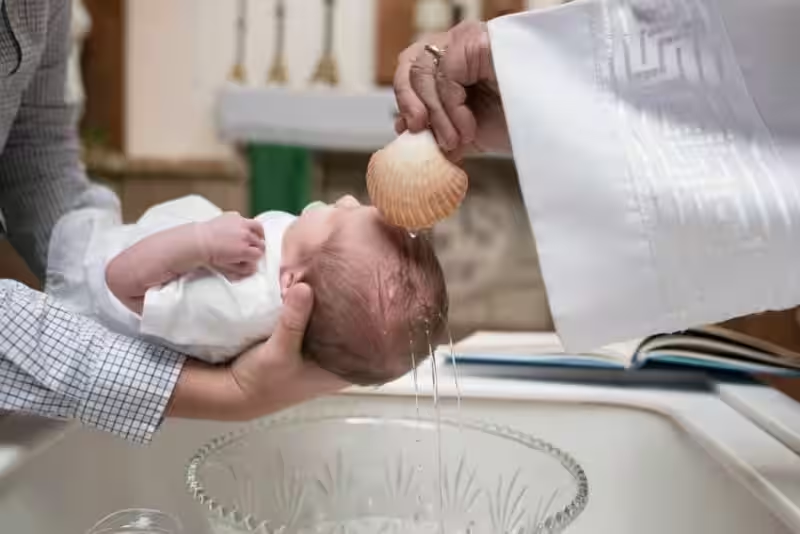
The act of baptism, a sacred rite of passage in many faiths, holds profound significance. It’s a symbolic washing away of sin, an entry into a spiritual community, and a declaration of faith. But when we consider this transformative ritual, a fundamental question arises: who can perform a baptism? The answer, as we’ll explore, is not a monolithic one. It varies significantly depending on the specific denomination, its theological understanding, and the historical traditions it upholds. Understanding these distinctions offers a valuable glimpse into the diverse tapestry of religious practice and the deeply held beliefs about spiritual authority and efficacy.
This exploration delves into the heart of baptismal practice, seeking to illuminate the roles individuals play in administering this vital sacrament. We’ll navigate the nuanced perspectives of various Christian denominations, touching upon the qualifications and authority deemed necessary for someone to effectively perform this sacred act. From the ordained clergy to the possibility of lay participation in certain contexts, the journey of who can perform a baptism is as rich and varied as the faiths themselves, offering comfort and clarity to those seeking to understand or participate in this profound spiritual experience.
Theological Foundations: Authority and Ordination in Christian Baptism
At its core, the question of who can perform a baptism within Christianity is deeply intertwined with the concept of divine authority and the laying on of hands. Most Christian traditions believe that the power to administer sacraments, including baptism, is not something an individual can simply claim. Instead, it is a delegated authority, often passed down through a lineage of ordination. This ordination signifies a formal recognition by the church that an individual has been called by God, adequately trained, and is authorized to act on behalf of Christ and the church in performing sacred rites.
Think of it like a doctor performing surgery. While many people might understand the human body and even have medical knowledge, only a licensed and qualified surgeon has the authority and training to perform such a critical procedure. Similarly, in many Christian denominations, ordained ministers – such as priests, pastors, or bishops – are considered the primary individuals authorized to perform baptisms. This authority is seen as a spiritual inheritance, tracing back through apostolic succession in some traditions, ensuring the integrity and validity of the sacrament. This is why you’ll typically see a member of the clergy leading baptismal services in these denominations.
The Role of the Ordained Minister
In the vast majority of Christian churches, the primary responsibility for performing a baptism rests with the ordained clergy. This includes a wide spectrum of roles, from the pope and bishops in the Catholic and Orthodox traditions to priests, pastors, ministers, and elders in Protestant denominations. The ordination process itself is a significant event, often involving rigorous theological study, spiritual formation, and a public affirmation of faith and commitment to service. This formal recognition by the church bestows upon them the spiritual authority to administer sacraments.
For example, a Catholic priest, having been ordained by a bishop, is considered to have the authority to perform baptisms in the name of the Father, Son, and Holy Spirit. This is not merely a symbolic gesture; the church believes that through the priest’s actions, the grace of God is conveyed to the individual being baptized. The same principle applies to a Baptist pastor or a Methodist minister. Their public ordination and the trust placed in them by their congregations empower them to preside over this foundational sacrament, ensuring that the baptism is performed according to the established rites and theological understanding of their respective traditions.
Exceptions and Emergency Baptisms: When the Rules Bend
While the ordained minister is the norm, most Christian traditions recognize that extraordinary circumstances can necessitate exceptions to the rule of who can perform a baptism. The most common exception is the emergency baptism. This arises when a person is in imminent danger of death, and there is no ordained minister readily available. In such situations, the church generally permits any baptized Christian, regardless of their formal ordination status, to perform the baptism, provided they have the intention to do what the Church does when it baptizes.
The key elements in an emergency baptism are the use of water, the invocation of the Trinity (“I baptize you in the name of the Father, and of the Son, and of the Holy Spirit”), and the intention to bring the person into the Christian faith. For instance, if a baby is born prematurely and is not expected to survive, and a priest cannot be reached in time, a devout layperson – perhaps a godparent or even a parent – might be called upon to perform the baptism. This act is recognized as valid by most denominations because the focus shifts to the salvation of the soul in a critical moment, emphasizing God’s mercy and the universal call to share the faith.
Lay Participation: A Spectrum of Involvement
The involvement of lay members (those who are not ordained clergy) in baptism varies significantly between denominations. In some traditions, the role of the laity is primarily ceremonial or supportive, while in others, there is a more direct, albeit still qualified, involvement. Understanding this spectrum is crucial to grasping the full picture of who can perform a baptism.
In many Protestant churches, while the pastor typically leads the service, godparents play a vital role. Godparents are often baptized and confirmed members of the church themselves and are expected to support the spiritual upbringing of the child being baptized. They don’t perform the baptism in the sense of administering the water and speaking the Trinitarian formula, but their presence and commitment are deeply integrated into the ritual. They are witnesses and guardians of the faith being pledged on behalf of the baptized.
Some denominations, particularly in the early church and in certain contemporary movements, have allowed for more direct lay participation in baptism, especially in contexts where ordained clergy are scarce or unavailable. This often hinges on the belief that all baptized Christians share in the priesthood of all believers, a concept that suggests a direct connection to God for all followers. Therefore, in specific circumstances, a layperson might be authorized to perform a baptism.
For example, in some mission fields or in remote communities, a leader of a house church who is not formally ordained might be recognized as having the authority to baptize. This is not a universal rule, and the authorization often comes either from a higher church body or is understood within the community’s prevailing practice. The emphasis here is on the community’s need and the shared responsibility of believers to ensure that the sacrament is administered. It’s a recognition that the church’s mission to baptize is paramount, and sometimes, the ordinary channels may need to be supplemented.
Baptism in Other Religions: Distinct Practices and Participants
While the term “baptism” is most commonly associated with Christianity, it’s important to acknowledge that similar ritualistic washings and initiations exist in other religious contexts, albeit with different theological underpinnings and often different individuals performing them. These practices, while not identical to Christian baptism, share the commonality of being significant rites of passage that signify a transition, purification, or commitment. Understanding these parallels can broaden our perspective on who can perform a baptism in a more general, ritualistic sense.
In Judaism, for instance, the mikveh, a ritual bath, plays a crucial role in purification for various reasons, including conversion. While not called “baptism” in the Christian sense, the act of immersion in the mikveh is a powerful symbol of spiritual cleansing and rebirth. The performance of this ritual, particularly for conversion, is overseen by a rabbinical court (beit din). This signifies that the authority to enact such a transformative rite is vested in the collective wisdom and religious authority of the community’s leaders.
Rituals of Purification and Initiation
Many ancient and modern religions incorporate ritualistic washing or immersion as a part of their spiritual practices. These acts often symbolize the shedding of an old way of life and the embrace of a new spiritual identity or commitment. The question of who can perform these rituals again points to established religious authority and communal recognition.
For example, in some Eastern spiritual traditions, there are practices of ritual bathing that signify purification from negative karma or a commitment to a spiritual path. The individuals who guide or perform these rites are typically spiritual teachers, gurus, or senior practitioners who have attained a certain level of spiritual attainment and earned the respect and trust of their followers. Their authority stems not from formal ordination in the Christian sense, but from demonstrable wisdom, spiritual insight, and the endorsement of their lineage or community.
Conversion and the Role of Religious Leaders
When individuals seek to formally join a religious community through a process akin to conversion, the role of religious leaders in overseeing these rites is paramount. This is true across many faiths, including those that utilize immersion or symbolic washing. The leaders ensure that the conversion is undertaken with genuine understanding and commitment, and that the ritual is performed correctly according to the traditions of the faith.
In Islam, while there isn’t a direct equivalent to baptism, the Shahada (declaration of faith) is the foundational act of conversion. This is often witnessed and accepted by Muslim scholars or imams. In Hinduism, the process of initiation into certain spiritual paths may involve ritualistic ceremonies led by a guru or a qualified priest. These leaders are seen as intermediaries who can guide the aspirant and facilitate their entry into a deeper spiritual life, ensuring the sincerity and validity of their commitment.
Conclusion: The Enduring Significance of Who Performs the Rite
Ultimately, the question of who can perform a baptism, or its parallel rituals in other faiths, is more than just an administrative detail. It speaks to the deeply rooted beliefs about spiritual authority, community, and the efficacy of sacred rites. Whether it’s an ordained minister in a Christian church, a rabbinical court in Judaism, or a spiritual teacher in another tradition, the individual performing the ritual is seen as a conduit for divine grace, a representative of the faith community, and a guardian of the sacred tradition.
The variations in who can perform a baptism highlight the diverse ways in which humanity seeks to connect with the divine and mark life’s most significant transitions. While the specific individuals and their qualifications may differ, the underlying principle remains: these rites are entrusted to those who are recognized by their respective communities as possessing the spiritual authority, knowledge, and intention to guide individuals into a deeper relationship with the sacred. This understanding enriches our appreciation for the profound and enduring significance of these transformative ceremonies across the global religious landscape.
Frequently Asked Questions About Baptism
Who Can Perform a Baptism?
In most Christian traditions, baptism is performed by an ordained minister, priest, pastor, or elder. In some denominations, deacons or even lay people who are authorized by the church leadership may also be permitted to perform baptisms. The specific qualifications can vary significantly between different Christian denominations and traditions.
What Religion is Baptism Associated With?
Baptism is a central sacrament in Christianity. It is practiced by nearly all Christian denominations, including Catholic, Orthodox, Protestant (such as Baptist, Methodist, Lutheran, Presbyterian, Pentecostal, and many others), and Anglican churches. While the practice and meaning of baptism are shared across Christianity, the specific rituals, theological interpretations, and age at which it is performed can differ between denominations.