The journey of faith within the Catholic Church is a profound and deeply personal one, marked by a constant striving for spiritual growth and a closer relationship with God. Central to this pursuit is the understanding of sin, not just as a transgression, but as a force that can create a significant distance between the soul and divine grace. Within Catholic theology, a crucial distinction is made between venial and mortal sins. While both are considered offenses against God’s law, mortal sins carry a weight that can, if unrepented, sever the very lifeline of God’s grace. This article aims to illuminate this vital concept, providing a clear and relatable explanation of the mortal sins Catholic Church list, and its implications for a fulfilling spiritual life.
At its core, a mortal sin represents a grave offense against God. It’s not merely a minor slip-up or a moment of weakness; it’s a deliberate and serious turning away from God’s love and law. The Church teaches that for a sin to be considered mortal, three essential conditions must be met simultaneously. Firstly, the act itself must be grave matter, meaning it concerns a serious violation of God’s commandments. Secondly, the individual must have full knowledge that the act is sinful and gravely wrong. Finally, there must be deliberate consent of the will, meaning the person freely chooses to commit the sin, knowing its gravity.
Think of it like a serious betrayal in a deep friendship. If you intentionally and knowingly do something that profoundly damages the trust and love in that relationship, it’s far more significant than a casual misunderstanding. Similarly, a mortal sin is a profound betrayal of our covenant with God. It’s a conscious decision to prioritize our own desires or actions over God’s will, thereby breaking the vital connection of divine grace that sustains our spiritual life. Without this grace, our ability to love God and our neighbor is significantly weakened, making us more susceptible to further sin and spiritual decline.
The Traditional List of Mortal Sins: A Framework for Reflection
For centuries, the Catholic Church has provided a traditional framework for understanding what constitutes grave matter. This list, often referred to as the mortal sins Catholic Church list, serves as a guide for self-examination and a reminder of the seriousness of certain actions. It’s important to remember that this list is not exhaustive in the sense of cataloging every possible sinful act, but rather highlights categories of offenses that are inherently grave when committed with full knowledge and deliberate consent. These are not merely suggestions, but serious warnings about behaviors that can have profound spiritual consequences.
While the specific wording can vary slightly across different catechisms and theological explanations, the core categories remain consistent. These traditional mortal sins provide a clear and direct pathway to understanding the gravity of certain choices. They are meant to be a tool for spiritual discernment, helping individuals to identify areas where they may be straying from God’s path and to seek reconciliation and healing. Understanding these categories is the first step towards actively avoiding them and cultivating a life in accordance with God’s loving plan.
Often discussed in relation to mortal sins are the Seven Deadly Sins: pride, greed, lust, envy, gluttony, wrath, and sloth. While these are often referred to as “sins,” it’s more accurate to understand them as vices or disordered inclinations that, when acted upon with full knowledge and deliberate consent, can lead to mortal sin. They are like roots from which more destructive sinful actions can sprout. For instance, pride, the excessive love of self, can lead to actions like refusing to admit fault or looking down on others, which can certainly be mortal sins.
Consider greed, the insatiable desire for material possessions. If this greed leads someone to steal from another, to defraud them, or to engage in exploitative practices, these actions, when committed with the necessary knowledge and consent, can constitute grave offenses. Similarly, lust, an inordinate or unrestrained sexual desire, can manifest in actions that are considered mortal sins, such as adultery or the objectification of another person. Understanding these root vices helps us to identify and address the underlying tendencies that can lead to more egregious transgressions, guiding us towards true virtue.
Specific Examples of Grave Matter
Beyond the broad categories of the Seven Deadly Sins, the mortal sins Catholic Church list also encompasses specific actions that are universally recognized as grave. Murder, the intentional taking of an innocent human life, is a prime example. This is considered a direct violation of the commandment “You shall not kill” and a grave offense against God, who is the author of life. Another significant offense is adultery, which is the violation of the marital covenant and a betrayal of the trust and love between spouses.
Other actions that typically fall under grave matter include sacrilege, which is the mistreatment or abuse of sacred persons, places, or things; perjury, which is lying under oath; and grave theft or robbery, where significant material harm is inflicted upon another. The Church also considers abortion and euthanasia as grave offenses against the sanctity of human life. These examples serve as stark reminders of the seriousness with which the Church approaches actions that directly harm oneself, others, or the relationship with God.
The Consequences of Mortal Sin: A Spiritual Crisis
When a mortal sin is committed, the immediate consequence is the loss of sanctifying grace. This grace is the very life of God within us, enabling us to love Him and to live a virtuous life. Its absence creates a spiritual void, leaving the soul vulnerable and weakened. It’s like a vital electrical current being cut off from a home; essential functions cease, and the environment becomes dark and lifeless. This loss of grace doesn’t mean God stops loving the person, but it does mean that the direct, life-giving connection is broken.
The spiritual consequences can be profound. A soul in a state of mortal sin struggles to grow in holiness, finds prayer more difficult, and is more susceptible to temptation. It can lead to a hardening of the heart and a gradual drifting away from God. This is why the Church places such immense importance on sacramental confession (also known as the Sacrament of Reconciliation or Penance). Through sincere confession and absolution, the lost grace is restored, and the soul is healed and reconciled with God. This sacrament is a profound act of God’s mercy and a vital tool for spiritual recovery.
The Path to Healing: Reconciliation and Redemption
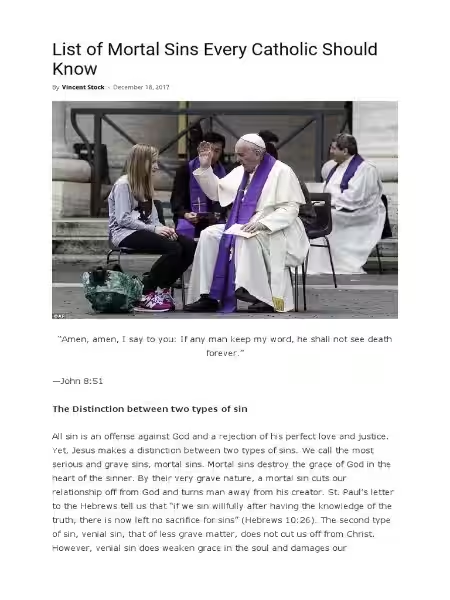
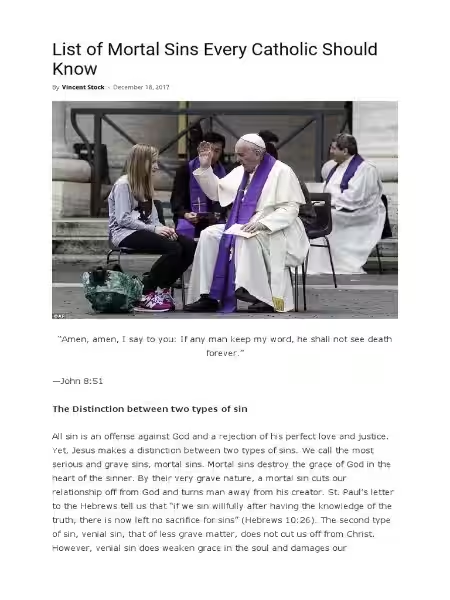
The good news is that no sin is too great for God’s mercy, especially when there is contrition, or deep sorrow for sins committed. The Sacrament of Reconciliation is the primary means by which Catholics can be restored to a state of grace after committing mortal sins. This sacrament involves confessing one’s sins to a priest, who acts in the person of Christ, offering forgiveness and spiritual guidance. It’s a profound experience of God’s unconditional love and a powerful step towards spiritual renewal.
The process of confession is more than just listing offenses; it’s an act of humility and a sincere desire to turn back to God. When we approach the confessional with a contrite heart, acknowledging our failings and resolving to sin no more, we are met with God’s boundless mercy. This sacrament not only forgives sins but also imparts actual grace, strengthening us to resist future temptations and to live a more Christ-like life. It’s a continuous cycle of falling, repenting, and being lifted up by God’s grace.
Living a Life Free from the Grip of Mortal Sin
Understanding the mortal sins Catholic Church list is not about instilling fear, but about fostering a deeper understanding of our spiritual well-being and the incredible gift of God’s grace. It’s an invitation to live intentionally, to be mindful of our choices, and to cultivate a closer relationship with the divine. By reflecting on these categories of grave offenses, we can identify areas where we need to grow and seek God’s help to overcome our weaknesses.
Ultimately, the goal is not to obsess over a list, but to cultivate a heart that is turned towards God. This involves regular prayer, sacramental participation (especially the Eucharist and Reconciliation), acts of charity, and a continuous effort to grow in virtue. By understanding the gravity of mortal sin, we can better appreciate the immense love and mercy God offers us, and strive to live a life that reflects that love in all our actions and intentions. This journey of spiritual health is lifelong, marked by God’s constant invitation to return to Him, no matter how far we may have strayed.
Frequently Asked Questions about Mortal Sins in the Catholic Church
What are mortal sins in the Catholic Church?
Mortal sins are grave offenses against God’s law that destroy the life of grace in the soul. They are considered “mortal” because they can lead to spiritual death, meaning eternal separation from God, if not repented and absolved through the Sacrament of Reconciliation.
What are the conditions for a sin to be considered mortal?
For a sin to be considered mortal, three conditions must be met simultaneously:
1. Grave Matter: The sin itself must be seriously wrong.
2. Full Knowledge: The person must know that the act is sinful and gravely wrong.
3. Deliberate Consent: The person must willingly and freely choose to commit the sinful act.
Is there an official list of mortal sins in the Catholic Church?
While the Catechism of the Catholic Church (CCC) outlines categories of grave sins, it doesn’t provide a definitive, exhaustive, numbered list that is universally applied in every situation. Instead, it identifies common and serious sins that, when committed with the three conditions mentioned above, are considered mortal.
What are some examples of actions that are commonly considered grave matter, and thus potentially mortal sins?
Common examples of grave matter include:
* Theft, especially of significant value.
* Adultery and other forms of grave sexual misconduct (e.g., fornication, homosexual acts committed with consent, incest).
* Murder and intentional killing.
* Abortion.
* Grave disrespect towards parents or lawful superiors.
* Willful and malicious destruction of another’s good name.
* Taking human life.
* Grave blasphemy.
* Grave sacrilege.
* Grave denial of faith.
* Grave injustice in dealings with others.
* Grave hatred of God or neighbor.
* Grave envy.
* Grave greed.
* Grave gluttony.
* Grave lust.
* Grave sloth (acedia, especially when it leads to neglecting one’s spiritual duties).
What is the difference between a mortal sin and a venial sin?
Venial sins are less serious offenses that wound but do not destroy the life of grace in the soul. They weaken the relationship with God but do not separate us from Him entirely. While venial sins should be avoided and are typically absolved through communal prayer or acts of charity, they do not require the Sacrament of Reconciliation for forgiveness in the same way mortal sins do.
What happens if someone dies in a state of mortal sin?
According to Catholic teaching, if a person dies in a state of unrepented mortal sin, without having received God’s mercy through repentance and absolution, they separate themselves from God eternally. This state is understood as hell.
How can one confess and be forgiven of mortal sins?
Mortal sins must be confessed to a priest in the Sacrament of Reconciliation (Confession). The priest, acting in the person of Christ, grants absolution, thereby reconciling the sinner with God and the Church. This sacrament cleanses the soul of mortal sin and restores the sanctifying grace lost.
What is the role of “sin of omission” regarding mortal sins?
A sin of omission can be mortal if there is a grave obligation to act and the individual knowingly and deliberately fails to do so, with full knowledge of the gravity of their inaction and with deliberate consent. For example, deliberately refusing to fulfill a grave obligation to assist someone in mortal danger.
Does lack of knowledge excuse a mortal sin?
Yes, if the lack of knowledge is “invincible” (meaning the person could not have known better), then it can remove the element of “full knowledge” required for a sin to be mortal. However, “vincible” ignorance (where the person could and should have known better) does not excuse the sin. The Church encourages continuous learning and formation to avoid vincible ignorance.
Is it possible to commit a mortal sin accidentally?
No, by definition, a mortal sin requires deliberate consent. An act that might be grave matter can only become a mortal sin if the person knows it is grave matter and chooses to do it anyway. Accidental actions, without intent or full knowledge, do not meet the criteria for mortal sin.