For centuries, the Catholic Church has offered a profound and deeply personal path to healing, not just of the body, but of the spirit and mind. This journey is intricately woven with Catholic healing prayers, ancient invocations that tap into a wellspring of divine grace and comfort. These prayers are more than just words; they are whispers of hope, channels of God’s love, and acts of profound faith that can bring about transformative change. Whether facing physical ailments, emotional struggles, or spiritual emptiness, countless individuals have found solace and restoration through the power of prayer within the Catholic tradition.
This article will explore the rich tapestry of Catholic healing prayers, their theological underpinnings, and how they can be incorporated into our lives for personal growth and recovery. We will delve into the various forms these prayers take, from simple petitions to more formal supplications, and understand how they connect us to the healing power of Jesus Christ and the intercession of saints. This is a journey of faith, a pathway to understanding how divine intervention can touch our lives in tangible and miraculous ways.
Understanding the Foundation: Faith, Grace, and Divine Intervention
At the heart of Catholic healing prayers lies a profound understanding of faith. It is not simply belief, but a deep-seated trust in God’s power and goodness, a conviction that He hears our pleas and desires our well-being. This faith is the bedrock upon which all prayer is built, transforming a mere recitation of words into a powerful dialogue with the Divine. Without this active and trusting faith, even the most eloquent prayers can remain dormant.
Central to this process is the concept of divine grace. Catholic theology teaches that God’s unmerited favor, His grace, is essential for our spiritual and physical healing. Catholic healing prayers are often seen as avenues through which this grace flows into our lives, offering comfort, strength, and restoration. This grace is not a magical potion, but a supernatural gift that empowers us to overcome difficulties and to experience God’s loving presence in our struggles. Think of it like a gardener tending to a wilting plant; the gardener provides water and sunlight (our prayers and faith), but it is the inherent life force within the plant, aided by these external elements, that allows it to bloom again.
The Role of Jesus Christ: Our Ultimate Healer
Jesus Christ is the central figure in Catholic healing. His earthly ministry was characterized by countless acts of healing – curing the sick, raising the dead, and casting out demons. These miracles were not merely displays of power, but profound signs of His compassion for humanity and His divine authority over suffering. He is not just a historical figure; He is the living, Risen Christ who continues to offer healing to all who turn to Him in faith.
When we offer Catholic healing prayers, we are ultimately directing our petitions to Jesus. We ask Him to impart His healing touch, to restore what is broken, and to bring peace to troubled souls. Whether we are praying for the healing of a loved one who is physically ill or seeking inner peace from emotional turmoil, our prayers are a recognition of Christ’s power and a plea for His intervention. Consider the story of the woman with the hemorrhage in the Gospels; her simple act of touching Jesus’ cloak, driven by immense faith, brought her immediate healing. This demonstrates that direct appeal to Christ is a cornerstone of Catholic spiritual practice.
Intercession of Saints and the Blessed Mother
Beyond direct petitions to Jesus, Catholic healing prayers often involve the intercession of saints and the Blessed Mother Mary. These holy individuals, having lived lives of exemplary faith and virtue, are believed to be in God’s presence and can act as powerful intercessors on our behalf. They understand the struggles of human life and can offer prayers that are particularly pleasing to God.
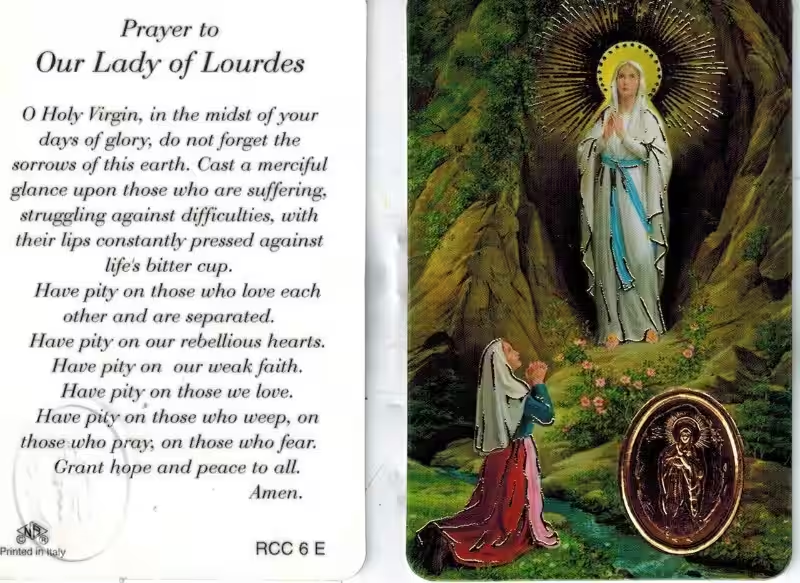
The Blessed Mother Mary holds a unique and cherished place in Catholic devotion as the Mother of God and our spiritual mother. Her compassion and maternal love make her a powerful advocate for those seeking healing. Prayers like the Hail Mary or specific prayers to Our Lady of Lourdes, known for her miraculous healing waters, are potent expressions of this trust. Similarly, saints like St. Jude, the patron of impossible causes, or St. Peregrine, the patron of those suffering from cancer, are invoked for their specific intercessory powers. Imagine a child asking their mother to speak to a teacher on their behalf; the mother’s words might carry more weight or understanding. In a similar vein, saints and Mary can present our needs to God with a special intimacy.
Forms and Expressions of Catholic Healing Prayers
Catholic healing prayers manifest in a variety of forms, each offering a unique way to connect with God’s healing power. These prayers are not rigid formulas but living expressions of faith, adaptable to the needs of the individual and the situation. Understanding these different expressions can empower individuals to find the prayer that resonates most deeply with their hearts.
From simple, spontaneous pleas whispered in moments of distress to the structured beauty of liturgical prayers, the Catholic tradition provides a rich landscape for seeking healing. These prayers can be private acts of devotion, offered in the quiet of one’s room, or communal acts of worship, shared with the Church community during Mass or in prayer groups. The emphasis is always on sincerity of heart and a reliance on God’s providence.
Personal Petitions and Spontaneous Prayers
One of the most accessible forms of Catholic healing prayer is the personal petition. These are the heartfelt words we speak directly to God, expressing our needs, our fears, and our hopes for healing. They are often spontaneous, arising from the depths of our experience. A simple prayer like, “Lord, please give me strength to endure this pain,” or “Jesus, have mercy on me and heal me,” is a powerful act of faith.
These spontaneous prayers are incredibly valuable because they are authentic and unadorned. They are the raw outpouring of our souls, seeking solace from the One who knows us intimately. When we are in a moment of crisis, struggling with an illness, or overwhelmed by anxiety, these simple, direct pleas can be the most effective way to connect with God’s merciful love. Consider a child crying out for their parent in the night; the immediate, instinctual cry is often the most effective in reaching the parent’s attention.
Formal Prayers and Liturgical Supplications
Beyond personal petitions, the Catholic Church offers formal prayers and liturgical supplications specifically designed to invoke healing. These prayers are often found in prayer books, missals, and in the Sacrament of the Anointing of the Sick. They are rich in theological content and have been refined over centuries of prayer and reflection.
Examples include:
The Our Father (The Lord’s Prayer): While a universal prayer, its petition, “Thy will be done,” is crucial in accepting God’s plan, even when it is difficult, and its plea for daily bread can extend to spiritual and physical sustenance.
The Divine Mercy Chaplet: This powerful prayer, inspired by the visions of St. Faustina Kowalska, asks for God’s infinite mercy for ourselves and the whole world, specifically for the sick and the dying. The invocation, “For the sake of His sorrowful Passion, have mercy on us and on the whole world,” is a profound appeal to Christ’s redemptive suffering.
Prayers for the Sick: The Church provides specific prayers for those who are ill, often asking for physical restoration, spiritual comfort, and peace. A common prayer might include: “O God, the sole author of life and nobility, who by the gift of grace have restored us to your likeness, and by the sacrifice of your Son have redeemed us from death, look favorably on your servants who are sick and grant them your healing power.”
The Liturgy of the Anointing of the Sick: This sacrament, administered by a priest, is a profound prayer for healing, offering spiritual strength, peace, and forgiveness, and sometimes physical healing, according to God’s will.
These formal prayers provide a structured framework for prayer, allowing us to articulate our needs in ways that align with Catholic doctrine and tradition. They are a shared heritage of faith, connecting us to generations of believers who have sought God’s healing touch.
Incorporating Catholic Healing Prayers into Your Life
Integrating Catholic healing prayers into your daily life is a journey of intentionality and deepening your relationship with God. It’s not about adding another chore to your day, but about cultivating a spirit of prayerfulness that permeates your existence. By making prayer a consistent and meaningful part of your routine, you open yourself more fully to the graces of healing that God offers.
The beauty of Catholic healing prayers lies in their versatility. They can be woven into the fabric of your day, from moments of quiet reflection in the morning to prayers before sleep at night. The key is to approach these prayers with sincerity, humility, and an unwavering trust in God’s loving providence. Even a few minutes of focused prayer can make a profound difference in your spiritual and emotional well-being.
Finding Moments for Prayer amidst the Busyness
In our fast-paced world, finding quiet moments for prayer can seem challenging. However, the essence of Catholic healing prayer is not about the duration, but the quality of your intention. Even brief moments can be powerful opportunities for connection.
Consider these practical approaches:
Morning Offering: Begin your day with a simple prayer like, “Lord, I offer you this day and ask for your healing grace in all that I do.” This sets a prayerful tone for your day and invites God’s presence into every activity.
Short Meditations: Take a few minutes during your lunch break or while commuting to reflect on a passage from Scripture or to recite a short healing prayer, such as the Jesus Prayer: “Lord Jesus Christ, Son of God, have mercy on me, a sinner.”
Before Meals: Express gratitude for the nourishment you receive and ask for God’s blessing, praying, “Bless us, O Lord, and these Thy gifts, which we are about to receive from Thy bounty, through Christ our Lord. Amen.” This simple practice acknowledges God’s provision and can be a moment of quiet reflection.
Evening Reflection: Before going to sleep, review your day, offer thanksgiving for blessings, and ask for healing and peace through prayers like the Act of Contrition or a simple plea for restoration: “Into Your hands, Lord, I commend my spirit.”
Utilize Technology: Many Catholic apps and websites offer guided meditations, audio prayers, and access to Catholic healing prayers, making it easier to pray on the go.
By intentionally seeking out these small pockets of prayer, you cultivate a habit of reliance on God, which is the very foundation of Catholic healing.
The Importance of Community and Sacraments
While private prayer is essential, the Catholic Church emphasizes the power of communal prayer and the sacraments in the journey of healing. Praying with others amplifies our intentions and connects us to the broader Body of Christ, where we can find support, encouragement, and shared faith.
Mass: Participating in Holy Mass, especially receiving Holy Communion, is a profound act of communion with Christ, the ultimate healer. The prayers offered during Mass are for the entire Church, including those seeking healing.
Prayer Groups: Joining a Catholic prayer group allows you to share your burdens and joys with fellow believers, offering and receiving prayers for healing. The collective faith of a group can be incredibly powerful.
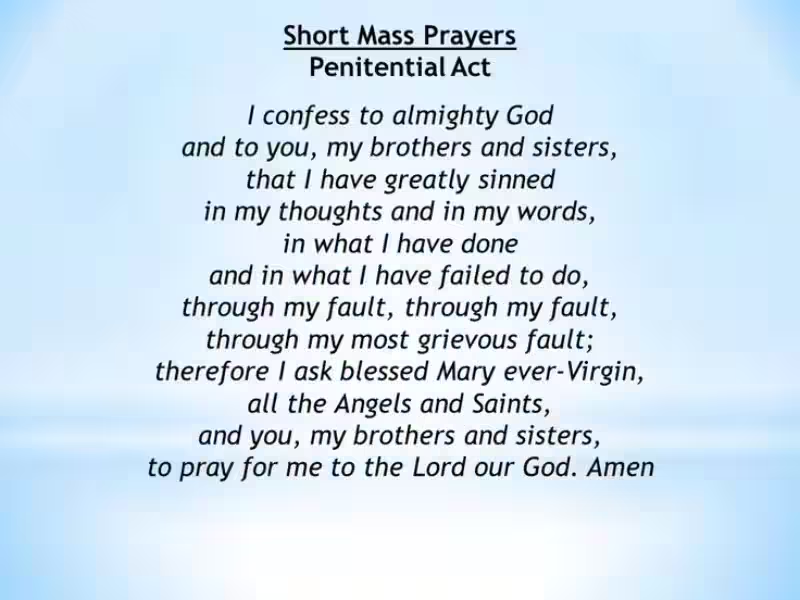
The Sacrament of Reconciliation (Confession): This sacrament offers spiritual healing and forgiveness, which is often a crucial step in overcoming emotional and spiritual wounds that can manifest as physical ailments.
The Anointing of the Sick: As mentioned earlier, this sacrament is a direct invocation of God’s healing grace for those who are seriously ill. Receiving this sacrament with faith can bring profound spiritual comfort and sometimes physical restoration.
Remember, the Church is a community of faith, and we are not meant to journey alone. By engaging with the sacraments and the communal prayer life of the Church, you tap into a rich source of spiritual strength and healing.
Ultimately, the practice of Catholic healing prayers is an act of profound hope and trust. We pray not with the expectation of always receiving the exact outcome we desire, but with the firm conviction that God hears us, loves us, and desires what is best for us. His plan, while sometimes mysterious, is always one of love and ultimate good.
The journey of healing, whether physical, emotional, or spiritual, is often a process that unfolds over time. There may be moments of doubt or discouragement, but it is during these times that our faith is tested and strengthened. By continuing to turn to Catholic healing prayers, we remain connected to the source of all healing, trusting in His wisdom and His unfailing love.
In conclusion, Catholic healing prayers offer a timeless and potent pathway to restoration and peace. They are a testament to the enduring power of faith, the inexhaustible mercy of God, and the profound connection we can forge with the Divine through sincere and devoted prayer. May you find solace, strength, and healing as you embark on this sacred journey.
Frequently Asked Questions about Catholic Healing Prayers
This section addresses common questions regarding healing prayers within the Catholic faith.
What is the purpose of Catholic healing prayers?
Catholic healing prayers are directed towards God, Jesus Christ, and the intercession of saints, seeking physical, emotional, spiritual, or mental healing. They are an expression of faith, trust, and reliance on divine mercy and power.
Are Catholic healing prayers effective?
The effectiveness of Catholic healing prayers is a matter of faith. Catholics believe that God answers prayers according to His divine will and timing. While not all prayers for healing result in immediate or visible physical recovery, they are believed to bring spiritual comfort, peace, strength, and sometimes, through God’s grace, physical healing.
What is the role of the sacraments in Catholic healing?
The Catholic Church emphasizes the importance of the Sacraments, particularly the Anointing of the Sick, as a primary means of spiritual and sometimes physical healing. Reconciliation (Confession) also plays a role in spiritual healing and forgiveness of sins.
Can I pray for healing for myself or others?
Yes, absolutely. Catholics are encouraged to pray for healing for themselves and for others. This can be done through personal prayer, praying the Rosary, reciting specific prayers for healing, or participating in communal prayer services.
Are there specific prayers or devotions for healing in Catholicism?
Yes, there are many. Common examples include the “Our Father,” “Hail Mary,” prayers to the Sacred Heart of Jesus, prayers to the Virgin Mary (especially under titles like Our Lady of Lourdes or Our Lady of Perpetual Help), prayers to specific healing saints (like St. Peregrine for cancer, St. Jude for impossible causes, or St. Raphael the Archangel for physical healing), and the Litany of the Saints.
What is the difference between a Catholic healing prayer and other forms of prayer?
Catholic healing prayers are specifically addressed to the Triune God (Father, Son, and Holy Spirit) and often include invoking the intercession of Mary, the Mother of God, and the saints. They are rooted in Catholic theology, the belief in the Real Presence of Christ in the Eucharist, and the efficacy of the Sacraments.
What should I do if my prayers for healing are not answered in the way I hoped?
Catholics are encouraged to maintain faith and trust in God’s plan, even when faced with unanswered prayers or difficult circumstances. This often involves seeking deeper spiritual understanding, accepting God’s will, and finding strength and peace through continued prayer, the Sacraments, and the support of the Church community.