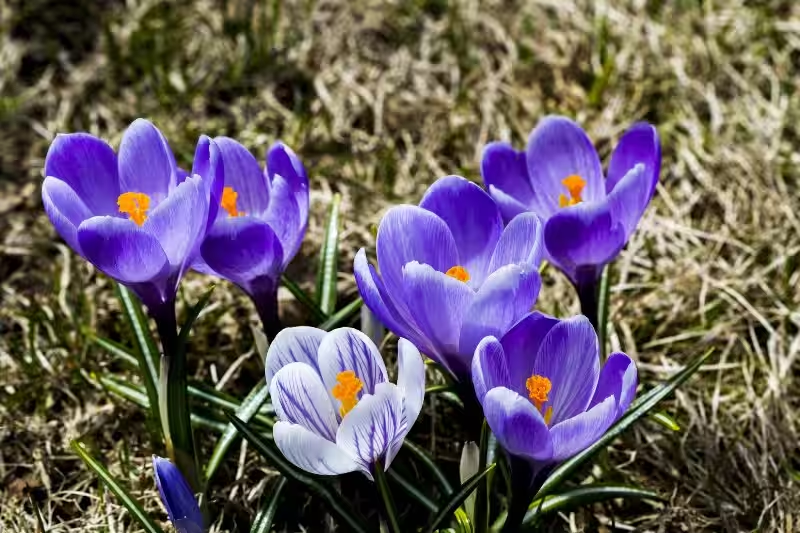
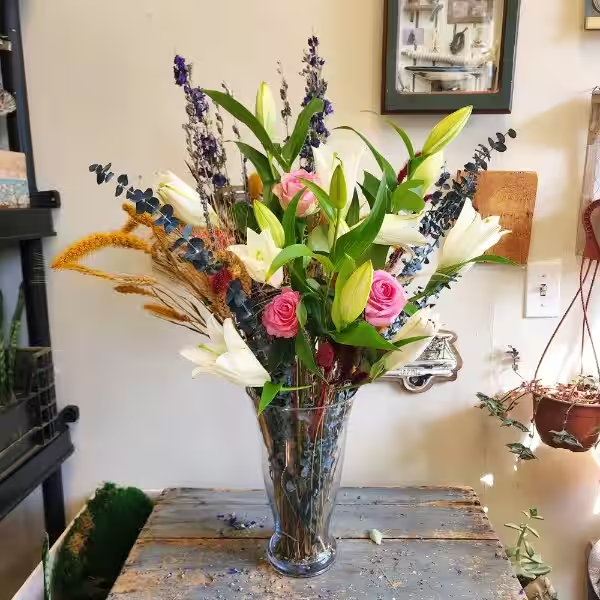
Religious traditions across the globe are rich with symbolism, and flowers hold a particularly potent place, often representing profound concepts like new beginnings, rebirth, and the promise of a fresh start. These delicate yet resilient blooms, nurtured by divine forces according to many beliefs, serve as tangible reminders of spiritual renewal and the ever-present potential for transformation. From the vibrant burst of spring to the gentle unfurling of a bud, flowers mirror the cyclical nature of life and the hopeful anticipation of what is to come, making them deeply intertwined with religious narratives of creation, resurrection, and the promise of eternal life.
The very act of a flower emerging from the earth, often after a period of dormancy or hardship, is a powerful metaphor. It speaks to the overcoming of challenges, the triumph of life over apparent death, and the inherent beauty that can emerge from even the most unassuming beginnings. This inherent symbolism resonates deeply within religious frameworks, offering solace, inspiration, and a visual language to express abstract spiritual truths. Understanding these floral connections can enrich our appreciation for both the natural world and the profound messages embedded in our faith.
The lily, particularly the white variety, is perhaps one of the most universally recognized flowers that represent new beginnings in a religious context. Its pristine white petals are seen as a symbol of purity, innocence, and the unblemished soul. In Christianity, the lily is strongly associated with the Virgin Mary, representing her purity and her role in the divine plan. Its trumpet-like shape is also interpreted as a herald of good news, a call to spiritual awakening, and a reminder of the resurrection of Christ, signifying the ultimate new beginning for believers.
Beyond its association with Mary, the lily’s emergence from the earth after winter’s chill embodies the promise of resurrection and eternal life. Its elegant form and fragrant perfume evoke a sense of divine presence and the possibility of spiritual renewal. Imagine a barren garden, seemingly lifeless, suddenly bursting forth with these radiant blooms; it’s a powerful visual testament to the enduring strength of life and the beauty that can arise from seemingly desolate circumstances, a potent reminder for us to seek out the potential for new growth in our own spiritual journeys.
The Lotus: Enlightenment, Rebirth, and Spiritual Awakening
In Eastern religions, particularly Buddhism and Hinduism, the lotus flower is an incredibly significant symbol of new beginnings and spiritual ascent. This aquatic bloom, which rises from murky waters to unfurl its petals in the sunlight, beautifully represents the journey of the soul from the darkness of ignorance and suffering towards enlightenment and spiritual awakening. Its ability to remain pristine and pure despite its muddy origins makes it a powerful emblem of transcendence and the inherent goodness within all beings.
The different stages of the lotus’s growth – from the submerged bud to the fully opened blossom – are often interpreted as stages of spiritual development. Each petal that unfurls signifies a step closer to nirvana or moksha, the ultimate state of liberation and rebirth. The lotus reminds us that even from the most challenging environments, beauty and clarity can emerge, offering a profound message of hope and the continuous possibility of personal transformation. It’s a testament to the idea that our past circumstances do not define our future potential.
The Iris: Faith, Hope, and the Promise of a New Dawn
The iris, with its striking, vibrant petals, holds a special significance as a flower representing new beginnings and the virtues of faith and hope. Its name is derived from the Greek word for “rainbow,” often seen as a divine bridge or a promise from God. In Christian iconography, the iris is frequently linked to the Virgin Mary and the sorrow of the Passion, but more importantly, it symbolizes hope and the resurrection, a testament to God’s enduring love and the promise of a new dawn after darkness.
The layered structure and regal bearing of the iris can also be interpreted as representing layers of spiritual understanding and the unfolding of divine revelation. Its ability to bloom prolifically in many regions, often appearing with surprising vibrancy, serves as a visual reminder of the ever-present potential for renewal and the grace that can usher in fresh starts. Consider the stunning variety of irises; each unique color and form can be seen as a different facet of divine promise, encouraging us to embrace the diverse ways new beginnings can manifest in our lives.
The Tulip: Renewal, Forgiveness, and the Springtime of the Soul
The tulip, with its cheerful and often vibrantly colored blooms, is a quintessential flower of spring and therefore, a strong symbol of renewal and new beginnings. In many cultures, the arrival of tulips signifies the end of winter and the return of life and warmth, mirroring the spiritual rebirth that many religions emphasize. The tulip’s straightforward beauty and its capacity to emerge with such consistent vibrancy after a dormant period make it a beloved representation of fresh starts and the opportunity for forgiveness.
Historically, tulips have also been associated with perfect love and divine care. Their emergence in the springtime can be seen as a divine blessing, a sign of nature’s inherent ability to regenerate and offer second chances. The tulip encourages us to shed the old, embrace the new, and to approach life with an open heart, ready to receive the blessings of a fresh start. Just as a garden is revitalized by the burst of tulips, so too can our spirits be renewed with hope and a sense of forgiveness.
The Rose: Divine Love, Grace, and the Unfolding of Life
While the rose is often associated with romantic love, its deeper religious symbolism also powerfully connects it to new beginnings, divine love, and grace. In Christianity, the rose is frequently linked to the Virgin Mary, often referred to as the “Mystical Rose,” symbolizing her purity and her role as a vessel of divine love. The thorns of the rose can represent the suffering and sacrifice inherent in life, while its beautiful bloom signifies the redemption and new life that can emerge from such trials.
The unfolding of a rosebud into a full bloom is a beautiful metaphor for spiritual growth and the gradual unfolding of life’s potential. It reminds us that new beginnings are not always instantaneous but can be a process of patient nurturing and development. The rose, with its intoxicating fragrance and captivating beauty, invites us to experience the grace of the divine and to embrace the promise of new beginnings that are constantly offered to us, urging us to cultivate our own inner gardens towards blossoming.
The Geranium: Comfort, Serenity, and the Gentle Embrace of Change
Though perhaps less overtly religious in some traditions, the geranium carries a gentle yet significant meaning as a flower representing new beginnings, particularly in its association with comfort, serenity, and the gentle embrace of change. Its ability to thrive in various conditions and its continuous blooming cycle can symbolize the resilience of the spirit and the ongoing process of renewal. In some contexts, geraniums are seen as offering protection and encouragement, making them fitting companions during times of transition.
The simple, honest beauty of the geranium speaks to the quiet strength found in embracing new phases of life. It suggests that new beginnings don’t always need to be grand or dramatic; they can also be found in the peaceful acceptance of change and the steady growth that comes with it. This flower invites us to find comfort in the present moment while looking forward with a sense of serenity to the opportunities that lie ahead, allowing us to navigate transitions with a calm and hopeful heart.
Conclusion: Embracing the Floral Promise of New Beginnings
Across diverse religious landscapes, flowers serve as enduring and beautiful symbols of new beginnings, offering a visual lexicon for hope, rebirth, and spiritual renewal. From the pristine purity of the lily and the transcendent enlightenment of the lotus to the steadfast faith symbolized by the iris and the vibrant promise of the tulip, these natural wonders remind us of the constant potential for transformation. Even the comforting presence of the geranium speaks to the gentle embrace of change that often accompanies fresh starts.
These flowers that represent new beginnings are not merely decorative; they are profound messengers, woven into the fabric of our spiritual understanding. They encourage us to look beyond present challenges, to trust in the cyclical nature of life, and to believe in the divine grace that permits second chances and everlasting hope. By recognizing and appreciating these floral symbols, we can deepen our connection to our faith and find solace and inspiration in the beautiful, ever-present promise of a new dawn.
Frequently Asked Questions: Flowers Representing New Beginnings and Religion
What flowers symbolize new beginnings?
Several flowers are associated with new beginnings, often due to their symbolism or their blooming cycles. Some of the most popular include:
Lilies: Particularly white lilies, represent purity, rebirth, and renewed life. They are often used in ceremonies marking fresh starts or in times of spiritual renewal.
Peonies: Symbolize prosperity, good fortune, and a happy life, all of which can be associated with starting anew. Their lush blooms suggest abundance and a promising future.
Irises: These flowers are often linked to hope, faith, and wisdom. The iris’s emergence after winter can also be seen as a symbol of new life and a fresh start.
Daffodils: Known for their bright yellow blooms that appear in early spring, daffodils are a strong symbol of rebirth, new beginnings, and optimism after a period of dormancy.
Tulips: Especially in vibrant colors, tulips can represent the arrival of spring and the renewal of life. They signify a fresh start and new love or opportunities.
Lotus Flowers: In many Eastern religions, the lotus is a profound symbol of spiritual awakening, purity, and rebirth. It signifies rising from the mud to bloom beautifully, representing a new, enlightened state.
Sunflowers: Their heliotropic nature, always turning towards the sun, symbolizes positivity, hope, and a bright future, making them a fitting representation of new beginnings.
How do flowers relate to religion and new beginnings?
Flowers have a long and rich history of use in religious contexts, often symbolizing spiritual concepts such as purity, rebirth, resurrection, and divine grace. Many religions incorporate flowers into their rituals, art, and sacred spaces to represent these ideas.
Christianity: Lilies are frequently associated with the Virgin Mary, symbolizing her purity and the resurrection of Christ. Easter lilies specifically represent the resurrection and new life. White flowers are often used to symbolize purity and new beginnings in baptisms and weddings.
Buddhism: The lotus is a central symbol, representing purity, enlightenment, and the ability to rise above worldly suffering to achieve spiritual awakening and new beginnings. It signifies the unfolding of the mind and the path to nirvana.
Judaism: While not as prominently featured as in some other religions, flowers can symbolize the cycle of life, renewal, and the beauty of creation. The concept of “Shmita” (the Sabbatical year) involves periods of rest and renewal, akin to new beginnings.
Hinduism: Flowers like marigolds, jasmine, and lotuses are used extensively in religious ceremonies, offerings, and decorations. They represent devotion, purity, beauty, and the divine. The lotus, as mentioned, is particularly significant for spiritual growth and rebirth.
Islam: Flowers are appreciated for their beauty and fragrance, often used to adorn mosques and gardens. While specific floral symbolism tied to “new beginnings” might be less formalized than in other faiths, the appreciation of nature’s beauty can be seen as a reflection of divine creation and the potential for renewal.
In essence, flowers often serve as tangible representations of abstract spiritual concepts, connecting the earthly and the divine, and visually communicating the idea of new life, hope, and spiritual transformation across various religious traditions.