In the vast and often complex landscape of religious life, it’s easy to feel adrift, unsure of the best path to take, or how to best live out one’s faith. For many, particularly those within the Catholic tradition, a guiding light has been illuminated by the Universal Apostolic Preferences. These aren’t just abstract theological concepts; they are practical, actionable directives designed to orient the Church – and by extension, individuals – towards meaningful engagement with the world. Think of them as a spiritual GPS, offering direction and purpose in our daily journey.
These preferences, developed by the Society of Jesus (Jesuits) and adopted more broadly by the Catholic Church, offer a powerful framework for understanding where our energy, resources, and prayers can be most effectively directed. They are a call to action, a gentle but firm nudge towards living out our faith in tangible ways that address the deepest needs of humanity and the planet. Understanding and embracing these preferences can transform passive belief into active, Christ-centered living, making our faith not just a personal conviction but a force for good in the world.
Understanding the Universal Apostolic Preferences: A Modern Call to Faith
The concept of “apostolic preferences” might sound a bit formal, but at its heart, it’s about identifying the most pressing needs and then discerning how to respond to them with the spirit and teachings of Jesus. These aren’t new commandments, but rather a prioritization of existing calls to service and love that resonate with the Gospel message. They stem from a deep prayerful discernment, seeking to understand what the Holy Spirit is urging the Church to focus on in our contemporary world.
Imagine you have a limited amount of time and energy each day. You can’t do everything for everyone. The Universal Apostolic Preferences help us make wise choices, guiding us to invest our efforts where they will have the greatest impact. They encourage us to move beyond simply attending Mass or praying individually, and to actively participate in the mission of Christ in the world. This is about making our faith a living, breathing reality, not just a set of rules or traditions.
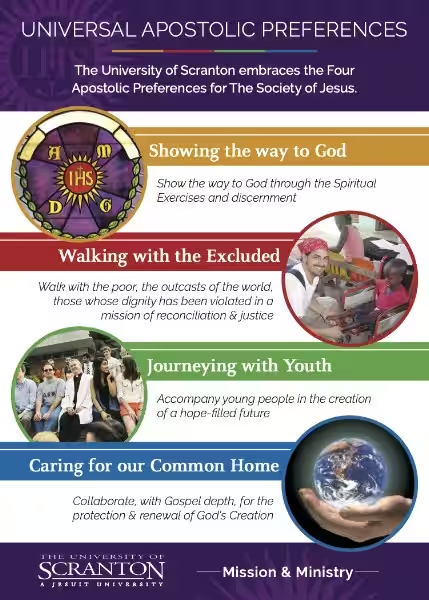
Preference 1: Showing the Way to God
The first Universal Apostolic Preference centers on “showing the way to God.” This isn’t about forcing beliefs on others, but about creating opportunities for people to encounter the divine. It’s about living in such a way that our faith is evident, inviting curiosity and reflection. This can manifest in countless ways, from deepening our own prayer life to engaging in meaningful conversations about faith, hope, and love.
Consider the simple act of being a genuinely kind and compassionate person. When we offer a listening ear to a struggling friend, volunteer our time at a local shelter, or simply express gratitude for the blessings in our lives, we are, in essence, pointing others towards a God of love and mercy. This preference calls us to be modern-day evangelists, not through grand pronouncements, but through the quiet, consistent witness of a life lived in faith. It’s about making God visible in the mundane, the everyday, and the extraordinary moments of life.
Preference 2: Walking with the Excluded
The second preference, “walking with the excluded,” speaks directly to Jesus’ ministry. He consistently sought out those on the fringes of society: the poor, the sick, the marginalized, and the misunderstood. This preference calls us to embrace solidarity with those who are often overlooked or ostracized in our communities and in the wider world.
This might involve actively seeking out opportunities to serve the homeless, to advocate for refugees and immigrants, or to offer support to individuals struggling with addiction or mental health challenges. It’s about breaking down barriers of prejudice and judgment, and instead extending a hand of welcome and understanding. For example, if a new person joins your faith community and seems lost, actively inviting them to join a small group or sharing a meal afterward is a concrete way of “walking with the excluded” and making them feel seen and valued.
Preference 3: Journeying with Youth and Young Adults
Thirdly, the Universal Apostolic Preferences highlight the importance of “journeying with youth and young adults.” This generation faces unique challenges and opportunities, navigating a rapidly changing world filled with information, pressures, and existential questions. This preference calls us to listen deeply to their concerns, accompany them in their spiritual journeys, and empower them to become active participants in faith and society.
This involves more than just offering religious education; it’s about building genuine relationships, being present in their lives, and helping them discover their own God-given gifts. Think about mentoring a young person, creating safe spaces for them to ask difficult questions, or supporting initiatives that address their needs and aspirations. It’s about recognizing that they are not just the future of the Church, but vital contributors to its present mission. Their energy, creativity, and unique perspectives are essential for the ongoing work of faith in the world.
Preference 4: Caring for Our Common Home
The final Universal Apostolic Preference, “caring for our common home,” is a profound recognition of our interconnectedness with the natural world. In an era of environmental crisis, this preference is more urgent than ever. It calls us to live sustainably, advocate for ecological justice, and understand our role as stewards of creation as entrusted to us by God.
This can translate into practical actions such as reducing our carbon footprint, supporting ethical consumption, and educating ourselves and others about environmental issues. It’s about seeing the beauty and sacredness in nature and recognizing that the well-being of the planet is intrinsically linked to the well-being of humanity. When we recycle diligently, conserve water, or support organizations working to protect endangered species, we are actively participating in this crucial apostolic preference, understanding that our faith calls us to be caretakers of God’s magnificent creation.
Living the Preferences: From Theory to Practice
The true power of the Universal Apostolic Preferences lies not in abstract understanding, but in their practical application in our everyday lives. They offer a roadmap for intentional discipleship, encouraging us to move beyond passive faith and embrace an active, engaged spirituality.
To truly live out these preferences means regularly reflecting on our actions and choices. Are we consciously making an effort to show God’s love to others? Are we actively seeking out and supporting those on the margins? Are we investing time and energy in the lives of young people? And are we mindful of our impact on the environment? These are not questions to be answered once and forgotten, but rather ongoing invitations to greater intentionality and deeper commitment in our faith journey.
Making the Preferences Your Own: A Personal Journey
Embracing the Universal Apostolic Preferences is not about achieving perfection overnight, but about embarking on a continuous process of growth and discernment. It’s about allowing these guiding principles to shape our priorities, inform our decisions, and ultimately, transform our lives.
Start small. Choose one preference that resonates most deeply with you and explore concrete ways to live it out this week. Perhaps it’s making an extra effort to connect with a lonely neighbor (showing the way to God), offering a helping hand to someone in need (walking with the excluded), reaching out to a young person in your life (journeying with youth), or making a conscious effort to waste less food (caring for our common home). Every small, intentional act of love and service ripples outward, making the world a more Christ-like place, one step at a time.
Frequently Asked Questions about Universal Apostolic Preferences
What are the Universal Apostolic Preferences?
The Universal Apostolic Preferences (UAPs) are a set of four guiding priorities chosen by the Society of Jesus (Jesuits) to direct their mission and work for the next ten years. They represent areas where the Jesuits believe they can best serve the Church and the world with their unique charism and resources.
When were the Universal Apostolic Preferences established?
The Universal Apostolic Preferences were promulgated by Father General Arturo Sosa, S.J., in February 2019, following a discernment process that involved Jesuits and collaborators worldwide.
What are the four Universal Apostolic Preferences?
The four Universal Apostolic Preferences are:
1. Showing the way to God (through Ignatian spirituality and discernment).
2. Walking with the Poor and the Outcast of the World.
3. Journeying in common with youth towards a hope-filled future.
4. Caring for our Common Home.
What is the purpose of the Universal Apostolic Preferences?
The UAPs provide a framework for the Jesuits to focus their energies and resources on areas of greatest need and impact. They aim to foster a more unified and effective mission, enabling Jesuits and their collaborators to respond more meaningfully to the challenges and opportunities of today’s world.
How are the Universal Apostolic Preferences implemented?
Implementation of the UAPs is multi-faceted. It involves local Jesuit communities, institutions (schools, universities, social centers), and individuals discerning how to integrate these preferences into their daily work and ministries. It also encourages collaboration with others who share similar concerns.
Are the Universal Apostolic Preferences exclusive to Jesuits?
While the UAPs are specifically for the discernment and action of the Society of Jesus, their themes are universal and resonate with the mission of the wider Church and many other faith-based and secular organizations. The Jesuits actively seek collaboration in pursuing these preferences.
How do the Universal Apostolic Preferences relate to “Religion”?
The Universal Apostolic Preferences are deeply rooted in the Christian faith and the Ignatian tradition of service. They are inherently religious endeavors, seeking to express God’s love and justice in the world through practical action and spiritual engagement. For instance:
* Showing the way to God is about deepening spiritual life and relationship with the Divine.
* Walking with the Poor is a direct response to Christ’s call to serve the marginalized, reflecting core religious values of compassion and justice.
* Journeying with Youth involves accompanying young people in their search for meaning and purpose, often a central aspect of religious formation.
* Caring for our Common Home is seen as a spiritual responsibility, recognizing the Earth as a gift from God and a shared inheritance that must be protected with reverence.