For millennia, humanity has gazed upon the vast expanse of the ocean, a force of nature both awe-inspiring and terrifying. This profound connection to the water has woven itself deeply into the fabric of our spiritual lives, shaping beliefs, rituals, and our understanding of the divine. The concept of the sovereign seas isn’t merely a geopolitical or environmental one; it extends into the very heart of religious thought, where the ocean has been deified, revered, and seen as a source of both life and ultimate reckoning. The rhythmic pulse of the waves, the unfathomable depths, and the sheer power of storms have all served as potent metaphors for the divine, influencing how we perceive creation and our place within it. It’s a relationship as old as civilization itself, a testament to the enduring human need to find meaning in the face of the immense and mysterious.
From the earliest coastal settlements to the grandest maritime empires, the sea has been a constant presence, a source of sustenance, and a conduit for exploration. This omnipresent force naturally lent itself to religious interpretation. Many ancient cultures saw the sovereign seas as a living entity, governed by powerful deities who controlled its temperaments and tides. These sea gods and goddesses were often depicted with immense authority, their moods dictating the fortune of sailors, fishermen, and entire communities. Understanding and appeasing these divine powers was paramount, leading to a rich tapestry of prayers, offerings, and rituals designed to ensure safe passage, bountiful catches, and protection from the ocean’s wrath. This foundational reverence for the sovereign seas continues to echo in many spiritual traditions, even in our modern, technologically advanced world.
Echoes of the Divine in the Deep: Mythologies of the Sovereign Seas
Across the globe, ancient mythologies paint vivid pictures of deities holding dominion over the sovereign seas. These divine rulers were not simply passive overseers; they were active participants in the world, their actions directly impacting human lives. Think of Poseidon in Greek mythology, the formidable god of the sea, earthquakes, and horses, whose trident could stir up storms or calm the waters. His temper tantrums could sink ships and drown sailors, while his favor brought prosperity and safe voyages. Similarly, in Norse lore, Ægir was the personification of the sea, a giant who hosted feasts for the gods but also commanded the waves with ferocity. These narratives highlight a profound respect for the ocean’s untamed power, recognizing it as a force that demanded reverence and could not be controlled by mortal means. The very concept of the sovereign seas was intrinsically linked to these powerful, anthropomorphic representations of its might.
These myths served multiple purposes. They provided explanations for natural phenomena, such as storms and tides, attributing them to the whims of divine beings. They also offered moral frameworks, teaching people about the consequences of disrespecting the sea and its inhabitants. For instance, stories often warned against hubris and overconfidence when venturing onto the waters, emphasizing humility and preparedness. The offerings made to these sea deities, from precious metals to the first fruits of a harvest, were tangible expressions of this respect and dependence. These practices underscore how the sovereign seas were not just a physical entity but a spiritual one, deeply interwoven with the daily lives and the existential concerns of ancient peoples. The imagery of these powerful deities, forever linked to the vast and often indifferent ocean, continues to inspire artistic and literary works, reminding us of this ancient, sacred bond.
From Ancient Deities to Modern Spiritualities: The Evolving Reverence for the Sovereign Seas
While the overt worship of specific sea gods might have faded in many parts of the world, the underlying reverence for the sovereign seas has transformed, finding expression in new and diverse spiritual traditions. Many indigenous cultures, particularly those with strong maritime connections, continue to hold deep spiritual respect for the ocean, viewing it as a sacred ancestor or a vital life-giving force. Their traditions often involve intricate ceremonies and oral histories that emphasize balance and reciprocity with the marine environment, ensuring the continued health and bounty of the sovereign seas for future generations. These contemporary practices are a testament to the enduring power of the ocean as a spiritual touchstone, a reminder of our interconnectedness with the natural world.
Even within major world religions, subtle yet significant connections to the ocean persist. In Christianity, the miraculous catch of fish and Jesus walking on water are powerful parables that highlight divine control over the elements, including the sea. The symbolism of baptism, a cleansing ritual often performed with water, can also be seen as a spiritual rebirth, mirroring the ocean’s life-giving properties. Similarly, in Islam, the Quran mentions the sea as a sign of Allah’s power and creation, and pilgrimage often involves journeys across water. These examples demonstrate how the sovereign seas, once the domain of specific deities, are now often incorporated into broader theological frameworks, serving as metaphors for divine omnipotence, purification, and the vastness of the unknown. The fundamental awe inspired by the ocean’s immensity continues to fuel spiritual contemplation.
The Ocean as a Metaphor for the Spiritual Journey
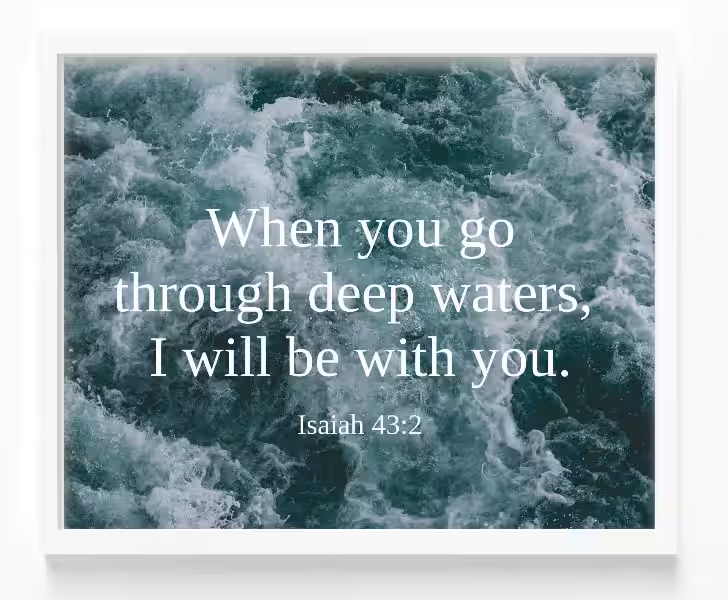
The sovereign seas offer a profound and enduring metaphor for the human spiritual journey. The act of setting sail, venturing into the unknown with only the stars and one’s inner compass to guide them, mirrors the personal quest for enlightenment or divine connection. Just as a ship can encounter calm waters and exhilarating journeys, or be battered by tempests and face the risk of capsizing, so too does the spiritual path present periods of peace and profound insight alongside challenges, doubts, and moments of crisis. The ocean’s vastness can represent the boundless nature of the divine, while its depths can symbolize the mysteries of the soul that are yet to be explored. This rich symbolism makes the sovereign seas a powerful and relatable image for anyone on a path of self-discovery.
Consider the concept of “navigating troubled waters.” This common idiom directly links the challenges of life to the experience of a mariner facing difficult conditions at sea. Similarly, the idea of “calm after the storm” speaks to the relief and peace that can follow periods of intense spiritual struggle. The ocean’s constant movement, its ebb and flow, can also symbolize the cyclical nature of life, death, and rebirth, or the dynamic interplay between the material and spiritual realms. For many, the sound of the waves is intrinsically calming, a reminder of a larger, more enduring rhythm that exists beyond our immediate concerns. This intuitive connection to the sovereign seas allows us to find solace and wisdom in its presence, using its vastness as a canvas upon which to project our deepest spiritual aspirations and understand the complexities of our inner lives.
Finding Peace and Perspective in the Presence of the Sovereign Seas
In our fast-paced, often overwhelming modern lives, the sovereign seas offer a powerful antidote to stress and anxiety. Simply being in the presence of the ocean, listening to its rhythmic roar, and feeling the spray on your face can be an incredibly grounding experience. This connection to nature, particularly to such a vast and ancient force, has been shown to promote mindfulness and reduce feelings of overwhelm. The sheer scale of the ocean puts our own problems into perspective, reminding us that we are part of something much larger and more enduring than our individual struggles. It’s a place where we can shed the burdens of everyday life and reconnect with a sense of wonder and awe, fostering a deeper appreciation for the world around us and the sovereign seas that cover so much of it.
Many spiritual retreats and contemplative practices are held in coastal locations, leveraging the inherent serenity of the environment. The sound of the waves can act as a natural mantra, aiding in meditation and introspection. Staring out at the horizon, where the sky meets the sea, can evoke feelings of boundless possibility and hope, offering a visual representation of the infinite potential that lies within each of us. This profound sense of peace and perspective is not limited to those who live by the coast; even a visit to the beach can offer a temporary respite and a reminder of the enduring power and beauty of the sovereign seas. This connection allows us to tap into a universal wellspring of tranquility, a sacred space that has always been a source of inspiration and spiritual renewal for humanity.
Frequently Asked Questions: Sovereign Seas and Religion
What is the religious significance of “Sovereign Seas”?
The term “Sovereign Seas” in a religious context often refers to the profound spiritual authority and dominion that a divine being (such as God or a deity) is believed to possess over the oceans and the entirety of creation. It can symbolize divine power, ultimate control, and the sacredness of water as a fundamental element in many creation narratives and spiritual traditions.
Are there specific religions that emphasize “Sovereign Seas”?
Many religions, particularly those with maritime histories or originating in coastal regions, have concepts that resonate with “Sovereign Seas.” Examples include:
Judaism: The creation story in Genesis describes God separating the waters, indicating His dominion. Psalms often speak of God’s power over the sea.
Christianity: The New Testament recounts Jesus calming the seas, demonstrating divine authority over nature. The imagery of the “new heavens and new earth” sometimes involves a cleansed or transformed sea.
Islam: The Quran describes Allah as the creator and sustainer of the seas, highlighting His omnipotence.
Ancient Mesopotamian Religions: Myths like Enuma Elish depict cosmic battles involving primordial sea deities, with the ultimate victor establishing order and sovereignty.
Indigenous Religions: Many coastal indigenous cultures have creation myths and spiritual beliefs centered around the ocean as a powerful, often sacred entity or domain of spirits and deities.
How does the concept of “Sovereign Seas” relate to religious rituals or practices?
The concept can influence religious rituals in several ways:
Water as a purifying agent: Many rituals involve water for cleansing, baptism, or consecration, drawing on the idea of the sea as a source of purity and divine essence.
Prayer and supplication: Sailors and coastal communities might offer prayers or make vows to a deity for safe passage or favorable seas, acknowledging divine control.
Symbolic representation: The sea can be a motif in religious art, architecture, or literature, symbolizing divine power, the vastness of the divine, or the journey of the soul.
Sacred sites: Certain springs, lakes, or coastal areas might be considered sacred due to their connection to divine power over water.
Can interpretations of “Sovereign Seas” vary within a religion?
Yes, interpretations can vary significantly. Within any given religion, different denominations, theological schools, or individual believers may emphasize different aspects of the divine’s relationship with the sea. Some might focus on its awe-inspiring power, others on its life-giving properties, and some might interpret it more metaphorically, representing the vastness of the divine mystery or the challenges of life.
Does “Sovereign Seas” have any connection to concepts of creation or apocalypse in religion?
Absolutely. In many religious traditions, the sea is a fundamental element in creation narratives, often representing the primordial chaos that a divine being brings order to. Conversely, in apocalyptic or eschatological visions, the sea can also play a role, sometimes disappearing, being calmed, or becoming a site of divine judgment or renewal. The idea of God’s ultimate sovereignty extends to these transformative periods.