When a loved one passes, the grief can be overwhelming. Amidst the sorrow, families often face the task of planning a funeral service that honors their Catholic faith while also accommodating specific circumstances. For many, the traditional Catholic funeral Mass, a cornerstone of Catholic rites, might not be the most suitable option. This is where understanding the nuances of a Catholic funeral service without Mass becomes essential. It’s a path that still deeply honors Catholic traditions and the spiritual journey of the deceased, offering solace and a meaningful farewell.
While the Mass is a central and sacred act of worship in Catholicism, the Church recognizes that other forms of liturgical and non-liturgical services can adequately commend the deceased to God’s mercy. A Catholic funeral service without Mass is not a lesser ceremony; rather, it’s a thoughtfully chosen alternative that can be just as profound and spiritually rich. Whether due to logistical constraints, the wishes of the family, or the specific pastoral situation, these services provide a framework for prayer, remembrance, and spiritual support rooted in Catholic belief.
Catholic funeral rites are designed to offer comfort to the bereaved, to celebrate the life of the deceased, and most importantly, to pray for their soul. The Church’s primary concern is the eternal rest of the departed, and every aspect of the funeral liturgy is oriented towards commending them to the loving embrace of God. This belief in purgatory and the efficacy of prayer for the dead is a fundamental tenet that underpins all Catholic funeral practices.
Even in a Catholic funeral service without Mass, these core intentions remain paramount. The prayers, readings, and rituals are all geared towards recognizing the deceased’s participation in Christ’s Paschal Mystery – His death and resurrection. The hope is that through God’s infinite mercy, the deceased will be welcomed into eternal life. This is why regardless of the format, the spiritual essence of a Catholic farewell is preserved.
Understanding the Funeral Liturgy Options
The Catholic Church offers several distinct possibilities for funeral liturgies, each with its own structure and focus. The most common and deeply cherished is the Funeral Mass, celebrated at a parish church. However, when a Mass is not feasible, the Church provides other equally valid and meaningful options. These alternatives are guided by the principles of Catholic faith and tradition, ensuring a dignified and spiritually resonant send-off.
The primary alternative to a Funeral Mass is the Funeral Liturgy Outside of Mass, often referred to as a Liturgy of the Word. This service focuses heavily on scripture readings, prayers, and a homily, all centered on God’s love and mercy. It can be celebrated in a variety of locations, such as a funeral home, a cemetery chapel, or even a private residence, offering flexibility for families with specific needs or preferences.
Components of a Catholic Funeral Service Without Mass
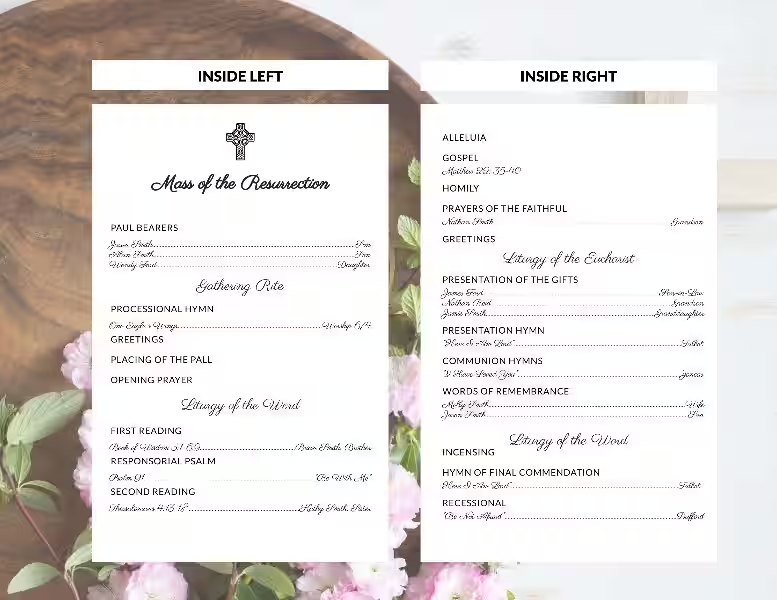
While the absence of the Eucharistic sacrifice differentiates it from a Funeral Mass, a Catholic funeral service without Mass is still rich with prayer, scripture, and reflection. It centers on the Liturgy of the Word, which provides a powerful framework for remembering the deceased and entrusting them to God. Think of it as a deeply spiritual gathering focused on God’s promises and the hope of resurrection.
Key elements typically included in a Catholic funeral service without Mass are:
Gathering Prayer: This opening prayer sets the tone, asking for God’s presence and blessing upon the service and all who are gathered. It acknowledges the grief but also the hope found in faith.
Liturgy of the Word: This is the heart of the service. It includes:
Old Testament Reading: Often a passage speaking of God’s faithfulness, comfort, or the promise of new life. For example, Isaiah 43:1-3, which speaks of God redeeming and calling us by name, is a powerful choice.
Responsorial Psalm: Sung or recited, these psalms express faith, trust, and lament, offering a communal voice of prayer and hope. Psalm 23, “The Lord is my shepherd,” is a classic choice for its comforting imagery.
New Testament Reading: Typically from the Epistles or Gospels, these readings focus on Christ’s resurrection, eternal life, and God’s love. Passages like 1 Corinthians 15:20-28, which speaks of Christ’s resurrection as the first fruits, offer profound reassurance.
Gospel Reading: A passage from the Gospels that speaks of Jesus’ teachings on life, death, and resurrection. The Gospel of John, with its themes of Jesus as the resurrection and the life, is a common and fitting selection.
Homily: The priest or deacon delivers a reflection on the scripture readings, applying them to the deceased’s life and the mystery of death and resurrection. This is a crucial moment for spiritual guidance and comfort.
Universal Prayer (Prayers of the Faithful): These are prayers offered for various intentions, including:
The deceased, asking for God’s mercy and eternal rest.
The grieving family and friends, praying for strength and peace.
The community, so that all may grow in faith and hope.
Rite of Committal: If the service is held at a funeral home or another location, it may conclude with a prayer and blessing before proceeding to the burial or cremation site for the final committal. This is the solemn act of returning the body to the earth or its final resting place.
When a Catholic Funeral Service Without Mass is Chosen
There are several reasons why a family might opt for a Catholic funeral service without Mass. Sometimes, it’s a matter of practicality. Perhaps the deceased was not a practicing Catholic, or the family has members of different faiths who may feel more comfortable with a service that doesn’t center on the Eucharist. It could also be that a priest is unavailable to celebrate Mass at the desired time or location. In other instances, the family may simply prefer a service that emphasizes scripture and prayer over the sacrificial aspect of the Mass.
Consider a scenario where a family has members who are not Catholic. A Catholic funeral service without Mass can serve as a beautiful way to honor the deceased’s faith while ensuring that all mourners feel included and spiritually supported. The focus on scripture and prayer provides universal themes of love, loss, and hope that resonate across different belief systems. This approach fosters unity and a shared experience of remembrance, even amidst diverse spiritual backgrounds.
Even in a Catholic funeral service without Mass, the presence and guidance of a priest or deacon are vital. They are ordained ministers who lead the liturgy, offering spiritual direction and prayers on behalf of the Church. Their role is to ensure that the service is conducted according to Catholic rites and that the spiritual needs of the family and the deceased are met.
The priest or deacon will select appropriate readings and prayers, deliver the homily, and preside over the Rite of Committal. They provide a pastoral presence, offering comfort and support to the grieving family. Their understanding of Catholic theology allows them to frame the deceased’s passing within the context of God’s redemptive plan, offering hope and consolation rooted in faith. For example, a deacon might lead a Catholic funeral service without Mass if a priest is geographically unavailable, ensuring the family still receives pastoral care and a properly structured liturgical experience.
Navigating the Process with Pastoral Care
Planning any funeral can be an emotionally charged experience. When opting for a Catholic funeral service without Mass, understanding the process and having clear communication with your parish priest or funeral director is key. They are there to guide you through the selections of readings, prayers, and music, ensuring that the service reflects your loved one’s life and your family’s faith.
Don’t hesitate to express your wishes and concerns. A good priest or funeral director will work with you to create a service that is both meaningful and comforting. They can explain the options available, assist with the order of service, and help you choose hymns or readings that hold special significance. Remember, this is a time for spiritual support, and pastoral care is a cornerstone of the Catholic Church’s response to loss.
Conclusion: A Faithful Farewell
A Catholic funeral service without Mass is a deeply meaningful and spiritually appropriate way to honor the life of a loved one and commend their soul to God. While the Funeral Mass is a cherished tradition, the Church offers flexible and supportive alternatives that remain firmly rooted in Catholic belief and practice. These services provide a space for prayer, remembrance, and the profound hope of resurrection.
Ultimately, the most important aspect of any Catholic funeral, whether with or without Mass, is the prayerful hope for the deceased’s eternal rest and the spiritual comfort offered to the grieving. By understanding your options and working closely with your parish and funeral director, you can ensure a dignified, faithful, and loving farewell that truly honors your departed loved one and their place in God’s eternal plan. The journey of faith continues, even after earthly life concludes, and a Catholic funeral service without Mass offers a powerful testament to that enduring hope.
Frequently Asked Questions: Catholic Funeral Service Without Mass
What is a Catholic funeral service without Mass?
A Catholic funeral service without Mass, also known as a Liturgy of the Word or a Funeral Service, is a Catholic rite that celebrates the life of the deceased and commends them to God’s mercy. It includes readings from Scripture, prayers, a homily, and eulogies. It is celebrated when a Mass is not possible or appropriate, such as when the deceased or their family are unable to attend a Mass or when the deceased was not a practicing Catholic.
When would a Catholic funeral service without Mass be held?
This type of service is often held when:
The deceased or their immediate family are unable to attend a Mass.
The deceased, while baptized Catholic, may not have been a practicing Catholic in their later years, and the family wishes for a service that reflects this.
The family chooses this option for pastoral reasons.
The circumstances make a Funeral Mass impossible or impractical.
What are the key components of a Catholic funeral service without Mass?
While it does not include the Eucharist (Communion), a Catholic funeral service without Mass typically includes:
Gathering: The community comes together to celebrate the life of the deceased.
Liturgy of the Word: Readings from the Old and New Testaments are proclaimed, followed by a homily that reflects on the readings and the life of the deceased.
Prayers of the Faithful: Intercessory prayers are offered for the deceased, their family, and all those who mourn.
Rite of Commendation: A prayer of farewell and entrustment of the deceased to God’s loving care.
Rite of Final Committal: The procession to the place of burial or cremation, where prayers are offered at the graveside or final resting place.
Eulogies or tributes to the deceased are also typically incorporated into the service.
Is this service still considered a Catholic funeral?
Yes, a funeral service without Mass is still a recognized and valid Catholic funeral rite. It adheres to the teachings and prayers of the Catholic Church, focusing on commending the soul of the deceased to God and offering comfort and hope to the bereaved. The absence of Mass does not diminish its spiritual significance within the context of Catholic tradition.
Do Catholics believe in cremation?
The Catholic Church permits cremation, provided that it does not indicate outright denial of the resurrection of the body. The ashes are to be treated with the same respect given to the deceased’s body. The Church prefers that the body be present for the funeral rites, but when cremation takes place beforehand, the funeral rites are celebrated with the cremated remains.
What is the purpose of a Catholic funeral?
The primary purposes of a Catholic funeral are:
To commend the soul of the deceased to God’s mercy and love.
To celebrate the life of the deceased and give thanks for their gifts.
To offer comfort and hope to the grieving family and friends through prayer and the proclamation of the Gospel.
To affirm Christian belief in the resurrection of the dead and the hope of eternal life.