The lifeblood of any vibrant community, be it secular or spiritual, often lies in its structure. For those involved in the intricate tapestry of religious life, understanding the church organization chart is not merely an administrative detail; it’s a gateway to comprehending how faith is lived out, ministered, and sustained. This chart, a visual representation of roles, responsibilities, and reporting lines, acts as the backbone, ensuring that the spiritual mission is carried out effectively and efficiently. Whether you’re a newcomer seeking to understand where you fit in, a long-time member curious about leadership, or someone exploring the mechanics of religious bodies, delving into your church’s organizational framework offers profound insights into its operational heartbeat.
Think of a church organization chart like the blueprint of a magnificent cathedral. You see the stunning architecture, the soaring spires, and the beautiful stained glass, but beneath the surface, a complex network of foundations, support beams, and intricate wiring makes it all possible. Similarly, this chart maps out the essential components that enable a church to function, from preaching and teaching to outreach, pastoral care, and financial stewardship. It clarifies who leads, who supports, and how different ministries collaborate to serve both the congregation and the wider world.
The Foundational Pillars: Leadership and Governance
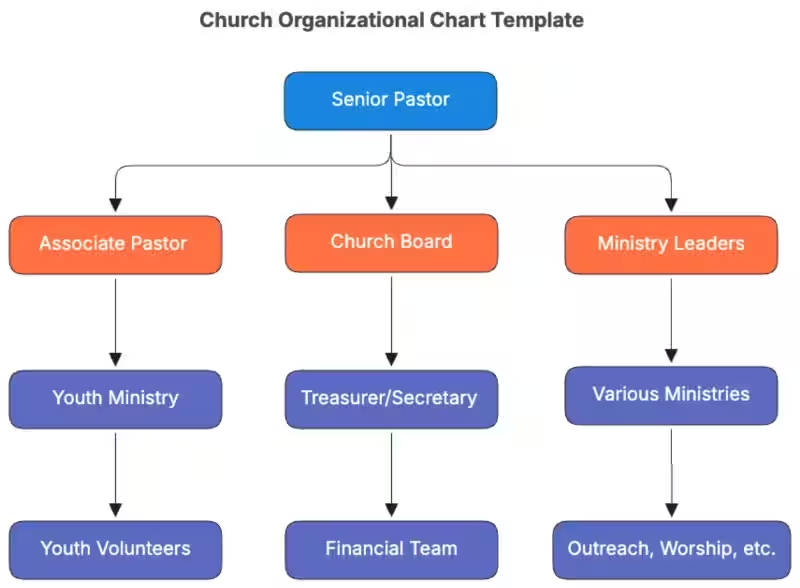
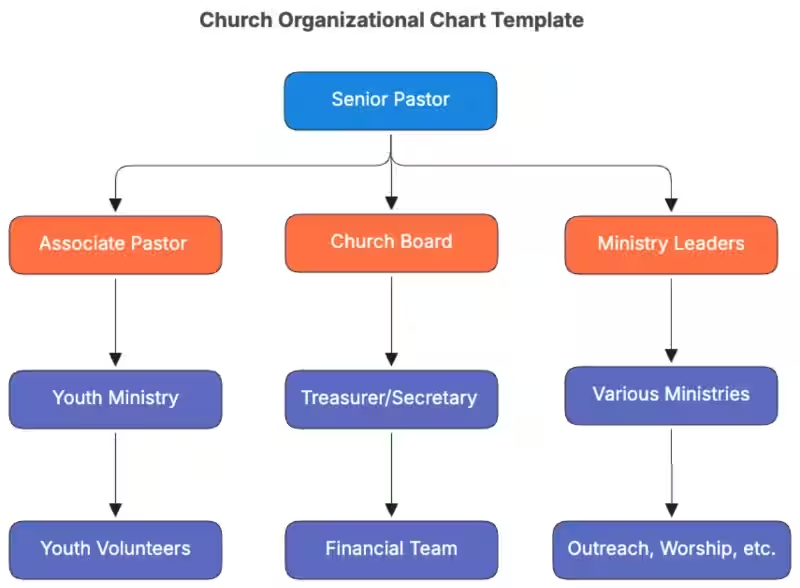
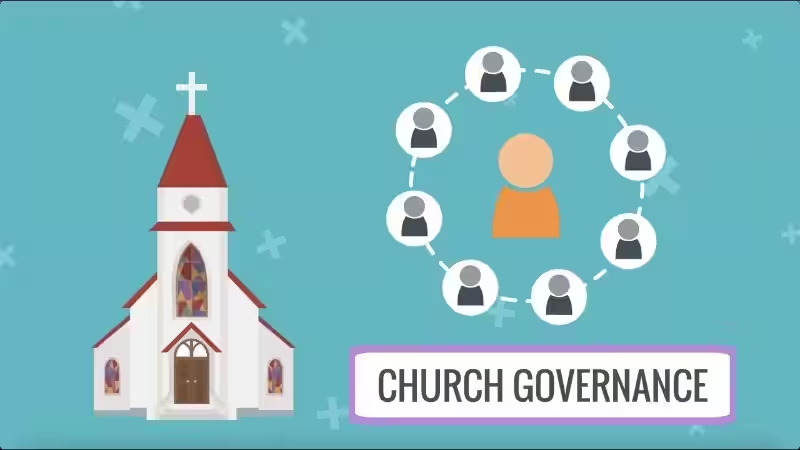
At the apex of most church organization charts reside the leadership and governance structures. This is where the vision is set, major decisions are made, and the spiritual direction of the community is guided. Depending on the denomination and specific church polity, this can take various forms, including a Senior Pastor, a Board of Elders, a Vestry, or a Presbytery. These individuals or groups are entrusted with the weighty responsibility of ensuring the church remains true to its core beliefs and effectively pursues its mission. Their roles are crucial in fostering unity, promoting spiritual growth, and providing ethical oversight.
For instance, in a congregational model, the church organization chart might show the Senior Pastor reporting directly to a democratically elected Board of Deacons or Trustees. This board acts as the primary governing body, responsible for fiscal management, property oversight, and supporting the pastoral staff. Conversely, in a hierarchical system, the Senior Pastor might be part of a larger regional or national structure, with their authority and responsibilities clearly defined within that broader framework. Understanding these leadership roles is vital for congregational members to know who to approach for guidance or to voice concerns, fostering transparency and accountability within the faith community.
Pastoral Care and Ministry Teams: The Hands and Feet of Service
Beneath the overarching leadership, the church organization chart branches out into various ministry teams and departments, often headed by pastors or appointed leaders. These teams are the engines of practical ministry, embodying the church’s commitment to serving its members and the community. We see here the Pastoral Care team, responsible for the spiritual well-being of individuals, offering counsel, visiting the sick, and providing comfort during times of crisis. Their work is often deeply personal and vital to the health of the congregation.
Other key areas often depicted on a church organization chart include Worship and Music, ensuring that services are spiritually uplifting and engaging; Education and Discipleship, focused on teaching and spiritual formation for all ages; Children’s and Youth Ministries, nurturing the faith of the next generation; Outreach and Missions, extending the church’s love and service beyond its walls; and Administration and Finance, managing the practical resources that enable all these ministries to flourish. Each of these teams, though distinct, operates interdependently, relying on the support and collaboration of others to achieve the church’s overarching goals. For example, the Finance team might allocate funds for the Youth Ministry’s summer camp, while the Worship team might feature a testimony from a recent mission trip supported by Outreach. This interconnectedness is a hallmark of a healthy church – a testament to the combined efforts of many individuals working towards a shared purpose.
The Pillars of Support: Administration and Operations
No organization can thrive without robust administrative and operational support, and a church organization chart invariably reflects this crucial aspect. This section often outlines the individuals and committees responsible for the day-to-day functioning of the church, ensuring that resources are managed wisely and that the infrastructure is in place to support ministry. This might include roles like a Church Administrator, Treasurer, Secretary, or a Building and Grounds Committee, all of whom play a silent yet indispensable role in the church’s success.
Consider the church organization chart as a complex organism where the administrative functions are akin to the circulatory system. They ensure that essential resources, like financial contributions, are collected, accounted for, and distributed to where they are needed most. This includes everything from paying utilities and staff salaries to funding mission projects and supporting educational programs. Without efficient financial oversight and administrative processes, the vibrant ministries depicted elsewhere on the chart would struggle to operate effectively. A well-defined administrative structure also ensures transparency and accountability, building trust within the congregation and demonstrating responsible stewardship of God’s blessings.
Volunteers and Committees: The Dynamic Force of Engagement
A significant and often beautifully complex part of any church organization chart involves the myriad of volunteer positions and committees that form the active workforce of the faith community. These are the individuals who dedicate their time, talents, and energy to bringing the church’s mission to life. From serving on the Welcome Committee to organizing community outreach events, these volunteers are the heartbeat of engagement, embodying the spirit of service and fellowship. Their contributions are invaluable, often forming the backbone of specific ministries.
The church organization chart might not always detail every single volunteer role, but it will typically outline the major committees or task forces. For example, a “Benevolence Committee” might be listed, detailing its responsibility for assisting those in need within and outside the congregation. Similarly, a “Communications Committee” could be responsible for managing the church newsletter, website, and social media presence. These committees provide a structured avenue for congregants to get involved, offering a sense of belonging and purpose. When you see these on a church organization chart, it’s an invitation to consider where your own unique gifts might best serve the community. Think of it as a menu of opportunities to contribute to the collective good of the church family.
The Interconnectedness of Faith and Structure
Ultimately, the church organization chart is more than just a hierarchical diagram; it’s a visual testament to the interconnectedness of faith and structure. It illustrates how a community of believers organizes itself to live out its calling, to love and serve God and neighbor. By understanding this framework, individuals can gain a deeper appreciation for the intricate workings of their church and identify avenues for more meaningful participation. It allows for clarity in roles, fostering a sense of shared responsibility and collective impact.
Whether you’re examining the top leadership, the dedicated ministry teams, or the essential administrative functions, the church organization chart reveals the deliberate design behind the church’s mission. It highlights how different parts work together, much like a well-coordinated orchestra, to produce a harmonious and impactful expression of faith. Recognizing these connections encourages a more informed and engaged approach to church life, transforming passive membership into active discipleship and contribution. The chart serves as a practical guide, empowering every member to understand their place in the grander scheme of spiritual service and community building.
Frequently Asked Questions about Church Organization Charts
What is a church organization chart?
A church organization chart is a visual representation of the structure and hierarchy within a church or religious denomination. It outlines the various leadership roles, departments, committees, and ministry teams, as well as the reporting relationships between them.
The specific roles will vary greatly depending on the size, denomination, and operational model of the church.
How is a church organization chart different from a business organization chart?
While both use similar visual structures, the primary difference lies in their ultimate purpose and guiding principles. Business charts focus on profit, market share, and operational efficiency. Church charts, while also valuing efficiency and effectiveness, are fundamentally guided by spiritual principles, discipleship, pastoral care, and fulfilling the church’s mission as defined by its faith and doctrine. Leadership in a church context is often seen as service rather than strict authority.
Can a church organization chart be flexible?
Yes, church organization charts should ideally be flexible. As a church grows and its needs evolve, its structure may need to adapt. The chart should be a living document that can be reviewed and adjusted to best serve the congregation and its mission, while still maintaining core spiritual leadership and governance principles.
What is the role of the congregation in relation to the organization chart?
The congregation is the body of believers that the church serves and is a part of. While the organization chart outlines leadership and ministry structures, the congregation often participates through volunteering, attending services and events, financial support, and sometimes through governance roles depending on the church’s polity (e.g., congregational voting). The organization chart exists to facilitate the church’s ministry to and with the congregation.