Across the vast tapestry of human experience, a recurring motif emerges – the concept of a heavenly temple. This isn’t merely a denomination-specific structure; it’s a profound archetype, a luminous sanctuary found within the hearts of diverse religious traditions. Whether envisioned as a physical edifice in the afterlife, a state of spiritual consciousness, or a sacred space on Earth imbued with divine presence, the heavenly temple serves as a potent symbol of our yearning for connection with the ultimate reality, the divine source that underpins existence.
For millennia, humanity has sought to understand and commune with the transcendent. This fundamental human drive has manifested in countless ways, but the heavenly temple stands as one of the most enduring and universally recognized metaphors for this sacred pursuit. It represents a place of ultimate peace, perfect understanding, and unconditional love, a realm where the earthly struggles and limitations fall away, and pure spirit reigns. This article will explore the multifaceted nature of the heavenly temple across various religions, highlighting its unifying themes and its profound relevance to our spiritual journeys.
The Heavenly Temple in Religious Traditions: A Sacred Architecture of Faith
The notion of a heavenly temple is deeply woven into the fabric of many major world religions, each offering its unique architectural blueprint for this divine abode. From the gleaming spires of celestial cities to the innermost chambers of the soul, these visions provide a tangible representation of ultimate spiritual fulfillment. Understanding these diverse interpretations can offer us a richer appreciation for the common threads that bind humanity in its quest for the sacred.
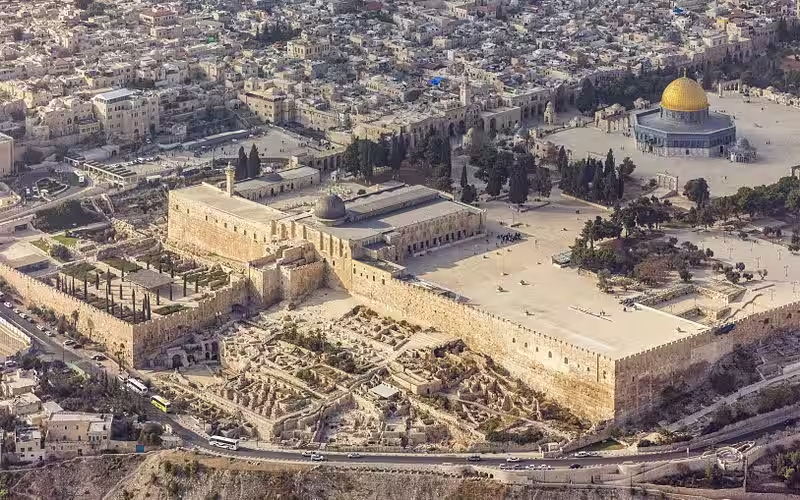
In Judaism, the concept of the heavenly temple finds a profound echo in the earthly Temple in Jerusalem, a place meant to be a dwelling for God’s presence. While the physical structures have been destroyed and rebuilt throughout history, the idea of a sacred, divinely appointed space where humanity can connect with the Almighty remains central. For many observant Jews, the study of Torah and the practice of Mitzvot (commandments) are considered acts that bring one closer to this divine presence, effectively creating a personal heavenly temple within their lives.
Christianity’s Vision of the Heavenly Temple
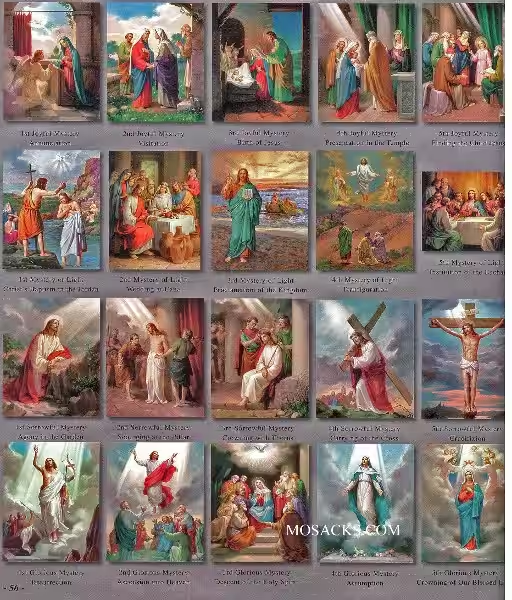
Within Christianity, the heavenly temple is often depicted as the ultimate dwelling place of God and the saints. The Book of Revelation paints a vivid picture of a New Jerusalem, a city of pure gold and precious jewels, where there is no temple because God himself and the Lamb are its temple. This imagery suggests a state of perfect communion, where the divine presence is so pervasive that a separate structure is unnecessary. It speaks to a future state of spiritual purity and eternal fellowship, a heavenly temple of pure being.
Furthermore, Christian theology often speaks of the believer’s body as a heavenly temple, a temple of the Holy Spirit. This perspective transforms the concept from a distant, ethereal location to an intimate, personal reality. It emphasizes the importance of living a life that honors God, keeping our inner selves pure and welcoming the divine presence within. This internalized heavenly temple is cultivated through prayer, worship, and righteous living, making our earthly existence a sacred space.
Islam and the Divine Presence
In Islam, the concept of a heavenly temple is intrinsically linked to the Kaaba in Mecca, considered the “House of God” (Bayt Allah). Pilgrims journey from all corners of the world to circumambulate the Kaaba, a profound act of devotion and submission. While the Kaaba is a physical structure, its significance transcends the material, representing a focal point for the entire Muslim community and a tangible manifestation of God’s presence on Earth. This earthly heavenly temple serves as a reminder of our unity and our shared devotion.
Beyond the Kaaba, the ultimate heavenly temple in Islam is understood as Jannah, or Paradise, a realm of eternal bliss and divine pleasure. Descriptions of Jannah often involve magnificent gardens, flowing rivers, and unparalleled beauty, all within the presence of Allah. This spiritual paradise is the ultimate aspiration for believers, a place where all earthly desires are fulfilled in the divine light, a heavenly temple of perfect peace and divine communion.
Buddhism and the Inner Sanctuary
While Buddhism may not use the term “temple” in the same architectural sense as other religions, the concept of a heavenly temple resonates deeply within its teachings, particularly in the idea of enlightenment and the purification of the mind. The ultimate goal of Buddhist practice is Nirvana, a state of liberation from suffering and the cycle of rebirth. This state can be understood as an inner heavenly temple, a serene and unconditioned space within the mind that is free from all defilements.
Meditation and mindfulness practices are the pathways to discovering this inner heavenly temple. By cultivating awareness, compassion, and wisdom, Buddhists aim to quiet the noise of the ego and the external world, uncovering the inherent purity and tranquility of their true nature. This internal sanctuary, free from the illusions of the material world, is a heavenly temple of profound peace and understanding, accessible to all who diligently practice.
The Universal Significance of the Heavenly Temple
Regardless of the specific religious framework, the heavenly temple consistently embodies several universal themes that resonate with the human spirit. It represents a sanctuary, a place of refuge and safety from the storms of life. It signifies divine presence, a tangible or felt connection with a power greater than ourselves, offering solace and guidance. Moreover, it is a symbol of ultimate truth and perfection, a vision of a reality unmarred by imperfection, inspiring us to strive for higher ideals.
The heavenly temple also serves as a powerful motivator for spiritual growth. The aspiration to one day enter or experience this sacred realm encourages individuals to live lives of virtue, kindness, and devotion. It provides a framework for understanding the purpose of existence – to cultivate our souls and prepare ourselves for a higher state of being. Whether through prayer, meditation, service, or ethical conduct, the journey towards the heavenly temple is a journey of self-transformation.
Cultivating Our Own Heavenly Temple
The idea of a heavenly temple isn’t solely about a future reward; it’s also about how we can imbue our present lives with sacredness. We can cultivate our own personal heavenly temple through conscious intention and practice. This involves creating spaces for reflection and prayer, dedicating time to spiritual learning, and nurturing compassionate relationships. It means treating our bodies and minds as sacred vessels, worthy of care and respect.
Think of it this way: just as a physical temple requires diligent upkeep and devotion to remain a sacred space, our inner heavenly temple demands consistent attention. Regular meditation can clear the mental clutter, Acts of kindness can purify our intentions, and Moments of gratitude can elevate our spirits. By actively engaging in these practices, we make our lives a living testament to the divine, transforming the ordinary into the extraordinary. The journey to the heavenly temple begins here and now, within us.
The Heavenly Temple as a Source of Hope and Unity
In a world often fractured by division and conflict, the concept of the heavenly temple offers a powerful beacon of hope and a unifying principle. It reminds us of our shared humanity and our common yearning for peace and transcendence. While the paths may differ, the destination – a state of divine connection and ultimate fulfillment – is a universal aspiration. The heavenly temple transcends cultural and religious boundaries, speaking to the deepest longings of every soul.
By recognizing the heavenly temple as a shared ideal, we can foster greater understanding and respect among different faith traditions. Instead of focusing on the distinctions, we can celebrate the common ground, the universal desire for something greater than ourselves. This shared vision can inspire us to work together for a more peaceful and harmonious world, a world that reflects the divine qualities of the heavenly temple itself. Ultimately, the pursuit of the heavenly temple is a journey towards collective spiritual awakening.
Frequently Asked Questions about Heavenly Temple Religion
What is Heavenly Temple religion?
Heavenly Temple is a religion that centers on the belief in a divine realm known as the Heavenly Temple, which is considered the ultimate spiritual destination and the dwelling place of benevolent deities and enlightened beings. Followers strive to live a life of virtue, compassion, and spiritual discipline to attain eventual union with this divine realm.
What are the core beliefs of Heavenly Temple religion?
Core beliefs typically include the existence of a supreme divine presence, the importance of cultivating inner peace and moral conduct, the concept of karma and reincarnation, and the pursuit of spiritual enlightenment through dedicated practice. The Heavenly Temple itself is seen as a representation of ultimate peace, harmony, and divine love.
What are the main practices in Heavenly Temple religion?
Practices can vary but often include meditation, prayer, chanting, communal worship services, acts of selfless service (seva), study of sacred texts, and adherence to ethical principles such as honesty, kindness, and non-violence. Pilgrimages to significant spiritual sites may also be a part of their practice.
Who are the deities or spiritual figures worshipped in Heavenly Temple religion?
While there may be a supreme, formless divine aspect, specific deities or enlightened beings are often revered as guides, protectors, or exemplars of divine qualities. These figures are typically viewed as benevolent entities who assist humanity on its spiritual journey.
What is the ultimate goal for followers of Heavenly Temple religion?
The ultimate goal is to achieve spiritual liberation or enlightenment, often described as merging with the divine essence of the Heavenly Temple. This state is characterized by ultimate peace, freedom from suffering, and eternal bliss.
Is Heavenly Temple religion an organized institution?
Heavenly Temple religion can manifest in various forms, from organized congregations and temples with established leadership and rituals to more individualistic spiritual paths. The structure can be decentralized, with a focus on personal spiritual growth and community support.
Are there specific sacred texts associated with Heavenly Temple religion?
Many spiritual traditions draw upon a body of sacred texts. In Heavenly Temple religion, these might include ancient scriptures, philosophical writings, or divinely inspired teachings that offer guidance on spiritual principles, ethical living, and the path to enlightenment.
How does Heavenly Temple religion approach life after death?
Beliefs about the afterlife often involve a continuation of the soul’s journey. This can include concepts of reincarnation, where the soul is reborn into different forms based on its karma, with the ultimate aim of progressing towards the Heavenly Temple.
Can people of other faiths practice elements of Heavenly Temple religion?
While the religion has its distinct tenets, many spiritual paths encourage the adoption of universal virtues like compassion and mindfulness. Followers of Heavenly Temple religion often welcome individuals who resonate with its core values and seek spiritual growth, fostering an inclusive environment for seekers.