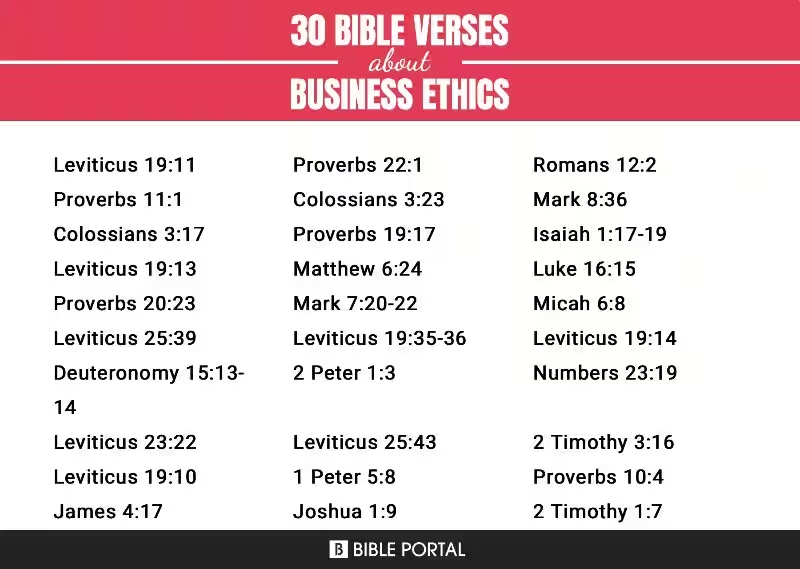
In today’s fast-paced and often cutthroat business world, the pursuit of profit can sometimes overshadow the importance of integrity and fairness. Many professionals grapple with the question of how to conduct their business dealings in a way that aligns with their values, particularly if those values are rooted in faith. For Christians, this isn’t a novel challenge; the Bible, far from being a relic of the past, offers profound and practical wisdom on ethical conduct in every sphere of life, including the marketplace. These ancient texts provide a timeless framework for building a business on solid moral ground, fostering trust, and ultimately, honoring God through our work.
The pursuit of wealth and success is not inherently wrong in the eyes of faith. The Bible acknowledges the reality of commerce and the need for diligent work. However, it consistently emphasizes that the how of our business practices is as crucial as the what. It’s about more than just making money; it’s about how we make it, who we impact, and the principles that guide our decisions. This article will delve into key Bible verses that illuminate the path of ethical business practices, offering practical insights and relatable examples to help you build a business that is both prosperous and principled.
At the heart of ethical business is a commitment to honesty. In a world where exaggerations and half-truths can seem like minor transgressions, the Bible calls for a higher standard of unwavering truthfulness. This principle extends to all our interactions, from advertising our products to negotiating deals and managing our finances.
The Proverbs, a book rich with practical wisdom, repeatedly stresses the importance of honesty. For instance, Proverbs 11:1 states, “A false balance is an abomination to the Lord, but a just weight is his delight.” This verse speaks directly to the practice of deception in trade. Imagine a merchant who consistently short-changes customers or uses a scale that’s rigged in their favor. This isn’t just bad business; it’s a moral failing that goes against divine principles. In a modern context, this could manifest as misleading advertising, inflating prices deceptively, or providing deliberately vague information about a product or service. The Bible urges us to be transparent and forthright, ensuring our dealings are characterized by integrity.
Another powerful reminder comes from Colossians 3:9, which instructs believers to “do not lie to each other, since you have taken off your old self with its practices.” This highlights that ethical business is not a separate compartment of life but an integral part of living out one’s faith. It means actively choosing to be truthful, even when a lie might seem easier or more profitable in the short term. Consider the small business owner who faces a difficult decision about a product defect. Instead of hiding the issue, they choose to be upfront with their customers, offering a refund or replacement. This honesty, while potentially costly in the moment, builds long-term trust and reinforces their reputation for credibility.
Beyond mere honesty, the Bible places a strong emphasis on fairness and justice in all our dealings. This means treating everyone with respect and ensuring that our business practices do not exploit or disadvantage others. It calls for a conscious effort to ensure that our pursuit of profit does not come at the expense of the well-being of employees, customers, or the community.
The Old Testament prophets frequently condemned injustice in the marketplace. Amos 8:4-6 vividly describes the plight of those who were oppressed by unethical business practices: “Hear this, you who trample on the needy and crush the poor of the land… you sell the needy for silver and the poor for a pair of sandals, even crushing the head of the poor into the dust of the earth and thrusting the helpless aside.” While this passage paints a stark picture of ancient exploitation, its message resonates powerfully today. It warns against practices that prey on the vulnerable, such as charging exorbitant interest rates to those in desperate need, exploiting workers with unfair wages, or profiting from shoddy or dangerous goods.
Jesus himself demonstrated a commitment to justice. He overturned the tables of money changers in the temple, not because commerce was inherently evil, but because their practices had become exploitative and dishonorable. This act signifies a divine displeasure with any business that becomes a “den of robbers” rather than a place of legitimate exchange. For us, this translates to ensuring that our pricing is reasonable, our wages are fair, and our working conditions are safe. It means recognizing the inherent dignity of every person we interact with in business and striving to create win-win situations rather than exploitative ones.
The Virtue of Generosity and Stewardship
Ethical business is not solely about avoiding wrongdoing; it also encompasses positive actions like generosity and responsible stewardship. The Bible teaches that what we have, whether it be wealth, resources, or talent, is ultimately a gift from God, and we are called to manage it wisely and generously. This includes sharing blessings with those in need and investing in ways that benefit society.
The concept of tithing and giving is a recurring theme throughout scripture. While often associated with church giving, the principle extends to our broader financial practices. 1 Corinthians 16:2 encourages believers to “set aside a sum of money in keeping with your income, as you prosper.” This suggests that as our businesses thrive, so should our capacity for generosity. For a business owner, this could mean setting aside a portion of profits for charitable giving, supporting community initiatives, or investing in the development and well-being of their employees.
Furthermore, the Bible speaks of being good stewards of what we have been given. This implies responsible management of resources, avoiding waste, and using our influence for good. Matthew 25:14-30, the parable of the talents, illustrates the importance of using our gifts and resources productively and faithfully. A business owner who invests in sustainable practices, treats their employees with care, and contributes positively to the economy is acting as a good steward. It’s about recognizing that success is not just about personal accumulation but about wise management and purposeful impact.
Integrity in Every Interaction: A Practical Application
Applying these biblical principles to the daily grind of business might seem daunting, but it’s about cultivating a mindset of integrity that permeates every interaction. It’s a continuous process of making conscious choices that align with our faith.
Consider a marketing team developing a new advertising campaign. Instead of resorting to sensationalism or making unsubstantiated claims, they focus on accurate representation of the product’s benefits. They might ask themselves, “Would I be comfortable with my grandmother seeing this ad?” This simple question can be a powerful filter for ensuring truthfulness and avoiding manipulative tactics. The goal is to build customer loyalty through trust, not through deceptive promises.
In the realm of employee relations, fostering a fair and supportive environment is paramount. This means paying fair wages, providing safe working conditions, and offering opportunities for growth. When a company consistently treats its employees with respect and dignity, it not only reflects ethical business practices but also cultivates a more motivated and productive workforce. The verse, “Do to others what you would have them do to you” (Matthew 7:12), serves as a powerful reminder in all employer-employee relationships. It’s about empathy and recognizing the shared humanity in the workplace.
Conclusion: Building a Business with Purpose and Principle
The Bible offers a comprehensive and timeless guide to ethical business practices. It’s not about rigid rules but about cultivating a heart of integrity, fairness, and generosity that informs every decision. By grounding our business endeavors in these divine principles, we can move beyond simply pursuing profit to building ventures that have a positive impact, foster trust, and ultimately, bring honor to our faith.
Living out these principles in the marketplace is a journey, not a destination. It requires prayer, reflection, and a willingness to learn and adapt. As we navigate the complexities of the business world, let us remember that our actions speak volumes. By embracing biblical ethics, we can create businesses that are not only economically successful but also morally sound, leaving a legacy of integrity and purpose. This commitment to ethical conduct, guided by scripture, can transform our businesses from mere commercial enterprises into vehicles for positive change and divine reflection.
Frequently Asked Questions: Bible Verses About Business Ethics
What does the Bible say about honesty in business?
Several Bible verses emphasize the importance of honesty in all dealings, including business. Proverbs 11:1 states, “False scales are an abomination to the Lord, but a just weight is his delight.” This highlights that deception in trade is displeasing to God. Similarly, Leviticus 19:36 instructs, “You shall have just balances, just weights, just measures, or just hin: I am the Lord your God, who brought you out of the land of Egypt.” This command underscores the need for fairness and integrity in every commercial transaction.
Does the Bible address fair wages and treatment of employees?
Yes, the Bible speaks to the ethical treatment of workers. James 5:4 warns, “Behold, the wages of the laborers who mowed your fields, which you have kept back by fraud, cry out; and the cries of those who harvested have reached the ears of the Lord of hosts.” This verse condemns withholding fair compensation. Deuteronomy 24:14-15 also states, “You shall not oppress a hired servant who is poor and needy, whether he is one of your brothers or one of the sojourners who are in your land within your towns. You shall give him his wages on his day, before the sun sets (for it is poor and he needs it), lest he cry against you to the Lord, and you be guilty of sin.” This emphasizes prompt and just payment.
What are the biblical perspectives on greed and covetousness in business?
The Bible strongly cautions against greed and covetousness. Luke 12:15 warns, “Take care, and be on your guard against all covetousness, for one’s life does not consist in the abundance of his possessions.” Jesus also spoke in parables, like the rich fool in Luke 12:16-21, to illustrate the folly of accumulating wealth without regard for God or others. 1 Timothy 6:10 states, “For the love of money is a root of all kinds of evils. It is through this craving that some have wandered away from the faith and pierced themselves with many pangs.” This highlights the destructive nature of an excessive desire for wealth.
How does the Bible view borrowing and lending?
The Bible offers guidance on financial responsibility regarding debt. Proverbs 22:7 famously says, “The rich rules over the poor, and the borrower is the slave of the lender.” This illustrates the potential burden of debt. While not always condemning borrowing, it encourages careful consideration and responsible repayment. The concept of usury, or excessive interest, is also addressed, with verses like Exodus 22:25 discouraging exploitation of the needy through lending.
What does the Bible say about fulfilling contracts and keeping promises in business?
Fulfilling agreements and keeping promises are foundational to biblical business ethics. Matthew 5:37, as part of Jesus’ teachings, states, “Let what you say be simply ‘Yes’ or ‘No’; anything beyond this is from the evil one.” This principle extends to business agreements, implying that a verbal or written commitment should be honored. Psalms 15:4 also describes a righteous person as one who “swears to his neighbor even to his own hurt and does not change.” This emphasizes commitment and integrity in one’s word.