The concept of a papal blessing is one that resonates deeply within the Catholic faith, carrying with it a profound spiritual weight. While often associated with specific occasions and formal pronouncements, understanding the papal blessing schedule can offer a tangible way for believers to connect with the heart of the Church and the ministry of the Pope. It’s not merely a decorative scroll or an item for a display cabinet; it’s a tangible symbol of God’s grace, transmitted through the Vicar of Christ himself. For many, receiving or witnessing a papal blessing is a profound spiritual experience, a moment of grace that can be sought, treasured, and integrated into the fabric of their devotional lives.
The papal blessing schedule, while not a rigid, daily calendar of events like a typical diary, is intrinsically linked to the rhythm of the liturgical year and significant papal activities. This means that understanding when and how these blessings are typically imparted requires a broader awareness of the Church’s life and the Pope’s public ministry. Whether it’s a blessing bestowed upon a large gathering during a public audience, a special prayer offered for a particular cause, or the more formal blessing accompanying a signed document, each instance carries its own unique significance and spiritual potency.
At its core, a papal blessing is a prayer and an invocation of God’s favor and protection, offered by the Pope, who serves as the Successor of Saint Peter and visible head of the Catholic Church. This blessing is not a magical incantation, but rather a sacramental, a visible sign of an invisible grace. It’s an expression of the Church’s love and concern for its members, a reminder of their connection to the universal Church and its spiritual leadership. The words themselves, often invoking the Trinity, are steeped in tradition and theological meaning, aiming to strengthen faith, encourage virtue, and offer solace.
The authority behind a papal blessing stems from the Pope’s office. He is seen as the chief shepherd, entrusted by Christ to guide and nourish the flock. Therefore, his prayers and blessings are believed to carry a special efficacy, a direct channel of God’s mercy. This is why a papal blessing can be a source of immense comfort and spiritual strength, especially during times of trial, celebration, or significant life events. It’s like receiving a parent’s heartfelt prayer, amplified by the spiritual authority of the Pope.
Types of Papal Blessings and Their Contexts
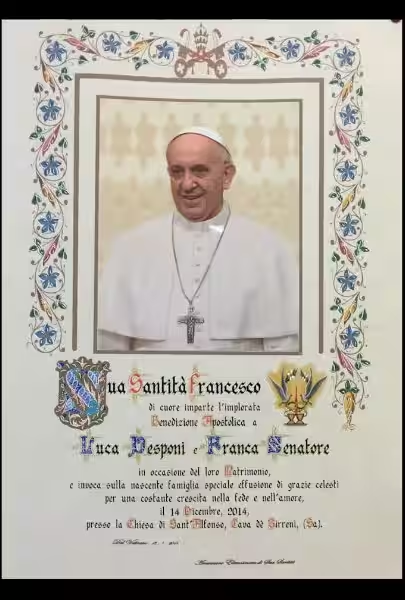
Papal blessings can manifest in various forms, each with its own context and purpose. The most commonly recognized might be the apostolic blessing, often granted on parchment and requested for specific occasions like anniversaries, ordinations, First Communions, or even for the dearly departed. These are typically requested through the Apostolic Penitentiary, a Vatican office. The process involves submitting a formal request, often through a parish or a diocese, detailing the occasion and the individuals for whom the blessing is sought. The resulting document, beautifully calligraphed, serves as a cherished memento and a spiritual reminder of the Pope’s prayerful support.
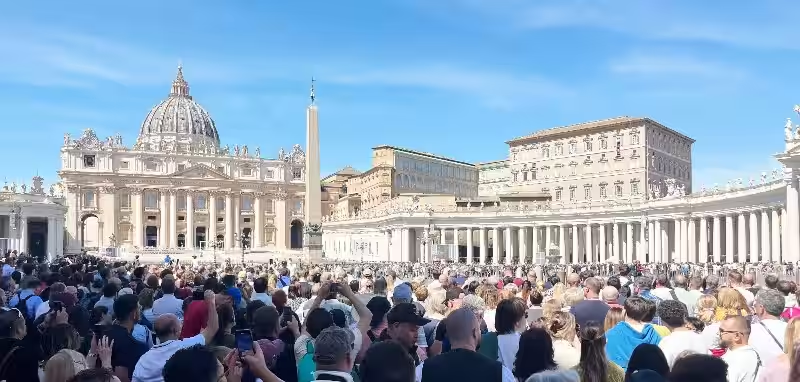
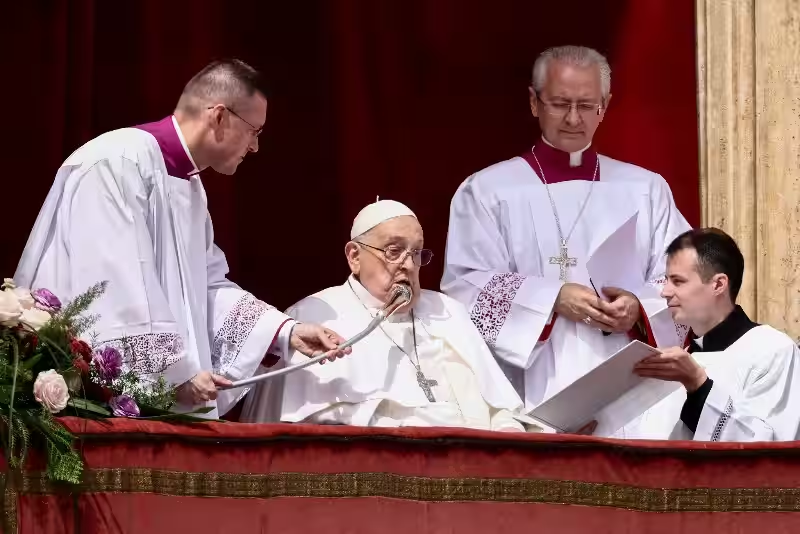
Beyond these formal documents, there are also blessings imparted directly during papal events. Think of the Pope’s public audiences in St. Peter’s Square, where he often extends his hands and offers a general blessing to the assembled faithful. Christmas and Easter blessings, delivered “Urbi et Orbi” (to the City and to the World), are perhaps the most globally recognized examples, reaching millions through television and radio. These public blessings reinforce the Pope’s role as a spiritual father to all Catholics worldwide, offering universal prayers for peace, unity, and salvation. Understanding the papal blessing schedule in this broader sense helps one appreciate the Pope’s constant engagement with the faithful.
Navigating the Papal Blessing Schedule: Practical Considerations
For those wishing to obtain a formal apostolic blessing for a special occasion, understanding the practicalities of the papal blessing schedule is key. The Apostolic Penitentiary processes these requests, and while there isn’t a “daily papal blessing schedule” in the sense of public availability, there are established procedures. Requests are generally made several months in advance to allow for processing and mailing. This timing is crucial; imagine planning a wedding and needing to book a venue a year in advance – similar foresight is needed for a papal blessing to ensure it arrives on time for your significant event.
The timing of the Pope’s own schedule also influences the processing of these blessings. During periods of intense papal travel, major liturgical celebrations, or significant Vatican events, there might be slight delays. Therefore, it’s always advisable to consult the official Vatican website or your local diocese for the most up-to-date information regarding application timelines and any potential adjustments to the usual papal blessing schedule. This proactive approach ensures that your request is handled efficiently and that your blessing arrives when you need it most.
When Can You Expect a Papal Blessing?
Papal blessings are intrinsically linked to the papal blessing schedule of major liturgical feasts and significant events. For instance, blessings are prominently featured during Christmas and Easter, with the Pope imparting the Urbi et Orbi blessing. These are global events, broadcast and witnessed by millions. During the Advent and Lenten seasons, the Pope often offers specific prayers and blessings related to the themes of preparation and penance.
Individual blessings, as mentioned, require a formal request. The processing time can vary, but generally, allow at least two to three months. This means if you’re celebrating a golden anniversary in December, you should ideally submit your request by September or October. The papal blessing schedule for these formal blessings is thus managed through the Apostolic Penitentiary’s administrative processes, ensuring that each request is given due consideration. It’s a tangible connection to the Pope’s prayer, a spiritual gift that requires a bit of planning on our part.
Receiving a papal blessing, whether in person or through a formal document, is a deeply spiritual experience for many Catholics. It serves as a powerful reminder of their faith, their belonging to a global Church, and the ongoing prayers of the Holy Father. For individuals facing challenges, a papal blessing can be a source of immense strength and encouragement. It’s a tangible sign that they are not alone in their struggles, but are held in the prayers of Christ’s Vicar.
The papal blessing schedule, in its broader sense, also highlights the Pope’s constant pastoral care for the Church. His public appearances, his messages, and his prayers are all aimed at guiding and strengthening the faithful. Even for those who may never have the opportunity to meet the Pope or request a formal blessing, witnessing or hearing about these acts of prayerful support can be profoundly uplifting. It reinforces the unity of the Church and the enduring power of prayer, connecting us to the heart of our faith through the ministry of the Pope.
Making the Most of a Papal Blessing
When you receive a papal blessing, whether it’s a formal document or a blessing imparted during a public event, consider it an invitation to deeper prayer and reflection. Take the time to read the words carefully, to meditate on their meaning, and to offer your own prayers in response. Frame the document as a reminder of God’s grace and the Pope’s intercession. For those who receive a blessing in person, cherish the moment and allow it to strengthen your faith and commitment to living out Christ’s teachings.
Understanding the papal blessing schedule is not just about logistics; it’s about appreciating the spiritual opportunities available within the Church. It’s about recognizing that these blessings are gifts, meant to enrich our spiritual lives and draw us closer to God. Whether you are celebrating a milestone, praying for a loved one, or simply seeking spiritual encouragement, a papal blessing can be a profound source of grace. It’s a way to feel directly connected to the universal Church and its spiritual leader, a testament to the enduring power of faith and prayer.
Frequently Asked Questions about Papal Blessings
What is a Papal Blessing?
A Papal Blessing is a special prayer and sacramental that is imparted by the Pope or on his behalf. It is a symbol of the Pope’s pastoral care and a tangible connection to the Church’s highest authority.
Can I request a Papal Blessing for a specific occasion?
Yes, Papal Blessings can be requested for a variety of occasions, including:
* Baptisms
* First Communions
* Confirmations
* Weddings
* Anniversaries
* Ordinations
* Birthdays
* Papal Audiences
Papal Blessings are typically requested through the Office of Papal Charities (Elemosineria Apostolica) in the Vatican or through official channels appointed by the Holy See. In many countries, religious orders, dioceses, or designated Catholic organizations may also assist with the request process. It is often recommended to contact your local bishop’s office or a reputable Catholic institution that specializes in such requests.
What information is needed to request a Papal Blessing?
You will generally need to provide the following information:
* The name(s) of the recipient(s)
* The specific occasion for the blessing
* The date of the occasion
* The full address where the blessing certificate should be sent
* A donation to support the charitable works of the Holy Father.
Is there a cost for a Papal Blessing?
While not a purchase, there is typically a requested donation to cover administrative costs and to support the charitable works of the Holy Father. The amount of the donation can vary.
How long does it take to receive a Papal Blessing?
The processing time can vary depending on the volume of requests and the time of year. It is advisable to submit your request well in advance of the desired occasion, often several months ahead.
Can a Papal Blessing be sent internationally?
Yes, Papal Blessings can be sent internationally to Catholic individuals and families around the world.
What is the religious significance of a Papal Blessing?
A Papal Blessing is a profound spiritual gift within the Catholic faith. It signifies the Pope’s prayerful intercession for the recipients and is considered a tangible expression of God’s grace and the Church’s loving embrace. It is a reminder of the unity of the Church and the spiritual connection to the successor of Saint Peter.
Are Papal Blessings only for Catholics?
While the Pope is the head of the Catholic Church, Papal Blessings are often extended to non-Catholics as a gesture of goodwill and universal love. However, the primary recipients and intended recipients are Catholics.
What is the difference between a Papal Blessing certificate and attending a Papal Audience?
A Papal Blessing certificate is a formal document, often beautifully designed, that commemorates the blessing for a specific occasion. Attending a Papal Audience is an opportunity to be present in person for a catechesis and general audience with the Pope, where he may offer blessings to those gathered. Both are forms of papal engagement, but the certificate is a tangible memento for a specific event.