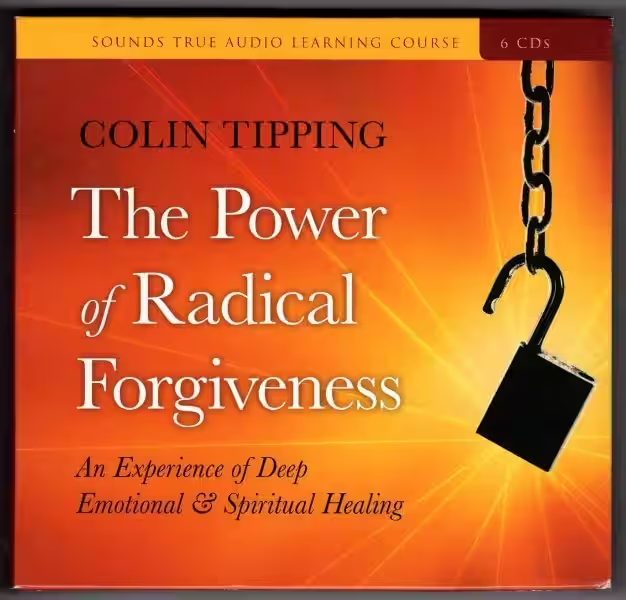
Betrayal feels like a shattering blow, a deep wound that leaves us reeling. It can be the infidelity of a spouse, the deception of a close friend, or the broken promises of a family member. Whatever the form it takes, betrayal erodes trust, leaving us feeling vulnerable, angry, and lost. In these darkest moments, the path to healing often seems impossibly steep. Yet, for many, religious faith offers a beacon of hope, a framework for understanding and ultimately, for forgiveness after betrayal.
This journey isn’t about forgetting or condoning the hurtful actions. Instead, it’s about reclaiming our own peace and finding a way to move forward, unburdened by resentment. Religion, with its emphasis on compassion, redemption, and the divine, provides potent tools and perspectives that can guide us through this complex emotional landscape. It offers a space to grapple with pain while simultaneously cultivating a spirit of release.
The sting of betrayal is a universal human experience. It’s the raw feeling of being deceived and violated, of having our sense of security and trust irrevocably damaged. When someone we’ve opened our hearts to deliberately causes us pain, it’s natural to feel a torrent of emotions: shock, hurt, anger, and a profound sense of loss. This emotional upheaval can be debilitating, impacting our relationships, our self-esteem, and our overall well-being.
Consider Sarah, who discovered her long-time business partner had been secretly siphoning funds from their company. The feeling of being financially and emotionally betrayed by someone she considered family was overwhelming. She felt a burning desire for retribution, a voice inside screaming for justice. This intense emotional response is a natural survival mechanism, a signal that a boundary has been crossed. However, holding onto this anger can become a heavy burden, preventing us from truly healing.
Religion as a Compass: Navigating Towards Forgiveness
Many religious traditions offer a profound lens through which to view betrayal and the arduous process of forgiveness. These faiths often emphasize the inherent dignity of all individuals, even those who have caused harm, and the transformative power of grace. This doesn’t mean excusing the behavior, but rather understanding that humanity is flawed, and that everyone is capable of both great good and great wrong.
The concept of divine judgment and mercy plays a significant role. Religious teachings often remind us that ultimate judgment belongs to a higher power, freeing us from the burden of becoming our own judges and executioners. This can be incredibly liberating. Instead of dwelling on the individual who wronged us, we can shift our focus to our own spiritual growth and our relationship with the divine. Think of it as handing over the reins of vengeance to a power far greater and wiser than ourselves, allowing us to focus on our own inner healing.
Scriptural Foundations for Forgiveness
Across various faiths, scriptural texts are replete with calls for forgiveness. These sacred writings provide divine mandates and inspiring narratives that encourage believers to extend grace, even after being deeply wounded. The Golden Rule, found in some form in nearly every major religion, often underpins these teachings: “Do unto others as you would have them do unto you.” This simple yet profound principle encourages empathy, even for those who have wronged us.
For example, in Christianity, Jesus’ teachings on the Sermon on the Mount are central. He famously said, “Blessed are the merciful, for they shall be shown mercy” (Matthew 5:7). His own crucifixion, where he prayed, “Father, forgive them, for they know not what they do” (Luke 23:34), serves as the ultimate example of selfless forgiveness. Similarly, in Islam, the Quran emphasizes Allah’s mercy and forgiveness, encouraging believers to emulate these qualities. The concept of Tawbah (repentance) is central, highlighting the possibility of redemption and cleansing.
The Spiritual Practice of Letting Go
Forgiveness, from a religious perspective, is often viewed not just as an emotional release, but as a spiritual discipline. It’s an active choice, a conscious act of will to release the hold that resentment and anger have on our hearts. This practice can be cultivated through prayer, meditation, and communal worship. By dedicating time to spiritual reflection, we can begin to dissolve the bitterness that betrayal fosters.
Consider a Buddhist practitioner who uses mindfulness meditation to observe their anger without judgment. Instead of getting swept away by the emotion, they acknowledge its presence, understand its roots in their pain, and then gently release it, like a leaf floating down a river. This isn’t about becoming passive; it’s about actively choosing peace over perpetual suffering. The goal is to free ourselves from the emotional prison that betrayal creates, allowing our spiritual well-being to flourish.
The Path to Healing: Practical Steps Rooted in Faith
Embarking on the journey of forgiveness after betrayal is rarely a linear process. It’s a path marked by ups and downs, moments of clarity, and periods of renewed pain. However, by integrating faith-based practices into our healing, we can navigate this terrain with greater resilience and a deeper sense of purpose. These steps are not always easy, but they are profoundly transformative.
It’s crucial to remember that forgiveness is a gift we give ourselves. It’s about releasing the emotional weight that keeps us tethered to the past and prevents us from embracing a brighter future. This process requires patience, self-compassion, and a steadfast reliance on our spiritual anchors.
1. Acknowledging and Validating Your Pain
The first step in any healing process is to honestly acknowledge the depth of your pain. Suppressing or denying your emotions will only prolong the suffering. Religious faith can provide a safe space to express your hurt and anger, often through prayer or confession. Many congregations offer pastoral care and support groups where individuals can share their experiences without fear of judgment.
Think of it like tending to a wound. You wouldn’t ignore a deep gash; you would clean it, bandage it, and allow it to heal. Similarly, your emotional wounds need to be acknowledged and cared for. Religious teachings often provide prayers for solace and comfort, helping individuals to articulate their grief and find a sense of being heard by the divine. This validation is essential for moving forward.
2. Seeking Divine Strength and Guidance
When we feel overwhelmed by the aftermath of betrayal, turning to prayer and spiritual communion can be a source of immense strength. Religious traditions offer comforting scriptures, hymns, and devotional practices that can remind us of our inherent worth and the enduring presence of love. This is not about asking God to fix the situation, but to empower us to face it.
Many find solace in reciting prayers of surrender, asking for the strength to let go of bitterness and embrace peace. For instance, the Serenity Prayer, often used in Christian contexts, encapsulates this sentiment: “God, grant me the serenity to accept the things I cannot change, the courage to change the things I can, and the wisdom to know the difference.” This simple yet powerful prayer can be a guiding light when navigating the turbulent waters of betrayal.
3. Understanding the Concept of Redemption and Grace
Religious frameworks often highlight the possibility of redemption for those who have caused harm, and the unconditional grace offered by the divine. This doesn’t absolve the wrongdoer, but it opens a door for understanding that people are capable of change and repentance. This perspective can help shift our focus from retribution to restoration, both for the offender and for ourselves.
Imagine a parable from your faith about a prodigal son who returns after making grave mistakes. The father’s joyful and unconditional embrace upon his return illustrates the power of grace. While the son’s actions were wrong, the father’s willingness to forgive and welcome him back speaks to a deeper spiritual truth about the possibility of renewal. This understanding can foster a more compassionate outlook, even towards those who have hurt us.
4. Practicing Compassion, Even When It Hurts
Cultivating compassion is perhaps one of the most challenging aspects of forgiveness after betrayal, yet it is also one of the most spiritually rewarding. It involves trying to understand the circumstances, motivations, or brokenness that may have led to the hurtful actions, without excusing them. This is where religious teachings on empathy and mercy are invaluable.
A spiritual practice that can aid in developing compassion is loving-kindness meditation, found in traditions like Buddhism. This involves extending well wishes and blessings, first to oneself, then to loved ones, neutral people, difficult people, and finally, to all beings. While extending this to the person who betrayed you might feel impossible at first, the consistent practice can gradually soften the heart and open it to a more expansive view. It’s about releasing the grip of animosity and choosing a path of spiritual liberation.
5. Releasing the Need for Retribution and Finding Inner Peace
Ultimately, true forgiveness after betrayal is about freeing yourself from the cycle of anger and resentment. It’s about reclaiming your emotional sovereignty and choosing peace over perpetual pain. Religious faith offers a transformative pathway to achieve this, by reminding us that our ultimate peace comes from our connection to something greater than ourselves.
When we release the desire for revenge, we open ourselves to divine peace. This is not about condoning the past, but about choosing not to be defined by it. It’s about recognizing that holding onto anger is like drinking poison and expecting the other person to die. By actively choosing to let go, guided by our faith, we reclaim our energy and our joy, allowing ourselves to move forward with renewed hope and a lighter heart.
The Ongoing Journey of Faith and Forgiveness
The journey of forgiveness after betrayal is ongoing. There will be days when the wounds feel fresh, and the desire for retribution resurfaces. However, by grounding ourselves in our religious faith, we can find the strength and wisdom to navigate these challenges. Forgiveness is not a destination, but a continuous practice, a testament to our spiritual resilience and our capacity for love and healing.
Ultimately, embracing forgiveness after betrayal, through the lens of our faith, is an act of profound self-love and spiritual liberation. It allows us to break free from the chains of the past, to find peace within ourselves, and to embrace the grace and redemption that our spiritual traditions so beautifully offer. This journey, though difficult, can lead to a deeper understanding of ourselves, of others, and of the divine.
Frequently Asked Questions: Forgiveness After Betrayal and Religion
Can religious teachings help in forgiving a betrayal?
Many religions offer frameworks and guidance that can be instrumental in the process of forgiveness after betrayal. Concepts like compassion, mercy, and the inherent value of all individuals are often central to religious doctrines. Religious texts and practices can provide solace, perspective, and a moral compass to help individuals navigate the difficult emotions associated with betrayal and encourage a path towards reconciliation or letting go.
How do different religions approach forgiveness?
Different religions offer varying perspectives on forgiveness. Christianity, for instance, emphasizes divine forgiveness and the imperative for believers to forgive others as they have been forgiven. Islam views forgiveness as a divine attribute and a virtue highly encouraged among Muslims, with the Prophet Muhammad’s (peace be upon him) example often cited. Buddhism teaches that holding onto anger and resentment harms oneself and that cultivating compassion and understanding can lead to liberation from suffering, including the pain of betrayal. Judaism also values forgiveness, with Yom Kippur, the Day of Atonement, being a significant time for seeking and granting forgiveness.
Is forgiveness always expected in religious contexts after betrayal?
While many religions strongly encourage forgiveness, the expectation and the methods for achieving it can vary. Some traditions may emphasize the importance of reconciliation and restoration of relationships, while others may focus more on the internal process of letting go of anger and resentment for the sake of one’s own spiritual well-being, even if reconciliation is not possible or advisable. Considerations of justice and accountability are also often part of the religious discourse surrounding betrayal.
What if the betrayal is severe and difficult to forgive from a religious standpoint?
Religious teachings often acknowledge the profound pain and difficulty associated with severe betrayals. While the ideal of forgiveness is maintained, many faiths also recognize the process as a journey that may require time, support, and spiritual guidance. Religious leaders, prayer, meditation, and communal support can all play a role in helping individuals work through such deep hurts. The focus is often on healing and finding peace, rather than forcing an immediate or unconditional forgiveness that may not be genuinely felt or healthy.
How can I reconcile my religious beliefs with the desire for justice after betrayal?
Many religious traditions seek to balance forgiveness with justice. This often involves understanding justice not merely as retribution, but as a restoration of balance and truth. Religious teachings might encourage holding individuals accountable for their actions while still offering the possibility of redemption and encouraging a spirit of mercy. Seeking guidance from religious scholars or leaders can help individuals understand how to navigate this complex interplay between their faith’s call for forgiveness and their own need for a sense of justice and healing.