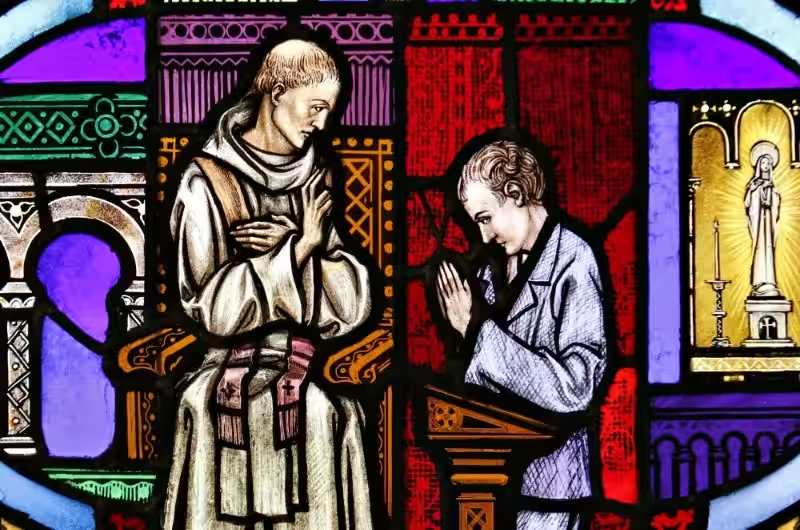
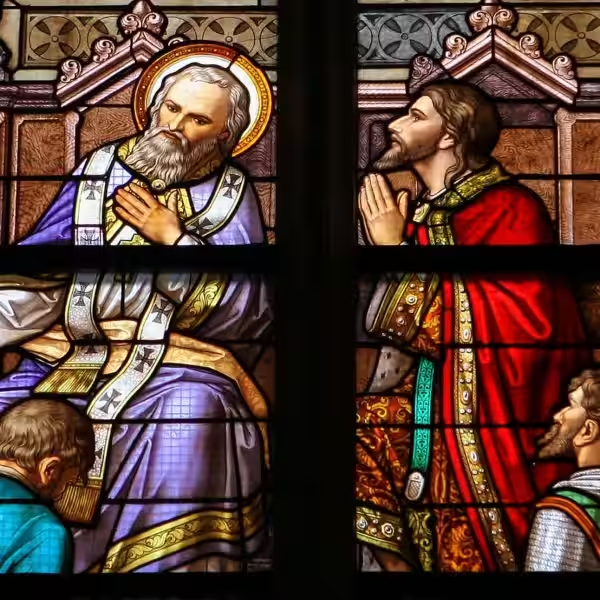
The Catholic faith, rich with tradition and sacraments, offers a profound and personal path towards God. Among its most distinctive and often misunderstood practices is the Sacrament of Penance, commonly known as Catholics confession. Far from being a mere ritual of guilt and judgment, it represents a deeply spiritual encounter, a healing balm for the soul that fosters growth and a renewed relationship with the Divine and with the community. Understanding the nuances of confession can unlock a powerful tool for spiritual well-being within the broader landscape of religion.
For many, the idea of confessing sins to another human being can evoke feelings of apprehension or even shame. However, within the Catholic framework, this act is understood as a sacred trust, a bridge to divine mercy. It’s a structured dialogue, guided by faith, that allows individuals to unburden their consciences, receive absolution, and gain insights for a more virtuous life. This article aims to demystify Catholics confession, exploring its theological underpinnings, practical application, and its enduring significance in the life of a believer and in the practice of religion.
The Sacrament of Penance, or Catholics confession, is rooted in the teachings and practices of Jesus Christ as recorded in the Gospels. Christ’s ministry was characterized by forgiveness, and he explicitly empowered his apostles to forgive sins. For instance, in the Gospel of John (20:22-23), Jesus breathes on his disciples and says, “Receive the Holy Spirit. If you forgive the sins of any, they are forgiven them; if you withhold forgiveness from any, it is withheld.” This passage is foundational, understood by Catholics as the institution of the Church’s authority to administer God’s forgiveness.
Furthermore, the early Church Fathers consistently wrote about the importance of confessing sins and seeking reconciliation. The concept of penance evolved over centuries, but the core idea of confessing to a priest for absolution has remained a central tenet. It’s not about the priest having power in himself; rather, he acts “in persona Christi” – in the person of Christ – as an instrument of God’s boundless mercy. This understanding transforms Catholics confession from a human interaction into a divinely mediated encounter, a powerful expression of God’s love and desire for reconciliation within religion.
What Sins Should Be Confessed?
The Church encourages the confession of all grave sins (also known as mortal sins) that one remembers after a careful examination of conscience. Grave sins are those that are serious in matter, committed with full knowledge, and with deliberate consent. Examples include acts of murder, adultery, grave theft, or deliberately spreading harmful lies. The act of confessing these sins is seen as a crucial step in restoring one’s relationship with God after a serious offense. It’s an acknowledgment of wrongdoing and a sincere desire for healing and forgiveness.
Beyond grave sins, Catholics are also encouraged to confess venial sins (less serious faults) and any recurring sinful tendencies. While venial sins do not sever one’s relationship with God, confessing them can help individuals become more aware of their weaknesses and patterns of behavior. It’s like regular spiritual maintenance, allowing for consistent growth in virtue and a deeper understanding of one’s spiritual journey. This practice contributes to a more holistic spiritual life within the context of religion, fostering personal growth and accountability.
The Examination of Conscience: Preparing for Confession
A vital precursor to Catholics confession is the examination of conscience. This is a prayerful reflection on one’s thoughts, words, and actions since the last confession, with the aim of identifying sins committed. It’s not about dwelling on past mistakes with self-recrimination, but rather about approaching God with honesty and humility, recognizing areas where one has fallen short of God’s will. Many resources are available, including guides based on the Ten Commandments, the Beatitudes, or the teachings of the Church, to aid in this process.
Imagine preparing for a job interview; you would review your resume, anticipate questions, and think about how to present yourself best. Similarly, the examination of conscience is about preparing your heart to meet God’s unconditional love in the confessional. It involves asking oneself: “Have I loved God above all things? Have I loved my neighbor as myself? Have I lived according to God’s commandments and the teachings of the Church?” This self-reflection is a crucial element of personal responsibility and a cornerstone of effective Catholics confession, leading to spiritual clarity and renewal within religion.
Practical Steps for a Fruitful Confession
Entering the confessional involves a few straightforward steps designed to facilitate the sacrament. Typically, one begins by approaching the priest and making the sign of the cross. Then, it’s customary to state how long it has been since one’s last confession. The next step is to openly and honestly confess the sins identified during the examination of conscience. It’s important to be specific about grave sins and to express contrition, a sincere sorrow for having offended God.
After confessing, the priest will offer spiritual counsel and guidance. This might involve words of encouragement, advice on how to avoid future sin, or the assignment of a “penance” – a specific prayer or act of charity to be performed. This penance is not a punishment, but rather a way to make reparation for sins and to strengthen one’s commitment to a virtuous life. Finally, the priest will pronounce the words of absolution, conveying God’s forgiveness and granting peace to the soul. This moment is a profound experience of divine mercy and a powerful affirmation of God’s presence in religion.
The most significant benefit of regular Catholics confession is the restoration of grace. When grave sins are committed, they sever one’s direct connection to God’s grace. Confession, through the absolution granted, restores this grace, allowing the soul to be in full communion with God once more. This is essential for receiving the other sacraments, such as Holy Communion, with the proper disposition. It’s like recharging your spiritual battery to be able to live a fuller Christian life.
Beyond the restoration of grace, regular confession fosters spiritual growth and self-awareness. The priest, acting as a spiritual guide, can offer insights into recurring sin patterns and provide practical strategies for overcoming them. This ongoing dialogue can lead to a deeper understanding of oneself, one’s strengths, and one’s weaknesses, enabling a more intentional and virtuous life. It promotes humility, accountability, and a deeper reliance on God’s strength, all vital elements for spiritual maturity within religion.
Confession as a Journey of Reconciliation
The Sacrament of Penance is fundamentally about reconciliation. It’s a threefold reconciliation: with God, with oneself, and with the Church community. By confessing sins and receiving forgiveness, individuals are brought back into right relationship with God. This often leads to a greater sense of inner peace and self-acceptance, as the burden of guilt is lifted. Furthermore, by acknowledging wrongdoing and seeking to amend one’s life, one contributes to the healing and unity of the Church, which is the Body of Christ.
Consider a family dispute that creates a rift between loved ones. Reconciliation involves acknowledging the hurt, seeking forgiveness, and working towards understanding and renewed love. Catholics confession mirrors this process on a spiritual level. It’s an act of humility and courage that opens the door to unprecedented levels of peace and spiritual freedom. This transformative power makes Catholics confession an indispensable pillar of Catholic religion and a profound pathway to everlasting life.
Frequently Asked Questions: Catholic Confession
What is Catholic confession?
Catholic confession, also known as the Sacrament of Reconciliation or Penance, is a sacrament instituted by Jesus Christ in which Catholics confess their sins to a priest. The priest, acting in the person of Christ, grants absolution (forgiveness) for these sins, provided the penitent is truly repentant.
Catholics believe that Jesus gave the apostles the authority to forgive sins (John 20:23). This authority has been passed down through apostolic succession to bishops and their priests. Confessing to a priest is seen as confessing to God through His appointed minister.
What are the requirements for confession?
To receive the grace of absolution, a Catholic should:
* Examine their conscience to identify their sins.
* Be sorry for their sins (contrition).
* Confess all mortal sins to a priest.
* Resolve to amend their life and avoid sin.
* Perform the penance assigned by the priest.
What is a mortal sin?
A mortal sin is a grave offense against God’s law that destroys charity in the heart of the person. For a sin to be mortal, it requires three conditions:
1. The sin must be grave matter.
2. It must be committed with full knowledge that it is wrong.
3. It must be committed with deliberate consent.
What is a venial sin?
A venial sin is a less serious offense against God’s law that weakens our relationship with God but does not destroy it. While not all venial sins need to be confessed, doing so is highly recommended as it helps to grow in virtue and strengthen one’s relationship with God.
What happens during confession?
Typically, a penitent approaches a priest in a confessional or meeting room. After a brief greeting, the penitent confesses their sins. The priest may ask clarifying questions. Following the confession, the priest will offer spiritual guidance and assign a penance (prayer, fasting, or an act of charity) to be performed. The priest then offers absolution, pronouncing God’s forgiveness.
Is confession mandatory?
Catholics are obligated to confess their mortal sins at least once a year, and before receiving Holy Communion if they are aware of having committed a mortal sin.
What does “sacrament” mean in Catholicism?
In Catholicism, a sacrament is an outward sign, instituted by Christ, to give grace. There are seven sacraments: Baptism, Confirmation, Eucharist, Reconciliation (Confession), Anointing of the Sick, Holy Orders, and Matrimony.
What is absolution?
Absolution is the remission of sin and the eternal punishment due to sin, granted by God through the ministry of a priest in the Sacrament of Reconciliation.
Can a priest reveal what I confess?
No. The seal of confession is absolute and inviolable. A priest is forbidden under the most severe penalties to reveal anything heard in confession, even if the penitent’s identity is known.