In the vast tapestry of religious belief, few concepts resonate as profoundly and enduringly as that of a covenant. More than just a promise, a covenant represents a solemn agreement, a sacred pact often made between the divine and humanity, or between individuals or groups within a religious community. These agreements are not made lightly; they are foundational to understanding the relationship between God and his followers, shaping doctrines, practices, and the very identity of religious traditions. The exploration of covenant scriptures offers a window into the heart of religious faith, revealing the promises, expectations, and the enduring nature of divine commitment.
Across diverse faiths, the idea of a covenant serves as a cornerstone of theological understanding. It’s the thread that binds generations, the assurance that despite human failings, a divine commitment remains steadfast. To delve into these covenant scriptures is to engage with ancient narratives of divine faithfulness, human responsibility, and the unfolding of a grand, often redemptive, plan. It’s a journey that can illuminate our own spiritual paths, offering hope, guidance, and a deep sense of belonging.
The Divine Promise: Covenants as Foundations of Faith
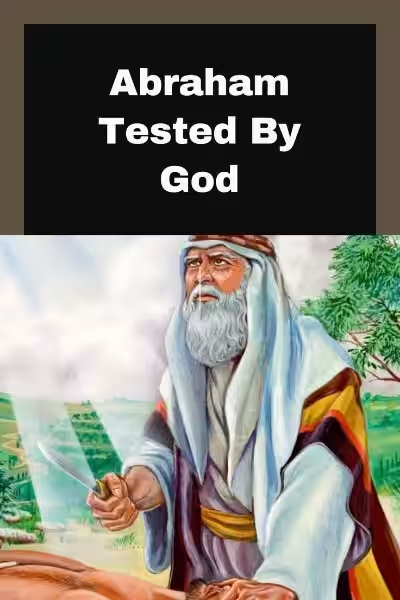
At its core, a covenant in religious contexts signifies a binding agreement, often initiated by God. These aren’t mere casual pledges; they are sacred oaths with significant implications. Think of it like a prenuptial agreement, but on a cosmic scale. In the Judeo-Christian tradition, the Abrahamic covenant stands as a monumental example. The scriptures in Genesis tell of God’s promise to Abraham: to make him a great nation, to bless those who blessed him, and to give him land. This was not a promise based on Abraham’s merit alone, but a divine initiative, a declaration of God’s intention to work through a specific lineage. This covenant established Abraham as the father of many nations, a foundational promise that continues to shape the identity and destiny of millions.
The concept of a covenant provides a framework for understanding God’s relationship with humanity. It’s a two-way street, though often initiated by divine grace. While God makes profound promises, there are usually expectations and responsibilities placed upon the recipients of the covenant. For instance, in the Old Testament, the Mosaic covenant established at Mount Sinai involved God’s law, the Ten Commandments, given to the Israelites. This was a covenant where obedience and faithfulness were paramount. The scriptures remind us that while God would remain faithful, the Israelites’ adherence to the covenant stipulations was crucial for them to experience its full blessings and avoid its curses. This delicate balance highlights the mutual engagement inherent in many covenant scriptures.
The Noahic Covenant: A Universal Promise of Preservation
One of the earliest and most universal covenants described in religious texts is the Noahic covenant. Following the devastating flood, as recounted in the book of Genesis, God established a covenant with Noah and all living creatures. This was a promise of preservation and continuity. The scriptures describe God declaring that he would never again destroy all life on Earth with a flood. The rainbow became the tangible sign of this covenant, a beautiful reminder of God’s commitment to uphold life and sustain the world. This covenant, unlike some later ones, is not limited to a specific people but extends to all creation, emphasizing God’s universal care and faithfulness.
The Noahic covenant is a powerful illustration of divine grace and mercy. Even after witnessing profound human wickedness, God chose not to abandon his creation. Instead, he established a lasting promise to safeguard the planet. This covenant scripture offers a sense of reassurance, a foundational belief that despite the storms and challenges of life, there is an underlying divine promise of stability and renewal. It’s a message that resonates across cultures and time, reminding us of hope even in the darkest of times.
The Abrahamic Covenant: The Father of Faith and His Descendants
The Abrahamic covenant is arguably one of the most significant covenants in religious history, particularly within Judaism, Christianity, and Islam. God’s promise to Abraham, detailed in Genesis 12, 15, and 17, was multifaceted. It included the promise of numerous descendants, the gift of land (Canaan), and the assurance that through Abraham’s line, all nations would be blessed. This wasn’t just about a physical lineage; it was about a spiritual one too. Abraham’s unwavering faith in God, even when faced with seemingly impossible circumstances, earned him the title “father of faith.” This covenant scripture underscores the importance of belief and obedience as responses to divine promises.
The implications of the Abrahamic covenant are vast. For Judaism, it solidified their identity as God’s chosen people, inheritors of the land and the covenant. For Christianity, Jesus is seen as the ultimate descendant of Abraham through whom the promised blessing for all nations is fulfilled. In Islam, Abraham is revered as a prophet and a foundational figure. The covenant scriptures concerning Abraham highlight a divine plan for redemption and blessing that extends far beyond a single individual or generation, demonstrating God’s enduring commitment to humanity.
The Mosaic Covenant: Law, Relationship, and Responsibility
Following the liberation of the Israelites from slavery in Egypt, God established the Mosaic covenant at Mount Sinai, as recorded in the book of Exodus. This covenant was characterized by the giving of the Law (Torah), including the Ten Commandments. This wasn’t just a set of rules; it was a framework for holiness and for maintaining a distinct relationship between God and his people. The covenant scriptures here emphasize that obedience to God’s commands was the pathway to experiencing his protection, provision, and favor. It was a conditional covenant, where faithfulness brought blessings, and disobedience led to consequences.
The Mosaic covenant illustrates the intertwined nature of divine law and divine love. God desired his people to be set apart, to live lives that reflected his character. This involved not only worship but also a holistic approach to life, encompassing justice, compassion, and ethical conduct. The rituals and sacrifices prescribed within this covenant served as a means of atonement for sin and a way to continually reaffirm their commitment to God. Understanding these covenant scriptures helps us grasp the importance of living in accordance with divine principles as a response to God’s grace, and the understanding that our actions have spiritual significance.
The New Covenant: Grace, Forgiveness, and Internal Transformation
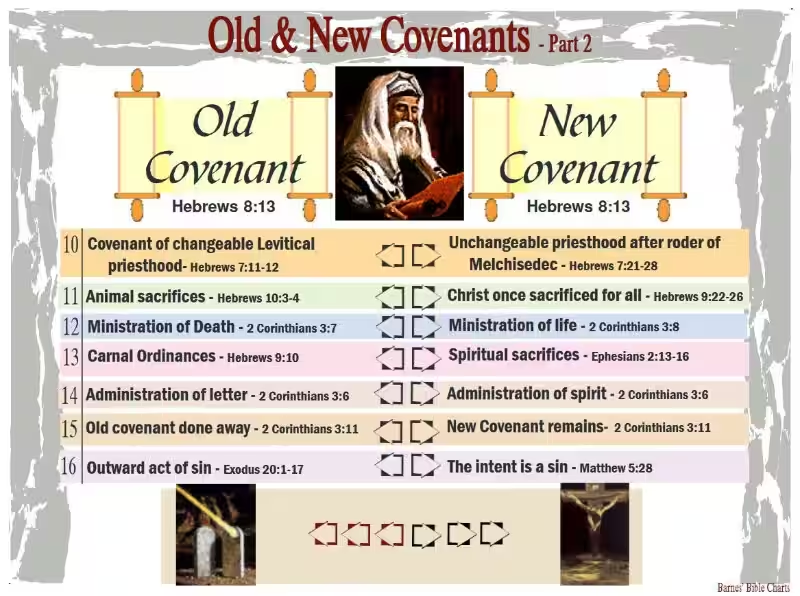
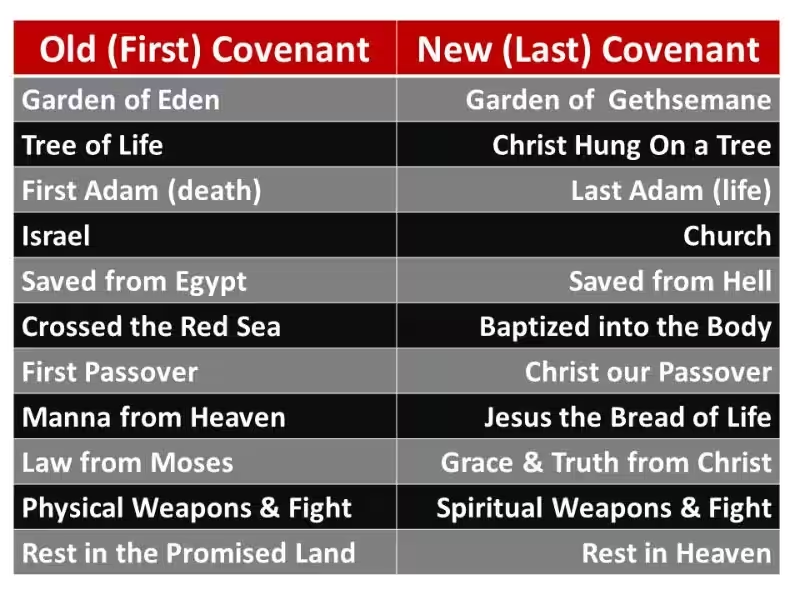
As time progressed and the limitations of the Mosaic covenant became apparent in its inability to fully address the depth of human sinfulness, the concept of a New Covenant emerged. Prophesied by Jeremiah (Jeremiah 31:31-34), this covenant was to be different, not written on stone tablets, but on the hearts of people, and not based on strict adherence to external laws alone, but on internal transformation and forgiveness. This covenant scripture points to a future where God’s law would be internalized, and his people would know him directly.
In Christian theology, Jesus Christ is understood as the mediator of this New Covenant. Through his sacrificial death and resurrection, believers are offered complete forgiveness of sins and a direct relationship with God. The emphasis shifts from external observance to an inner transformation empowered by the Holy Spirit. This covenant scripture signifies a new era of grace, where access to God is not solely dependent on ritualistic adherence but on faith in Christ’s atoning work. It’s a covenant of unconditional love and boundless mercy, inviting all who believe into a renewed and intimate relationship with the divine.
The Blood of the Covenant: Sacrifice and Redemption
A recurring theme within covenant scriptures is the concept of blood as a sealing element. In ancient times, the shedding of blood was often associated with sacrifice and the confirmation of solemn agreements. In the Old Testament, animal sacrifices were a crucial part of many covenant rituals, serving to atone for sins and maintain the covenant relationship. The covenant scriptures concerning the blood of sacrifices underscore the seriousness of sin and the necessary price for reconciliation with a holy God. This was a visual representation of life exchanged for life.
The New Testament takes this profoundly deeper with the blood of Jesus Christ. Christians believe that Jesus’ sacrifice on the cross is the ultimate shedding of blood, inaugurating the New Covenant. The covenant scriptures in the New Testament, such as in Hebrews 9:11-15, explain that Christ’s blood cleanses believers from sin, offering eternal redemption. This is not merely a ritualistic cleansing but a spiritual purification that allows for direct access to God. The blood of the covenant symbolizes unparalleled love, ultimate sacrifice, and the power of redemption, offering hope and a fresh start to all who believe.
Covenant and Community: Belonging and Shared Identity
Covenants are not just about individual relationships with the divine; they also play a crucial role in shaping religious communities. The establishment of covenants has historically been the catalyst for the formation of distinct religious groups, bound together by shared beliefs, practices, and a collective identity. The covenant scriptures often detail how these agreements define who belongs to the community and what responsibilities come with that membership. For example, the circumcision in the Abrahamic and Mosaic covenants was an outward sign of belonging to God’s covenant people, signifying a commitment to the covenant’s terms.
Being part of a covenant community offers a profound sense of belonging, support, and shared purpose. It provides a framework for ethical living and mutual accountability, strengthening the bonds between members. These communities are often seen as inheritors of the divine promises, tasked with living out the covenant in the world. The enduring nature of these covenants ensures that the community’s identity persists across generations, providing a legacy of faith and a sense of continuity that can be deeply reassuring in a constantly changing world.
Living in Covenant: Our Response to Divine Promises
Understanding covenant scriptures is not merely an academic exercise; it calls for a personal and communal response. It’s about recognizing the divine initiative in establishing these sacred bonds and understanding our obligations and privileges within them. Whether it’s living by the principles of the Mosaic Law, embracing the grace of the New Covenant, or simply remembering the universal promise of the Noahic covenant, our lives are meant to be a reflection of our commitment to these agreements.
Ultimately, the concept of covenant in religion is a testament to God’s enduring faithfulness and his desire for a relationship with humanity. It’s a narrative of promises made and promises kept, of divine love that transcends human imperfection. By engaging with these covenant scriptures, we can find assurance in God’s promises, guidance for our lives, and a deeper understanding of our place within the grand unfolding of divine purpose. The covenant is an ongoing invitation to trust, to obey, and to live in the transformative power of divine love.
Frequently Asked Questions: Covenant Scriptures and Religion
What are covenant scriptures?
Covenant scriptures are religious texts that describe and elaborate on the concept of covenants, which are sacred agreements or promises often understood to be between a divine being and humanity or specific groups of people. These scriptures detail the terms, conditions, and implications of these covenants, outlining obligations, blessings, and consequences.
How do covenant scriptures relate to religion?
Covenant scriptures are foundational to many religions, particularly those in the Abrahamic traditions (Judaism, Christianity, and Islam). They provide a framework for understanding the relationship between God and believers, shaping theological beliefs, religious practices, moral codes, and the historical narrative of the faith. They often serve as the basis for communal identity and divine guidance.
Which religions prominently feature covenant scriptures?
Judaism heavily emphasizes the covenant made with Abraham and the covenant at Sinai with Moses. Christianity views the New Testament as fulfilling and superseding the Old Covenant with a New Covenant in Jesus Christ. While the concept of covenant is present in Islam, it is often understood differently, with a primary focus on the submission to Allah’s will and the revelation of the Quran as a guiding covenant.
What is the significance of covenants in these religions?
Covenants are significant because they establish a binding relationship between the divine and the human. They represent God’s faithfulness and commitment to His people, while also requiring obedience and faithfulness from believers. Covenants often define chosen peoples, grant specific promises (like land or salvation), and provide a structure for divine law and redemption.
Are covenant scriptures only found in the Bible?
While the Bible (both Old and New Testaments) is a primary source for covenant scriptures for Judaism and Christianity, the concept and its textual expressions can be found in other religious traditions. However, the term “covenant scriptures” is most commonly associated with the biblical texts due to their explicit and central focus on covenants.
How do different religions interpret covenant scriptures?
Interpretations vary significantly. For example, Jewish interpretation often focuses on the enduring nature of the covenant with Israel and its ongoing implications for Jewish law and identity. Christian interpretation emphasizes the New Covenant through Christ, seeing it as a universal offer of salvation and a spiritual transformation. Islamic perspectives may view earlier covenants as superseded by the final revelation of the Quran.