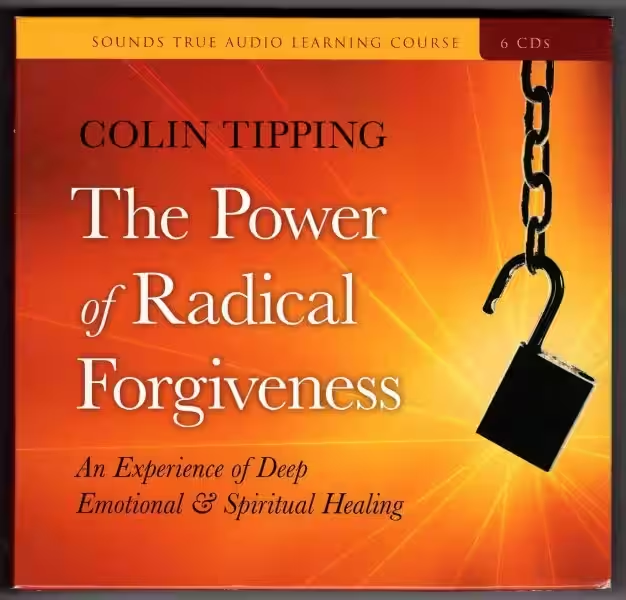
The weight of past hurts can be a heavy burden. Whether it’s a betrayal by a loved one, a perceived injustice from a stranger, or even self-inflicted pain, holding onto resentment can cast a long shadow over our lives, dimming our present joy and jeopardizing our future peace. For many, the concept of radical forgiveness, particularly as explored in books like Colin Tipping’s seminal work, offers a profound pathway to liberation. This isn’t about condoning hurtful actions or forgetting what happened; it’s about a transformative inner shift that frees us from the chains of anger and pain, often with deep roots in our religious and spiritual beliefs.
Many spiritual traditions, from Christianity and Buddhism to Hinduism and Indigenous faiths, speak of the power of forgiveness. Yet, the practical application of this principle can feel elusive, especially when the wounds are deep and the perpetrators seem unrepentant. Radical forgiveness book principles provide a structured and accessible approach to navigating these complex emotional and spiritual landscapes, offering a tangible method for achieving the peace that our faith traditions so often advocate. This article will delve into how the concepts presented in the radical forgiveness book can be integrated into our religious lives, offering practical strategies for healing and spiritual growth.
At its heart, radical forgiveness is a conscious decision to release the grievance that binds you to the person or situation that caused you pain. It’s an internal process, not an external one, meaning it doesn’t require the offender to acknowledge their wrongdoing or apologize. This is a crucial distinction that often makes the idea of forgiveness seem impossible, especially when dealing with severe injustices. The radical forgiveness book methodology emphasizes that the primary beneficiary of this act is the forgiver, as it liberates them from the emotional prison of anger and blame.
Think of it like carrying a heavy backpack filled with stones. Each stone represents a grievance, a hurtful memory, a moment of betrayal. The longer you carry it, the heavier it becomes, making every step forward more difficult. Radical forgiveness, as outlined in various radical forgiveness book resources, offers a way to unpack that backpack, stone by stone, and leave it behind. It’s about recognizing that while the hurt may have been real, the ongoing suffering caused by your unresolved anger is a choice you can make to change.
The Role of Religion in the Forgiveness Journey
Religious and spiritual traditions are replete with teachings on forgiveness, often framing it as a divine imperative or a path to spiritual enlightenment. Jesus’s teachings on loving your enemies and praying for those who persecute you, or the Buddhist concept of metta (loving-kindness) extended to all beings, are powerful examples. However, translating these profound spiritual ideals into lived reality, especially when confronted with deep personal suffering, can be a significant challenge. The radical forgiveness book offers a practical framework that can complement and deepen these religious teachings.
Many find that their faith provides the initial motivation and the moral compass for forgiveness. However, the emotional turmoil that accompanies deep hurt can sometimes feel at odds with their spiritual beliefs, creating internal conflict. Radical forgiveness book principles can act as a bridge, providing tangible tools and techniques to bridge the gap between the spiritual aspiration to forgive and the emotional reality of experiencing pain. It’s about finding a way to embody the spiritual lessons of compassion and release in a way that is personally transformative.
The concept of radical forgiveness often finds deep resonance within religious frameworks that emphasize divine love, mercy, and redemption. Many faiths teach that holding onto anger and resentment is not only detrimental to our well-being but also offends a higher power. When we embrace radical forgiveness, we are, in essence, aligning ourselves more closely with these spiritual principles, choosing to embody the qualities of compassion and grace that are central to our faith.
Consider the parable of the unforgiving servant in the New Testament (Matthew 18:23-35). This story powerfully illustrates the spiritual consequences of refusing to forgive, highlighting how unforgiveness can alienate us from divine mercy. The radical forgiveness book approach can help individuals understand how their emotional attachments to grievances create a similar barrier to their own spiritual peace and connection. By actively engaging in the process of radical forgiveness, believers can actively work towards reconciliation with themselves and with the divine.
Overcoming Religious Guilt Associated with Unforgiveness
It’s a common experience for individuals to feel guilty or ashamed for their inability to forgive, especially within religious communities that place a high value on it. This internal conflict can exacerbate their suffering. The radical forgiveness book methodology offers a non-judgmental and empowering perspective, acknowledging the reality of pain without demanding immediate or effortless forgiveness. It provides steps to gently dismantle the emotional barriers that prevent spiritual alignment with forgiveness.
Instead of viewing the struggle to forgive as a spiritual failing, the radical forgiveness book can reframe it as an opportunity for deep inner work and spiritual growth. It suggests that the very process of wrestling with these difficult emotions, guided by the principles of radical forgiveness, can lead to a more profound understanding of compassion, empathy, and the interconnectedness of all beings, aligning perfectly with the aspirations of a devout life.
The Practical Application of Radical Forgiveness
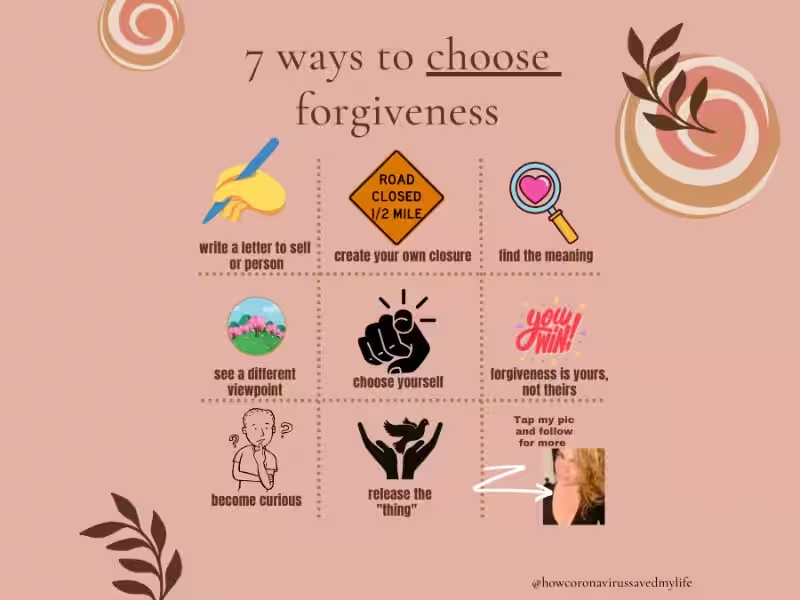
The radical forgiveness book offers specific processes and exercises designed to guide individuals through the journey of releasing resentment. These are not abstract philosophical ideas but actionable steps that can be integrated into daily life, regardless of your specific religious affiliation. The core idea is to shift your perspective from blame to understanding, and from victimhood to empowerment.
One of the cornerstones of the radical forgiveness book approach involves a structured process of identifying, acknowledging, and releasing grievances. This often includes writing exercises, visualizations, and affirmations that help to dissolve the emotional charge associated with past hurts. For a person of faith, these practices can be seen as a form of active prayer or meditation, a way of consciously choosing to embody the divine principles of love and acceptance.
Step-by-Step Towards Inner Peace
The journey of radical forgiveness typically involves several key stages, as detailed in various radical forgiveness book resources:
Identifying the Grievance: Clearly pinpointing the specific person, event, or situation that has caused you pain. This involves honest self-reflection and acknowledging the impact of the hurt.
Acknowledging the Pain: Allowing yourself to feel and express the emotions associated with the grievance without judgment. This is where spiritual support and community can be invaluable.
Shifting Perspective: Actively seeking to understand the situation from different angles, considering the circumstances and motivations of others. This is where religious teachings on empathy and compassion can provide profound guidance.
Releasing the Grievance: Consciously choosing to let go of the anger, resentment, and desire for retribution. This is often facilitated through affirmations, visualizations, or specific forgiveness rituals, which can be deeply integrated with prayer.
Embracing the New Reality: Experiencing the freedom and peace that comes with releasing the burden of unforgiveness, and actively cultivating gratitude and joy.
Integrating Radical Forgiveness with Prayer and Meditation
For those who are religious, the practices of radical forgiveness can be seamlessly woven into their existing spiritual disciplines. Prayer can become a space to articulate your pain and your desire to release it, asking for divine strength and guidance in the process. Meditation can be used to cultivate the feelings of compassion and understanding that are central to forgiveness. The radical forgiveness book often suggests specific meditations that can be adapted to a religious context.
Imagine using your daily prayer time not just to ask for blessings, but to consciously offer forgiveness to those who have wronged you, even if it feels difficult. This is the essence of radical forgiveness in practice. By dedicating your spiritual energies to this act of release, you are not only healing yourself but also living out the core tenets of many faith traditions.
The Transformative Power of Radical Forgiveness
The outcome of embracing radical forgiveness, as illuminated by the radical forgiveness book, is not just a reduction in negative emotions; it’s a profound transformation of one’s inner landscape and outward experience. When we are no longer consumed by anger and resentment, we have more energy, clarity, and capacity for love and joy. This is the promised land of spiritual peace that so many religious paths strive for.
The radical forgiveness book underscores that this is a journey, not a destination, and the benefits are cumulative. As you practice radical forgiveness more consistently, you will find yourself becoming more resilient in the face of adversity, more compassionate towards yourself and others, and more deeply connected to your spiritual source. This is a liberation that radiates outwards, impacting not only your personal life but also your relationships and your community.
Rekindling Spiritual Connection Through Forgiveness
Holding onto unforgiveness can act as a barrier to our spiritual connection, creating a disconnect between our actions and our deeply held beliefs. By practicing radical forgiveness, we actively dismantle these barriers, allowing for a renewed and deeper connection with the divine. It’s about aligning our hearts and minds with the universal principles of love and acceptance that are at the core of most religious teachings.
When we forgive, we are essentially choosing to participate in the divine act of mercy and grace. The radical forgiveness book provides the practical steps to make this spiritual aspiration a tangible reality in our lives, leading to a profound sense of inner peace and a strengthened connection to our faith.
Living a Life Free from the Chains of Resentment
Ultimately, the practice of radical forgiveness is about reclaiming your power. It’s about recognizing that you have the agency to decide how you will respond to life’s challenges, and that your inner peace is not dependent on the actions of others. The radical forgiveness book offers a roadmap to this freedom, empowering individuals to move beyond victimization and embrace a life of purpose, joy, and spiritual fulfillment, a life that is a testament to their faith.
By integrating the principles of radical forgiveness into our lives, we can experience a spiritual awakening, shedding the heavy cloak of resentment and stepping into the light of unconditional love and inner peace. This profound transformation is a gift we give ourselves, a gift that aligns perfectly with the highest spiritual aspirations of our religious traditions.
Frequently Asked Questions about Radical Forgiveness and Religion
Is Radical Forgiveness compatible with my religious beliefs?
Radical Forgiveness, as presented in the book, is a spiritual practice rather than a religious one. It focuses on releasing personal pain and suffering by understanding that all beings are doing the best they can with the knowledge and tools they have. Many find that the principles of Radical Forgiveness resonate deeply with the teachings of compassion, love, and understanding found in various religious traditions. It can be seen as a tool to deepen one’s spiritual journey within any faith.
Does Radical Forgiveness require me to abandon my religion?
No, Radical Forgiveness does not require you to abandon your religion. In fact, it can often enhance your religious practice by helping you to let go of judgment, resentment, and anger that may hinder your connection to your faith and its core tenets. It aims to bring you closer to peace and spiritual growth, which are often central goals in religious and spiritual paths.
How does Radical Forgiveness relate to concepts like sin, judgment, and divine justice in religion?
Radical Forgiveness offers a different perspective on these concepts. Instead of focusing on sin as an offense against a divine being or a moral failing, it views actions that cause pain as stemming from a lack of awareness or understanding. Judgment is seen as a personal construct that creates suffering, and divine justice is reframed as a natural unfolding of cause and effect, rather than punishment. The practice encourages moving beyond these punitive frameworks towards understanding and acceptance.
Can Radical Forgiveness help me reconcile difficult passages or interpretations in my religious texts?
Yes, Radical Forgiveness can provide a framework for understanding difficult passages or interpretations. By applying the principles of forgiveness, you can approach challenging texts with a spirit of inquiry and acceptance, rather than with anger or condemnation. It encourages looking for the deeper spiritual meaning or historical context that might have been overlooked, promoting a more compassionate and reconciled understanding of your faith.
How can Radical Forgiveness help me with religious figures or communities that have caused me harm?
Radical Forgiveness offers a path to heal from hurt caused by individuals or groups within a religious context. It guides you through a process of understanding the pain and then releasing the desire for retribution. This can lead to personal liberation and a renewed sense of peace, allowing you to engage with your spirituality in a healthier way, free from the burden of past grievances.