The very mention of the Vatican Grottoes entrance conjures images of deep history, sacred ground, and a pilgrimage into the heart of Catholic tradition. For many, the journey to this hallowed space is more than just a tourist stop; it’s a deeply spiritual experience, a chance to connect with centuries of faith and the tangible resting places of those who shaped it. Understanding what lies beyond the Vatican Grottoes entrance requires delving into its significance, its history, and the profound emotions it evokes.
This sacred necropolis, nestled beneath the grandeur of St. Peter’s Basilica, offers a unique perspective on the enduring power of belief. It’s a place where the earthly and the eternal seem to converge, where the whispers of the past are palpable, and where the reverence of millions of pilgrims finds a tangible focal point. The anticipation of stepping through the Vatican Grottoes entrance is often a prelude to a deeply personal reflection on faith, mortality, and the legacy of devotion.
Beneath the Basilica: A Glimpse into History and Faith
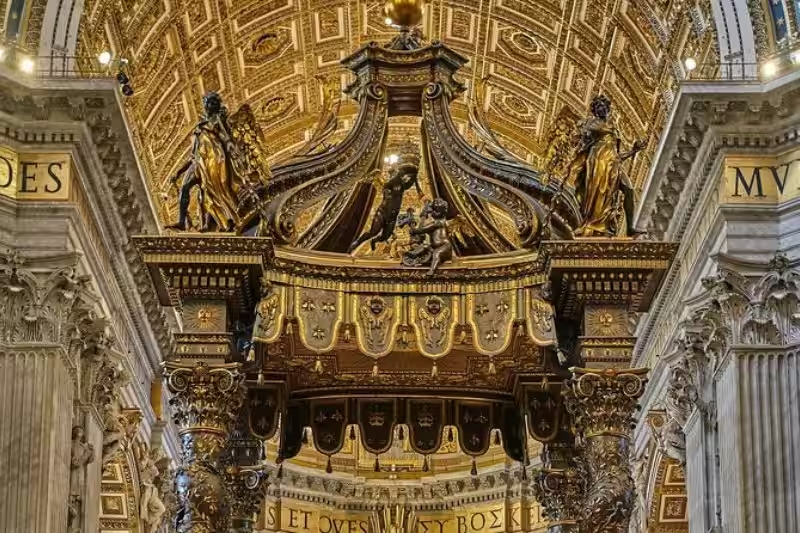
The area known as the Vatican Grottoes, or the “Grotte Vaticane” in Italian, is a subterranean complex located directly beneath the main floor of St. Peter’s Basilica. Its origins are intrinsically linked to the very foundations of Christianity, as it is believed to be the site of St. Peter’s tomb, a cornerstone of Catholic identity. The discovery and subsequent elaboration of this sacred space have been a long and fascinating process, evolving over centuries of religious devotion and archaeological exploration.
When you approach the Vatican Grottoes entrance, you are stepping into a layered history. The current basilica was built over the original Constantinian basilica, which in turn was erected over the ancient Roman cemetery where many early Christians, including apostles, were buried. This layering of structures underscores the continuous religion and reverence that has marked this site for nearly two millennia. Imagine the early Christians, gathering in secret, their faith a quiet but powerful force, laying their departed to rest in this very soil.
The Sacred Necropolis: More Than Just Tombs
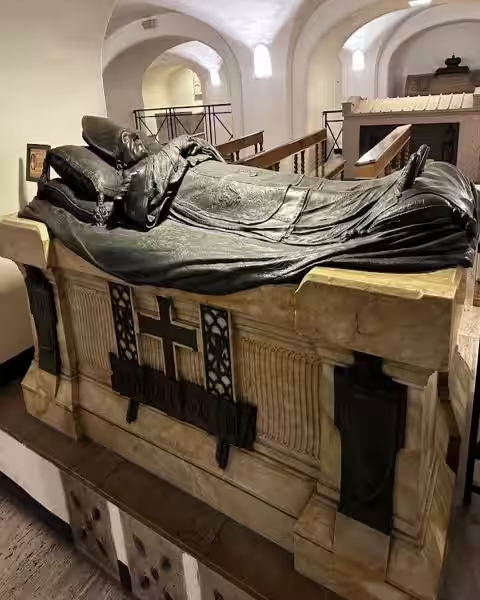
The Vatican Grottoes are not merely a collection of tombs; they are a testament to the early Christian community’s devotion and their unwavering belief in the resurrection. Within these hallowed chambers, you will find the resting places of popes, saints, and even royalty who wished to be buried near the Apostle Peter. The sheer density of historical and religious significance within these walls is awe-inspiring, creating an atmosphere of profound respect and contemplation.
The architecture itself tells a story. You’ll see a fascinating blend of ancient Roman mausoleums, later papal tombs adorned with intricate carvings and inscriptions, and chapels dedicated to various saints. Each tomb, each mosaic, each piece of marble has a narrative connected to the history of the Church and the individuals who played pivotal roles in its development. The experience of walking amongst these silent witnesses is an immersive lesson in religion and history, far more impactful than any textbook.
Navigating the Entrance: Practicalities and Reverence
Accessing the Vatican Grottoes is typically done through specific entrances within St. Peter’s Basilica itself. These are not grand, imposing doorways that scream for attention; rather, they are often discreet portals that lead you down, away from the sunlit grandeur of the basilica above, into the hushed, atmospheric depths. Understanding the process of reaching the Vatican Grottoes entrance is part of preparing for the spiritual journey.
Visitors will find that guided tours often provide the most comprehensive and insightful way to navigate the Grottoes. These tours ensure that you don’t miss key historical sites and that you gain a deeper understanding of the religious context. It’s important to remember that this is a sacred space, and while it is open to visitors, a certain decorum and respect are expected. Think of it as visiting someone’s cherished home; you want to tread lightly and absorb the atmosphere with humility.
Illuminating the Past: Discoveries and Significance
The historical significance of the Vatican Grottoes is deeply intertwined with archaeological discoveries that have unfolded over centuries. The most pivotal of these was the identification of St. Peter’s tomb. This discovery transformed the Grottoes from a general burial site into the most sacred spot in Christendom, a pilgrimage destination of unparalleled importance for the Catholic faith. The meticulous work of archaeologists and historians has brought this ancient resting place to light, solidifying its place in religious history.
The exploration and preservation of the Grottoes have been an ongoing endeavor, driven by a profound respect for the religious heritage they contain. Imagine archaeologists carefully excavating, piecing together fragments of history, their hands guided by a deep sense of purpose. The Vatican Grottoes entrance is the gateway to a world where these discoveries are not just academic curiosities but living testaments to centuries of unwavering religion and devotion.
The Tomb of St. Peter: A Spiritual Anchor
The identification of the tomb believed to be that of St. Peter is the central pillar of the Vatican Grottoes’ significance. For Catholics, Peter was the first Pope, the rock upon which Christ built his Church. To stand, even indirectly, in proximity to his final resting place is a powerful experience, connecting believers to the very origins of their faith. The reverence associated with this spot has drawn pilgrims for centuries, each seeking a personal connection to this foundational figure.
The precise location and the evidence supporting the identification have been subject to intense study and debate, but the consensus among Catholic authorities and many historians is strong. The discovery of inscriptions and artifacts that point to Peter’s burial here has cemented its status as a paramount religious site. The journey to the Vatican Grottoes entrance is often undertaken with the specific intention of honoring this sacred memory.
Papal Tombs and Royal Interments
Beyond the tomb of St. Peter, the Vatican Grottoes house the tombs of numerous popes, spanning from early pontiffs to more recent ones. This creates a unique lineage of leadership and spiritual authority memorialized in one location. Additionally, you will find the final resting places of some royalty and prominent figures who, by their devotion or political ties, earned the privilege of being interred within this sacred precinct, further enriching the historical tapestry.
The artistry and style of these papal tombs vary dramatically, reflecting the different eras in which they were created. Some are simple stone sarcophagi, while others are elaborate monuments adorned with sculptures, mosaics, and inscriptions detailing the life and achievements of the departed pontiff. Walking through the Grottoes is like taking a chronological journey through the history of the papacy, with each tomb serving as a marker along the way. This tangible representation of leadership and religion is a powerful reminder of the Church’s enduring presence.
Experiencing the Grottoes: A Journey of Reflection
Visiting the Vatican Grottoes is a profoundly moving experience that transcends mere sightseeing. It is an immersion into a realm of deep history, unwavering faith, and quiet contemplation. The atmosphere within the Grottoes is one of palpable reverence, a marked contrast to the bustling activity of the basilica above. The journey to and from the Vatican Grottoes entrance itself is part of the unfolding spiritual narrative.
As you descend, the light changes, and the air grows cooler, creating a sense of entering a sacred, almost timeless space. The hushed silence, broken only by the soft footsteps of fellow pilgrims and the occasional hushed whisper, encourages introspection. It’s a moment to step away from the distractions of the modern world and connect with something far more enduring – the continuity of religion and human devotion.
What to Expect Beyond the Entrance
Upon entering the Vatican Grottoes, you’ll find yourself in a complex network of corridors and chapels. The layout can seem intricate, but the path is generally well-marked, guiding you through the significant areas. You will encounter numerous papal tombs, each with its own story and artistic representation. The sheer volume of history contained within these subterranean chambers is staggering.
You’ll see ancient Roman burial structures integrated with later Christian additions, showcasing the evolution of the site. The walls themselves seem to whisper tales of faith, martyrdom, and pontifical legacies. It’s a place where the tangible remnants of the past provide a powerful connection to the abstract principles of religion, making the concepts of saints and popes feel remarkably real and present.
Embracing the Spiritual Significance
The true impact of visiting the Vatican Grottoes lies in embracing its spiritual significance. It’s an opportunity to reflect on the lives of those interred here, to consider the enduring nature of faith, and to contemplate one’s own spiritual journey. The proximity to the tomb of St. Peter, the first shepherd of the Church, imbues the entire space with a unique sanctity.
Many visitors find themselves moved by a sense of peace and awe. The Vatican Grottoes entrance is not just a physical opening; it’s a gateway to a profound encounter with the history and spirit of a global religion. Whether you are a devout follower of Catholicism or simply an interested observer of history and culture, the Grottoes offer a powerful and unforgettable experience. Remember to approach this sacred site with an open heart and a spirit of reverence.
The journey through the Vatican Grottoes is a stark reminder that faith is not just an abstract concept but a lived reality, passed down through generations. It’s a testament to the enduring power of belief and the human desire to connect with the divine, a legacy that continues to resonate from the depths beneath St. Peter’s Basilica, accessible through the profound Vatican Grottoes entrance.
The Vatican Grottoes, also known as the Vatican Necropolis or the Scavi, are an ancient burial ground located beneath St. Peter’s Basilica. They are believed to contain the tomb of Saint Peter.
Can I visit the Vatican Grottoes?
Yes, you can visit the Vatican Grottoes, but access is strictly controlled and requires advance booking.
How do I book a visit to the Vatican Grottoes?
Visits are arranged through the “Ufficio Scavi” (Office of the Excavations), which is responsible for the archaeological site. You need to submit a request online through their official website.
Is there a cost to visit the Vatican Grottoes?
There is a small fee to cover the cost of the guided tour and the upkeep of the site.
What is the religion associated with the Vatican Grottoes?
The Vatican Grottoes are deeply significant to the Catholic religion. They are believed to be the resting place of Saint Peter, one of Jesus Christ’s apostles and the first Pope. This makes it a highly sacred site for Christians worldwide.
Do I need to be Catholic to visit the Vatican Grottoes?
No, you do not need to be Catholic to visit the Vatican Grottoes. The site is open to all visitors interested in its historical and religious significance, though respect for the sacred nature of the location is expected.
What should I expect during a visit to the Vatican Grottoes?
Visits are conducted in small groups with a guide who will explain the history and archaeology of the site. You will walk through ancient tombs and passageways, culminating at the presumed tomb of Saint Peter.
Is there a dress code for visiting the Vatican Grottoes?
While there isn’t a strict dress code specifically for the Grottoes, it is part of the Vatican City, which has a general dress code for religious sites. This typically means covering your shoulders and knees. Comfortable walking shoes are also recommended as there is a lot of walking involved.
How far in advance should I book my visit?
It is highly recommended to book your visit several months in advance, especially during peak tourist seasons, as access is limited and demand is very high.
Can I take photos inside the Vatican Grottoes?
Photography is generally not allowed inside the Vatican Grottoes to preserve the atmosphere and protect the ancient artifacts.
What is the duration of a visit to the Vatican Grottoes?
A typical guided tour of the Vatican Grottoes lasts approximately 45 minutes to an hour.