Jerusalem. The very name evokes a profound sense of history, a tapestry woven with the threads of countless generations and the echoes of prayers whispered across millennia. For many, the Orient Jerusalem district, in particular, represents a living, breathing embodiment of this spiritual significance. It is here, amidst its ancient stones and bustling streets, that the convergence of major world religions isn’t just a historical footnote, but a daily reality, shaping the lives of its residents and offering a unique window into the enduring power of faith.
This article will delve into the multifaceted relationship between Orient Jerusalem and the practice of religion, exploring how its sacred sites, diverse communities, and ongoing narratives contribute to its unparalleled religious importance. We will examine the profound sense of spiritual connection felt by adherents of Judaism, Christianity, and Islam, and how the unique character of Orient Jerusalem fosters both coexistence and, at times, profound tension. Understanding this dynamic is crucial for anyone seeking to grasp the soul of this extraordinary city.
The very topography of Orient Jerusalem seems designed by providence to draw the faithful. Its rolling hills and ancient pathways have been trodden by prophets, pilgrims, and kings, imbuing the land with an almost palpable spiritual energy. Here, the sacred is not confined to grand edifices but permeates the very air, the texture of the stone, and the rhythm of daily life.
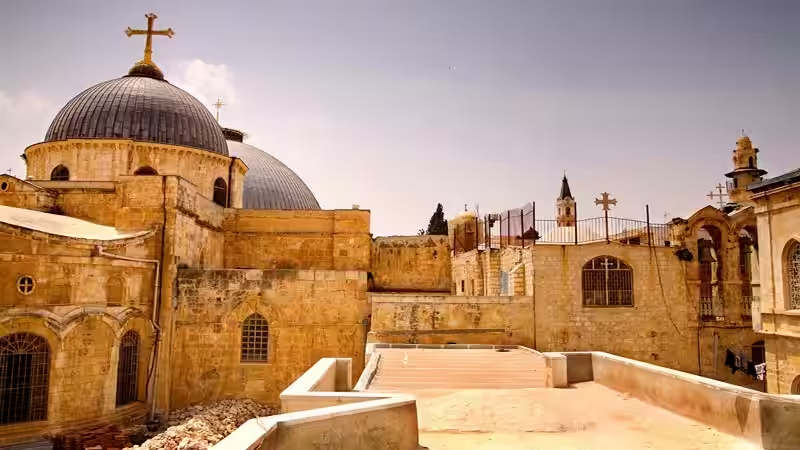
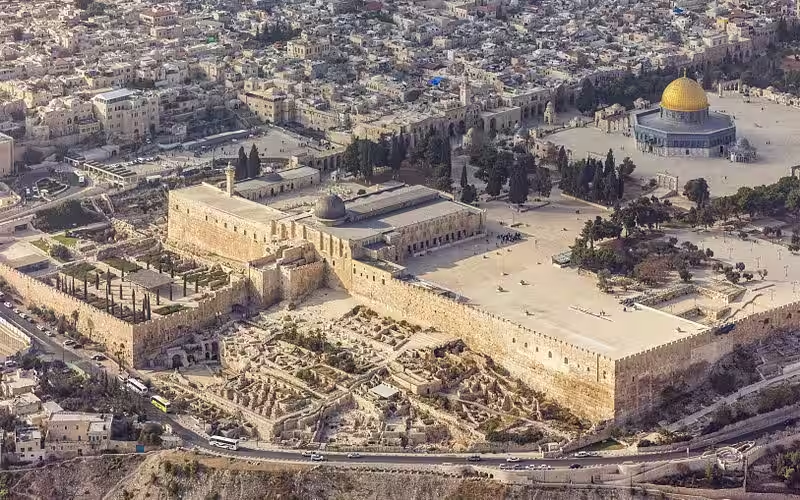
Within Orient Jerusalem, specific locations hold immense religious weight for billions around the globe. For Jews, the Western Wall, a remnant of the ancient Jewish Temple, stands as the holiest site, a place of fervent prayer and contemplation. Christians are drawn to the Church of the Holy Sepulchre, believed to be the site of Jesus Christ’s crucifixion and burial, a pilgrimage destination for centuries. Muslims revere the Al-Aqsa Mosque and the Dome of the Rock on the Temple Mount, the third holiest site in Islam, commemorating the Prophet Muhammad’s miraculous night journey. This concentrated presence of holy sites within and around Orient Jerusalem makes it an unparalleled spiritual nexus.
Pillars of Faith: Judaism in Orient Jerusalem
The pulse of Judaism beats strongly within Orient Jerusalem, a testament to its deep historical roots and enduring spiritual significance. The echoes of ancient traditions resonate through the narrow alleys and the solemn prayers offered at its sacred sites. This district is not merely a geographical area; it is a living testament to the covenant between God and the Jewish people.
The Western Wall, or Kotel, is undoubtedly the centerpiece of Jewish spiritual life in Orient Jerusalem. Imagine thousands of people, from all walks of life, pressing their foreheads against the ancient stones, whispering pleas and thanksgivings. This is a deeply personal and communal experience, a powerful connection to both history and the divine. Beyond the Wall, numerous synagogues, yeshivas (religious schools), and Jewish neighborhoods within Orient Jerusalem foster a vibrant religious community, where Torah study, observance of holidays like Passover and Yom Kippur, and the daily rhythm of prayer are central to life. The sense of belonging and continuity is profound, a tangible link to ancestors who walked these same paths.
Echoes of the Messiah: Christianity in Orient Jerusalem
For Christians, Orient Jerusalem is the hallowed ground where their faith was born and where the foundational events of their religion unfolded. The very stones seem to whisper stories of Jesus’s life, ministry, and sacrifice, drawing millions of pilgrims each year seeking to touch the sacred.
The Church of the Holy Sepulchre is the most potent symbol of Christian devotion in Orient Jerusalem. Picture the throngs of pilgrims, holding candles, their faces illuminated by the flickering light, as they navigate the dimly lit chapels, each one commemorating a significant moment from the Passion. This is not just a visit; it is a journey of faith, a reenactment of the central sacrifice. Beyond this iconic site, Orient Jerusalem is dotted with other significant Christian landmarks, including the Via Dolorosa, the path Jesus is believed to have walked carrying his cross, and numerous other churches and monasteries representing diverse Christian denominations from around the world. The shared experience of pilgrimage and the pursuit of spiritual solace are powerful unifying forces.
The Sacred Precinct: Islam in Orient Jerusalem
Islam’s profound connection to Orient Jerusalem is undeniable, rooted in the miraculous events and prophetic significance attributed to the city. The Temple Mount, known to Muslims as Haram al-Sharif (the Noble Sanctuary), is a site of immense spiritual elevation and historical importance, revered by Muslims worldwide.
The Al-Aqsa Mosque and the Dome of the Rock stand as majestic testaments to Islamic architecture and devotion within Orient Jerusalem. The call to prayer, the Adhan, echoing across the ancient cityscape five times a day, serves as a constant reminder of the presence of God and the rhythmic devotion of the Muslim community. For Muslims, the Haram al-Sharif is the site of the Prophet Muhammad’s miraculous night journey and ascension, a pivotal event in their faith. The sense of awe and reverence that permeates the Noble Sanctuary is an experience that transcends the ordinary, drawing worshippers seeking spiritual connection and divine blessings.
Coexistence and Contention: The Complex Reality of Religious Life in Orient Jerusalem
The concentration of such deeply held religious beliefs within Orient Jerusalem naturally leads to both remarkable instances of coexistence and significant points of contention. The shared geography of sacredness is a constant reminder of interconnectedness, yet historical narratives and contemporary realities often create friction.
Navigating the religious landscape of Orient Jerusalem requires acknowledging a delicate balance. On one hand, you witness acts of mutual respect and understanding. During religious festivals, there are often efforts to ensure that one group’s observances do not unduly disrupt another’s. Muslim shopkeepers in the Old City might close early for a Christian procession, or Jewish visitors might be mindful of prayer times at the mosques. This demonstrates a human capacity for empathy and a shared desire for peace. However, the political complexities inextricably linked to Orient Jerusalem often spill over into religious life, creating tensions over access, control, and historical claims. The very sanctity of the sites can become a focal point for broader geopolitical struggles, making the pursuit of harmony a continuous and challenging endeavor.
Despite the broader complexities, the daily life in Orient Jerusalem for many is characterized by a surprising degree of intermingling. Imagine walking through the markets of the Old City: a Jewish baker might sell bread next to a Palestinian Muslim vendor selling spices, and Christian pilgrims weave through the crowds, all engaged in the mundane yet essential act of commerce. These everyday interactions, though seemingly small, form the fabric of a shared existence.
The shared use of public spaces within Orient Jerusalem is a constant negotiation. For instance, the areas surrounding the holy sites often see a blend of devout individuals, curious tourists, and local residents going about their daily routines. Understanding the sensitivities of each religious group is paramount. This can involve observing dress codes, respecting prayer times, and being aware of communal customs. For example, a visitor might notice that during certain Jewish holidays, specific routes within the Old City become exceptionally crowded with worshippers, requiring a different approach to navigation. Similarly, during Ramadan, the atmosphere in Muslim quarters changes significantly, with a focus on fasting and evening gatherings. These nuances of daily life are what make Orient Jerusalem so unique and offer a more intimate glimpse into the lived reality of faith.
Challenges to Harmony
The interwoven nature of religion and politics in Orient Jerusalem inevitably presents significant challenges to religious harmony. While many individuals strive for peaceful coexistence, historical grievances, territorial disputes, and differing interpretations of religious narratives can fuel tensions. This is not to say that conflict is constant, but it is a persistent undercurrent that requires careful management and a commitment to dialogue.
The control and access to holy sites are recurring issues that can exacerbate friction. For example, disputes over prayer rights, security arrangements, and the preservation of ancient structures often become points of contention. These issues are not simply administrative; they are deeply symbolic and touch upon the core identities of the religious communities. Furthermore, the discourse surrounding Jerusalem often becomes polarized, with each side framing narratives in ways that can inadvertently marginalize or demonize the other. Overcoming these challenges requires a sustained effort from religious leaders, political figures, and the international community to foster mutual understanding, respect, and a commitment to finding common ground. The aspiration for peace in Orient Jerusalem is not just a political goal; it is a spiritual imperative for adherents of all faiths.
The Enduring Allure: Why Orient Jerusalem Matters
The significance of Orient Jerusalem extends far beyond its geographical boundaries. It is a beacon for believers worldwide, a place where the divine feels palpably close, and where the threads of history and faith are inextricably intertwined. Its challenges are immense, but so too is its enduring power to inspire and to connect.
Ultimately, Orient Jerusalem serves as a profound reminder of humanity’s deep-seated need for spiritual connection and meaning. It is a place where the sacred is not an abstract concept but a lived reality, influencing the daily lives of millions. The ongoing narrative of Orient Jerusalem is a testament to the resilience of faith, the complexities of human coexistence, and the enduring search for peace in a world that desperately needs it. Understanding this unique intersection of faith and place is to glimpse the very soul of a city that has captivated hearts and minds for millennia.
What is the religious significance of Orient Jerusalem?
Orient Jerusalem, also known as East Jerusalem, holds immense religious significance for Judaism, Christianity, and Islam. It is home to many sacred sites for all three Abrahamic faiths, including the Western Wall (Judaism), the Church of the Holy Sepulchre (Christianity), and the Al-Aqsa Mosque and Dome of the Rock (Islam). This concentration of holy places makes it a focal point of pilgrimage and religious devotion for millions worldwide.
How do different religions interact in Orient Jerusalem?
The religious landscape of Orient Jerusalem is complex, with adherents of Judaism, Christianity, and Islam living in close proximity. While there are instances of cooperation and shared sacred spaces, there are also historical and ongoing tensions related to access, control, and the preservation of religious sites. The Old City, in particular, is divided into four quarters: Jewish, Christian, Muslim, and Armenian, each with its own distinct religious character.
Are there specific religious holidays or observances that are particularly prominent in Orient Jerusalem?
Yes, many major religious holidays for Judaism, Christianity, and Islam are observed with great fervor in Orient Jerusalem. Jewish holidays like Passover and Sukkot, Christian holidays such as Easter and Christmas, and Islamic holidays like Ramadan and Eid al-Adha all bring significant religious activity and often large gatherings to the city’s holy sites. The timing and observance of these holidays can sometimes be a source of discussion and negotiation.
What is the role of religious leaders and institutions in Orient Jerusalem?
Religious leaders and institutions play a crucial role in the spiritual, social, and political life of Orient Jerusalem. They are responsible for the upkeep and management of holy sites, guide their congregations, and often act as representatives in dialogues and discussions concerning the city’s future. Various religious councils, churches, mosques, and synagogues are active in the community.
How does the religious status of Orient Jerusalem impact its residents?
The religious significance of Orient Jerusalem profoundly impacts its diverse residents. For many, it is a place of deep spiritual connection and identity. However, the political and religious complexities surrounding the city can also create challenges related to freedom of movement, access to holy sites, and the preservation of cultural and religious heritage for all communities.