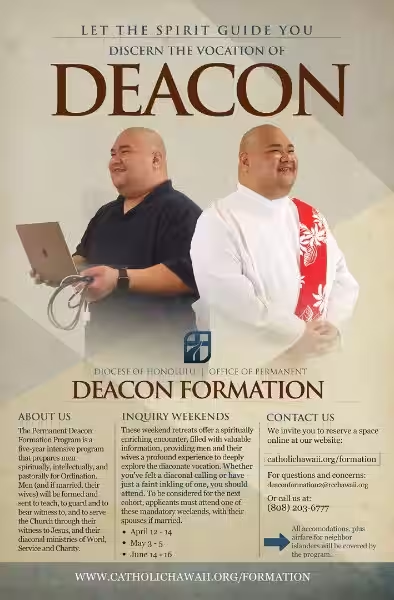
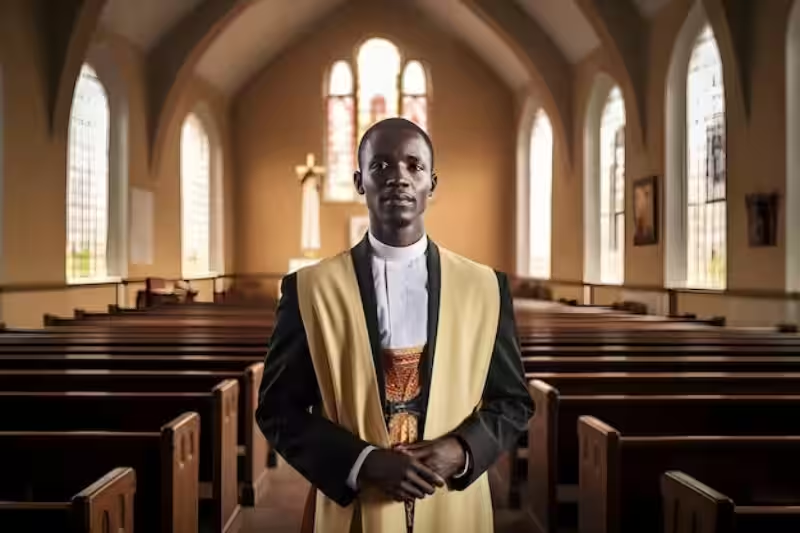
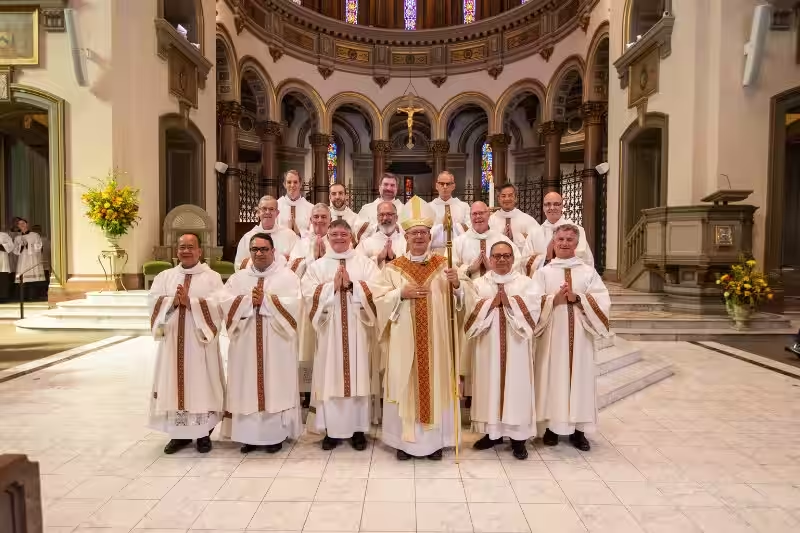
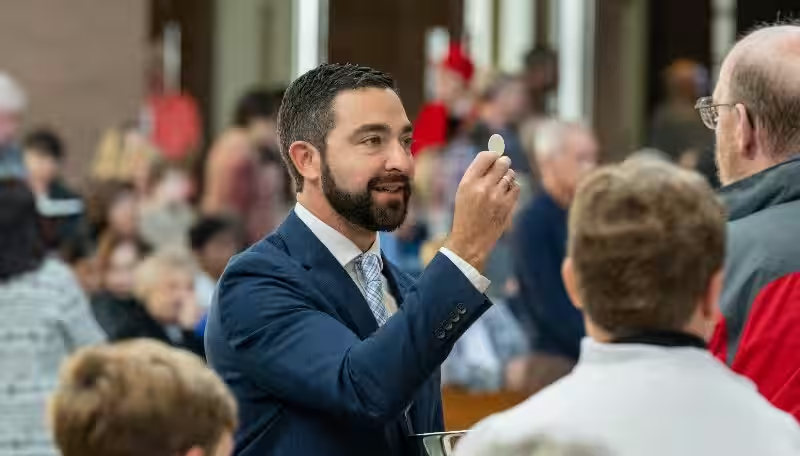
So, you’re exploring the question, how do I become a Catholic deacon? This isn’t a casual inquiry; it’s often the beginning of a profound vocational discernment, a calling to a unique form of service within the Catholic Church. Deacons are ordained ministers, distinct from priests and bishops, who serve the Church and the People of God in various capacities, particularly in areas of charity, word, and liturgy. Their ministry is rooted in Christ’s own example of service, making the diaconate a path for those who feel a strong pull towards selfless dedication.
This article will guide you through the essential steps, considerations, and spiritual foundations involved in answering the call to diaconal ministry. We’ll explore the discernment process, academic and spiritual formation, and the qualities that mark a potential deacon. Whether you’re a single man, married with children, or a man in his later years, the path to becoming a Catholic deacon is open to many, provided they meet the specific requirements and demonstrate a genuine desire to serve God and His Church.
Before diving into the specifics of how do I become a Catholic deacon, it’s crucial to grasp the essence of the diaconate. Deacons are not priests, meaning they do not preside over the Mass or consecrate the Eucharist in the same way. Instead, their ministry is often described as one of service – “diakonia” in Greek. This service manifests in several key areas: preaching the Gospel, assisting the priest at the altar during Mass, administering Baptism, witnessing marriages, assisting with funerals, distributing Holy Communion, and most importantly, engaging in works of charity and social justice.
Think of a deacon as a bridge. They bridge the gap between the Church’s teachings and the practical needs of the community. They might be found feeding the hungry, visiting the sick and imprisoned, or leading Bible study groups. Their ordination is a sacrament, setting them apart for a specific ministry of service. This distinction is vital because it shapes the expectations and responsibilities of those who answer this call. It’s a life committed to active, tangible love for God and neighbor, often working behind the scenes to ensure the Church’s mission of mercy is fulfilled.
Married Men and the Diaconate
One of the most significant distinctions of the permanent diaconate is that married men can be ordained as deacons. This is a cornerstone of the permanent diaconate, allowing men who are already established in their families and careers to embrace this call to ministry. For a married man discerning this path, the support and understanding of his wife are paramount. The Church requires her consent and full cooperation, as the diaconal ministry will inevitably impact family life. This isn’t about choosing between family and ministry, but about integrating them into a unified, Christ-centered life.
This integration can be a beautiful testament to faith. Imagine a father who, after years of dedicated family life, feels a strong calling to serve the Church. He might continue his secular work while also assisting at the altar, visiting the sick in hospitals, or leading a ministry for the poor. His family can become a part of this service, embodying Christian love in action. This path emphasizes that vocations are not always about leaving everything behind, but about bringing our whole lives, including our commitments, to God’s service. The question of how do I become a Catholic deacon for a married man involves a holistic consideration of family, faith, and community needs.
Celibate Men and the Diaconate
Celibate men, whether they have never been married or are widowed, can also pursue the diaconate. For these men, the call to ordination as a deacon represents a complete dedication of their lives to God and the Church. Their celibacy, in this context, is not merely the absence of marriage but a positive offering of their entire being to the evangelical mission of Christ and His Church. It allows for a singular focus on ministry, unrestricted by the demands of a marital relationship, though it still requires a life of deep prayer and commitment to the Church’s teachings.
A celibate man called to be a deacon can bring a unique perspective and availability to his ministry. He is free to dedicate more time to pastoral care, spiritual direction, and the various charitable works that deacons are called to perform. His life becomes a living testament to the radical love of God, mirroring Christ’s own self-giving. For those who feel this specific call, the journey of how do I become a Catholic deacon is one of profound spiritual growth and unwavering commitment to the Church’s mission of love and service.
The journey of how do I become a Catholic deacon begins with discernment, a prayerful and thoughtful process of discerning God’s will. This is not a decision made lightly or impulsively. It requires a deep examination of one’s heart, motivations, and spiritual life. Are you drawn to service? Do you have a love for the Word of God? Do you feel a pull towards assisting the poor and marginalized? These are important questions to ponder as you begin this exploration. Speaking with a trusted priest or spiritual director is an essential first step in this discernment.
Discernment is an ongoing conversation with God, often facilitated by prayer, Scripture study, and participation in the sacramental life of the Church. It involves listening to the gentle promptings of the Holy Spirit and seeking guidance from those who can offer wisdom and support. It’s about identifying not just a desire, but a genuine vocation, a calling that aligns with the needs of the Church and your own spiritual gifts. This process can take time, sometimes years, as you move from initial interest to a clear understanding of God’s call for you to explore the path of becoming a Catholic deacon.
Initial Steps for Inquiry
If you find yourself asking how do I become a Catholic deacon, the very first practical steps involve reaching out. The most direct route is to speak with your parish priest. He is your initial point of contact and can provide invaluable guidance, answer your immediate questions, and help you connect with the relevant diocesan resources. He can also help you assess if your interest is a genuine calling and not just a passing thought. This conversation is a safe space to explore your desires and concerns, and it’s the gateway to the next stages.
Beyond your parish priest, your diocese will have specific guidelines and a director of diaconate formation. This individual is responsible for overseeing the process and can provide detailed information about eligibility requirements, application procedures, and the timeline for formation. Networking with currently serving deacons in your diocese can also be incredibly beneficial. They can offer firsthand accounts of their experiences and insights into the realities of diaconal ministry, helping you paint a clearer picture of what the commitment entails.
Qualities of a Potential Deacon
When considering how do I become a Catholic deacon, the Church looks for specific qualities that indicate a person is well-suited for this ministry. Primarily, a deacon must be a man of deep faith and prayerful life. This is the bedrock upon which all diaconal service is built. He should possess a genuine love for the Church and its teachings, demonstrating a commitment to living a virtuous life. A deacon is also called to be a man of service and charity, showing a compassionate heart for the needs of others, especially the poor and vulnerable.
Other important qualities include maturity, good moral character, and a stable family life (if married). He should be capable of communicating effectively, both in preaching and in his interactions with people from all walks of life. A sense of humility and obedience is also crucial, as deacons serve under the authority of the bishop. Essentially, the Church seeks men who are spiritually grounded, emotionally mature, and actively engaged in living out their faith in a way that reflects Christ’s own ministry of service. These are not static traits but aspects that are continually nurtured and deepened throughout formation.
The Formation Process: Growing into Ministry
Once the initial discernment and inquiry phases are complete, the journey of how do I become a Catholic deacon moves into a structured formation program. This is a rigorous and comprehensive period designed to equip candidates spiritually, intellectually, and pastorally for their ordained ministry. It’s a time of intense growth, learning, and spiritual deepening, preparing them to serve the Church effectively and authentically. The requirements and duration of formation can vary slightly by diocese, but the core components remain consistent.
This formation process is a transformative experience. It’s not simply about acquiring knowledge, but about developing into a Christ-like servant leader. Candidates are challenged to grow in their understanding of Scripture, theology, Church history, and canon law, while also cultivating a profound prayer life and honing their pastoral skills. The emphasis is on integrating academic learning with practical ministry experience, ensuring that candidates are not only knowledgeable but also deeply rooted in the compassionate heart of Christ, ready to embody the diaconal call.
Academic Requirements and Studies
A significant part of understanding how do I become a Catholic deacon involves the academic component of formation. Candidates will engage in theological studies, often at a seminary or a designated diocesan learning center. This coursework typically includes subjects such as:
Sacred Scripture: Deepening understanding of the Old and New Testaments.
Systematic Theology: Exploring core doctrines of the Catholic faith.
Church History: Understanding the development and evolution of the Church.
Moral Theology: Learning to apply Catholic moral principles to contemporary issues.
Liturgical Theology: Understanding the sacraments and the rites of the Church.
Canon Law: Familiarizing oneself with Church governance and discipline.
Homiletics and Preaching: Developing skills in proclaiming the Word of God.
These studies are not merely academic exercises; they are foundational to the deacon’s ability to teach, preach, and live out his ministry. The goal is to provide a solid intellectual and spiritual framework for their ordained service. For example, understanding Christology (the study of Christ) helps a deacon better comprehend and explain Christ’s self-emptying love, which is the model for his own diaconal service.
Spiritual and Pastoral Formation
Beyond the classroom, the formation of a Catholic deacon is deeply rooted in spiritual and pastoral development. This is where the theoretical knowledge gained from academic studies is integrated with lived experience and a deepening relationship with God. Spiritual direction plays a crucial role, providing candidates with a guide to navigate their interior lives, identify spiritual gifts and challenges, and grow in intimacy with Christ. This is a vital aspect of answering the question, how do I become a Catholic deacon, as it focuses on the heart of the minister.
Pastoral formation involves hands-on ministry experience. Candidates will typically be assigned to parishes or other pastoral settings where they can practice preaching, assist at liturgies, engage in catechesis, and participate in various outreach programs. This practical experience allows them to develop their pastoral skills, learn to connect with people on a deeper level, and understand the realities of pastoral ministry. It’s about learning to serve with compassion, humility, and wisdom, mirroring the actions of Christ the Servant, and preparing them for the multifaceted demands of the diaconate.
Ordination and Life as a Deacon
The culmination of the formation process, after years of dedicated study and spiritual growth, is ordination. This is the sacrament that confers the order of deacon upon a man, setting him apart for public ministry within the Church. The question of how do I become a Catholic deacon finds its sacramental answer in this profound rite, where a man is ordained by the bishop and becomes a permanent minister of the Church. It’s a moment of profound grace, not just for the individual, but for the entire Church.
Ordination is a public commitment to a life of service, prayer, and obedience to the bishop. It marks the beginning of a new chapter, one of continued growth and dedicated ministry. The life of a deacon is characterized by a commitment to living out the Gospel in tangible ways, serving the needs of the Church and the wider community with charity, humility, and zeal. It’s a lifelong journey of deepening faith and ever-increasing service, a testament to God’s abundant grace.
The Rite of Ordination
The ordination of a deacon is a solemn and beautiful liturgy, usually celebrated by the bishop of the diocese. The rite itself is rich in symbolism and tradition, signifying the conferral of sacramental grace. As part of understanding how do I become a Catholic deacon, it’s important to appreciate this sacred moment. The candidate, having completed his formation, is presented to the bishop, and following the homily and the examination of the candidate, he makes solemn promises of obedience and chastity (if celibate). He then prostrates himself on the floor of the sanctuary as the Litany of the Saints is sung, a profound act of surrender and reliance on God’s grace.
The bishop then lays his hands on the head of the candidate, invoking the Holy Spirit through the prayer of consecration. This is the essential moment of ordination, where the man is sacramentally configured to Christ the Servant. Following this, the newly ordained deacon receives the signs of his office: the stole and the dalmatic, and the Book of the Gospels. He is then formally greeted by the bishop and the other clergy with the kiss of peace. This sacred moment is the tangible answer to the question of how do I become a Catholic deacon, marking their official entry into ordained ministry.
Continuing Ministry and Growth
Becoming a Catholic deacon is not an endpoint but a beginning. The ministry is ongoing, and the commitment to spiritual and pastoral growth continues throughout a deacon’s life. Even after ordination, there are expectations for continued formation, often referred to as ongoing formation. This may involve regular retreats, theological study days, and opportunities for collaboration with other deacons and clergy. The question of how do I become a Catholic deacon evolves into a continuous process of living out that calling.
A deacon’s ministry is not static. It can adapt and grow as his life circumstances change and as the needs of the Church evolve. He remains a vital part of the Church’s pastoral team, working alongside priests and lay ministers to serve the People of God. The call to service, once embraced through ordination, becomes a lifelong dedication, a constant invitation to love God more deeply and serve Him more fully in the lives of others. The journey of how do I become a Catholic deacon is a testament to the enduring power of God’s call and the transformative nature of a life devoted to His service.
Frequently Asked Questions: Becoming a Catholic Deacon
What is a Catholic Deacon?
A Catholic Deacon is a man ordained for service in the Church. He assists bishops and priests in ministry, particularly in the areas of charity, preaching, and liturgy. Deacons can preside at baptisms, weddings, and funerals, and can preach the Gospel.
Who can become a Catholic Deacon?
Generally, men who are at least 35 years old and have been practicing Catholics for a significant period are eligible. There are also requirements regarding marital status. Married men can be ordained, but single men must typically commit to celibacy.
What is the difference between a permanent and a transitional deacon?
A permanent deacon is a man ordained as a deacon who intends to remain in that order permanently. He may be married and continue his secular profession. A transitional deacon is a man who is studying for the priesthood and is ordained a deacon as a step towards ordination as a priest.
What is the discernment process for becoming a deacon?
The discernment process typically involves a period of prayer, reflection, and meeting with a diocesan vocations director or a designated pastor. This process helps potential candidates explore their calling and assess their suitability for the diaconate.
What kind of formation is required to become a deacon?
Diaconal formation programs vary by diocese but generally include theological studies, pastoral training, spiritual direction, and practical experience in ministry. These programs typically last several years.
Do I need to be married to become a permanent deacon?
No, you do not need to be married. While many permanent deacons are married men, single men can also discern and be ordained as permanent deacons, committing to celibacy.
What are the responsibilities of a Catholic Deacon?
Deacons have specific ministries assigned by their bishop. These often include works of charity and justice, preaching the Word of God, assisting at the altar during Mass, baptizing, witnessing marriages, and conducting funeral services.
How long does the formation process take?
The duration of diaconal formation varies by diocese, but it typically spans several years, often between four and six years.
Can a woman become a Catholic Deacon?
Currently, the Catholic Church only ordains men as deacons. The historical role of female deacons is a subject of theological discussion, but the Church has not instituted the permanent diaconate for women.