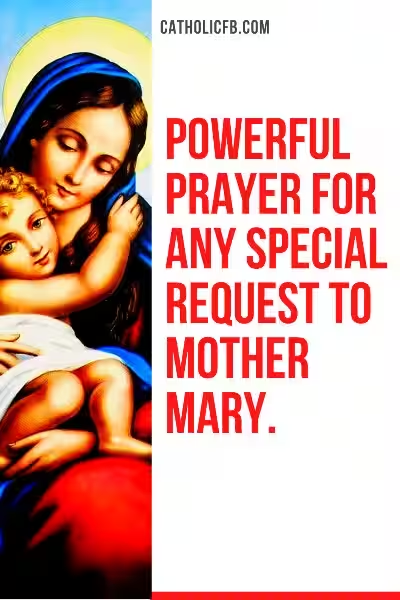
The Enduring Significance of Mary in Catholic Faith
For centuries, the figure of Mary, the mother of Jesus, has held a central and deeply revered place within the Catholic Church. She is not merely a historical figure but a vibrant, living presence in the hearts of millions. Her role extends far beyond that of a biological mother; she is seen as the Mother of God, a powerful intercessor, and a model of faith, obedience, and selfless love. This profound veneration is expressed through a rich tapestry of prayers and devotional practices that have been passed down through generations, offering solace, guidance, and a tangible connection to the divine.
The Catholic understanding of Mary is rooted in scripture, particularly the Gospels, which depict her unwavering acceptance of God’s will and her maternal care for Jesus. However, Catholic tradition and theological reflection have further elaborated on her unique position. She is believed to have been immaculately conceived, free from original sin, and assumed body and soul into heaven. These doctrines, while sometimes a point of theological discussion, underscore the Church’s conviction in Mary’s extraordinary holiness and her intimate connection with Christ. This belief fosters a deep sense of trust in her ability to hear and respond to the prayers of the faithful.
The Rosary: A Meditative Journey with Mary
Perhaps the most recognizable and widely practiced form of Catholic prayer involving Mary is the Holy Rosary. This devotion is not simply a recitation of prayers but a contemplative journey through the life of Jesus, with Mary as our guide. As we pray the Hail Mary, we are encouraged to meditate on specific “mysteries” – significant events from the lives of Jesus and Mary. These mysteries are divided into four sets: the Joyful Mysteries, the Luminous Mysteries, the Sorrowful Mysteries, and the Glorious Mysteries.
Each decade of the Rosary typically begins with the Lord’s Prayer, followed by ten Hail Marys, and concludes with the Glory Be and the Fatima Prayer. The repetition of the Hail Mary, a prayer invoking Mary’s intercession and acknowledging her blessedness, creates a rhythmic and contemplative atmosphere. For example, when meditating on the Annunciation within the Joyful Mysteries, one might reflect on Mary’s humble “yes” to God’s plan, considering what it means to accept God’s will in our own lives, even when it is challenging or unexpected. The Rosary is a powerful tool for spiritual growth, fostering a deeper relationship with Christ through the eyes of His mother.
The Hail Mary: A Foundation of Marian Devotion
The Hail Mary is the cornerstone of the Rosary and a fundamental prayer in Marian devotion. Its words are drawn directly from scripture: “Hail, full of grace, the Lord is with thee. Blessed art thou amongst women, and blessed is the fruit of thy womb, Jesus.” To this, the Church adds the invocation: “Holy Mary, Mother of God, pray for us sinners, now and at the hour of our death. Amen.” This prayer is both a profession of faith in Mary’s unique status and a plea for her intercession.
The phrase “full of grace” acknowledges Mary’s special relationship with God, a grace that set her apart. The recognition of her as the “Mother of God” is a profound statement of Christological belief, affirming Jesus’ divine nature. The petition “pray for us sinners” highlights the Catholic understanding that Mary, as a beloved saint and mother, can plead on our behalf to her son. It’s akin to asking a loving mother to speak to her son about a difficult situation; her words often carry weight and tenderness. This prayer offers a sense of comfort and reassurance, knowing that a loving mother is watching over us.
Other Devotional Prayers to Mary
Beyond the Rosary, the Catholic tradition offers a wealth of other prayers specifically directed to Mary, each with its own unique focus and spiritual benefit. These prayers often express gratitude, seek guidance, or implore protection, reflecting the diverse needs and aspirations of the faithful. They serve as expressions of love and trust in Mary’s maternal care and her powerful intercessory role.
The Memorare, meaning “Remember,” is a powerful prayer of petition. It begins with the stirring words: “Remember, O most gracious Virgin Mary, that it is a Christian custom to have recourse to your intercession in times of need, and that it is unheard of that anyone who has sought your help has been abandoned.” This prayer emphasizes Mary’s consistent willingness to help those who turn to her, offering a profound sense of hope and security when facing difficulties. It reminds us that she is a mother who never forgets her children.
The Magnificat: Mary’s Song of Praise
The Magnificat, found in the Gospel of Luke, is Mary’s joyful hymn of praise upon hearing that she will bear the Son of God. It is a beautiful and profound expression of humility, gratitude, and prophetic vision. The words, “My soul magnifies the Lord, and my spirit rejoices in God my Savior, for he has regarded the low estate of his handmaiden. For behold, from now on all generations will call me blessed,” echo the transformative power of God’s grace.
The Magnificat is often prayed during Evening Prayer in the Liturgy of the Hours, but it also serves as a powerful personal prayer. It encourages believers to recognize God’s work in their lives, even in seemingly small or humble circumstances. Mary’s song reminds us that God lifts up the humble and brings down the proud, a timeless message of divine justice and mercy. It is a powerful reminder of Mary’s own journey of faith, from a young maiden in Nazareth to the Mother of the Savior.
The Angelus: A Call to Remembrance
The Angelus is a short, traditional prayer recited three times a day – at morning, noon, and evening – to commemorate the Incarnation of Jesus Christ, the moment when the Angel Gabriel announced to Mary that she would conceive Him by the power of the Holy Spirit. The prayer consists of three brief verses, each followed by the Hail Mary, and a concluding prayer. Traditionally, a bell would ring to signal the time for the Angelus.
This devotion serves as a constant reminder of the central event of Christian salvation: God becoming man. It calls the faithful to pause in their daily activities and reflect on the mystery of the Incarnation. The Angelus fosters a sense of gratitude for God’s love and a desire to live in accordance with His will, just as Mary did. It’s a brief, yet profound, spiritual pause in the rhythm of the day, a small act of acknowledgment and devotion.
Why Pray to Mary? Understanding Intercession
A common question among those unfamiliar with Catholic practice is: “Why pray to Mary when we can pray directly to God?” The Catholic understanding is not that Mary replaces God, but that she acts as a powerful intercessor. Just as we might ask a friend or family member to pray for us, Catholics believe that Mary, being so close to God, can plead our needs more effectively than we can on our own. She is seen as a loving mother who cares for her spiritual children and desires their salvation.
Think of it like this: if you have a very important request for the President of a country, and you know someone who is the President’s trusted advisor or even their mother, you might ask that person to recommend your request to the President. Their relationship and trust with the President could make your request more likely to be heard and considered favorably. In this analogy, Mary is that trusted advisor and loving mother, her relationship with God (her Son) is unique and intimate, and her intercession is seen as a gift of God’s mercy.
Mary as a Model of Faith and Virtue
Beyond her role as intercessor, Mary is also held up as the ultimate model of Christian discipleship. Her virtues – her faith, humility, obedience, purity, and compassion – are exemplary for all believers. She embraced God’s will even when it was difficult, demonstrating a profound trust and surrender. Her steadfast presence at the foot of the cross, even in the face of immense suffering, exemplifies unwavering love and endurance.
When we pray prayers that focus on Mary’s virtues, we are not just admiring her but also inviting her to help us cultivate these same qualities in our own lives. For instance, reflecting on her humility during the Magnificat can inspire us to be less prideful and more open to God’s humble workings. Her dedication to her son serves as a powerful example for how we should strive to love and serve Christ in our own vocations and relationships. She is a constant source of inspiration for living a life pleasing to God.
Conclusion: A Living Tradition of Devotion
Catholic prayers about Mary are not simply historical relics; they are living expressions of a deep and enduring faith. Through the Rosary, the Hail Mary, the Magnificat, the Angelus, and countless other prayers and devotions, Catholics find comfort, strength, and a profound connection to both the divine and to a spiritual mother who watches over them. These prayers offer a pathway to a deeper understanding of Christ, a greater appreciation for God’s plan of salvation, and a constant reminder of the power of love, faith, and intercession. Mary remains a beacon of hope and a guiding light for believers on their spiritual journey.
Frequently Asked Questions About Catholic Prayers to Mary
What is the Rosary?
The Rosary is a traditional Catholic prayer that meditates on the life of Jesus Christ through a series of prayers, including the Our Father, Hail Mary, and Glory Be. It is accompanied by the use of rosary beads, which help the devotee count the prayers. The mysteries of the Rosary, divided into the Joyful, Luminous, Sorrowful, and Glorious, offer reflections on significant events in the lives of Jesus and Mary.
What is the Hail Mary prayer?
The Hail Mary is a central prayer in Catholicism, consisting of two parts. The first part, “Hail Mary, full of grace, the Lord is with thee. Blessed art thou amongst women, and blessed is the fruit of thy womb, Jesus,” is derived from traditions and biblical passages. The second part, “Holy Mary, Mother of God, pray for us sinners, now and at the hour of our death. Amen,” is a petition for Mary’s intercession.
Why do Catholics pray to Mary?
Catholics do not worship Mary; they venerate her as the Mother of God and a highly esteemed saint. They believe that as Jesus’ mother, she has a special closeness to her son and can intercede for them. Praying to Mary is a way of asking for her prayers and guidance, much like asking a friend to pray for you.
What is the Magnificat?
The Magnificat is a prayer recited by Mary after she learns she will conceive Jesus. It is found in the Gospel of Luke (1:46-55). It is a song of praise and thanksgiving, expressing Mary’s humility and joy in God’s mercy. The Magnificat is a significant part of the Liturgy of the Hours and is often prayed by Catholics.
Are there other common prayers to Mary?
Yes, besides the Rosary and the Hail Mary, other common prayers to Mary include the Memorare, the Angelus, and various Marian litanies. The Memorare is a prayer of confidence in Mary’s mercy. The Angelus is a prayer recited three times a day to commemorate the Annunciation. Marian litanies are a series of invocations to Mary, each followed by a response.
Is praying to Mary biblical?
While the Bible does not contain direct prayers to Mary as found in Catholic tradition, it does highlight her unique role as the Mother of Jesus. The Hail Mary prayer incorporates biblical phrases and concepts. Catholics believe that asking for the intercession of saints, including Mary, is consistent with Christian tradition and the concept of the communion of saints.