In the tapestry of human devotion, certain symbols emerge not as mere decorations, but as potent conduits of faith, carrying within them stories of hardship, resilience, and the profound yearning for divine intervention. Among these, the Milagro Paloma, or “Miracle Dove,” holds a special place, particularly within various religious traditions. This humble yet deeply resonant image, often crafted from humble materials like tin, silver, or even wood, embodies a powerful spiritual narrative that transcends geographical and denominational boundaries. Its presence in homes, churches, and personal altars speaks volumes about the enduring human need for connection to the sacred and the persistent whisper of hope that accompanies it.
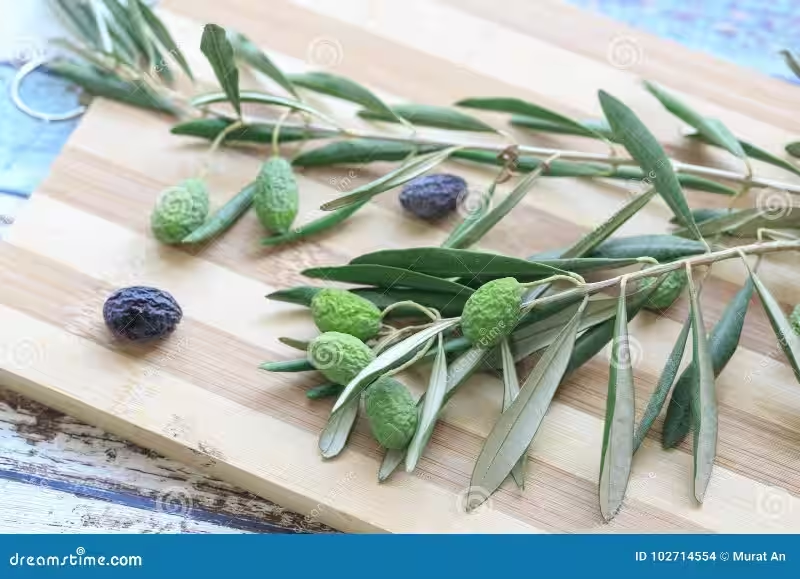
The concept of the dove as a symbol of peace, purity, and the divine is ancient, predating the specific imagery of the Milagro Paloma itself. From the biblical account of Noah’s ark, where a dove returning with an olive branch signaled the end of the flood and the promise of renewal, to its association with the Holy Spirit in Christianity, the dove has consistently represented a divine message or a blessing. The Milagro Paloma takes this established symbolism and imbues it with a more personal, tangible quality, transforming an abstract concept into a physical object of reverence and petition. It’s a tangible representation of a prayer, a plea, or a thanksgiving, a small beacon of faith in the everyday. Understanding the significance of the Milagro Paloma offers a window into the heart of many religious practices, revealing the universal human desire for miracles and the solace found in believing in something greater than ourselves.
The Symbolism of the Milagro Paloma: More Than Just a Dove
At its core, the Milagro Paloma is a votive offering, a small devotional object created and offered in fulfillment of a vow or in petition for a miracle. These charming, often hand-crafted figures are imbued with immense personal meaning for those who possess them. They are not simply art pieces; they are vessels of prayer, tangible reminders of a difficult situation overcome, or a fervent hope for divine assistance. The craftsmanship itself, though often simple, carries weight. Each stroke of the metal, each curve of the wood, can be seen as a testament to the devotion of the maker and the earnestness of the petitioner. The very act of creating or acquiring a Milagro Paloma is an act of faith, a declaration of belief in the possibility of the miraculous.
The dove, as the chosen form, carries layers of rich symbolic meaning across numerous cultures and religions. In Christianity, it is universally recognized as the embodiment of the Holy Spirit, descending upon Jesus at his baptism, signifying divine presence and empowerment. In this context, a Milagro Paloma can represent a prayer for guidance, comfort, or the strength to face challenges with spiritual fortitude. Beyond Christianity, the dove’s association with peace and love is widespread. It can be seen as a plea for reconciliation, for healing in relationships, or for a general sense of tranquility in a turbulent world. When someone holds a Milagro Paloma, they are not just holding a trinket; they are holding a concentrated symbol of their most heartfelt desires and their unshakeable faith in divine benevolence.
Origins and Traditions: Where the Milagro Paloma Finds Its Home
The practice of offering votive objects, or milagros, has deep roots in various religious traditions, particularly within Catholicism and folk religious practices throughout Latin America and parts of Europe. These small ex-votos (Latin for “by vow”) are typically offered to saints or deities in exchange for answered prayers, healing from illness, protection from harm, or the successful completion of a difficult task. The Milagro Paloma is a specific manifestation of this broader tradition, focusing the devotional energy on the powerful symbolism of the dove. Imagine a family facing a severe illness; they might create or purchase a Milagro Paloma and place it on their home altar, praying daily for the recovery of their loved one, seeing the dove as a messenger of divine healing.
While strongly associated with Mexican folk art and Catholicism, the sentiment behind the Milagro Paloma resonates across a spectrum of religious belief. The essential act is one of offering and petition, a belief in the efficacy of prayer and the responsiveness of the divine. In many humble homes, a Milagro Paloma might hang above a doorway for protection, rest on a bedside table as a source of comfort during illness, or be placed on a mantelpiece as a constant reminder of answered prayers and blessings received. The specific saint or divine figure invoked can vary, but the core message of the Milagro Paloma – hope, peace, and the possibility of divine intervention – remains a constant, a gentle but persistent reminder that individuals are not alone in their struggles and aspirations.
The Personal Significance: A Milagro Paloma in Your Own Life
For many, the Milagro Paloma is not just an object of religious veneration but a deeply personal talisman, a tangible link to profound moments of spiritual experience. It might be a gift from a beloved grandparent, representing a legacy of faith, or a piece acquired during a pilgrimage, marking a significant spiritual journey. The stories attached to these small figures are often intensely personal, weaving individual narratives of hardship, gratitude, and unwavering belief into the fabric of religious devotion. A young person might receive a Milagro Paloma from their ailing parent, with the silent understanding that it carries the weight of their shared hope for recovery, a constant companion through difficult days.
The act of caring for a Milagro Paloma is itself a form of spiritual practice. It involves regular prayer, reflection, and a conscious acknowledgment of the divine. Whether it’s a simple tin dove or an intricately crafted silver one, its presence serves as a focal point for meditation and a reminder to maintain faith, especially during challenging times. Consider the simple ritual of dusting your Milagro Paloma each morning; this small act can be an intentional moment to connect with your faith, to offer gratitude for the blessings already received, and to set intentions for the day ahead. It’s a quiet affirmation that even in the midst of life’s storms, hope, symbolized by the gentle flight of the dove, is always present.
Finding Solace and Strength: The Enduring Appeal of the Milagro Paloma
In a world that often feels chaotic and uncertain, the Milagro Paloma offers a powerful symbol of enduring peace and divine reassurance. Its humble beauty and profound symbolism resonate with individuals seeking comfort, protection, and a tangible connection to something larger than themselves. The very act of acknowledging and displaying a Milagro Paloma is an act of faith, a quiet declaration that even in the face of adversity, hope and divine grace are accessible. It’s a testament to the human spirit’s capacity for resilience and its unyielding belief in the possibility of miracles, big or small.
The enduring appeal of the Milagro Paloma lies in its ability to translate complex spiritual concepts into a simple, relatable form. It reminds us that faith is not always about grand pronouncements but often about quiet devotion and persistent hope. Whether it’s a prayer for inner peace, a plea for reconciliation, or a thank you for a burden lifted, the Milagro Paloma serves as a constant, gentle reminder of the divine presence that surrounds us. In its small, often delicate form, it carries the weight of countless prayers and the unwavering belief that even the softest whisper of hope can lead to miraculous change.
Frequently Asked Questions about Milagro Paloma and Religion
What is Milagro Paloma?
Milagro Paloma is a term that can refer to a few different concepts, most commonly:
A specific devotional object: In this context, it’s a small charm or amulet, often in the shape of a dove (paloma), that is believed to hold the power of a miracle (milagro) or to be a symbol of good luck, peace, or divine intervention. These are often found in folk art and religious traditions.
A spiritual or religious concept: It can represent a divine message of peace, hope, or a miraculous event associated with a dove.
How does Milagro Paloma relate to religion?
The connection to religion is often strong, though it can vary depending on the specific tradition.
Catholicism and Folk Catholicism: Doves are significant symbols in Christianity, representing the Holy Spirit. Milagro paloma objects are frequently found in Catholic devotional practices, especially in Latin America, where they are used for prayer, protection, and as offerings for blessings or answered prayers.
Other Spiritual Traditions: The symbolism of the dove as a messenger of peace and the concept of miracles are not exclusive to Catholicism and can be found in various spiritual and New Age practices.
Are Milagro Paloma objects considered idols or worshipped?
Generally, no. Milagro paloma objects are typically considered devotional aids or symbols. Devotees may pray to God or a specific saint through or with the object, seeking intercession or expressing faith, rather than worshipping the object itself. It’s similar to how a rosary is used in prayer.
Where can I find Milagro Paloma objects?
These items are often found in:
Religious supply stores.
Folk art markets, particularly in regions with strong Catholic or folk art traditions (e.g., Mexico, parts of Latin America).
Online retailers specializing in religious or artisanal goods.
What kind of miracles or blessings are associated with Milagro Paloma?
The blessings sought are diverse and often personal. Common associations include: