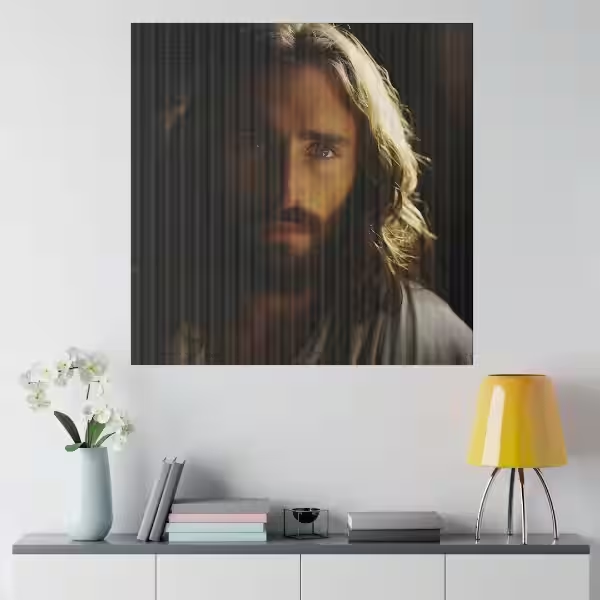
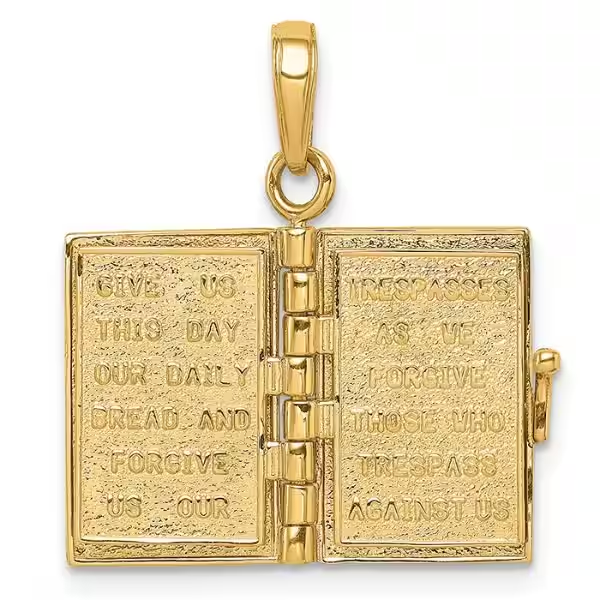
For centuries, the humble tin picture has held a significant, often deeply personal, place in the practice of religious devotion. Far from being mere decorative items, these metal images, typically made of pressed or etched tin, have served as powerful conduits for faith, offering solace, inspiration, and a tangible connection to the divine. Their accessibility and durability have made them a cornerstone of religious art for many, transcending social strata and geographical boundaries.
This article will explore the multifaceted role of the tin picture in religious contexts, examining its historical significance, its devotional function, and the enduring reasons for its continued relevance in our modern world. We will delve into how these simple yet profound objects have been used to foster prayer, commemorate sacred events, and act as powerful talismans of faith for individuals and communities alike.
The genesis of the tin picture as a religious artifact is rooted in its affordability and widespread availability. Unlike ornate paintings or carved statues, which were often confined to churches or wealthy patrons, tin pictures offered a democratic approach to religious imagery. This allowed ordinary people to bring sacred scenes and figures into their homes, transforming humble dwellings into spaces of spiritual reflection.
The process of creating tin pictures often involved lithography or stamping techniques, allowing for mass production. This meant that a wide array of religious subjects, from depictions of Jesus and Mary to saints and biblical narratives, could be readily disseminated. Imagine a family in a small village, gathering around a simple wooden table, their prayers illuminated by the soft glow reflecting off a tin picture of St. Christopher, their patron saint for safe travels. This accessible art form brought the grandeur of religious stories into the intimate sphere of family life.
From Workshops to Worship: The Craftsmanship of Faith
The creation of a tin picture was, and often still is, a craft imbued with intention and reverence. While mass-produced, the designs themselves were carefully curated to convey theological messages and inspire piety. The lines, though often simple, were deliberate, and the metallic sheen added a unique luminescence that could be particularly striking in the flickering candlelight of a prayer room.
Artisans who specialized in tin pictures understood the power of iconography. They knew that a particular gesture, a specific halo, or the arrangement of figures in a religious tin image could evoke a cascade of spiritual associations for the devout. Consider the difference between a tin picture showing a serene, benevolent Christ and one depicting him in a more suffering, sacrificial pose; each elicits a distinct emotional and spiritual response, guiding the viewer’s contemplation. The meticulous detail, even in seemingly basic designs, served to deepen the connection between the viewer and the sacred subject.
The primary function of a tin picture in religious life has always been its capacity to aid in devotion. These sacred visuals serve as focal points for prayer, meditation, and contemplation, helping believers to connect with their faith on a deeper, more personal level. The very act of gazing upon a tin picture can transport the mind, fostering a sense of presence and communion with the divine.
These metal icons are not static objects; they are active participants in the spiritual journey of the individual. They can be kissed, touched, or held during prayer, becoming a tactile reminder of the sacred. For many, a tin picture acts as a silent companion, offering comfort during times of hardship and celebrating moments of joy. The tangible nature of the tin provides a grounding element, making abstract spiritual concepts feel more real and accessible.
A Personal Altar in Every Home
The tin picture has played a crucial role in personalizing religious practice, allowing individuals to curate their own sacred spaces. Whether displayed on a mantelpiece, a bedside table, or a small shelf dedicated to prayer, these devotional images transform ordinary spaces into sanctuaries. This personalization of worship is a powerful aspect of their enduring appeal.
For instance, a tin picture of the Virgin Mary might be placed near a child’s bed, offering protection and a gentle presence during sleep. Conversely, a tin picture of a specific saint might be prominently displayed in a workshop, a constant reminder of their intercession and guidance in one’s daily work. The placement and selection of a tin picture are therefore deeply personal choices, reflecting individual needs, beliefs, and spiritual aspirations. It’s like creating a mini-chapel, tailored precisely to one’s spiritual landscape.
Tin Pictures as Vessels of Memory and Hope
Beyond their role in active prayer, tin pictures often become repositories of cherished memories and symbols of enduring hope. They can be passed down through generations, carrying with them the spiritual legacy of family members and commemorating significant life events. The tin picture becomes a bridge between the past, present, and future, connecting individuals to a lineage of faith.
The durability of tin is a significant factor in its longevity as a devotional object. Unlike paper prints that can fade and degrade, a well-preserved tin picture can last for decades, even centuries. This resilience mirrors the enduring nature of faith itself. A family might keep a tin picture of a wedding or a baptism, a constant reminder of sacred vows and divine blessings. This visual testament serves as both a historical record and a perpetual source of spiritual encouragement.
Commemorating Sacred Journeys and Miracles
Throughout history, tin pictures have been used to commemorate pilgrimage journeys or to give thanks for answered prayers. A traveler might acquire a tin picture of a holy site as a memento of their sacred journey, a tangible reminder of the spiritual destination. Likewise, after experiencing a perceived miracle or receiving divine intervention, a tin picture might be acquired or commissioned as a thanksgiving offering.
Think of the many tin pictures depicting St. Jude, the patron saint of lost causes and desperate situations. For someone facing immense challenges, possessing such a tin picture is not just about visual representation; it’s about holding a symbol of unwavering hope and the belief in divine assistance. These simple metallic images become powerful anchors in the storm of life, offering a constant reminder that even in the darkest hours, spiritual support is available. The resilience of the tin can feel almost symbolic of the resilience of the human spirit in the face of adversity.
The Enduring Relevance of the Tin Picture Today
In an age dominated by digital media and ephemeral online content, the tin picture might seem like an anachronism. Yet, its continued presence in religious communities speaks volumes about its enduring appeal. The tactile, tangible nature of a tin picture offers a welcome counterpoint to the disembodied experience of online faith.
The simplicity of the medium also allows for a direct and unadorned connection to the divine. There are no distracting digital interfaces or complex narratives to navigate; just the stark, often beautiful, image on metal. This uncluttered focus can be incredibly powerful in fostering concentration and spiritual depth. The inherent simplicity of a tin picture allows the viewer’s own devotion and interpretation to fill in the emotional and spiritual nuances.
A Connection to Tradition and Authenticity
For many, the tin picture represents a connection to a long-standing tradition of religious art and devotion. It evokes a sense of authenticity and continuity, a link to the faith practices of ancestors and the wider religious community. This historical resonance adds a layer of depth and meaning that newer forms of religious imagery may not possess.
In conclusion, the tin picture, in its humble yet profound way, has served and continues to serve as a vital element in the landscape of religious devotion. From its role as an accessible canvas for sacred stories to its power as a personal altar and a vessel of memory and hope, the tin picture remains a testament to the enduring human need for tangible connections to the divine. Its simple elegance and profound impact ensure its continued relevance for generations to come. The next time you encounter a tin picture, take a moment to appreciate the layers of faith, memory, and devotion it might hold.
Frequently Asked Questions about Tin Pictures
What is a tin picture?
A tin picture, also commonly referred to as a tin sign or metal sign, is typically a decorative or informative item made from sheet metal, most often tin-plated steel. These are often printed with images, text, or designs, and have been used for advertising, decoration, and as collectibles.
What is the religious significance of tin pictures?
Tin pictures themselves do not inherently possess religious significance. However, they can be used to depict religious imagery, figures, or symbols. For example, a tin picture might feature a depiction of a saint, a religious scene from scripture, or a prayer. In such cases, the tin picture serves as a medium for expressing or displaying religious devotion or belief.
Are tin pictures used in religious practices?
While not a traditional religious artifact in the same way as icons or statues, tin pictures depicting religious themes can be used in personal devotion or as decorative elements in religious settings. For instance, a devout individual might hang a tin picture of a patron saint in their home as a reminder and source of inspiration. They are generally considered decorative or commemorative items rather than objects of worship.
Can tin pictures be considered sacred objects?
Generally, tin pictures are not considered sacred objects. Their sacredness would derive entirely from the religious imagery or text they portray and the individual’s or community’s belief in that imagery’s spiritual importance. The material itself (tin) is not imbued with religious sanctity.
Where can I find tin pictures with religious themes?
Religious-themed tin pictures can be found in various places, including religious supply stores, souvenir shops near religious sites, online marketplaces, and antique or collectible dealers.