More Than Just Words: The Meaning Behind Catholic Prayers Before Meals
For many Catholics, the moment before a meal is a familiar ritual: a brief pause, a spoken prayer, and then the enjoyment of sustenance. But what lies beneath this seemingly simple act? The prayer before food Catholic tradition is far more than a rote recitation; it’s a profound expression of gratitude, a recognition of God’s providence, and a conscious act of spiritual grounding. It’s about taking a beat in our busy lives to acknowledge the source of our nourishment and to ask for a blessing upon it and upon ourselves, transforming a mundane act into a sacred one.
This practice, deeply rooted in Catholic faith, allows us to intentionally connect with God before we consume the food that sustains our bodies. It’s an invitation to remember that every meal, from a simple breakfast to a grand feast, is a gift. This prayer serves as a reminder of our dependence on divine grace, fostering humility and a sense of awe for the abundance we often take for granted. Consider the farmer who toiled, the laborers who transported, and the hands that prepared your meal – all are part of a chain of Providence that ultimately leads back to God.
The Core Elements of a Catholic Meal Prayer
At its heart, a prayer before food Catholic observance typically encompasses a few key sentiments. Firstly, there is gratitude. We thank God for the food itself, recognizing it as a blessing. This gratitude extends to all those involved in bringing the meal to our table, acknowledging their efforts as instruments of God’s care. Secondly, there’s a plea for blessing. Catholics ask God to bless the food, making it wholesome and nourishing for their bodies, and also to bless them, enabling them to be nourished spiritually as well.
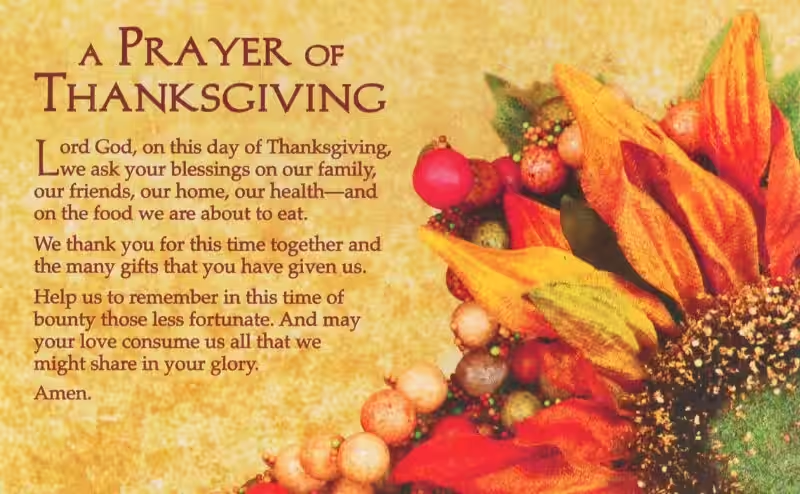
Finally, and often implicitly, there’s a prayer for those who have less. While not always explicitly stated in every short prayer, the underlying spirit of Catholic meal blessings is one of solidarity and compassion. It’s a moment to reflect on the global reality of hunger and to pray for those who are less fortunate, fostering a sense of shared humanity and divine responsibility. This can be as simple as a silent reflection or a more vocal prayer for the less fortunate, extending the grace of the meal beyond our own immediate circle.
Common Catholic Prayers Before Food: Examples and Their Significance
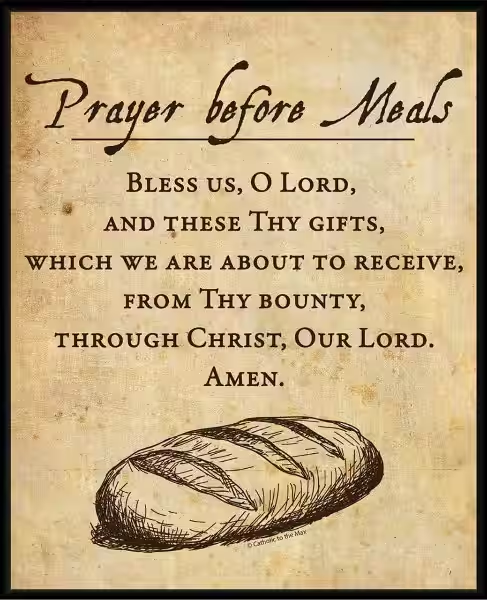
The beauty of Catholic tradition lies in its diversity, and this extends to the prayer before food Catholic customs. While there are commonly recited prayers, the most impactful ones are those spoken with sincerity and a genuine heart. These prayers can be formal, like the traditional “Bless us, O Lord, and these thy gifts, which we are about to receive from thy bounty, through Christ our Lord. Amen,” or more personal, reflecting the specific circumstances of the meal and the individuals present.
Let’s explore a few common variations and their underlying significance:
“Bless us, O Lord, and these thy gifts…”: This is perhaps the most widely recognized Catholic meal prayer. It’s concise, direct, and encompasses the core elements of gratitude and a plea for blessing. The phrase “from thy bounty” directly acknowledges God as the ultimate provider, emphasizing divine generosity.
“For the food we are about to receive, for the hands that prepared it, for the love with which it is shared, we give thanks to God.”: This version expands upon the traditional prayer by specifically mentioning the hands that prepared the food and the love involved. It highlights the human element in the provision of sustenance and the importance of love in the act of sharing a meal, a cornerstone of Catholic family life.
“Come, Lord Jesus, be our Guest, and bless this food, which Thou hast given us.”: This prayer has a slightly more personal and relational feel, inviting Jesus to be present at the meal. It emphasizes the communal aspect of faith and the desire for Christ’s presence in all aspects of life, including the simple act of eating together.
The significance lies not just in the words themselves, but in the intention behind them. A prayer spoken with a distracted mind might feel hollow, while one uttered with a grateful heart, even if simpler, can be deeply meaningful. This practice encourages mindfulness and presence, drawing us out of our personal worries and into a moment of spiritual connection.
Personalizing Your Prayer: Making it Your Own
While established prayers are valuable, the Catholic faith also encourages personal prayer. This means that during your prayer before food Catholic ritual, you can adapt or create your own words to reflect your unique situation. Did someone go through a difficult day? You can include a prayer for their strength. Is there a special occasion? Your prayer can acknowledge the joy. The key is to speak from the heart, expressing genuine feelings of gratitude, petition, or reflection.
Think of it like this: if you were thanking a friend for a gift, you wouldn’t just say “Thanks.” You might add, “This is exactly what I needed!” or “I can’t wait to use this!” Similarly, a personalized prayer before food Catholic experience can be more impactful. You might say, “Thank you, Lord, for this meal after a long day’s work,” or “We pray for peace in our family as we gather to share this food.” These personal touches deepen the connection and make the prayer a more authentic expression of your faith.
The Spiritual Benefits of a Regular Prayer Before Food Practice
Adopting and maintaining a prayer before food Catholic routine offers a wealth of spiritual benefits that extend far beyond the dinner table. This consistent practice cultivates gratitude, a virtue that can transform our perspective on life. When we regularly acknowledge God’s gifts, we are less prone to complaining and more likely to appreciate the blessings we have, no matter how small. This can lead to a more positive outlook and a greater sense of contentment.
Furthermore, incorporating this prayer into your daily life helps to foster humility. It’s a daily reminder that we are not self-sufficient, but rather recipients of God’s grace. This can temper pride and encourage a more dependent relationship with God, trusting in His provision. It also serves as a spiritual anchor in our often chaotic world, providing a moment of peace and reflection before engaging in the daily rhythm of life.
The consistent practice of saying a prayer before food Catholic blessing can significantly contribute to a deepening of your relationship with God. It transforms a mundane activity into a sacred encounter, inviting God’s presence into every aspect of your life. This regular, intentional engagement nurtures a sense of divine intimacy and reinforces the belief that God is present and active in the ordinary moments.
This shared moment, even if solitary, acts as a constant conversation with the divine. It’s like sending a regular text message to a loved one, keeping the connection alive. The act of pausing, reflecting, and offering thanks can quiet the internal noise of worries and distractions, opening up space for divine communication and guidance. Over time, this consistent practice can foster a profound sense of peace and spiritual resilience, making you more attuned to God’s will and presence in your life.
Making Prayer Before Food a Meaningful Family Tradition
For Catholic families, the prayer before food Catholic tradition presents a golden opportunity to instill faith in younger generations and to strengthen family bonds. When parents and children pray together before meals, it becomes a shared experience of faith, demonstrating that God is an integral part of their family life. This consistent practice can create lasting memories and a strong foundation of faith for children as they grow.
Consider the simple act of passing a bowl of food. If this is accompanied by a shared prayer, it transforms from a mere act of service to a symbol of unity and shared blessings. Children learn by example, and witnessing their parents engage in prayer with reverence and gratitude teaches them the importance of this spiritual discipline. This can also be a time for teaching and discussion, where parents can explain the meaning behind the prayer and connect it to broader Catholic teachings.
Engaging Children in the Prayer Before Food Ritual
Getting children actively involved in the prayer before food Catholic ritual is key to making it engaging and meaningful for them. Instead of simply reciting the prayer for children, encourage them to participate. You can start by letting them lead a simple prayer, or by asking them to name something they are thankful for at that meal. This empowers them and fosters ownership of the practice.
Here are some ideas to make it more interactive:
Assign roles: Older children can be responsible for initiating the prayer, while younger ones can be encouraged to say “Amen.”
Use visual aids: For very young children, you could use pictures or small toys representing food items or blessings to help them understand the prayer’s context.
Storytelling: Connect the prayer to stories from the Bible or lives of saints, explaining how they also gave thanks for God’s gifts.
Make it a game: For younger children, you could turn it into a simple game of “thank you,” where everyone names something they are thankful for before the prayer.
By making the prayer before food Catholic experience interactive and relevant, you help children understand its significance and develop a lifelong habit of faithful gratitude. It’s about creating a joyful and reverent atmosphere around the meal table, where faith is celebrated.
This practice, when embraced with intention and love, enriches not only our meals but our very souls. It’s a simple yet profound way to live out our Catholic faith in the everyday moments of life, transforming ordinary meals into sacred feasts of gratitude and divine connection.
Frequently Asked Questions: Catholic Prayer Before Food
Why do Catholics pray before eating?
Catholics pray before eating as a way to express gratitude to God for the food He provides, to thank Him for His blessings, and to ask for His grace to nourish their bodies and souls. It’s a spiritual discipline that acknowledges God’s presence in all aspects of life, including the sustenance we receive.
What is the most common Catholic prayer before food?
The most common prayer is a simple blessing, often referred to as “grace before meals.” While there are variations, a common form is: “Bless us, O Lord, and these Thy gifts, which we are about to receive from Thy bounty, through Christ our Lord. Amen.”
Is there a specific prayer for every meal?
While the grace before meals is the most common, Catholics can also offer spontaneous prayers of thanksgiving or use other traditional blessings. The intent is to give thanks, and the specific words are less important than the sincere heart behind them.
Does the Church require a specific prayer?
The Catholic Church encourages prayer before meals as a pious practice. While a specific prayer is not strictly mandated in the sense of a sin if omitted, it is a highly recommended and traditional part of Catholic life.
What is the meaning of “through Christ our Lord. Amen.”?
This phrase signifies that all blessings come to us through Jesus Christ. It acknowledges His role as mediator between God and humanity and His sacrifice that makes all spiritual graces possible. “Amen” means “so be it,” affirming our acceptance of the prayer.
Can children pray before meals?
Absolutely. Teaching children to pray before meals is a valuable way to instill faith and gratitude from a young age. Simple, age-appropriate prayers are encouraged.
What if I forget to pray before eating?
If you forget to pray before a meal, you can offer a prayer of thanksgiving afterward. The important thing is the spirit of gratitude, and God understands our human forgetfulness.
Are there other Catholic prayers related to food?
Yes, there is also a prayer of thanksgiving after meals, often called “grace after meals.” A common version is: “We give Thee thanks, O Lord, for all Thy gifts, who livest and reignest, world without end. Amen.” This prayer expresses continued gratitude for the nourishment received.