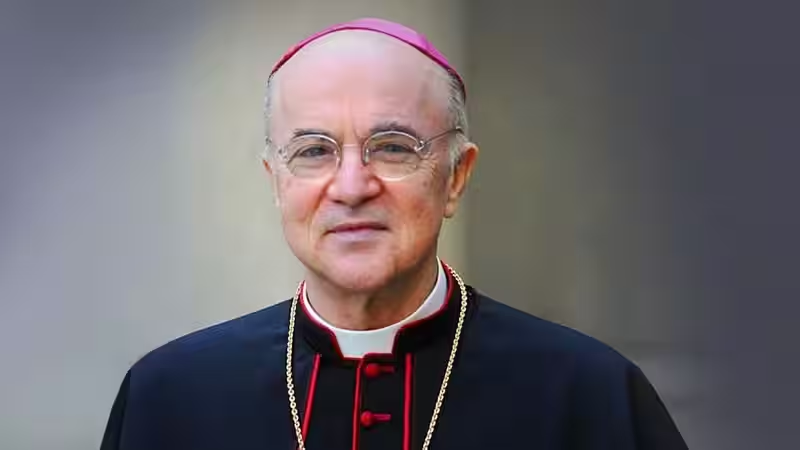
The landscape of contemporary religion is rarely static. It’s a vibrant, often contentious, tapestry woven with threads of ancient tradition, personal conviction, and the ever-present influence of evolving societal norms. Within this dynamic environment, certain figures emerge that not only represent a specific theological perspective but also become focal points for broader discussions about the direction and challenges facing organized faith. Archbishop Carlo Maria Viganò is undoubtedly one such figure, a prelate whose pronouncements have sparked considerable debate, revealing deeper anxieties and aspirations within the religious sphere. His interventions, often delivered with unyielding conviction, invite us to examine the very foundations of religious authority and the role of religion in a rapidly changing world.
This article aims to explore the significance of Archbishop Viganò’s contributions to contemporary religious discourse, not simply as an individual voice, but as a lens through which we can understand the complex forces at play in the religious lives of many. We will delve into the core issues he raises, the reactions he elicits, and what his presence signifies for the future of religion itself. By understanding the context and impact of his statements, readers can gain a more nuanced appreciation of the multifaceted nature of faith and the challenges it faces today.
The Voice of Discontent: Archbishop Viganò’s Challenge to the Establishment
Archbishop Viganò has become a prominent voice for a segment of the faithful who feel alienated or unheard within the established structures of religion, particularly within the Catholic Church. His most widely publicized interventions have often been characterized by a strong critique of perceived liberalism and theological compromise within the hierarchy. This resonates with many who feel that traditional doctrines and practices are being eroded or reinterpreted in ways that diminish their spiritual potency. For them, Archbishop Viganò represents a courageous defender of immutable truth, a figure willing to speak uncomfortable truths to power.
Consider the analogy of a beloved family recipe. Some family members might feel that newer generations are altering the ingredients, making it less authentic. Archbishop Viganò, in this scenario, would be the one passionately advocating for the original recipe, believing that the changes dilute its essence and its power to nourish. His critics, however, often view his stance as rigid and uncharitable, failing to acknowledge the need for pastoral adaptation and inclusivity in a diverse world. This fundamental difference in perspective highlights the ongoing tension between preserving tradition and responding to the evolving needs and understandings of believers. His pronouncements have thus become a litmus test for where individuals stand on these crucial religious debates.
Unpacking the Core Criticisms: Tradition, Authority, and the Modern World
At the heart of Archbishop Viganò’s critiques lies a profound concern for the preservation of traditional doctrine and morality. He frequently articulates a vision of religion as a divinely revealed, unchanging truth, and views deviations from this as a dangerous departure that jeopardizes the spiritual well-being of individuals and the Church as a whole. This includes a strong emphasis on scriptural interpretation as historically understood and a skepticism towards what he perceives as secular influences creeping into religious thought and practice. His warnings often center on the idea that compromising with the prevailing cultural currents can lead to a dilution of faith’s transformative power.
For instance, when discussing ethical issues, Archbishop Viganò often adheres to a principled stance rooted in long-standing theological teachings. This can manifest in his views on social issues, where he might lament what he sees as an accommodation of certain modern ideologies that he believes are incompatible with religious principles. This commitment to a perceived moral absoluteness is a significant part of his appeal to those who feel that religion is becoming too accommodating and losing its prophetic voice. He sees himself as standing firm against what he terms a “religion of man” as opposed to a “religion of God.”
The Role of Authority: A Crisis of Confidence?
A recurring theme in Archbishop Viganò’s discourse is the nature and exercise of religious authority. He has been particularly vocal in questioning the actions and decisions of certain leaders within the Catholic Church, often suggesting a loss of fidelity to their sacred office. This concern extends to the transparency and accountability of religious institutions, particularly in light of past scandals. For his supporters, this is a call for restoration and integrity within the hierarchy, a demand that those in positions of leadership live up to the highest moral and theological standards. They see him as a voice of conscience for the faithful, holding leaders accountable.
This can be understood through the lens of a community looking to its elders for guidance and wisdom. If those elders are perceived to be failing in their responsibilities, or even contributing to the community’s problems, a sense of unease and a desire for reform naturally arise. Archbishop Viganò’s willingness to publicly articulate these concerns, even when they are uncomfortable, has earned him a following among those who feel a crisis of confidence in current leadership. His emphasis on pastoral responsibility and spiritual stewardship resonates with a desire for authentic leadership in religious communities. He often highlights the importance of sound doctrine and faithful adherence to tradition as benchmarks for legitimate authority.
The Impact and Reception: A Polarizing Figure in Religious Discourse
Archbishop Viganò is undeniably a polarizing figure. His pronouncements elicit strong reactions, ranging from fervent admiration and support to sharp criticism and rejection. For a significant number of individuals, particularly within traditionalist Catholic circles, he is a heroic figure, a beacon of truth in a sea of ambiguity. They view his willingness to speak out against what he perceives as deviations from core religious tenets as an act of extraordinary courage and fidelity. His supporters often praise his intellectual rigor and unwavering commitment to Catholic doctrine. They see his interventions as essential for the spiritual health of the Church.
On the other hand, many within the mainstream of religious institutions and among more progressive believers view his statements with deep concern. They often characterize his approach as divisive, unforgiving, and out of touch with the realities of the modern world. Critics point to the potential for his rhetoric to alienate individuals and foster an atmosphere of intolerance and judgment. For them, his emphasis on what they see as a narrow interpretation of doctrine risks undermining the inclusive and compassionate message they believe is central to their faith. This stark divergence in reception underscores the deep divisions that exist within contemporary religious communities.
Navigating Faith in a Complex World: What Viganò Represents
Ultimately, Archbishop Viganò’s prominence in religious discourse serves as a powerful indicator of ongoing struggles within faith communities to navigate the complexities of the modern world. His voice, amplified by the internet and social media, taps into a deep-seated yearning for certainty and authenticity among some believers. In an era characterized by rapid change, shifting moral landscapes, and increasing secularization, the appeal of a clear, unwavering message rooted in tradition can be very strong. For those feeling adrift in a sea of evolving societal values, his pronouncements offer a sense of anchor and a reaffirmation of enduring principles.
His interventions also highlight the ongoing tension between tradition and adaptation that is a constant feature of religious life. Should religion remain a steadfast bulwark against secular influences, or should it evolve to meet the changing needs and understandings of its adherents? This is a question that Archbishop Viganò’s public life compels us to consider. His willingness to challenge established norms, even within his own religious tradition, forces a re-examination of what it means to be faithful in the 21st century. The debates he sparks are not merely about one individual, but about the very future and relevance of organized religion in a world that is constantly in flux. His legacy is intrinsically tied to these ongoing conversations about the essence and practice of faith.
Frequently Asked Questions about Archbishop Vigano and Religion
Who is Archbishop Vigano?
Archbishop Carlo Maria Viganò is a former apostolic nuncio to the United States. He gained significant attention for his public statements and accusations concerning the Catholic Church and its leadership.
What are Archbishop Vigano’s main theological positions?
Archbishop Vigano is known for his conservative theological views, often emphasizing traditional Catholic doctrine and practice. He has been critical of perceived changes or “liberalization” within the Church, particularly in the wake of the Second Vatican Council.
What controversies has Archbishop Vigano been involved in?
Archbishop Vigano is most notably associated with the “Vatileaks” scandal and later, his public accusations against Pope Francis and other high-ranking Church officials. These accusations often relate to alleged cover-ups of clerical sexual abuse and perceived deviations from traditional Catholic teachings.
What is Archbishop Vigano’s stance on the current papacy?
Archbishop Vigano has been a vocal critic of Pope Francis. He has publicly called for Pope Francis’s resignation, accusing him of heresy and of undermining Catholic doctrine.
What is Archbishop Vigano’s view on ecumenism and interreligious dialogue?
While specific detailed statements on every aspect may vary, Archbishop Vigano generally expresses skepticism towards modern ecumenical efforts that he believes compromise the unique truth claims of Catholicism. He tends to favor a more traditional approach to evangelization rather than broader interreligious dialogue.
What is Archbishop Vigano’s perspective on the Catholic Church’s role in society?
Archbishop Vigano often advocates for a more assertive role of the Catholic Church in public life, emphasizing its moral authority and its teachings on social and political matters. He has been critical of what he perceives as the Church’s retreat from these roles in contemporary society.
Has Archbishop Vigano been excommunicated or formally sanctioned by the Catholic Church?
As of my last update, Archbishop Vigano has not been excommunicated or formally excommunicated by the Vatican. However, his public pronouncements and criticisms have led to significant controversy and division within the Church.