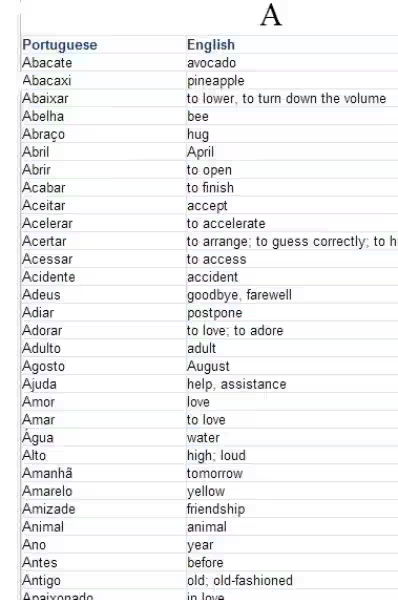
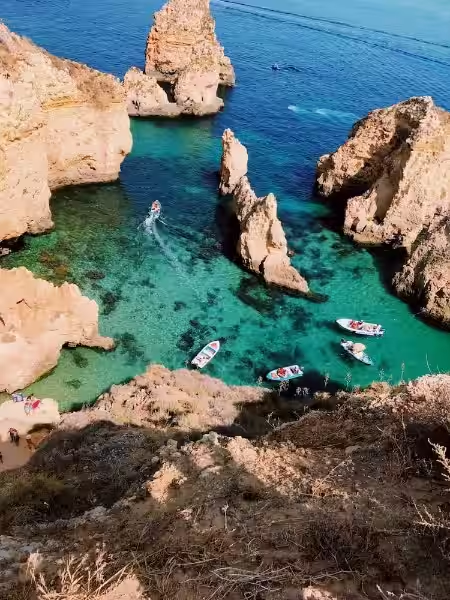
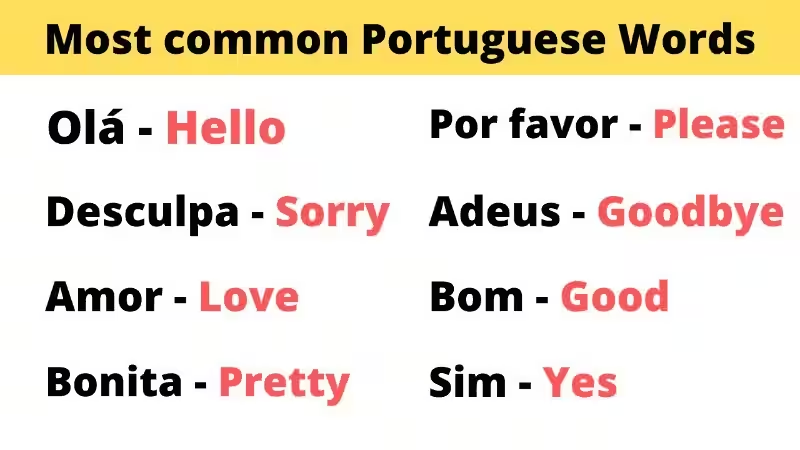
When we speak of Portugal, our minds often conjure images of sun-drenched beaches, historic castles, and the haunting melodies of Fado. Yet, beneath this picturesque surface lies a profound and intricate relationship between its people, their enduring faith, and the very essence of the Portugal words they use to express it. This is a land where spirituality is not merely a private affair but a woven thread in the fabric of daily life, influencing everything from local festivals to the humble greetings exchanged on a cobblestone street.
The linguistic landscape of Portugal is rich with terms that reflect centuries of devotion, from the grand pronouncements of faith in gilded cathedrals to the quiet whispers of prayer in a secluded chapel. Understanding these nuances offers a deeper appreciation for the soul of this captivating nation. It’s about more than just translation; it’s about grasping the cultural weight and historical resonance embedded in each utterance.
The Portuguese language is intrinsically linked to its religious heritage. Many everyday expressions, often used without a second thought, carry a religious undertone. For instance, the common farewell, “Até logo” (See you later), might seem secular, but the underlying sentiment of hope for a future reunion can be seen as a subtle echo of a belief in continuity and perhaps even divine providence. Similarly, phrases like “Graças a Deus” (Thanks to God) are not reserved for moments of profound gratitude but are often used to express relief after a minor inconvenience, demonstrating how deeply ingrained faith is in the collective consciousness.
Consider the prevalence of saints’ names in Portuguese towns and cities. Lisbon, the capital, is “Lisboa,” a name steeped in history and also famously associated with Saint Anthony, the patron saint of lost things. The saying “Pedir a Santo António” (to ask Saint Anthony) is a common plea for help, highlighting the personal and accessible nature of religious devotion. Even the simple act of crossing oneself, “fazer o sinal da cruz,” before embarking on a journey or facing a challenge, is a visual testament to the pervasive influence of faith, a silent prayer woven into the rhythm of movement.
The concept of a blessing, “bênção,” is central to Portuguese culture. It extends beyond the formal religious rite. Parents bless their children, elders offer blessings to the younger generation, and even a simple gesture of good luck can be framed as a blessing. This imbues everyday interactions with a sense of consecrated goodwill. When someone says, “Que Deus o abençoe” (May God bless you), it’s a heartfelt wish for well-being that resonates deeply, especially in times of uncertainty. This is a core aspect of the Portugal words that define their spiritual connection.
Think about the festivals that punctuate the Portuguese calendar. Many are deeply rooted in Catholic traditions. The Feast of Saint John, “Festas de São João,” in Porto is a vibrant example, with bonfires, music, and the tradition of hitting each other with plastic hammers. While seemingly playful, the underlying devotion to the saint and the symbolism of fire for purification are undeniable. These celebrations are not just historical reenactments; they are living expressions of faith, where laughter and reverence coexist, and where specific Portugal words associated with the saint are chanted with gusto.
The Sacred Landscape: Churches, Pilgrimages, and Portugal Words
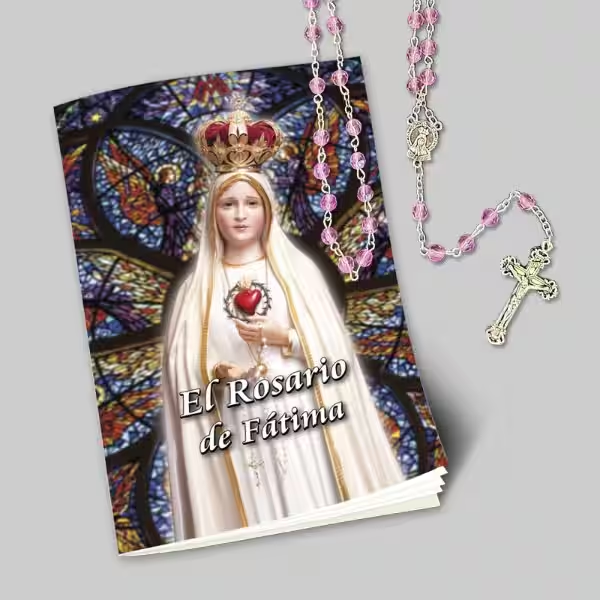
Portugal’s landscape is dotted with magnificent churches, monasteries, and shrines, each with its own story and spiritual significance. The Sanctuary of Fátima is perhaps the most internationally renowned, drawing millions of pilgrims annually. The story of the apparitions of the Virgin Mary in 1917 has left an indelible mark, and the prayers and hymns sung there, often in Portuguese, are powerful testaments to faith. The word “milagre” (miracle) is often whispered in hushed tones at Fátima, reflecting a deep-seated hope and belief in divine intervention.
Beyond Fátima, countless smaller sanctuaries and pilgrimage routes crisscross the country, like the Caminho de Santiago (Way of Saint James) which has a significant Portuguese section. These journeys, often undertaken on foot, are more than just physical challenges; they are spiritual pilgrimages. The shared experience, the quiet contemplation, and the sense of community forged among fellow travelers highlight the communal aspect of faith. The simple act of sharing a meal or a word of encouragement along the path becomes an act of shared humanity, amplified by the spiritual purpose of the journey.
From Devotion to Daily Life: The Nuances of Portugal Words
The influence of religion on Portuguese language is subtle yet pervasive. The word “fé” (faith) is not just about religious belief; it can also refer to trust and confidence in people or endeavors. For example, one might say, “Tenho fé que tudo vai correr bem” (I have faith that everything will go well), expressing optimism and resilience. This broader application of a religious term underscores its importance in the Portuguese worldview. It speaks to an inherent trust in the unfolding of events, a quiet confidence that things will, in time, align.
Even in moments of hardship, religious vocabulary often surfaces. Exclamations like “Meu Deus!” (My God!) are common when surprised or dismayed. The concept of “providência” (providence) plays a role in how many Portuguese people interpret life’s ups and downs, seeing a guiding hand even in adversity. This perspective fosters a sense of acceptance and resilience, a belief that there is a larger plan at work. The way these words are used, often with a sigh or a hopeful smile, reveals a profound connection to a spiritual framework that shapes their outlook.
The Lingering Spirit: Portugal Words and the Future
While Portugal, like many Western nations, has seen a rise in secularism, the echoes of its religious past remain vibrantly alive in its language and culture. The Portugal words we’ve explored are not relics of a bygone era; they are living expressions that continue to shape identity and connection. Even those who may not actively practice a religion often find themselves using these familiar phrases, a testament to their deep cultural embedding.
The enduring spirit of Portugal, expressed through its unique linguistic tapestry, is a blend of historical faith, unwavering resilience, and a profound connection to its heritage. Whether it’s a formal prayer in a historic church or a casual “Deus te ajude” (God help you) offered to a stranger, the sacred continues to permeate the everyday. This intricate interplay between language, religion, and daily life is what makes Portugal a truly captivating and soulful destination, offering a glimpse into a world where faith, in its many forms, continues to guide and inspire.
Portugal Words & Religion – Frequently Asked Questions
This section addresses common questions about Portuguese words and the role of religion in Portugal.
What are some common Portuguese words for greetings?
Some common Portuguese greetings include:
“Olá” (Hello)
“Bom dia” (Good morning)
“Boa tarde” (Good afternoon)
“Boa noite” (Good evening/night)
“Adeus” (Goodbye)
“Tchau” (Bye – informal)
What is the most widely spoken religion in Portugal?
The most widely spoken religion in Portugal is Christianity, specifically Roman Catholicism.
Are there any specific religious holidays that are widely celebrated in Portugal?
Yes, several religious holidays are widely celebrated. The most prominent include:
Christmas (Natal): Celebrated on December 25th.
Easter (Páscoa): A major Christian holiday with various observances.
Feast of Saint Anthony (Dia de Santo António): Celebrated on June 13th, especially in Lisbon, with festivals and processions.
Feast of Saint John (Dia de São João): Celebrated on June 24th, particularly in Porto, with bonfires and festivities.
All Saints’ Day (Dia de Todos os Santos): Celebrated on November 1st.
What does “Saudade” mean in Portuguese?
“Saudade” is a famously untranslatable Portuguese word that describes a deep emotional state of nostalgic or profound melancholic longing for an absent something or someone that one cares for and of which they have lost or been parted. It often carries a sense of loss and distance.
Is Portugal a secular country?
While Portugal is officially a secular state, Roman Catholicism has a strong historical and cultural influence. Freedom of religion is guaranteed, and there is no state religion.
What are some common Portuguese words for “thank you” and “please”?
The most common ways to express gratitude and politeness are:
“Obrigado” (Thank you – if you are male) / “Obrigada” (Thank you – if you are female)