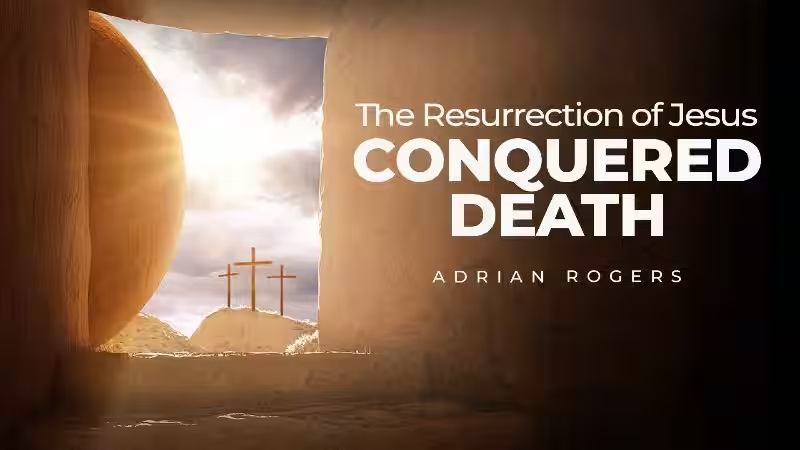
The cornerstone of Christian belief, the resurrection of Jesus Christ, is not merely a historical event but a transformative power that continues to shape the lives of millions. It’s the ultimate testament to God’s love and the victory over sin and death, offering a profound and enduring hope to believers across the globe. When we delve into the Jesus resurrection Bible verses, we uncover a narrative that is both deeply human and divinely triumphant, providing comfort, purpose, and an unshakeable foundation for faith.
This article will journey through the scriptural accounts of the resurrection, examining its significance and exploring how these ancient words resonate with timeless relevance today. We’ll consider the evidence presented in the Bible, the theological implications, and the personal impact this event has had on individuals and communities throughout history. Prepare to engage with passages that have ignited faith for centuries and discover the living power of the resurrection.
The very notion of the resurrection is anchored in the consistent testimony of multiple eyewitnesses. The Gospels of Matthew, Mark, Luke, and John all meticulously detail the events following Jesus’ crucifixion, with a particular focus on the discovery of the empty tomb. These accounts, while offering unique perspectives, collectively paint a powerful picture of a resurrected Savior. For instance, Matthew 28:6 famously declares, “He is not here; he has risen, just as he said.” This simple yet profound statement echoes through the centuries, a constant reminder of the miraculous nature of this event. The shock and awe of the women who first discovered the tomb, their initial fear giving way to bewildered joy, are palpable in these narratives.
Consider the scene: the stone rolled away, the tomb vacant, and angelic pronouncements confirming the impossible. This wasn’t a subtle hint; it was a bold declaration. The fear and confusion of the disciples, their initial disbelief, only serve to underscore the genuine nature of the resurrection. If it were a staged event, their reactions would likely have been different. Instead, we see a community grappling with an event that shattered their understanding of the world and God’s power. The discovery of the empty tomb is the first, crucial piece of evidence in the unfolding story of the resurrection.
Mark’s Account: The Hasty Revelation
The Gospel of Mark often presents a more direct and action-oriented narrative, and its account of the resurrection is no exception. It highlights the urgency and astonishment of the women who went to anoint Jesus’ body. Mark 16:4 describes their concern about the large stone blocking the entrance, only to find it had already been moved. Upon entering, they saw a young man in a white robe who declared, “Don’t be alarmed. You are looking for Jesus the Nazarene, who was crucified. He has risen! He is not here.” This sudden revelation, coupled with the women’s initial fear and trembling, emphasizes the overwhelming and unexpected nature of the resurrection. It’s a story that unfolds with a sense of breathless wonder.
Mark’s Gospel, with its characteristic brevity and focus on action, emphasizes the immediacy of the resurrection’s impact. The women are not given time for prolonged contemplation; they are immediately tasked with spreading the news. This urgent commission underscores the belief that this was not just a personal triumph for Jesus but a message of salvation for all humanity. The fear and awe experienced by the women are relatable emotions when faced with something that transcends our ordinary experience, making the biblical account feel incredibly real and immediate.
Post-Resurrection Appearances: Validating the Victory
The empty tomb, while significant, is only the beginning of the biblical testimony to Jesus’ resurrection. The Gospels and the book of Acts provide numerous accounts of Jesus appearing to his followers in his resurrected body. These post-resurrection appearances were not fleeting visions but tangible encounters that solidified the faith of the disciples and transformed them from fearful individuals into bold proclaimers of the Gospel. Luke 24:39 records Jesus himself saying, “Look at my hands and my feet. It is I myself! Touch me and see; a ghost does not have flesh and bones, as you see I have.” This direct appeal to their senses, including the invitation to touch him, demonstrates the physical reality of his resurrected form.
These appearances served a crucial purpose: to reassure and equip his followers for the mission he had entrusted to them. Imagine the disciples’ initial state of despair and confusion after the crucifixion. The resurrection appearances were like a divine balm, restoring their hope and igniting their courage. They saw Jesus eat, speak, and interact with them, dispelling any lingering doubts. These encounters were not just about proving the resurrection; they were about empowering the early church to carry on Jesus’ work, a testament to the enduring power of his presence even after his physical departure from earth.
The Appearance to Mary Magdalene: The First Witness to the Risen Christ
One of the most poignant and significant resurrection appearances is to Mary Magdalene. In John 20:14-16, we read how she, weeping outside the empty tomb, encounters Jesus. Initially, she mistakes him for the gardener, a testament to her grief and perhaps the changed appearance of the resurrected Christ. When Jesus calls her by name, “Mary,” her recognition is immediate and ecstatic. Her cry of “Rabboni!” (which means Teacher) signifies her profound joy and renewed devotion. This personal encounter highlights the intimate nature of God’s love and how Jesus prioritizes reaching out to those who are grieving and seeking him.
This encounter is incredibly significant because it positions a woman, often marginalized in ancient society, as the first witness to the resurrected Christ. It’s a powerful statement about the inclusivity of God’s kingdom. Mary’s immediate obedience to Jesus’ command, “Go tell my brothers and say to them, ‘I am ascending to my Father and your Father, to my God and your God,’” underscores the transformative impact of this personal encounter. Her grief turned to radiant joy, and her despair to a burning desire to share the good news.
Confronting Doubts: The Example of Thomas
The resurrection narrative also addresses the natural human tendency towards doubt. The story of Thomas, who was not present when Jesus first appeared to the other disciples, is a powerful example. He famously declared, “Unless I see the nail marks in his hands and put my finger where the nails were, and put my hand into his side, I will not believe” (John 20:25). When Jesus reappeared and specifically addressed Thomas’s skepticism, offering him the very proof he desired, Thomas’s doubt dissolved into unwavering faith. His exclamation, “My Lord and my God!” is a profound confession of Jesus’ divine nature.
This account is incredibly relatable. Many of us, at some point in our spiritual journey, grapple with questions and doubts. The Jesus resurrection Bible verses don’t shy away from acknowledging this. Jesus’ patient and loving response to Thomas demonstrates that faith isn’t about the absence of questions but about the willingness to seek and find truth. Thomas’s journey from doubt to confident declaration serves as an encouragement to all who wrestle with their faith, assuring them that God meets us where we are, offering grace and the opportunity to experience his reality firsthand.
Theological Significance: The Victory Over Death
The resurrection of Jesus is far more than just a historical event; it is the linchpin of Christian theology. It represents God’s ultimate triumph over sin and death, a victory that fundamentally alters the human condition for those who believe. 1 Corinthians 15:17 powerfully states, “And if Christ has not been raised, your faith is futile; you are still in your sins.” This verse highlights the absolute necessity of the resurrection for the validity of the Christian faith. Without it, the sacrifice of Jesus on the cross would be meaningless, and humanity would remain enslaved to the power of sin and the finality of death.
The resurrection is the divine validation of Jesus’ claims. It proves that he is who he said he was: the Son of God, the Messiah. It signifies that his sacrifice was accepted by God, a perfect atonement for the sins of the world. This is the central message of the Gospel: that through Jesus’ death and resurrection, we can be reconciled to God, forgiven of our sins, and offered the promise of eternal life. It’s the foundation upon which all other Christian doctrines are built, providing a solid and unshakeable hope in the face of life’s inevitable challenges.
The Promise of Eternal Life: Our Future Hope
Because Jesus was resurrected, believers are assured of their own future resurrection and eternal life. This is the ultimate promise embedded within the Jesus resurrection Bible verses. Romans 6:4 explains, “We were therefore buried with him through baptism into death in order that, just as Christ was raised from the dead through the glory of the Father, we too may live a new life.” This new life is not just for an afterlife; it begins now, with a transformed perspective and a renewed purpose. The resurrection ensures that death is not the end but a transition to an eternal existence with God.
This hope of eternal life is a powerful motivator and source of comfort. It provides perspective in times of suffering and loss, reminding us that earthly troubles are temporary. It fuels our desire to live lives that honor God, knowing that our ultimate destiny is one of perfect fellowship with him. The resurrection is the guarantee of this future, a promise sealed by Jesus’ victory over the grave. It’s the ultimate expression of God’s faithfulness and his desire for a relationship with humanity that transcends the limitations of this physical world.
The Impact of the Resurrection: Transforming Lives Today
The truth of the resurrection is not confined to ancient history; it has a profound and transformative impact on believers in the present day. It provides strength in weakness, hope in despair, and purpose in uncertainty. When we reflect on Acts 4:33, which speaks of the apostles testifying with “great power” about the resurrection of the Lord Jesus, we see the enduring legacy of this event. This power is not just for the apostles; it is available to all who place their faith in Christ.
The resurrection empowers believers to live lives of courage and conviction. It gives us the confidence to face challenges, knowing that the same power that raised Jesus from the dead is at work within us. It inspires us to live with purpose, to share the good news of salvation, and to make a positive impact on the world. The Jesus resurrection Bible verses are not just historical accounts; they are living words that continue to ignite faith, transform hearts, and equip believers for a life of service and hope.
Living a Resurrected Life: A Call to Newness
The resurrection of Jesus calls believers to live a “resurrected life” here and now. This means embracing a new identity in Christ, characterized by forgiveness, love, and service. 2 Corinthians 5:17 beautifully articulates this transformation: “Therefore, if anyone is in Christ, the new creation has come: the old has gone, the new is here!” This newness is a direct result of our union with Christ through his resurrection. It’s about stepping out of the old patterns of sin and despair and walking in the freedom and power of a life redeemed.
Living a resurrected life involves actively applying the truths of the resurrection to our daily experiences. It means choosing faith over fear, hope over doubt, and love over hate. It’s about recognizing that our past no longer defines us and that our future is secured in Christ. This is the practical outworking of our faith, demonstrating the reality of the resurrection in tangible ways through compassion, integrity, and a commitment to the values of God’s kingdom. The Jesus resurrection Bible verses provide the theological framework, and living a resurrected life is the personal application of that divine truth.
Conclusion: An Enduring Legacy of Hope
The Jesus resurrection Bible verses offer an unshakable foundation for Christian faith and a beacon of hope for humanity. From the empty tomb and the eyewitness accounts to the profound theological implications and the transformative impact on lives today, the resurrection of Jesus Christ stands as the ultimate testament to God’s power, love, and victory. It is a narrative that continues to inspire, comfort, and challenge, reminding us that in Christ, death has lost its sting, and life, abundant and eternal, is made possible.
As we continue to explore and embrace the truths of the resurrection, we are invited to live with a renewed sense of purpose and an unwavering hope. The Jesus resurrection Bible verses are not just ancient texts; they are a living invitation to experience the transformative power of a Risen Savior, offering us the promise of a new beginning and an eternal future secured by his triumph over the grave. This enduring legacy of hope is the most precious gift, available to all who believe.
Frequently Asked Questions: Jesus’ Resurrection and the Bible
What are the main Bible verses that talk about Jesus’ resurrection?
The primary accounts of Jesus’ resurrection are found in the Gospels: Matthew 28, Mark 16, Luke 24, and John 20-21. Additionally, the Apostle Paul discusses the resurrection extensively in 1 Corinthians 15 and elaborates on its significance in Romans 6 and 1 Corinthians 6.
Does the Bible say Jesus’ resurrection is a core belief?
Yes, the Apostle Paul states in 1 Corinthians 15:14, “And if Christ has not been raised, our preaching is in vain and your faith is in vain.” This highlights the resurrection as a foundational element of Christian faith.
Are there different interpretations of the resurrection accounts in the Bible?
While the core event of Jesus’ empty tomb and appearances to his followers is consistent across the Gospels, there are minor differences in the details of who went to the tomb, when, and what they saw or heard. These variations are often seen as complementary rather than contradictory, offering different perspectives on the same event.
What is the theological significance of Jesus’ resurrection according to the Bible?
The resurrection is understood as proof of Jesus’ divine identity, the victory over sin and death for believers, and the basis for the hope of eternal life. It signifies the validation of his sacrifice and teachings.
What does the Bible say about the resurrected body of Jesus?
The Gospels describe Jesus appearing to his disciples, eating with them, and being touched, indicating a physical reality. However, he also passed through locked doors, suggesting a transformed, glorified body distinct from a purely earthly one. 1 Corinthians 15 describes believers as having a “spiritual body” raised to immortality.
How does the resurrection relate to the concept of religion in general?
The resurrection of Jesus is a central tenet of Christianity, distinguishing it from many other religions. While other religions may have figures who achieved enlightenment or performed miracles, the physical resurrection of Jesus as a divine act of overcoming death is unique to Christianity and forms the basis of its salvific claims.