Introduction: Unveiling the Significance of Jesus Beads in Modern Faith
In the tapestry of religious devotion, certain objects transcend mere material form to become potent symbols of faith, prayer, and connection. Among these, Jesus beads stand out as a deeply personal and widely recognized emblem of Christianity. Far from being a simple piece of jewelry, these prayer beads, often crafted from wood, glass, or metal, carry a rich history and a profound spiritual weight. Their presence in the lives of believers, from ancient times to the present day, speaks to an enduring human need for tangible anchors in their spiritual journey. Whether worn around the wrist, carried in a pocket, or displayed in a place of reverence, Jesus beads serve as a constant reminder of divine presence and a powerful aid in prayer and meditation.
The evolution of Jesus beads mirrors the evolving landscape of religious practice. While their origins are intertwined with monastic traditions and the desire for consistent prayer, their accessibility has broadened, making them a familiar sight in diverse Christian communities. This article aims to explore the multifaceted significance of Jesus beads, delving into their historical roots, their practical application in prayer, and their enduring relevance in contemporary spiritual life. We will discover how these seemingly simple items can offer profound comfort, guidance, and a deeper connection to the divine, making them an invaluable tool for anyone seeking to enrich their faith.
The Historical Roots of Jesus Beads: A Journey Through Time
The concept of using beads for prayer is not exclusive to Christianity, with similar practices found in other major world religions like Buddhism and Hinduism. However, the specific tradition of Jesus beads, or prayer ropes as they are often known in Eastern Orthodox Christianity, has a distinct lineage within the Christian faith. Their genesis can be traced back to the early centuries of Christianity, particularly within monastic communities in the Eastern Church. Monks, seeking to fulfill the biblical injunction to “pray without ceasing” (1 Thessalonians 5:17), needed a method to keep track of their prayers, especially the Jesus Prayer – a short, repetitive supplication: “Lord Jesus Christ, Son of God, have mercy on me, a sinner.”
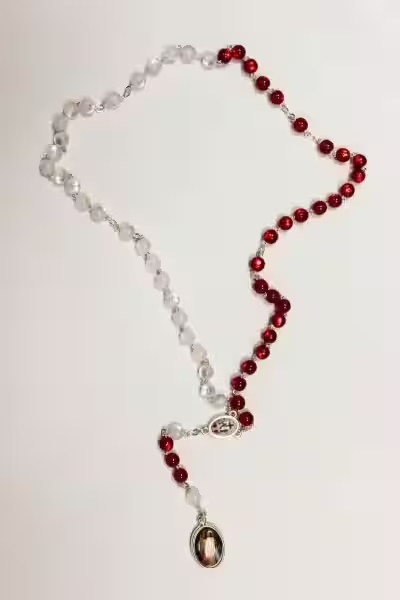
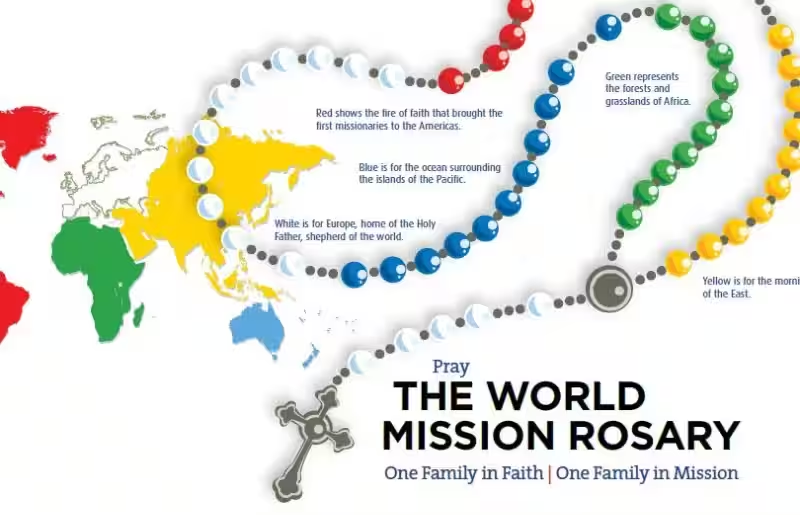
Early Jesus beads were often simple knots tied in a rope or cord, making them practical for counting prayers even in darkness or during strenuous manual labor. The number of knots varied, but a common form consisted of around 100 knots, sometimes with larger knots dividing them into sections. As Christianity spread and evolved, so did the form and material of these prayer aids. The Eastern Orthodox prayer rope, often made with wool, symbolizes the sheep of Christ’s flock, and the knots are typically tied in a specific way to form a cross. In the Western Church, the Rosary, while distinct in its structure and prayer sequence, shares the fundamental principle of using beads to guide meditative prayer, often focusing on the life of Jesus and Mary. The very name “Jesus beads” directly connects these instruments to the central figure of Christian faith, emphasizing their role as a conduit for communion with Him.
The Practical Application of Jesus Beads in Prayer and Meditation
The primary function of Jesus beads is to serve as a tactile aid for prayer and meditation. For many, the rhythmic movement of the beads through the fingers provides a grounding sensation, helping to focus the mind and quiet external distractions. This is particularly beneficial when engaging in repetitive prayers like the Jesus Prayer. As one moves from bead to bead, each touch becomes an affirmation of the prayer being offered, creating a meditative flow that deepens spiritual concentration. The physical act of handling the Jesus beads can anchor the practitioner in the present moment, drawing their attention away from worldly concerns and towards their spiritual practice.
Using Jesus beads can transform prayer from a potentially abstract or fleeting experience into a more concrete and structured devotion. For instance, when praying the Rosary, each bead represents a specific prayer – an Our Father, a Hail Mary, or a Glory Be. The sequential nature of the prayers, guided by the beads, allows for a sustained focus on the mysteries of Christ’s life, passion, and resurrection. Similarly, for those using Jesus beads to pray the Jesus Prayer, the consistent repetition, marked by the movement of each bead, can lead to a state of contemplative stillness. This consistent engagement, facilitated by the Jesus beads, helps in cultivating a habit of prayer and fostering a deeper, more personal relationship with God.
Jesus Beads as Symbols of Faith and Identity
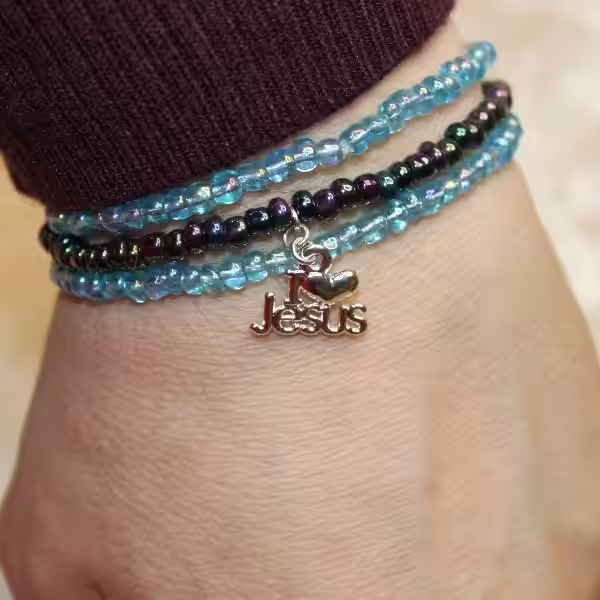
Beyond their devotional utility, Jesus beads have also become powerful symbols of Christian identity and outward profession of faith. Wearing Jesus beads around the wrist, for example, can be a subtle yet significant declaration of one’s religious affiliation and commitment. For many, it serves as a personal reminder of their faith throughout the day, a silent prayer companion in the midst of daily life. This visible aspect of Jesus beads can also spark conversations and offer opportunities to share one’s faith with others, acting as a bridge for interfaith dialogue or simply as a point of connection for fellow believers.
The materials and craftsmanship of Jesus beads can also carry symbolic meaning. Wooden Jesus beads might evoke the natural world and the simplicity of the early Church, while those made with precious stones or intricate metalwork can represent the divine beauty and the preciousness of faith. The choice of color can also be significant, with certain colors being associated with specific liturgical seasons or theological concepts. Ultimately, Jesus beads are more than just adornments; they are tangible expressions of an interior commitment, a personal statement of belief that can inspire the wearer and those around them. They are a constant, tangible connection to the divine, a reminder that faith is not confined to sacred spaces but can be woven into the very fabric of our everyday lives.
The Enduring Relevance of Jesus Beads in a Modern World
In an age often characterized by rapid technological advancement and secularization, the enduring popularity of Jesus beads might seem counterintuitive to some. However, their continued presence and use speak to a fundamental human craving for meaning, connection, and spiritual grounding that transcends time and trends. The tactile nature of Jesus beads offers a welcome antidote to the often abstract and screen-based nature of modern life, providing a tangible link to something more profound and enduring. They offer a quiet space for reflection in a noisy world, a consistent rhythm of prayer amidst the chaos of everyday responsibilities.
For many believers, Jesus beads represent a continuity with tradition, a connection to generations of saints and faithful who have used similar tools to draw closer to God. This sense of heritage can be incredibly comforting and inspiring. Moreover, in a world that can sometimes feel overwhelming and uncertain, the simple act of holding Jesus beads and engaging in prayer can provide a sense of peace, hope, and a renewed sense of purpose. They are a testament to the fact that even in the most modern of settings, the ancient practices of prayer and devotion, facilitated by simple yet powerful tools like Jesus beads, continue to hold immense value and offer profound spiritual solace.
Jesus beads, also known as prayer beads or prayer ropes, are a set of beads used in prayer and meditation, particularly within Orthodox Christianity. They are typically made of wool or silk and strung together with knots.
What is the purpose of Jesus beads?
The primary purpose of Jesus beads is to aid in the recitation of the Jesus Prayer, a continuous prayer that involves repeating the phrase “Lord Jesus Christ, Son of God, have mercy on me, a sinner.” Counting the prayers on the beads helps maintain focus and rhythm.
Are Jesus beads only used in Orthodox Christianity?
While most commonly associated with Orthodox Christianity, similar prayer beads are used in other Christian traditions, such as Catholicism (rosaries) and some Protestant denominations, though their design and specific usage may vary.
How are Jesus beads used?
Typically, a person holds the prayer rope in their hand and moves from bead to bead, reciting the Jesus Prayer with each bead. The knots between the beads can also be part of the counting process.
What is the significance of the number of beads?
The number of beads on a Jesus rope can vary, but common numbers include 33, 50, 100, or 150. The number often relates to the number of times the Jesus Prayer is recited in a specific prayer rule or tradition.
Are there different types of Jesus beads?
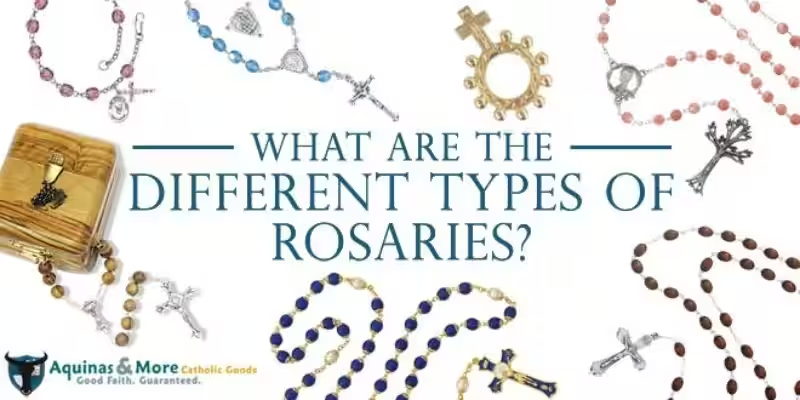
Yes, while the traditional prayer rope is made of wool with knots, other forms of prayer beads exist. These can include beaded strings made of wood, glass, or other materials, which function similarly to aid in counting prayers.
Can anyone use Jesus beads?
Anyone seeking to deepen their prayer life and engage in contemplative prayer can use Jesus beads. While deeply rooted in Orthodox tradition, their use is open to those who find them helpful for their spiritual practice.
What is the Jesus Prayer?
The Jesus Prayer is a short, repetitive prayer that centralizes faith in Jesus Christ. The most common form is “Lord Jesus Christ, Son of God, have mercy on me, a sinner.” Its power lies in its constant repetition, fostering communion with God.