Life, in its beautiful and often challenging tapestry, is woven with threads of both joy and sorrow. For many, navigating these inevitable depths leads them to seek solace, understanding, and a deeper connection to something greater than themselves. In the realm of Christian spirituality, the contemplation of the Sorrowful Mysteries of the Rosary offers a profound pathway to do just that. These meditations on the Passion of Christ aren’t about dwelling morbidly on suffering, but rather about a transformative reflection that can illuminate our own struggles, foster empathy, and ultimately lead us towards a more resilient faith.
This article invites you on a journey of reflection, exploring the spiritual significance of the Sorrowful Mysteries. We will delve into how meditating on Christ’s suffering can provide comfort, guidance, and a renewed perspective on our own lives. Whether you are a seasoned practitioner of the Rosary or simply curious about its deeper meaning, join us as we uncover the enduring power of these deeply moving events.
The Genesis of Sorrow: Understanding the Sorrowful Mysteries
The Sorrowful Mysteries, traditionally prayed on Tuesdays and Fridays, are a cornerstone of the Rosary, a prayer that combines the recitation of Hail Marys with meditation on key events in the lives of Jesus and Mary. These mysteries specifically focus on the suffering and sacrifice of Christ leading up to and including his crucifixion. They are not presented as detached historical accounts, but as living narratives meant to evoke a visceral and spiritual response within the believer. Each mystery serves as a window into the immense love and profound pain that defined Jesus’ mission.
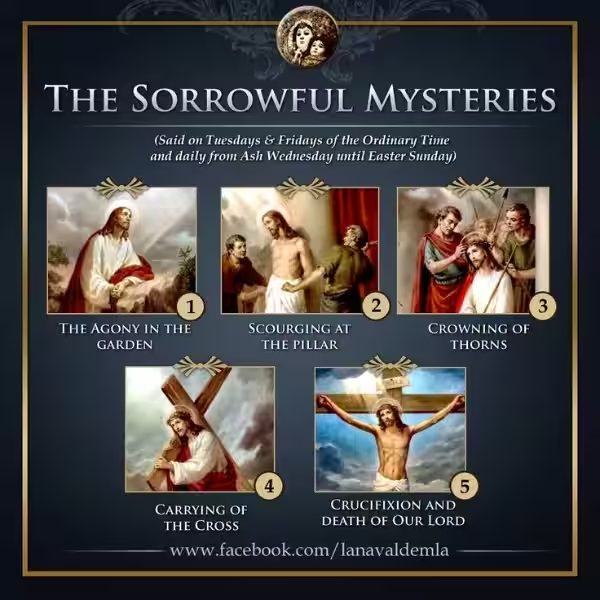
Contemplating these events – the Agony in the Garden, the Scourging at the Pillar, the Crowning with Thorns, the Carrying of the Cross, and the Crucifixion – is an act of deep spiritual engagement. It requires us to step beyond mere intellectual understanding and enter into a space of emotional and spiritual empathy. This reflection isn’t about seeking out pain for its own sake, but about recognizing that through Christ’s suffering, a profound victory was achieved. It’s about understanding that even in the darkest hours, a path to redemption and hope was forged.
The Agony in the Garden: Bearing the Weight of the World
Our first Sorrowful Mystery, the Agony in the Garden, plunges us into the heart of Jesus’ inner turmoil. Imagine the scene: Jesus, knowing the immense suffering that awaits him, withdraws to pray. He is not oblivious to the pain, but actively confronts it, his sweat becoming like drops of blood. This isn’t a passive acceptance of fate; it’s an active wrestling with anguish, a profound human and divine experience of facing the ultimate sacrifice. This mystery calls us to reflect on our own moments of profound struggle.
In our lives, we too experience agonizing moments where the weight of our burdens feels almost unbearable. Perhaps it’s a personal loss, a betrayal, a difficult decision, or the sheer exhaustion of daily life. The Agony in the Garden reminds us that we are not alone in our suffering. Jesus, in his deepest hour, understood and experienced the full spectrum of human pain, offering a powerful sense of solidarity. It teaches us that even in prayer, our wrestling with difficult truths is a sacred act, a form of communion with the divine.
The Scourging at the Pillar: The Pain of Rejection and Cruelty
Next, we meditate on the Scourging at the Pillar. Here, Jesus is brutally beaten, his body torn. This is a stark depiction of human cruelty and injustice. It’s a painful reminder of how easily people can inflict suffering on others, often driven by fear, hatred, or a desire for power. The physical torment Jesus endures is immense, but it also carries a deep symbolic weight, representing the rejection he faced from many he came to save.
Reflecting on this mystery can be challenging, but it offers valuable lessons. It prompts us to consider the ways in which we might have inflicted pain on others, intentionally or unintentionally. More importantly, it invites us to cultivate radical empathy for those who suffer unjustly in the world today. The Scourging shows us that even in the face of immense physical and emotional abuse, one can maintain a core of inner dignity and love. This is a powerful testament to the resilience of the spirit, even when the body is broken.
The Crowning with Thorns: The Mockery of Truth and Innocence
The Crowning with Thorns presents a scene of humiliation and derision. Soldiers, mocking Jesus’ claim to kingship, place a crown of thorns upon his head and a purple robe on his shoulders. This mystery highlights the perversion of justice and the way in which those who stand for truth and goodness are often ridiculed and attacked. The thorns, piercing his brow, are a tangible symbol of the pain caused by lies and the rejection of divine love.
In our own lives, we may encounter situations where our intentions are misunderstood, our efforts are belittled, or we are subjected to unfair criticism. The Crowning with Thorns encourages us to find strength in our integrity, even when faced with mockery. It teaches us to persevere in our commitment to what is right, regardless of popular opinion or outward ridicule. This mystery offers a profound reflection on the courage required to remain true to oneself and one’s values in a world that often seems to celebrate superficiality over substance.
The Carrying of the Cross: The Burden of Responsibility and Sacrifice
The fourth Sorrowful Mystery, the Carrying of the Cross, depicts Jesus, weakened and bleeding, struggling to bear the heavy wooden cross through the streets of Jerusalem. This is a powerful image of sacrifice and the acceptance of a profound responsibility. Jesus, though innocent, willingly shoulders the weight of humanity’s sins. This mystery speaks to the moments in our lives when we feel overwhelmed by the demands placed upon us, the burdens we must carry for loved ones or for the greater good.
We all have our crosses to bear – responsibilities, challenges, and even periods of personal suffering that feel immensely heavy. The Carrying of the Cross offers a message of hope and perseverance. It reminds us that even when we feel incapable of going on, there is a divine strength available to us. This reflection encourages us to approach our own burdens with a spirit of acceptance and, if possible, with a willingness to find meaning in our struggles, knowing that even the heaviest loads can be borne with grace.
The Crucifixion: The Ultimate Act of Love and Redemption
Finally, we arrive at the Crucifixion, the culmination of Christ’s suffering. Nailed to the cross, bleeding and dying, Jesus utters words of forgiveness: “Father, forgive them, for they know not what they do.” This is the ultimate expression of divine love and mercy. It is an act of sacrifice so profound that it redeems humanity. The Crucifixion is not merely an end, but a gateway to new life. It represents the victory of love over hate, of hope over despair, and of eternal life over death.
The Crucifixion calls us to a deep reflection on forgiveness. It challenges us to extend mercy to those who have wronged us, just as Christ did. It also invites us to consider the sacrifices we are willing to make for the sake of love and for the betterment of others. This mystery is the heart of the Christian message of redemption, demonstrating that even in the midst of ultimate suffering, profound healing and new beginnings are possible. It is a powerful reminder that our own sorrows, when united with Christ’s, can be transformed into something redemptive.
Transformative Reflections: Finding Light in the Darkness
The contemplation of the Sorrowful Mysteries is not about wallowing in despair. Instead, it’s a profoundly hopeful practice that offers a unique lens through which to view our own lives. By meditating on Christ’s suffering, we gain a deeper understanding of the human condition – its fragility, its capacity for cruelty, but also its incredible potential for love, resilience, and redemption.
These reflections can equip us with the spiritual tools to navigate our own difficulties. They foster a sense of empathy and compassion for others, recognizing that everyone carries their own burdens. Ultimately, the Sorrowful Mysteries remind us that even in our darkest moments, we are never truly alone. The love that endured the Cross is a love that can sustain us through any trial, offering a beacon of hope that shines brightest when the night is darkest.
Frequently Asked Questions about Reflecting on the Sorrowful Mysteries
What are the Sorrowful Mysteries?
The Sorrowful Mysteries are a set of five meditations within the Rosary that focus on the suffering and death of Jesus Christ. They are: the Agony in the Garden, the Scourging at the Pillar, the Crowning with Thorns, the Carrying of the Cross, and the Crucifixion.
What is the religious significance of reflecting on the Sorrowful Mysteries?
Reflecting on the Sorrowful Mysteries is a core practice in Catholic devotion. It allows believers to contemplate Jesus’ immense love for humanity, expressed through his suffering and sacrifice for our sins. This reflection aims to deepen faith, foster empathy, and inspire a spirit of penance and self-denial. It reminds us of the cost of our salvation and encourages us to live more virtuous lives.
How does reflecting on sorrow connect to religious faith?
In Christianity, sorrow, particularly the sorrow of Christ’s Passion, is not seen as an end in itself but as a path to redemption and spiritual growth. By meditating on Jesus’ suffering, believers are encouraged to face their own sorrows with faith, knowing that Christ understands and shares in their pain. This can lead to a deeper trust in God’s plan and a greater capacity for compassion towards others.
What are the benefits of meditating on these mysteries?
Meditating on the Sorrowful Mysteries can lead to increased spiritual awareness, a stronger relationship with God, and a greater appreciation for the sacrifice of Jesus. It can also foster humility, patience, and a willingness to bear crosses in one’s own life. For many, it is a source of comfort and strength during times of personal suffering.
Is it morbid to meditate on suffering in religion?
While the subject matter involves suffering, the intention is not morbid. Instead, it is an act of love and remembrance. By contemplating Christ’s Passion, believers are reminded of the profound love that drove him to endure such pain for the salvation of humanity. It is a way to understand the depth of God’s mercy and to draw closer to him through a shared experience of suffering.