The question of salvation is perhaps the most profound and enduring inquiry of the human heart. For Catholics, this question is intimately tied to their understanding of God’s love, the sacrifice of Jesus Christ, and the role of the Church in guiding believers. It’s a journey of faith, not a simple checklist, yet the Church offers clear guidance on the essential elements that constitute a life lived in accordance with God’s will, leading towards salvation. Understanding what a Catholic must do to be saved is about embracing a transformative relationship with God, one that permeates every aspect of life.
Many people, even those outside the Catholic faith, wonder about its teachings on salvation. Is it purely about belief? Is it about good deeds? Or is there a specific path prescribed by the Church? The answer, as is often the case with profound theological questions, is nuanced and deeply rooted in scripture and tradition. It’s a dynamic interplay between God’s grace and our free human response. The Catholic perspective emphasizes that salvation is a gift from God, freely offered through Christ, but it requires our active participation and conversion of heart. This article will delve into the core tenets, exploring the essential commitments and practices that define the Catholic path to salvation.
At the very core of Catholic belief regarding salvation is an unwavering faith in Jesus Christ. This isn’t merely an intellectual assent to historical facts; it’s a deep, personal trust in Jesus as the Son of God, the Savior of humanity. This faith acknowledges his divinity, his atoning sacrifice on the cross for our sins, and his resurrection, which conquered death. Without this foundational belief, all other actions and practices would be devoid of their salvific meaning. It’s the starting point, the bedrock upon which all else is built.
To truly believe in Jesus means to accept him not just as a historical figure or a moral teacher, but as the “way, the truth, and the life” (John 14:6). This implies a willingness to surrender our lives to his teachings and his will. Imagine a ship captain who trusts their navigator implicitly, even in treacherous waters. Similarly, a Catholic is called to trust Jesus completely, allowing his guidance to steer their spiritual journey. This faith is not static; it’s a living, breathing entity that grows and deepens through prayer, study, and lived experience. It requires a commitment to believe what Jesus revealed and what the Church teaches as His truth.
Belief in the Trinity and the Church’s Teachings
Integral to this faith is the belief in the Holy Trinity: God the Father, God the Son, and God the Holy Spirit, three Persons in one divine Being. This fundamental doctrine, while mysterious, underscores God’s complete and self-giving nature. Catholics are called to accept this revelation as a cornerstone of their faith. Furthermore, this faith is nurtured and articulated through the teachings of the Catholic Church, which are understood to be guided by the Holy Spirit. This includes the doctrines passed down through centuries, encapsulated in the Catechism of the Catholic Church, and expressed in the pronouncements of the Magisterium (the teaching authority of the Church).
Think of it like this: if Jesus is the captain, the Church’s teachings are the detailed maps and navigational charts provided by the experienced crew, ensuring you stay on course. This doesn’t mean blindly following without understanding; it encourages an ongoing process of learning and formation. A Catholic must strive to understand and embrace these teachings, not as external rules, but as pathways to a deeper relationship with God and a clearer understanding of His will. This commitment to the Church’s doctrine ensures that one’s faith is grounded in divine revelation and protected from error.
The Response: Sacramental Life and Grace
Faith, while essential, is meant to be expressed and strengthened through sacramental participation. The seven sacraments of the Catholic Church are powerful channels of God’s grace, instituted by Christ himself. These sacraments are not mere symbols; they are outward signs that effect inward grace. They are tangible encounters with the divine that nourish the soul and equip believers for their journey towards salvation. Without engaging with these sacraments, a Catholic’s faith risks becoming sterile and disconnected from its source of spiritual vitality.
The sacraments are the vehicles through which God’s salvific grace is most effectively conveyed. From the cleansing and new life received in Baptism, to the spiritual strengthening of Confirmation, and the profound nourishment of the Eucharist, Catholics are called to actively participate in this sacramental life. Consider the analogy of a farmer tending their crops: the sacraments are like the watering and fertilizing that allow the seeds of faith to flourish and bear fruit. This engagement is not optional for those seeking to live out their Catholic calling to salvation; it is a vital and necessary aspect of their spiritual growth.
The Sacraments of Initiation: Baptism, Confirmation, and Eucharist
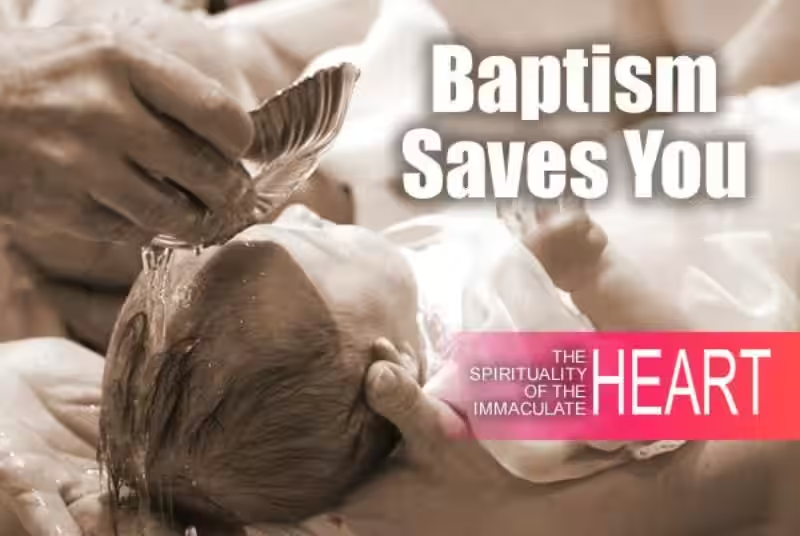
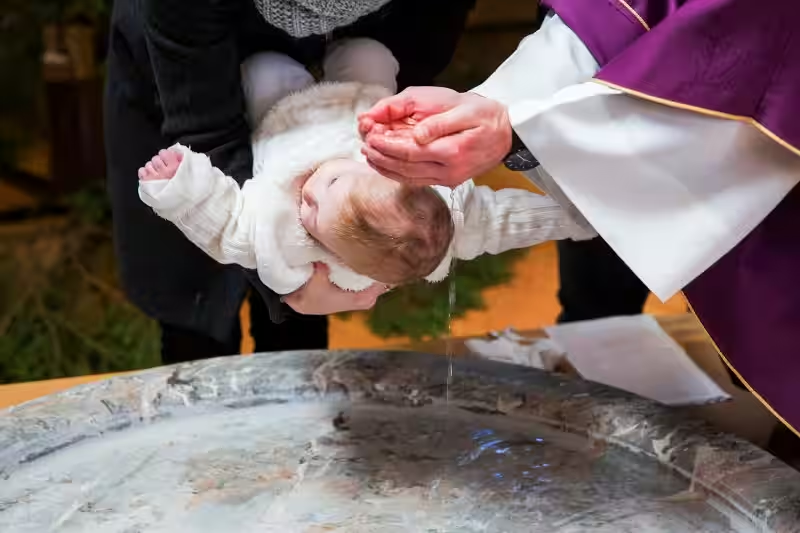
The journey begins with Baptism, the sacrament of initiation that washes away original sin and makes us children of God and members of the Church. It is the gateway to all other sacraments, marking our entry into the Christian covenant. Following Baptism, Confirmation strengthens the grace of Baptism, empowering the believer with the Holy Spirit to live out their faith more boldly and to be witnesses to Christ. Finally, the Eucharist, the “source and summit” of the Christian life, is the sacrament where Catholics receive the Body and Blood of Jesus Christ, fostering a profound union with Him and with each other.
These three sacraments form the foundation of the Catholic’s spiritual life. To be saved, a Catholic must not only have faith but also embrace and participate in these sacraments. A person who has been baptized and confirmed, and who regularly receives the Eucharist, is actively engaging with the very means God has provided for their spiritual nourishment and growth. For example, just as our physical bodies need food and water to survive and thrive, our souls need the grace received through these sacraments to develop and persevere on the path to eternal life. Their regular reception is a testament to a committed Catholic’s desire for God’s grace and their understanding of its necessity for salvation.
The Role of the Eucharist in Salvation
The Eucharist holds a particularly central role in the Catholic understanding of salvation. In receiving the consecrated bread and wine, Catholics believe they are truly partaking in the Body and Blood of Jesus Christ, the very Lamb of God who takes away the sins of the world. This spiritual communion with Christ nourishes the soul, strengthens one’s resolve to live a virtuous life, and offers remission of venial sins. It is a foretaste of the heavenly banquet, a promise of eternal life with God.
To neglect the Eucharist is to turn away from a primary source of spiritual strength and union with Christ. A Catholic who consciously and persistently avoids or disrespects the Eucharist is, in essence, rejecting a vital means of grace essential for salvation. Consider the importance of regular check-ups with a doctor for maintaining physical health; similarly, regular reception of the Eucharist is crucial for maintaining spiritual health and growing in holiness. It’s not simply about fulfilling an obligation, but about actively seeking the life-giving presence of Christ, which is indispensable for the journey toward salvation.
The Practice: Living a Moral Life and Works of Mercy
While faith and sacraments are foundational, the Catholic Church teaches that salvation is also manifested in a transformed life, characterized by good works and adherence to God’s moral law. This isn’t a system of earning salvation through merit, but rather the natural outflow of a heart that has been touched by God’s grace and filled with love for Him and neighbor. A Catholic’s actions are a visible expression of their inner faith and their commitment to following Christ’s teachings.
Jesus himself emphasized the importance of doing the will of God, which includes loving God and loving one’s neighbor. This translates into concrete actions: living by the Ten Commandments, practicing the Beatitudes, and engaging in works of mercy. Imagine a vibrant plant that naturally produces beautiful flowers and fruit; similarly, a Catholic whose faith is genuine will naturally bear the “fruits of the Spirit” in their actions. These good deeds are not a means to get God’s love, but a way to respond to the love we have already received and to participate in God’s ongoing work of redemption in the world.
The Ten Commandments and the Beatitudes
Living a moral life for a Catholic involves striving to live in accordance with the Ten Commandments, which provide a framework for proper relationships with God and with others. These are not merely restrictive laws, but guidelines for a fulfilling and just life. Alongside these, the Beatitudes, proclaimed by Jesus in the Sermon on the Mount, offer a vision of Christian character and a pathway to true happiness, often found in humility, meekness, and a desire for justice. A Catholic must actively seek to understand and live by these principles.
Consider the Ten Commandments as the sturdy fence around a garden, protecting the delicate plants (our souls) from harm. The Beatitudes, on the other hand, are the nurturing sunlight and rain that help them grow. A Catholic’s commitment to these teachings is a testament to their desire to align their will with God’s. For instance, upholding the commandment “You shall not steal” and striving for the Beatitude “Blessed are the merciful” are not just abstract moral concepts, but practical ways of living out one’s faith in daily interactions, demonstrating a commitment to a life that reflects God’s love and justice.
The Importance of Charity and Works of Mercy
Central to a Catholic’s moral life is charity, which is the theological virtue of selfless love for God and neighbor. This love is expressed through the works of mercy, both spiritual and corporal. The corporal works of mercy include feeding the hungry, giving drink to the thirsty, clothing the naked, sheltering the homeless, visiting the sick, and visiting the imprisoned. The spiritual works of mercy involve instructing the ignorant, advising the doubtful, comforting the sorrowful, bearing wrongs patiently, forgiving offenses, and praying for the living and the dead.
These works are not optional extras for Catholics; they are integral to living out the Gospel message and demonstrating a genuine love for God. Jesus famously stated that whatever we do for the least of his brothers and sisters, we do for him (Matthew 25:40). A Catholic must actively engage in these acts of love and compassion. Imagine a doctor who not only diagnoses an illness but also provides the necessary medicine and care; similarly, a Catholic’s faith calls them to not only believe but also to actively heal and serve the needs of others. Their commitment to these works is a tangible sign of their interior disposition and their participation in God’s salvific plan.
The Ongoing Journey: Repentance, Confession, and Perseverance
The path to salvation is not a one-time event but an ongoing journey of conversion, marked by repentance and reconciliation. Catholics acknowledge their sinfulness and the reality that they will stumble and fall. The sacrament of Penance and Reconciliation (Confession) is a divine gift, offering forgiveness for sins committed after Baptism and restoring the relationship with God that has been broken. This sacrament is crucial for spiritual health and perseverance.
No one is perfect, and even the most devout Catholic will sin. The beauty of the Catholic faith lies in its understanding that God’s mercy is infinite. The sacrament of Confession is like a spiritual hospital, where we can receive healing and restoration after falling ill. Without availing ourselves of this sacrament, the wounds of sin can fester and hinder our progress towards God. It is a vital practice for any Catholic seeking to remain on the path to salvation, demonstrating humility and a desire for continued purification.
The Necessity of the Sacrament of Reconciliation
While God’s mercy is boundless, the Church teaches that the sacrament of Penance and Reconciliation is the ordinary means by which Catholics who have fallen into mortal sin can be reconciled with God and the Church. Mortal sin is understood as a grave offense against God that can sever one’s relationship with Him. The confession of such sins, along with contrition (sorrow for sin) and the priest’s absolution, is essential for regaining the state of grace necessary for salvation.
This sacrament is not a sign of weakness but of spiritual maturity and self-awareness. A Catholic who knowingly avoids confession after committing serious sin is placing themselves in spiritual peril. Imagine a broken bone that requires professional medical attention to heal properly; similarly, the spiritual wounds of mortal sin require the healing power of this sacrament. For a Catholic, regularly participating in Reconciliation, especially after serious sin, is not just a recommendation but a fundamental requirement for maintaining their salvific relationship with God.
Perseverance in Faith Until the End
Ultimately, salvation is not just about the beginning of the journey or even the middle stages; it is about persevering in faith until the very end of life. This requires a constant reliance on God’s grace, ongoing conversion, and a commitment to live out one’s baptismal promises throughout one’s earthly existence. The Catholic Church teaches that it is through God’s enduring grace and our faithful response that we ultimately attain eternal life.
The journey of faith is a marathon, not a sprint. It requires consistent effort, a watchful spirit, and an unwavering hope. A Catholic must strive to remain in a state of grace, actively resist temptation, and grow in holiness throughout their entire life. Consider a climber scaling a mighty mountain: reaching the summit requires not only strength and skill but also sustained effort and careful navigation at every step. For a Catholic, perseverance means not giving up on God, even in times of trial, and continuing to embrace the saving work of Christ until their final breath.
Conclusion: A Lifelong Embrace of God’s Love
So, what must a Catholic do to be saved? It is a comprehensive answer that encompasses a profound and active embrace of God’s love and His plan for humanity. It begins with faith in Jesus Christ, a wholehearted belief in Him as Lord and Savior, and acceptance of the Church’s teachings. This faith is then strengthened and sustained through participation in the sacraments, especially Baptism, Confirmation, and the Eucharist, which are vital channels of God’s grace.
Furthermore, salvation is lived out in the moral transformation of one’s life, marked by adherence to God’s commandments, living the Beatitudes, and actively practicing charity and works of mercy. This journey is not without its challenges, and therefore, repentance and the sacrament of Reconciliation are essential for healing and restoration. Above all, it is a call to perseverance, to remain faithful to God’s love and His saving work until the very end of life. This is not about earning salvation, but about responding with our whole being to the divine invitation, participating in the life of Christ and the Church, and allowing His grace to transform us into the people He created us to be, ultimately leading us to the eternal joy of salvation.
Frequently Asked Questions: Salvation in Catholicism
What must a Catholic do to be saved?
In the Catholic Church, salvation is understood as a gift from God’s grace, received through faith and lived out in works. The Catechism of the Catholic Church outlines key aspects: accepting Jesus Christ as Lord and Savior, being baptized, living according to God’s commandments (including the Ten Commandments and the teachings of Jesus), participating in the sacraments (especially the Eucharist and Reconciliation), and living a life of love for God and neighbor. It is a lifelong process of cooperation with God’s grace.
Is faith alone enough for salvation?
The Catholic Church teaches that while faith is essential, it must be a living faith that is expressed through good works. As the Catechism states, “Faith, if it is without works, is dead” (James 2:17). Good works are seen as the outward expression of an interior faith and love for God. They are not done to earn salvation but as a response to God’s grace and a means of growing in holiness and union with Him.
What role do the Sacraments play in salvation?
The Sacraments are considered outward signs instituted by Christ to give grace. They are vital channels through which Catholics receive God’s help and deepen their relationship with Him. Baptism incorporates individuals into the Church, Original Sin is remitted, and they become children of God. The Eucharist nourishes the soul and unites believers with Christ. The Sacrament of Reconciliation (Confession) offers forgiveness for sins committed after Baptism. Other sacraments also provide grace for different stages and needs of life.
Does a Catholic have to follow all the rules to be saved?
Catholics are called to live according to the teachings and moral precepts of the Church, which are based on Scripture and Tradition. While perfect adherence to every rule is not expected, a sincere effort to follow God’s will and the teachings of Christ is essential. The emphasis is on striving for holiness and growing in love, with the understanding that God’s mercy is available through the Sacrament of Reconciliation for those who falter and repent.