In the tapestry of religious history, certain figures shimmer with an almost otherworldly luminescence, drawing millions into their orbit of faith and devotion. Among these radiant souls, the name of Padre Pio of Pietrelcina resonates deeply, a Capuchin friar whose life was a testament to extraordinary spiritual gifts and profound human compassion. For those seeking to understand the essence of his impact, delving into Padre Pio facts offers a compelling window into a man who lived a life of unwavering faith, marked by both profound suffering and miraculous encounters. His story is not just about religious dogma; it’s about the enduring power of the human spirit, the mysteries of divine intervention, and the solace found in a life dedicated to serving God and humanity.
The allure of Padre Pio lies in the intersection of his humble origins and the celestial phenomena that seemed to attend his every step. He was a beacon of hope for countless individuals seeking spiritual guidance, healing, and intercession. His life story, filled with astonishing events and unwavering dedication, continues to inspire and perplex, making him one of the most popular and venerated saints of modern times. The following exploration aims to illuminate key aspects of his life, offering a rich understanding of this remarkable servant of God.
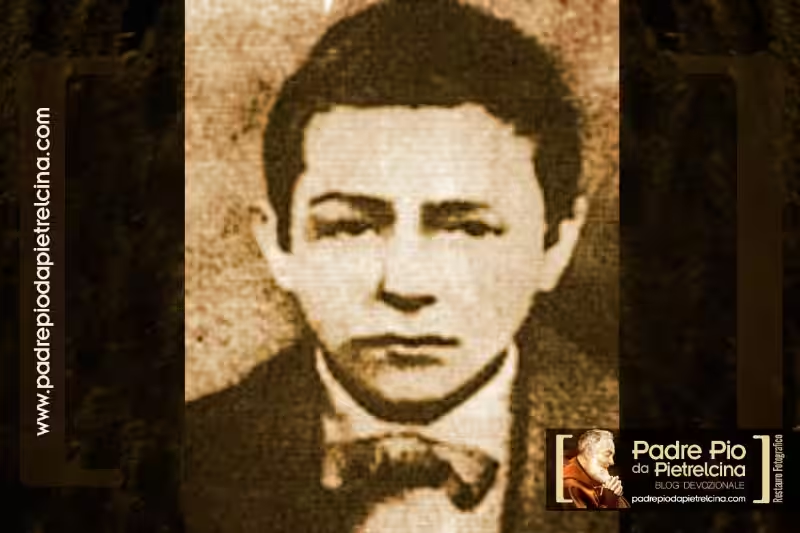
Born Francesco Forgione on May 25, 1887, in the small southern Italian town of Pietrelcina, his early life was characterized by a deep piety and a profound connection to the divine. Even as a child, Francesco exhibited an unusual spiritual maturity, often experiencing visions and ecstasies. This was a significant early indicator of the extraordinary path he would tread. His family, simple farmers, recognized his spiritual inclinations but could not have fully grasped the magnitude of the divine grace that would mark their son’s life. These early experiences laid the groundwork for the remarkable journey he was destined to undertake.
One of the most striking Padre Pio facts from his childhood is his reported ability to communicate with Jesus and Mary. Unlike typical childhood fantasies, these encounters were described with such clarity and consistency that they were seen as real spiritual visitations. Imagine a young child, not recounting imaginary friends, but detailing conversations with heavenly beings, receiving profound spiritual insights. This deep, innate connection to the divine set him apart from a young age, hinting at the spiritual warfare and divine favor that would define his adult life.
The Stigmata: A Wondrous and Painful Gift
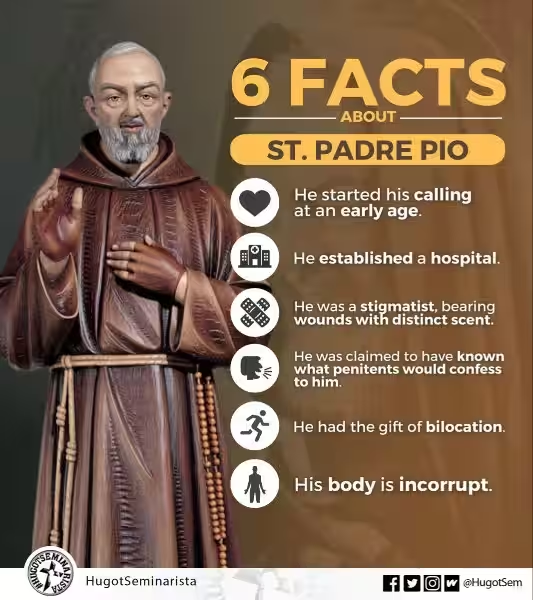
Perhaps the most widely known and debated of all Padre Pio facts is his possession of the stigmata – the wounds of Christ – which appeared on his hands, feet, and side in 1918 and remained with him for fifty years until his death. These wounds were not mere superficial marks; they bled regularly, caused him significant pain, and emitted a distinct, pleasant fragrance, often described as a blend of flowers and perfume. This phenomenon, witnessed and documented by numerous medical professionals and clergy, remains a profound mystery and a central element of his veneration.
The appearance of the stigmata was not an isolated event; they were a constant, physical manifestation of his deep spiritual suffering and his intimate union with Christ’s passion. Padre Pio himself often viewed them as a cross to bear, a heavy burden that brought him immense physical agony but also a profound sense of spiritual solidarity with Jesus. The fact that these wounds, which would typically lead to infection and decay, remained clean and even emitted a sweet scent, further fueled the belief in their supernatural origin, prompting both awe and skepticism.
Extraordinary Spiritual Gifts: Beyond Human Comprehension
Beyond the stigmata, Padre Pio was endowed with a bewildering array of spiritual gifts that astonished those who encountered him. These included bilocation, the ability to be in two places at once; prophecy, the foretelling of future events; and an extraordinary gift of reading hearts, a form of discernment that allowed him to understand the innermost thoughts and spiritual states of individuals. These gifts were not mere curiosities; they were tools he used to guide, comfort, and heal the souls who came to him seeking solace.
Consider the weight of being able to discern the hidden struggles of another soul. This was a hallmark of Padre Pio’s ministry. People would approach him with unspoken burdens, and he would often address these very issues with remarkable accuracy, offering words of profound insight and divine counsel. This ability to see into the spiritual depths of individuals, coupled with his unwavering compassion, made him a sought-after spiritual father for millions across the globe. The sheer volume of confessions he heard, often for hours on end, speaks to his tireless dedication and supernatural capacity.
The Fragrance of Heaven: Aromatic Manifestations
Another peculiar and widely reported phenomenon associated with Padre Pio facts is the presence of an inexplicable, sweet fragrance that often accompanied his presence or was detected in objects consecrated to him. This scent, described as a combination of flowers, was not merely pleasant; it was seen as a sign of divine presence and a spiritual blessing. People would often report smelling this fragrance in rooms where Padre Pio had prayed or even in letters he had sent, a tangible reminder of his spiritual power and grace.
This aromatic phenomenon served as a comforting and tangible sign for believers, a sort of heavenly perfume that permeated their lives. For those who had never met him, the scent could be experienced, bringing a sense of peace and proximity to the saint. This olfactory evidence, alongside his other miracles, solidified the belief for many that they were in the presence of something divinely ordained, a testament to God’s active intervention through his chosen servant.
At the core of Padre Pio’s extraordinary life was an unwavering commitment to prayer and sacrifice. He spent countless hours in deep contemplation and intercessory prayer, often enduring spiritual dryness and intense inner battles. His prayer life was not a passive act; it was a dynamic engagement with the divine, a constant offering of himself for the salvation of souls. This dedication to prayer was the bedrock upon which all his spiritual gifts were built.
His life was also marked by profound asceticism and self-denial. He embraced poverty, fasting, and prolonged periods of suffering, not out of masochism, but as a means of participating more fully in the redemptive suffering of Christ. This dedication to sacrifice, a core tenet of religious devotion, was exemplified in his daily life, a constant offering of his physical and spiritual well-being for the benefit of others. His commitment to the rosary, for instance, was legendary, a constant companion and source of spiritual strength.
Padre Pio and the Power of Confession
One of the most significant aspects of Padre Pio’s ministry was his profound impact on the sacrament of Reconciliation. He spent an astonishing amount of time in the confessional, often for 12-18 hours a day, listening intently to the sins and struggles of countless individuals. His ability to discern the spiritual state of penitents and offer profound absolution and guidance made the confessional a place of profound transformation for many.
Many stories abound of individuals who, after years of neglecting the sacrament, were drawn to Padre Pio’s confessional and experienced a profound conversion. He had a unique way of reaching people, often speaking directly to their hearts and revealing hidden sins they themselves had forgotten or suppressed. This profound understanding of the human condition, coupled with the grace of God, made him an instrument of immense spiritual healing, offering not just forgiveness, but a path to true repentance and renewal. This is a powerful reminder that the sacrament of confession, in the hands of a saintly confessor, can be a truly life-altering experience.
Legacy and Enduring Influence
Padre Pio’s legacy extends far beyond his earthly existence, continuing to inspire millions through his canonization and the continued devotion to his intercession. His life serves as a powerful reminder of the transformative power of faith, the reality of the spiritual realm, and the boundless mercy of God. The shrine in San Giovanni Rotondo, where he spent much of his life, remains a major pilgrimage site, attracting people from all corners of the world seeking his intercession and spiritual solace.
The enduring popularity of Padre Pio facts speaks to a deep human yearning for connection with the divine and for tangible signs of God’s presence in the world. His story offers not just historical accounts of a remarkable man, but a living testament to the enduring power of faith, prayer, and unwavering love. Whether one approaches his story with a devout heart or a curious mind, the life of Padre Pio offers a profound and inspiring exploration of what it means to live a life wholly dedicated to God and humanity.
Padre Pio, born Francesco Forgione, was an Italian Capuchin friar, priest, stigmatist, and mystic. He is venerated as a saint in the Catholic Church.
What are the stigmata?
The stigmata are wounds that appeared on Padre Pio’s body, corresponding to the wounds of Christ on the cross, particularly on his hands, feet, and side. These wounds bled and caused him pain for fifty years.
What made Padre Pio so famous?
Padre Pio became famous for his spiritual gifts, including the stigmata, bilocation (being in two places at once), prophecy, healing, and the ability to read souls. He was also known for his deep prayer life and his pastoral work, hearing confessions for many hours a day.
When was Padre Pio canonized?
Padre Pio was canonized as Saint Pio of Pietrelcina by Pope John Paul II on June 16, 2002.
What is the significance of Padre Pio in Catholicism?
Padre Pio is a highly revered figure in Catholicism, seen as a powerful intercessor and a model of faith, suffering, and devotion to Christ. His life and ministry have inspired millions worldwide.
What are some common prayers or devotions associated with Padre Pio?
The most common devotion associated with Padre Pio is the prayer to Saint Pio of Pietrelcina, often asking for his intercession. Many also pray the Rosary and engage in acts of charity in his honor.
Where is Padre Pio buried?
Padre Pio is buried in the Sanctuary of Saint Pio of Pietrelcina in San Giovanni Rotondo, Italy, where he spent most of his priestly life.
What is bilocation?
Bilocation is a phenomenon attributed to certain saints, where they are believed to be able to appear in two different places at the same time through divine intervention. Padre Pio was frequently reported to have experienced bilocation.
What is the Catholic Church’s stance on Padre Pio?
The Catholic Church recognizes Padre Pio as a saint. His life was thoroughly investigated, and the Church has affirmed the authenticity of his spiritual gifts and his heroic virtue.