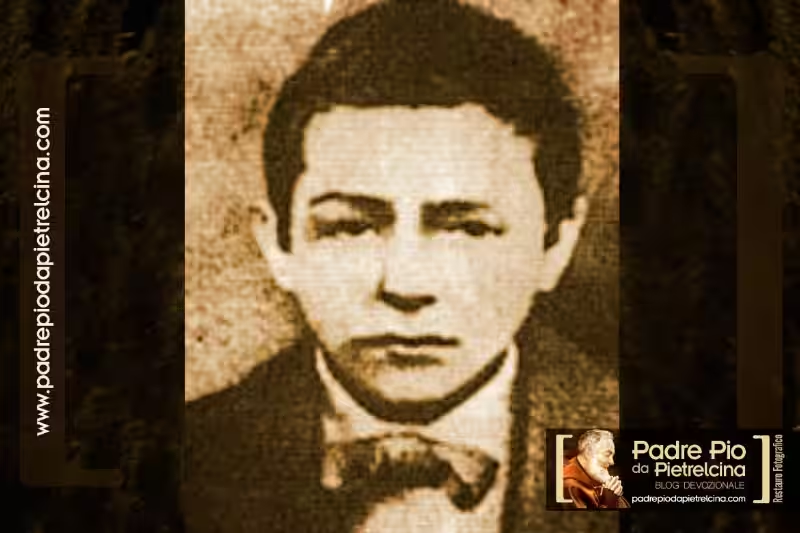
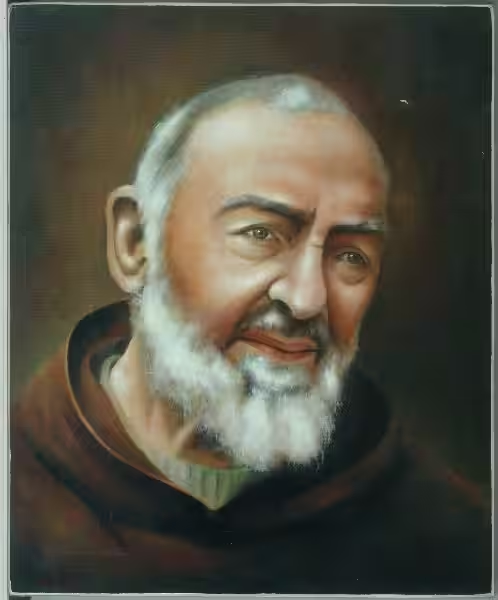
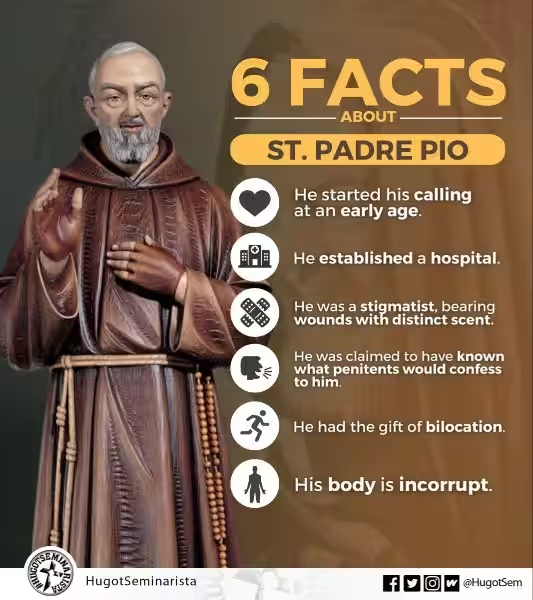
The story of Padre Pio is one that resonates deeply with believers worldwide, a testament to faith, suffering, and unwavering devotion. But before the stigmata, before the widespread veneration, there was a young boy named Francesco Forgione, born in the small Italian town of Pietrelcina on May 25, 1887. His early life, far from being marked by extraordinary events, was characterized by a profound simplicity and a deep-seated piety that would lay the foundation for his extraordinary spiritual journey. Growing up in a peasant family, Francesco’s childhood was not one of privilege but of hard work and a strong connection to the land. This grounded existence, however, was infused with an intense spiritual awareness from a very young age.
Francesco’s parents, Grazio Mario Forgione and Maria Giuseppa Di Nunzio Forgione, were devout Catholics who instilled in their children a deep love for God and the Church. Their faith was not merely a matter of ritual but a lived reality, woven into the fabric of their daily lives. Even as a young boy, Francesco displayed an unusual seriousness and a profound inclination towards prayer. He would often retreat to quiet places to meditate and converse with God, a stark contrast to the boisterous play of his peers. This early inclination towards the divine was a whispering prelude to the powerful spiritual force he would one day become, a force that would touch countless lives and inspire generations.
A Childhood Steeped in Faith and Sacrifice
Life in Pietrelcina during the late 19th century was challenging. The Forgione family, like many others in the region, relied on agriculture for their livelihood, and the work was often arduous. Francesco, from a tender age, participated in the family’s chores, helping with the farm animals and the cultivation of their small plot of land. This physical labor, though demanding for a child, likely contributed to his resilience and his understanding of sacrifice. Every task, no matter how humble, was approached with a sense of duty and a quiet acceptance, mirroring the greater sacrifices he would later embrace.
The religious life of the family was the central pillar around which their existence revolved. Daily Mass, evening Rosary, and frequent confessions were not optional extras but essential components of their routine. Francesco absorbed these practices with an earnestness that surprised many. He found solace and joy in the sacred rituals, developing a personal relationship with Jesus and the Blessed Mother that seemed to transcend his years. For instance, it’s said that he would sometimes experience ecstasies during Mass, a sign of his profound connection to the divine presence, a stark contrast to the ordinary experiences of most children his age.
Even in his formative years, there were discernible indications that Francesco was destined for a path beyond the ordinary. His childhood was marked by a series of unusual spiritual encounters and a deep sense of empathy for the suffering of others. These were not fantastical visions from the outset, but rather profound internal experiences that set him apart. He possessed a keen awareness of spiritual matters and a disconcerting ability to perceive things beyond the material realm, hinting at the extraordinary gifts he would later manifest.
One of the most striking aspects of Padre Pio’s early life was his profound connection to the unseen world. He spoke of seeing his Guardian Angel from a young age, a constant celestial companion who guided and protected him. While many children might dismiss such experiences as imagination, Francesco embraced them with a simple, unshakeable faith. This early communion with the angelic realm foreshadowed his later capacity for spiritual warfare and his role as an intercessor for souls. It was a testament to his pure heart and his openness to God’s grace, a purity that would define his entire ministry.
Mystical Experiences and the Whispers of Vocation
As Francesco grew, so too did the intensity of his spiritual experiences. He would often fall into trances, during which he felt united with God. These were not moments of escapism, but rather profound encounters that strengthened his resolve and deepened his understanding of his divine mission. These mystical experiences, while often private, began to shape his worldview and solidify his desire to dedicate his life entirely to God. The religious fervor of his youth was not a passing phase but a deeply ingrained calling.
The idea of becoming a priest began to take root in Francesco’s heart at a remarkably young age. He was drawn to the idea of serving God directly and ministering to the spiritual needs of others. This aspiration, however, was not easily realized. The family’s financial situation made it difficult to afford the education required for the seminary. Yet, fueled by an unwavering faith, Francesco and his parents embarked on a journey of sacrifice and prayer to make this dream a reality. They believed, and their belief was ultimately rewarded, that God would provide a way for their son to fulfill his sacred vocation.
The decision for Francesco to enter religious life was not a sudden one but a natural progression of his deeply spiritual inclination. As the desire to become a priest solidified, the Forgione family began to explore avenues that would allow him to pursue this path. Their humble means presented a significant obstacle, but their unwavering faith in divine providence guided their steps. They sought guidance from local clergy, who recognized the young Francesco’s exceptional piety and potential for a religious vocation.
The Capuchin friars, known for their simplicity, poverty, and deep spirituality, became the natural choice for Francesco. The order’s ethos resonated with his own humble upbringing and his desire for a life of austerity devoted to God. The process of entering the Capuchins involved a period of discernment and preparation, a time when Francesco’s commitment was tested and strengthened. His early life experiences had already equipped him with the virtues of patience and perseverance, qualities that would serve him well in the demanding spiritual discipline of the friars.
Entering the Order and Embracing the Name Pio
In 1902, at the age of fifteen, Francesco Forgione officially entered the Capuchin novitiate in Morcone. This marked a pivotal moment, the formal beginning of his journey as a religious. It was during this period of intense spiritual training and formation that he was given the religious name Pio, in honor of Pope Saint Pius V, a choice that would forever link him to one of the Church’s revered pontiffs. This transition from Francesco to Brother Pio was more than just a change of name; it signified his complete surrender to God’s will, his shedding of worldly identity to embrace a life wholly consecrated to divine service.
The novitiate was a time of profound spiritual growth and discipline. Brother Pio dedicated himself with exceptional fervor to prayer, study, and the austere practices of the Capuchin order. He embraced the challenges of communal living and the rigorous spiritual exercises with a spirit of joyful obedience. His holiness of life, even in these early stages of his religious journey, was evident to his superiors and fellow novices. They witnessed a young man of extraordinary virtue, whose deep prayer life and radiant inner peace were clear indicators of the spiritual giant he was destined to become, a testament to the enduring power of his early life devoted to religion.
Frequently Asked Questions: Padre Pio’s Early Life and Religion
Who was Padre Pio?
Padre Pio, born Francesco Forgione, was an Italian friar, priest, stigmatist, and mystic. He is revered as a saint in the Catholic Church.
When and where was Padre Pio born?
Padre Pio was born on May 25, 1887, in Pietrelcina, a small town in the province of Benevento, Italy.
What was Padre Pio’s family like?
His parents, Grazio Mario Forgione and Maria Giuseppa Di Nunzio Forgione, were humble peasant farmers. He had several siblings.
When did Francesco Forgione decide to become a friar?
At the young age of 15, Francesco decided to enter the Capuchin friars, a branch of the Franciscan order.
What was his religious order?
He joined the Order of Friars Minor Capuchin.
When did he take his final vows?
He took his solemn vows in 1910.
When was Padre Pio ordained a priest?
He was ordained a priest on August 10, 1910.
What was Padre Pio’s primary religious commitment?
His religious life was characterized by deep faith, prayer, penance, and a profound devotion to God and the sacraments, especially the Eucharist and Confession.
Did Padre Pio experience visions or spiritual phenomena in his youth?
Yes, even from a young age, Francesco reportedly experienced visions and spiritual encounters.
What role did the Capuchin friars play in his decision to pursue religious life?
The Capuchin friars, known for their simple lifestyle and dedication to prayer and service, inspired young Francesco and provided the path for his spiritual journey.