We are all, in our deepest selves, beings in search of something more. It’s a fundamental human experience, a quiet hum beneath the surface of our daily lives, a longing for fulfillment, for meaning, for a connection that nourishes our very souls. Think about the profound relief of finding a cool, clear stream after a long, parched journey. That physical sensation of quenching a deep thirst is a powerful metaphor for a deeper, spiritual thirst that resides within each of us. This intrinsic craving for sustenance, for something that truly revitalizes and sustains, is a constant. It’s the reason why cultures across the globe have developed diverse traditions, rituals, and belief systems – all attempts to find that essential source of life.
This innate desire for replenishment isn’t confined to any single demographic or geographical location. It’s a universal language spoken by the heart. Whether we realize it or not, we are all seeking a source of “living water,” a concept that resonates across various spiritual and religious landscapes, offering a promise of renewal and lasting vitality. This isn’t just about surviving; it’s about truly thriving, about experiencing a depth of life that goes beyond mere existence. It’s the whisper in our hearts that there’s more to this journey than what we can see and touch, a call to a source that can truly satisfy.
The Concept of “Living Water” Across Spiritual Traditions
The idea of “living water” is not exclusive to one specific religious text or doctrine. It’s a powerful, recurring symbol that appears in varied forms throughout humanity’s spiritual quests. Imagine a desert traveler, parched and weary, stumbling upon a spring that bubbles with fresh, life-giving water. This isn’t just any water; it’s a symbol of hope, renewal, and divine provision. Across different cultures and faiths, this symbolic water represents a spiritual source that offers eternal life, purification, and profound satisfaction. It’s the essence of what many seek when they turn to religion or spirituality.
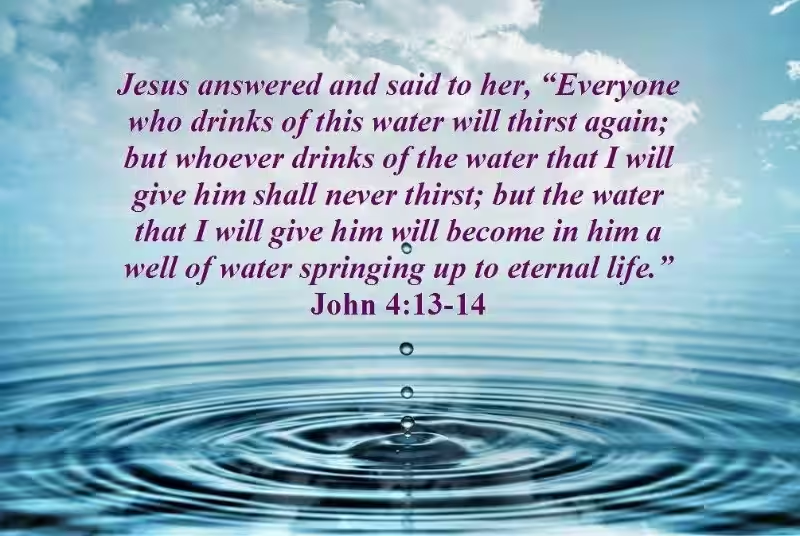
In Christianity, the well-known verse from John 4:10-14 speaks of Jesus offering the Samaritan woman “living water.” He states, “Everyone who drinks this water will be thirsty again, but whoever drinks the water I give him will never thirst. Indeed, the water I give him will become in him a spring of water welling up to eternal life.” This imagery evokes a source that doesn’t run dry, a constant wellspring of spiritual vitality that nourishes the soul indefinitely. It’s a stark contrast to the temporary relief of earthly comforts, pointing towards a deeper, more enduring fulfillment that transcends physical needs.
Biblical Perspectives on Living Water
The Bible is replete with references to water as a symbol of spiritual blessing and divine provision. Beyond the direct encounter in John, the Old Testament also paints vivid pictures of this concept. The prophet Jeremiah, for instance, declared in Jeremiah 2:13, “My people have committed two sins: They have forsaken me, the Lord, the fountain of living waters, and hewed them out cisterns for themselves, broken cisterns that can hold no water.” This powerful indictment highlights the folly of seeking fulfillment from temporary, man-made solutions instead of the eternal, divine source. The contrast is stark: broken cisterns offering only fleeting relief versus the unfailing abundance of living water.
These verses underscore a crucial point: true spiritual satisfaction comes not from our own efforts or from transient worldly gains, but from a divine connection. The metaphor of cisterns, which are essentially containers for water, represents human attempts to create their own sources of spiritual sustenance, often through rituals, philosophies, or material possessions. However, these are described as “broken,” implying they are inadequate and ultimately incapable of providing the deep nourishment the soul craves. The “fountain of living waters”, on the other hand, represents an inexhaustible and pure source, a direct conduit to divine grace and truth.
Echoes in Other Faith Traditions
While the terminology might differ, the underlying concept of a life-giving, spiritual source resonates in many other religious and philosophical traditions. In Hinduism, the concept of Amrita, the nectar of immortality, is often described as a divine drink that grants eternal life and bliss. This nectar, obtained through cosmic churning, symbolizes a celestial source of spiritual energy and liberation. It’s the ultimate refreshment, the antidote to the cycle of birth and death, offering a profound and lasting transformation.
Similarly, in Buddhism, the path to enlightenment involves overcoming suffering and achieving Nirvana, a state of profound peace and liberation. While not explicitly termed “living water,” the journey towards Nirvana is a quest for ultimate fulfillment and the cessation of spiritual thirst. The teachings of the Buddha offer a pathway to inner peace and a profound sense of contentment, akin to finding a deep, restorative wellspring within oneself. The relentless pursuit of desires, much like a thirst in a desert, is addressed by understanding the nature of reality and cultivating inner wisdom. This inner peace can be seen as a form of spiritual quenching, a deep satisfaction that arises from within.
The Practicality of “Living Water” in Daily Life
The idea of “living water” might seem abstract, confined to ancient scriptures and theological discussions. However, its relevance to our everyday lives is profound and practical. It’s about recognizing that the same thirst for refreshment and fulfillment that drove ancient peoples to seek spiritual sources still drives us today. In our fast-paced, often superficial world, we can easily fall into the trap of seeking satisfaction in fleeting pleasures, material possessions, and external validation. We build our own “broken cisterns” – chasing career advancements, accumulating wealth, or seeking constant entertainment – only to find ourselves spiritually parched and unfulfilled. This constant seeking without finding the true source leads to a persistent sense of unease and dissatisfaction.
Embracing the concept of “living water” in our daily lives means actively seeking a deeper, more enduring source of spiritual nourishment. This can manifest in various ways. For some, it might be through consistent prayer or meditation, cultivating a direct connection with the divine. For others, it’s found in acts of selfless service, recognizing that true fulfillment often comes from giving to others. It can also be found in contemplating nature’s beauty, reflecting on the intricate order and boundless creativity of the universe. The key is to shift our focus from outward accumulation to inward cultivation, from temporary fixes to a sustainable source of spiritual vitality.
Discovering your personal wellspring of “living water” is a journey of self-discovery and intentionality. It’s about understanding what truly nourishes your soul and then making conscious choices to prioritize those things. This might involve dedicating time each day for quiet reflection, away from the distractions of the digital world. It could mean engaging in practices that foster gratitude, actively appreciating the blessings in your life, big or small. Perhaps it’s about finding a community of like-minded individuals who share your spiritual aspirations, providing mutual support and encouragement.
Consider the simple yet powerful act of reading inspiring texts. Whether it’s a sacred scripture, a philosophical treatise, or even a well-crafted poem, these words can act as conduits, offering wisdom, solace, and a sense of connection. Just as drinking pure water revitalizes the body, absorbing profound truths and insights can revitalize the spirit. It’s about actively seeking out experiences that uplift, inspire, and connect you to something greater than yourself, allowing that divine refreshment to flow into your life.
The Impact of Spiritual Fulfillment
The impact of finding and regularly drawing from this spiritual wellspring is transformative. When our deepest thirst is quenched, we experience a profound sense of peace, resilience, and purpose. The anxieties and stresses of life, while not disappearing entirely, lose their power to overwhelm us. We are better equipped to navigate challenges, to face adversity with grace and fortitude, because our inner foundation is solid. This isn’t about becoming immune to suffering, but about developing an inner strength and perspective that allows us to endure and even grow through it.
Furthermore, this inner replenishment naturally overflows into our interactions with the world. When we are spiritually nourished, we tend to be more compassionate, more patient, and more generous. Our relationships deepen, and our capacity for love and empathy expands. We begin to see the world through a lens of abundance rather than scarcity, contributing positively to the lives of those around us. This is the ultimate testament to the power of “living water” – it not only sustains us individually but also allows us to become a source of refreshment and hope for others.
Conclusion: The Enduring Promise of Living Water
The concept of “living water,” whether explicitly named or implicitly understood, remains a universal and enduring promise across the spectrum of human spiritual endeavor. It speaks to our innate longing for meaning, connection, and lasting fulfillment. From the biblical accounts of Jesus offering a wellspring that never runs dry to the subtle yet profound spiritual quests found in other traditions, the message is consistent: true sustenance comes from a source that transcends the transient nature of the material world. This isn’t about adhering to a particular dogma, but about recognizing and responding to the deep-seated thirst within our souls.
Ultimately, the pursuit of “living water” is an invitation to explore the depths of our own spiritual being. It’s a call to move beyond superficial satisfactions and to seek out that which truly revitalizes and sustains us. By actively cultivating our connection to this divine source, we can experience a life of greater peace, resilience, and purpose. The verses about living water are not just ancient pronouncements; they are timeless invitations to tap into an inexhaustible reservoir of grace, love, and truth, offering a promise of eternal life and profound satisfaction that resonates across all religions and throughout all time.
Frequently Asked Questions: Living Water and Religion
What is “Living Water”?
The term “Living Water” appears in the Bible, most notably in the Gospel of John. In the context of Jesus speaking to the Samaritan woman at the well, He offers her “living water.” This refers to a spiritual water that quenches a person’s deepest thirst for meaning, purpose, and eternal life, which is found in a relationship with God through Jesus Christ. It symbolizes the Holy Spirit and the eternal life that believers receive.
How does the concept of “Living Water” relate to religion?
The concept of “Living Water” is central to Christianity, as it is directly linked to Jesus Christ. For Christians, “living water” is a metaphor for the spiritual sustenance and eternal life offered by God through faith in Jesus. While other religions offer spiritual guidance and practices, the specific theological understanding of “living water” as originating from Jesus and being the Holy Spirit is unique to Christian doctrine.
Can a person experience “Living Water” outside of a specific religion?
From a Christian perspective, “living water” is understood as a gift from God received through faith in Jesus Christ. Therefore, it is believed to be exclusively found within the Christian faith. Other religions offer different paths to spiritual fulfillment, but they do not, by definition, offer what Christians understand as “living water.”
What are the benefits of receiving “Living Water”?
According to Christian belief, the benefits of receiving “living water” include:
Spiritual fulfillment: It satisfies the soul’s deepest longings and provides a sense of purpose.
Eternal life: It signifies a connection to God that transcends earthly existence and leads to everlasting life.
The indwelling of the Holy Spirit: It symbolizes the presence and power of the Holy Spirit guiding and empowering believers.
Inner peace and joy: It brings a profound sense of peace and joy that is not dependent on external circumstances.