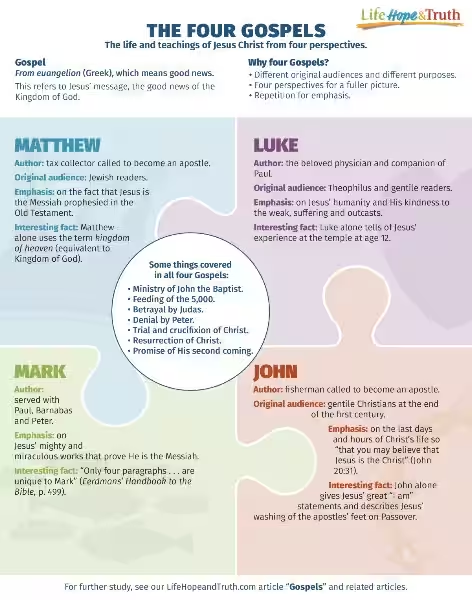
In the vast tapestry of religious literature, few threads are as central and as deeply revered as the accounts found within the four gospel narratives. These foundational texts, nestled within the Christian Bible, offer distinct yet harmonious perspectives on the life, teachings, death, and resurrection of Jesus Christ. More than just historical records, they serve as lighthouses of faith, guiding millions through the complexities of religious belief and practice. Understanding the unique contributions of each of the four gospel writers—Matthew, Mark, Luke, and John—allows for a richer, more nuanced appreciation of the core message of Christianity and its enduring impact on the world.
These narratives are not mere biographies; they are theological testaments, crafted with specific audiences and purposes in mind. Each evangelist, through their unique voice and emphasis, reveals different facets of Jesus’s identity and mission. Whether you are a seasoned believer seeking deeper insight or a curious observer exploring the foundations of a major world religion, delving into the four gospel is an essential journey. It’s an invitation to encounter a figure who has profoundly shaped human history and continues to inspire hope, compassion, and a search for meaning in countless lives.
Matthew’s gospel is often recognized for its structured and authoritative tone, presenting Jesus as the promised Messiah, the King of the Jews, fulfilling ancient prophecies. He begins by tracing Jesus’s lineage back to Abraham and David, establishing his royal heritage and his connection to the Old Testament covenant. This deliberate emphasis aims to convince his primarily Jewish audience that Jesus is indeed the one they have been waiting for. Think of it like a meticulously researched historical document, complete with citations and genealogies, all pointing to the arrival of a long-awaited monarch.
Key themes in Matthew include the Kingdom of Heaven, Jesus’s role as a supreme teacher (often compared to Moses, delivering new laws on a spiritual mountain), and the importance of righteousness and obedience. Matthew’s Jesus is often depicted delivering long, eloquent sermons, the most famous being the Sermon on the Mount, which lays out the ethical principles of his kingdom. He meticulously quotes scripture, demonstrating how Jesus’s life and ministry are the culmination of God’s plan as revealed in the Hebrew Bible, making the four gospel a cohesive narrative of divine fulfillment.
The Sermon on the Mount as a Blueprint for Living
The Sermon on the Mount, a central piece of Matthew’s gospel, is not just a collection of sayings; it’s a profound ethical manifesto. Here, Jesus reinterprets and elevates the Law, calling his followers to a higher standard of love, mercy, and inner purity. He challenges conventional wisdom, urging listeners to love their enemies, turn the other cheek, and pray for those who persecute them. This section is a cornerstone for understanding Jesus’s radical teachings on personal transformation and spiritual discipline.
For anyone grappling with how to live a meaningful and ethical life, the Sermon on the Mount offers practical, albeit challenging, guidance. It speaks to issues of anger, lust, divorce, oaths, and retaliation, presenting a vision of discipleship that goes beyond outward observance to a transformation of the heart. The Beatitudes, the opening pronouncements of blessedness, offer a counter-cultural view of who is truly fortunate, highlighting the poor in spirit, the meek, and those who hunger and thirst for righteousness, thereby redefining success and value within the context of the four gospel.
Mark: The Suffering Servant and Urgent Ministry
Mark’s gospel is the shortest of the four gospel, characterized by its fast-paced narrative and dramatic urgency. Written likely for a Roman audience, Mark focuses on Jesus’s actions and power, presenting him as the dynamic, divine Son of God who is constantly on the move. The narrative is often described as a “run-on sentence,” with frequent use of the word “immediately,” conveying a sense of relentless activity and the unfolding of a critical mission.
Mark’s Jesus is often portrayed as a compassionate healer and exorcist, demonstrating his authority over sickness, demons, and even nature itself. However, he also emphasizes Jesus’s suffering. The theme of the “Messianic secret” is prominent, where Jesus often instructs those he heals or his disciples not to reveal his identity, hinting at a deeper, more complex understanding of his messiahship that would involve suffering and sacrifice. This focus on action and suffering sets it apart in the collection of the four gospel.
Jesus’s Miracles: Demonstrations of Divine Power and Compassion
The numerous miracles recorded in Mark’s gospel are not just displays of supernatural ability; they are tangible expressions of God’s kingdom breaking into the world. From healing the blind and the deaf to calming the storm and feeding thousands, these events serve to authenticate Jesus’s identity and reveal his profound compassion for humanity’s suffering. Each miracle is a powerful testament to Jesus’s power and his desire to alleviate pain and bring wholeness.
For individuals facing their own struggles, whether physical, emotional, or spiritual, the miracle stories in Mark offer a profound source of hope and encouragement. They illustrate a God who is not distant or unconcerned, but actively involved in the lives of his people, intervening with healing and restoration. The consistent portrayal of Jesus responding to cries for help underscores the relational aspect of faith, a central theme throughout the four gospel.
Luke: The Universal Savior and Compassionate Physician
Luke, a physician himself, presents a gospel that is both meticulously researched and deeply compassionate, emphasizing Jesus as the Savior of all people, particularly the marginalized and the outcast. He meticulously traces Jesus’s lineage all the way back to Adam, highlighting his universal relevance. Luke’s narrative is filled with stories of outreach to the poor, the sick, women, Samaritans, and Gentiles, demonstrating that Jesus’s message of salvation is for everyone, transcending social and ethnic boundaries.
Luke also offers a unique perspective on prayer, the Holy Spirit, and the importance of social justice and economic concern. His gospel is known for its beautiful parables, such as the Good Samaritan and the Prodigal Son, which offer profound insights into God’s love and the nature of true discipleship. The inclusion of detailed accounts of Jesus’s birth and early life, as well as his ascension, further solidifies Luke’s comprehensive portrayal within the four gospel framework.
The Parables of Jesus: Timeless Lessons on Love and Forgiveness
The parables in Luke, like the story of the Good Samaritan, are more than just simple stories; they are divine illustrations designed to challenge assumptions and reveal spiritual truths. The Good Samaritan, for instance, radically redefines who our “neighbor” is, calling for unconditional love and selfless service regardless of social status or religious affiliation. Similarly, the parable of the Prodigal Son beautifully encapsulates the boundless nature of God’s forgiveness and the joy of reconciliation.
These parables offer practical wisdom for navigating life’s complexities and understanding the heart of God. They teach us about humility, repentance, generosity, and the radical nature of God’s grace. For anyone seeking to understand compassion, empathy, and the transformative power of forgiveness, Luke’s parables provide an enduring and deeply personal pathway within the broader message of the four gospel.
John: The Divine Word and Eternal Life
John’s gospel stands apart from the other four gospel accounts with its distinctive theological depth and philosophical language. John presents Jesus as the eternal Word of God (Logos), who was with God in the beginning and through whom all things were made. His focus is on the divine nature of Jesus and the eternal life that comes through belief in him. The narrative often uses symbolic language and extended discourses, offering a profound exploration of faith and identity.
John’s gospel is rich with intimate dialogues between Jesus and his disciples, particularly in the Upper Room discourse before his crucifixion. He highlights Jesus’s “I am” statements (e.g., “I am the bread of life,” “I am the light of the world”), which reveal his divine identity and his role as the source of spiritual sustenance and truth. This emphasis on belief and abiding in Christ is central to John’s message of salvation and the enduring relationship between believers and God, making it a crucial part of the four gospel.
The Concept of “Abiding in Christ”: A Foundation for Spiritual Growth
The metaphor of “abiding in Christ,” prominent in John’s gospel, is a powerful image for the deep, intimate connection that believers are called to have with Jesus. It signifies a continuous reliance on him, a constant drawing of spiritual strength and life from him, much like a branch draws life from a vine. This concept is fundamental for understanding spiritual maturity and the source of true joy and fruitfulness in the Christian life.
For individuals seeking a deeper and more consistent spiritual life, the teachings on abiding provide a practical framework. It involves actively engaging with Jesus through prayer, scripture, and obedience, cultivating a steadfast relationship that sustains through all of life’s seasons. This intimate union with Christ, as described in John, represents the ultimate fulfillment of the promises found throughout the four gospel.
While each of the four gospel writers offers a unique perspective, their narratives converge to paint a cohesive and powerful portrait of Jesus Christ. Matthew presents him as the King, Mark as the Servant, Luke as the Savior of all, and John as the Divine Word. Together, they provide a rich and multifaceted understanding of his life, teachings, and redemptive work, forming the bedrock of Christian faith and practice.
Exploring the four gospel is not just an academic exercise; it is an invitation to encounter the divine. It’s an opportunity to grapple with profound questions of faith, purpose, and the nature of love. The enduring relevance of these ancient texts lies in their ability to speak to the human heart, offering hope, transformation, and a pathway to eternal life for all who seek it. The symphony of their witness continues to resonate, shaping lives and inspiring devotion across generations.
Frequently Asked Questions about the Four Gospels
What are the Four Gospels?
The Four Gospels are the first four books of the New Testament in the Christian Bible: Matthew, Mark, Luke, and John. They are accounts of the life, teachings, death, and resurrection of Jesus Christ.
What is the purpose of the Four Gospels?
The primary purpose of the Gospels is to present the story of Jesus Christ and to encourage belief in Him as the Son of God and the Savior of humanity. Each Gospel offers a unique perspective and emphasizes different aspects of Jesus’ ministry to serve various audiences and theological purposes.
Are the Four Gospels historically accurate?
The Gospels are considered by most Christian scholars and historians to be historically reliable accounts of Jesus’ life and ministry, though they are not modern biographies. They were written by followers of Jesus and aim to convey truth about him. Modern scholarship continues to examine and debate the historical details within them.
What is the religion that the Four Gospels are associated with?
The Four Gospels are central to Christianity. They form the foundation of Christian belief and practice, providing the narrative of Jesus Christ, who is considered the founder and central figure of Christianity.
How do the Four Gospels differ from each other?
While all four Gospels tell the story of Jesus, they have distinct authors, audiences, and theological emphases. Matthew emphasizes Jesus as the Messiah and King, Mark focuses on Jesus as the suffering servant, Luke presents Jesus as the Savior of all people, and John highlights Jesus’ divine nature and his relationship with God the Father.
Can someone be a Christian without reading the Four Gospels?
While the Four Gospels are foundational to Christianity, individuals might come to faith through various means, such as the preaching of the Gospel or the testimony of other Christians. However, a deep understanding of Christian belief generally involves engagement with the teachings and life of Jesus as presented in the Gospels.