The word “Pentecost” might conjure up various images and feelings. For some, it’s a distant historical event, a chapter in a sacred text. For others, it’s a vibrant, living celebration, a powerful testament to faith. But what truly brings Pentecost to life for many are the Pentecost pictures – the visual depictions that have, over centuries, captured the essence of this pivotal moment in religious history. These images aren’t just pretty art; they are windows into the spiritual experience, offering us a tangible connection to the divine. Whether rendered in stained glass, painted on canvas, or etched in our collective memory, Pentecost pictures serve as powerful reminders of the Holy Spirit’s descent and its transformative impact.
Understanding Pentecost requires more than just reading about it; it involves seeing and feeling its power. These visual narratives allow us to participate in the event, to imagine ourselves present among the disciples, experiencing the awe and wonder. They speak a universal language, transcending cultural and linguistic barriers, and offer a deeply relatable way to grasp profound theological concepts. From the earliest Christian art to contemporary interpretations, Pentecost pictures have consistently strived to convey the burning intensity, the unifying force, and the outward-reaching mission that characterized that first Pentecost.
The Genesis of Pentecost: From Whispers to Wildfire
The story of Pentecost, as recounted in the Book of Acts, is a cornerstone of Christian belief. It marks the fiftieth day after the resurrection of Jesus Christ, a time when his followers, gathered in Jerusalem, experienced a miraculous outpouring of the Holy Spirit. This wasn’t a quiet, introspective moment; it was a dynamic, visible, and audible manifestation of God’s presence. The disciples, previously timid and uncertain, were suddenly filled with boldness, speaking in new tongues and empowered to spread the Gospel to the world.
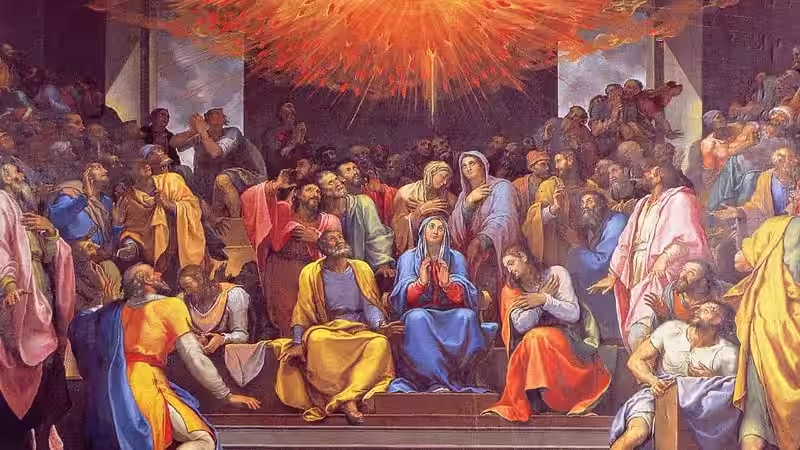
This foundational event is often depicted in Pentecost pictures as a room filled with disciples, their faces upturned, bathed in light. The most striking element is the tongues of fire that are said to have appeared, resting on each of them. These aren’t literal flames in the destructive sense, but rather symbolic representations of divine inspiration and purification. They signify the igniting of their faith, the empowerment to speak with clarity and conviction, and the burning desire to share their newfound message. Think of it like a spark igniting a powerful engine, ready to drive forward the message of salvation.
The Symbolism of Fire: Divine Presence and Transformation
The symbolism of fire in Pentecost pictures is rich and multifaceted, reaching back to ancient traditions where fire represented divine presence, purification, and sacrifice. In the context of Pentecost, these fiery tongues can be interpreted in several ways. Firstly, they represent the presence of the Holy Spirit, a tangible, albeit symbolic, manifestation of God’s active engagement with humanity. Secondly, the fire signifies purification, burning away fear and doubt, and leaving behind a purified vessel ready for God’s service. Imagine a blacksmith forging metal in a furnace; the heat transforms the raw material into something strong and useful.
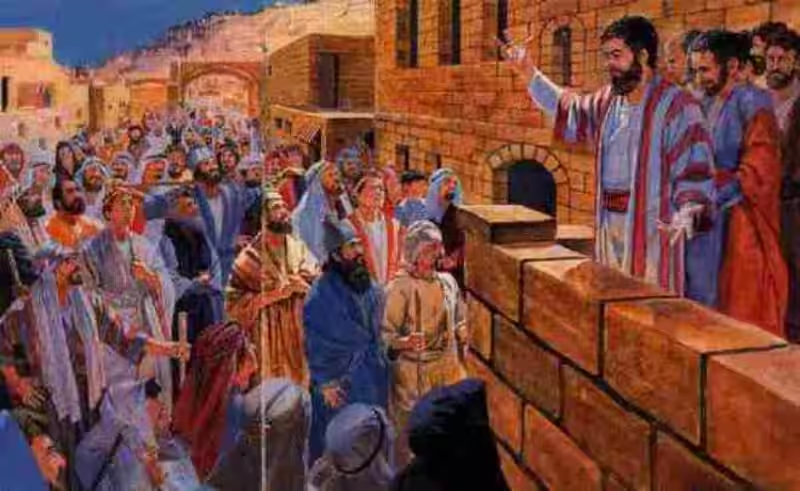
Furthermore, the tongues of fire speak to the gift of languages. The disciples began to speak in other tongues, enabling them to communicate the Gospel to people from all nations present in Jerusalem. This aspect is crucial, as it highlights the inclusive nature of God’s message. Pentecost pictures often capture this by showing diverse individuals reacting with astonishment and understanding. This visual element underscores the idea that God’s love and message are not confined by earthly boundaries, but are intended for everyone. The fire, in this sense, is not just a spectacle but a catalyst for universal communication and connection.
Iconic Pentecost Pictures: A Gallery of Faith
Over centuries, artists have grappled with how to best visualize the intensity and significance of Pentecost. The result is a stunning array of Pentecost pictures that have become iconic within religious iconography. These artworks not only depict the event but also interpret its theological implications, offering viewers varied perspectives on this foundational moment. From the vibrant mosaics of early churches to the dramatic canvases of the Renaissance, each piece contributes to our understanding and appreciation of Pentecost.
One of the most recurring motifs in these Pentecost pictures is the dove, often depicted descending from above or alongside the flames. While the tongues of fire represent the active, empowering presence of the Spirit, the dove traditionally symbolizes peace, gentleness, and the Holy Spirit itself. This pairing of fire and dove in Pentecost pictures creates a powerful duality: the fiery passion for spreading the message tempered by the peaceful guidance and love that accompanies it. It’s like the force of a storm channeled into a gentle, life-giving rain.
Early Christian Depictions: Mosaics and Manuscripts
The earliest Pentecost pictures emerged from the nascent Christian communities, often found in catacombs and early churches. These were not elaborate, detailed paintings but more symbolic representations. Think of stylized figures gathered together, with rays of light or stylized flames emanating from above. These primitive Pentecost pictures were crucial in establishing the visual language for this significant event, laying the groundwork for future artistic interpretations.
Later, with the rise of illuminated manuscripts and grander basilicas, more complex Pentecost pictures began to appear. Mosaics in churches like San Clemente in Rome offer striking visual narratives, depicting the disciples in a central upper room, with the Holy Spirit descending in a cascade of light and tongues of flame. These pieces were designed to be educational and inspiring for worshippers, many of whom were illiterate. The bold colors and clear imagery of these early Pentecost pictures ensured the story was accessible and impactful, reinforcing the transformative power of the Holy Spirit.
Renaissance and Baroque Interpretations: Drama and Emotion
The Renaissance and Baroque periods brought new levels of artistic sophistication and emotional depth to Pentecost pictures. Artists like El Greco, with his characteristic elongated figures and intense use of light and shadow, captured the supernatural and ecstatic nature of the event. His Pentecost pictures often feel almost otherworldly, emphasizing the divine intervention and the profound spiritual experience of the disciples.
The Baroque era, with its penchant for drama and grandiosity, further amplified the emotional impact of Pentecost scenes. Artists sought to convey the shock, awe, and overwhelming joy of the disciples. You’ll often see dynamic compositions, expressive faces, and a palpable sense of movement in these Pentecost pictures. They aim to draw the viewer into the moment, allowing them to feel the spiritual earthquake that occurred, the moment when the Church was truly born and empowered to embark on its mission.
The Enduring Relevance of Pentecost Pictures Today
In our modern world, filled with digital images and rapid-fire information, the enduring power of Pentecost pictures remains undiminished. They serve as visual anchors to our faith, reminding us of the continuous presence and activity of the Holy Spirit in our lives and in the world. These images are not relics of the past; they are living testaments to a divine encounter that continues to shape and empower believers.
Looking at Pentecost pictures today can be a deeply personal and inspiring experience. They invite us to reflect on our own spiritual journey, to consider how the Holy Spirit is working within us. Are we open to its transformative power? Are we willing to be empowered to share our faith? These visual prompts encourage introspection and a renewed commitment to living out the teachings of Christ, empowered by the same Spirit that filled the disciples on that momentous day.
Personal Connection and Spiritual Growth
For many, Pentecost pictures serve as a personal connection to their faith tradition. They can evoke memories of childhood Sunday school lessons, of powerful sermons, or of personal spiritual awakenings. Seeing these images can be like revisiting a cherished memory, a reminder of the foundational truths that have guided their lives. They offer a visual prayer, a moment to pause and reconnect with the divine.
These visual narratives are also powerful tools for spiritual growth. They challenge us to move beyond passive observation and to actively engage with the message of Pentecost. By contemplating the fiery tongues, the gathered community, and the outpouring of the Spirit, we can be inspired to seek a deeper experience of God’s presence in our own lives. They remind us that the power of Pentecost is not a historical artifact but a present reality, available to all who seek it with an open heart.
A Call to Action: The Spirit’s Work in the Modern World
Ultimately, Pentecost pictures are more than just artistic representations; they are a call to action. They remind us that the disciples were not meant to remain in a room, marveling at the experience. They were sent out, empowered to spread the Gospel, to heal the sick, and to make disciples of all nations. The fire of the Spirit was not meant to be contained but to illuminate the world.
In the context of the 21st century, this translates to a call to action in our own communities and beyond. How are we, as individuals and as a collective, embodying the spirit of Pentecost? Are we using our gifts and talents to serve others? Are we speaking truth with love and compassion? The vibrant imagery of Pentecost pictures encourages us to be active participants in God’s work, to be vessels of the Spirit’s transformative power in a world that so desperately needs it. The legacy of Pentecost lives on, waiting for us to embrace its calling.
Frequently Asked Questions About Pentecost Pictures
What is Pentecost and why are there pictures of it?
Pentecost is a significant Christian festival celebrating the descent of the Holy Spirit upon the Apostles. Pictures of Pentecost are created to visually represent this event and its themes, such as the coming of the Holy Spirit, divine inspiration, and the birth of the Christian Church.
What are common symbols found in Pentecost pictures?
Common symbols include tongues of fire, representing the Holy Spirit’s presence and power; doves, symbolizing peace and the Holy Spirit; and light, signifying divine illumination and guidance. The Apostles are often depicted gathered together, sometimes with Mary, the mother of Jesus.
What styles of art are used for Pentecost pictures?
Pentecost pictures can be found in various artistic styles, ranging from ancient mosaics and medieval illuminated manuscripts to Renaissance paintings, Baroque depictions, and contemporary illustrations. The style often reflects the artistic conventions and theological interpretations of the period in which it was created.
Where can I find Pentecost pictures?
You can find Pentecost pictures in religious art collections, churches, religious books and publications, art museums, and online archives of religious art. Many websites dedicated to Christian art and history also feature these images.
What is the religious significance of Pentecost pictures?
These pictures serve as powerful visual aids for understanding and contemplating the theological importance of Pentecost. They help believers connect with the event, meditate on the role of the Holy Spirit in their lives, and reflect on the mission and ongoing work of the Church.
Are there specific biblical accounts that inspire Pentecost pictures?
Yes, the primary biblical inspiration comes from the Book of Acts, chapter 2, which describes the event in detail. Other New Testament passages that discuss the Holy Spirit’s work and presence also contribute to the imagery and themes found in Pentecost art.