In the tapestry of Christian faith, certain threads shine with a particular luminescence, drawing countless souls into their radiant embrace. Among these, the practice of Marian devotion prayer stands out, offering a profound avenue for connection with the Divine through the intercession of Jesus’ mother, Mary. This isn’t merely a ritual; it’s a deeply personal engagement, a conversation of the heart that has echoed through centuries, providing solace, guidance, and an unwavering source of strength for believers across the globe. Whether you are a seasoned practitioner or new to exploring the spiritual landscape, understanding the essence and practice of Marian devotion prayer can unlock a richer, more fulfilling relationship with God.
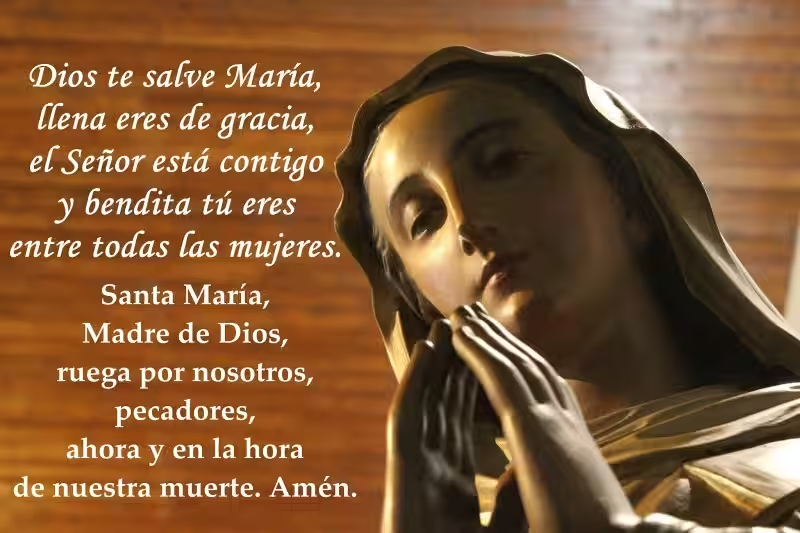
For many, the journey begins with a simple yet powerful act: reciting a Hail Mary. This foundational Marian devotion prayer, rich in biblical imagery and heartfelt praise, serves as an entryway into a deeper understanding of Mary’s role in salvation history. It’s a recognition of her unique grace, her “full of grace” status, and her role as the Mother of God. This prayer, and others like it, acts as a bridge, allowing us to approach the throne of God with the confidence of a child approaching a loving mother, knowing that Mary’s maternal heart is attuned to our deepest needs and desires. The beauty of Marian devotion lies in its accessibility, its ability to meet us where we are, offering peace in times of turmoil and hope in moments of despair.
At its core, Marian devotion prayer is an expression of love and reverence for Mary, not as an object of worship, but as a model of discipleship and a powerful intercessor. It stems from a profound theological understanding of her role as the Mother of God, a title that elevates her to a unique position in God’s plan. This devotion is not about diminishing Christ’s centrality, but rather about recognizing Mary’s integral part in His redemptive mission. She, who said “yes” to God’s will, embodies perfect obedience and unwavering faith, making her an unparalleled guide for our own spiritual journeys. Her life, from the Annunciation to the foot of the cross, offers a living testament to what it means to follow Christ with an open and courageous heart.
The practice of Marian devotion prayer is multifaceted, encompassing a variety of forms that cater to different spiritual needs and preferences. From the popular Rosary, a meditative prayer that cycles through the mysteries of Christ’s life, to the Litany of the Blessed Virgin Mary, a series of invocations offering praise and petition, there are numerous ways to engage. These prayers are not rote recitations but opportunities for contemplation, allowing the words to sink deep into our souls. Think of it like this: when you pray the Rosary, you are not just saying words; you are walking with Mary through significant moments in Jesus’ life, gaining insights and experiencing His love through her eyes. This immersive approach can transform a simple prayer into a profound spiritual encounter.
Perhaps the most recognized and widely practiced form of Marian devotion prayer is the Holy Rosary. This beautiful devotion is structured around a series of prayers, including the Our Father, Hail Mary, and Glory Be, woven together with reflections on fifteen or twenty significant events, known as the Mysteries of the Rosary. These Mysteries are divided into the Joyful, Sorrowful, Glorious, and Luminous (introduced by Pope John Paul II) sets, each offering a unique lens through which to view Jesus’ life and ministry, and by extension, our own spiritual journey. The repetitive nature of the Hail Mary, far from being monotonous, is intended to create a meditative rhythm, allowing the mind to quiet and the heart to open to deeper spiritual insights. It’s a spiritual pilgrimage, a walking with Mary through the life of her Son.
Engaging in the Rosary can be incredibly personal and transformative. For instance, when meditating on the Annunciation during the Joyful Mysteries, one can reflect on Mary’s humble acceptance of God’s plan and consider how they, too, are called to say “yes” to God’s will in their own lives. This isn’t just about reciting the prayer; it’s about allowing the content of the prayer to speak to your heart. The beads serve as tactile aids, helping to keep focus and providing a gentle rhythm to the prayer. Many find that as they become more familiar with the Mysteries, the Rosary becomes less of a task and more of a cherished appointment with the Blessed Mother, a time of profound peace and intimate connection with the Holy Family. It’s a Marian devotion prayer that offers a deeply personal encounter with the heart of God.
Other Forms of Marian Devotion Prayer and Their Significance
Beyond the Rosary, the landscape of Marian devotion prayer is rich and varied, offering diverse pathways for spiritual connection. The Angelus, a short but powerful prayer recited three times a day, commemorates the Incarnation and Mary’s acceptance of her divine role. Its simple structure—three sets of three Hail Marys, interspersed with verses and a concluding prayer—makes it an accessible way to sanctify moments throughout the day, grounding oneself in faith amidst the hustle and bustle of life. This practice encourages a constant awareness of God’s presence and Mary’s intercessory power; it’s a reminder that even in mundane moments, we are participants in God’s grand plan.
The Litany of the Blessed Virgin Mary, often referred to as the Litany of Loreto, is another significant form of Marian devotion prayer. This prayer consists of a series of invocations, each praising Mary with a unique title, such as “Holy Mother of God,” “Queen of Peace,” and “Mystical Rose.” These titles highlight various aspects of her holiness, her virtues, and her role in the Church. As believers recite these titles, they are invited to contemplate the beauty and power represented by each one, deepening their understanding and appreciation of Mary’s unique place in salvation history. It’s a beautiful way to acknowledge her many attributes and to implore her intercession for various needs, both personal and universal. The beauty of this Marian devotion prayer lies in its expansive acknowledgment of Mary’s multifaceted role.
Incorporating Marian Devotion Prayer into Daily Life
The true beauty and power of Marian devotion prayer lie not in grand gestures, but in its consistent integration into the fabric of everyday life. It’s about finding moments, however small, to connect with Mary and, through her, with Jesus. This could be as simple as a brief Hail Mary offered when waking up, a silent prayer for guidance before a difficult task, or a moment of quiet reflection on a Marian image. These small acts of devotion act as spiritual anchors, reminding us of God’s constant love and Mary’s ever-present intercession. Think of it as tending a garden; consistent, small acts of care yield abundant spiritual growth.
Making Marian devotion prayer a regular part of your routine doesn’t require hours of dedicated time. It can be woven into existing activities. For example, while commuting, one can pray a decade of the Rosary. During a quiet moment at work, a brief invocation to Mary for strength or peace can be offered. Even a simple glance at a Marian statue or icon can serve as a prompt for a short prayer. The key is consistency and sincerity. The more we invite Mary into our daily lives through prayer, the more we will experience her maternal care and her powerful intercession, drawing us closer to her Son. This consistent engagement transforms ordinary moments into opportunities for grace and divine encounter, making Marian devotion prayer a living, breathing aspect of faith.
The Transformative Impact of Marian Devotion Prayer
The consistent practice of Marian devotion prayer has a profound and transformative impact on the spiritual lives of believers. It cultivates virtues such as humility, obedience, and trust. By meditating on Mary’s life and her unwavering faith, individuals are inspired to emulate her example, striving to live lives more pleasing to God. This devotion also fosters a deeper sense of peace and serenity, knowing that they have a loving Heavenly Mother who intercedes for them with unparalleled compassion. It’s a comfort that transcends worldly troubles, offering a secure haven in God’s love.
Furthermore, Marian devotion prayer can deepen one’s understanding and love for Jesus Christ. Because Mary’s entire life was centered on her Son, devotion to her naturally leads to a greater appreciation of His teachings, His sacrifice, and His boundless love. She, who knew Him most intimately, guides us to know Him better. This journey of faith, enriched by Marian intercession, often leads to a more profound and personal relationship with the Trinity. The prayers become not just words, but pathways to experiencing God’s grace more fully and living a life more deeply rooted in His divine will. The enduring power of Marian devotion prayer lies in its ability to draw us ever closer to the heart of God.
Frequently Asked Questions about Marian Devotion and Prayer
What is Marian devotion?
Marian devotion refers to the special love, reverence, and veneration given to Mary, the mother of Jesus, within Catholicism and some other Christian traditions. It is a recognition of her unique role in salvation history and her intercessory power with her Son, Jesus Christ.
What are common Marian prayers?
Some of the most common Marian prayers include the Hail Mary (Ave Maria), the Rosary, the Magnificat, the Memorare, and the Litany of Loreto. These prayers often focus on Mary’s life, her virtues, and her role as Mother of God and Advocate for believers.
How does Marian devotion relate to prayer?
Marian devotion is expressed through prayer. Catholics pray to Mary, asking for her intercession and guidance. This is not seen as praying to her in the same way they pray to God, but rather asking her, as a beloved mother and saint, to pray for them to God.
Is Marian devotion a form of worship?
No, Marian devotion is not a form of worship (latria). Worship is reserved for God alone. Marian devotion is a form of veneration (hyperdulia), which is a special honor given to Mary due to her exalted position as the Mother of God and her sinlessness.
What is the purpose of praying the Rosary?
The Rosary is a prayer that contemplates the life of Jesus Christ through the repetition of the Hail Mary, Our Father, and Glory Be prayers, while meditating on specific “mysteries” (events from Jesus’ and Mary’s lives). Its purpose is to deepen one’s relationship with Christ by reflecting on his journey and to seek Mary’s intercession throughout this process.
Can non-Catholics participate in Marian devotion?
While Marian devotion is a central practice in Catholicism, individuals from other Christian denominations or faiths may find value in certain Marian prayers or in appreciating Mary’s role as a model of faith and motherhood. However, the theological understanding and the extent of devotion can vary significantly.