Thailand, a land often described as the “Land of Smiles,” is also a vibrant crucible of faith, where ancient traditions and modern beliefs intertwine to shape the lives of its people. For many, the concept of a “mission Thailand” evokes images of dedicated individuals embarking on journeys to share their spiritual convictions. However, the reality of religious life and missionary endeavors in Thailand is far more nuanced, encompassing a rich history, diverse practices, and a dynamic interplay between indigenous beliefs and external influences.
Understanding the spiritual landscape of Thailand requires delving beyond surface-level perceptions. It’s a journey into the heart of a culture deeply influenced by its religious heritage, where the sacred permeates daily life, from the smallest village shrine to the grandest Buddhist temple. This exploration of “mission Thailand” will shed light on the profound impact of religion on this fascinating Southeast Asian nation.
Buddhism, specifically Theravada Buddhism, stands as the bedrock of Thailand’s spiritual identity, influencing its laws, customs, and national character. It’s not merely a religion for most Thais; it’s an intrinsic part of their cultural fabric, a guiding philosophy that shapes their worldview and daily actions. The saffron robes of monks are a ubiquitous and respected sight, symbolizing a commitment to spiritual discipline and the pursuit of enlightenment. The practice of merit-making, through offerings to monks and acts of generosity, is a cornerstone of the faith, believed to bring good karma and a better rebirth.
The architecture of Thailand is a testament to Buddhist devotion, with countless temples, or ‘wats,’ dotting the landscape. These sacred spaces are not just places of worship but also community centers, educational hubs, and havens of peace. For instance, the imposing chedis and intricate murals within temples like Wat Phra Kaeo in Bangkok tell stories of the Buddha’s life and teachings, serving as a visual sermon for devotees. The rhythm of life in many Thai communities is set by temple bells and Buddhist festivals, underscoring the religion’s pervasive influence.
The Role of Monasticism and Lay Practice
Monastic life in Thailand is highly revered. Young boys are traditionally ordained as monks for a period, often during their adolescence, to gain spiritual merit for themselves and their families. This experience, known as ‘bhadra,’ is seen as a rite of passage, instilling discipline, respect, and a deeper understanding of Buddhist principles. While many leave the monastic order after this period, some dedicate their lives to it, becoming spiritual guides and caretakers of the temples.
Lay Buddhists actively participate in religious life by observing the five precepts (abstaining from killing, stealing, sexual misconduct, lying, and intoxicants), meditating, and making regular donations. The concept of ‘dukkha’ (suffering) and the path to its cessation, as taught by the Buddha, are central tenets that resonate with individuals seeking to navigate life’s challenges. The daily rituals, such as morning alms rounds where monks collect food offerings, exemplify the intimate connection between the monastic and lay communities, a vital aspect of the ongoing “mission Thailand” from within.
Beyond the Dharma: Other Faiths in the Thai Mosaic
While Buddhism undeniably dominates the religious landscape, Thailand is home to a fascinating array of other faiths, contributing to its rich spiritual diversity. This coexistence, though sometimes marked by subtle tensions, largely reflects the nation’s historical tolerance and its cosmopolitan nature. The presence of these communities adds layers of complexity and beauty to the overall picture of “mission Thailand.”
Islam holds a significant presence in the southern provinces, particularly among the Malay-speaking population, where it has been a deeply ingrained part of the cultural identity for centuries. Christianity, too, has a long history in Thailand, introduced by missionaries and now comprising a diverse range of denominations, from Catholic to Protestant churches, serving both Thai and expatriate communities. Even smaller communities of Hinduism and Sikhism contribute to the religious tapestry, often found in urban centers, serving the spiritual needs of their respective adherents.
Christian Missions: A Long and Evolving Journey
The story of Christian missions in Thailand is a narrative of perseverance, adaptation, and a deep-seated desire to share a message of hope. From the earliest encounters in the 16th century to the organized efforts of the 19th and 20th centuries, Christian denominations have engaged in various forms of ministry. Initially, outreach often focused on establishing schools and hospitals, recognizing that addressing the practical needs of the community could open doors for spiritual dialogue. These early endeavors laid the groundwork for what would become a significant aspect of “mission Thailand.”
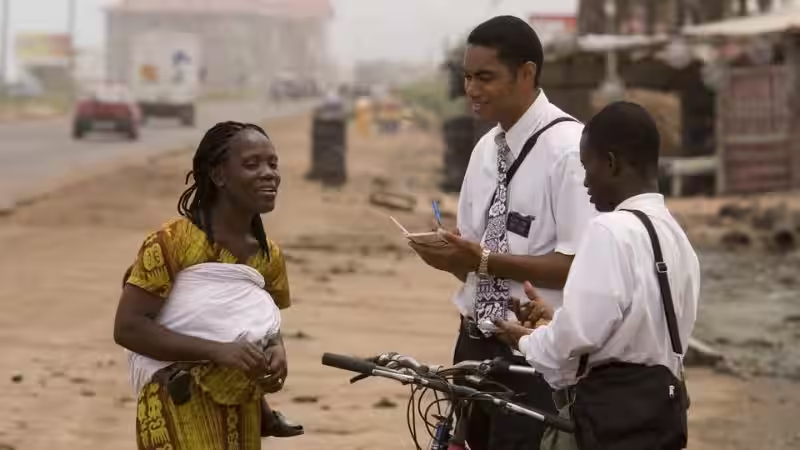
Modern Christian missions in Thailand are diverse, encompassing evangelism, discipleship, social work, and humanitarian aid. They often work in partnership with local Thai churches, empowering them to lead their own ministries. This shift towards indigenous leadership is crucial, ensuring that the message is communicated in a culturally relevant and sustainable way. For instance, organizations might focus on addressing issues like human trafficking or providing educational resources in remote areas, demonstrating a holistic approach to their mission.
Engaging in mission work in Thailand, regardless of the faith, is not without its challenges. Navigating cultural nuances, respecting local customs, and understanding the deep-seated influence of Buddhism requires sensitivity and a willingness to learn. The perception of foreign missionaries can sometimes be met with suspicion, necessitating a genuine commitment to building trust and relationships before any spiritual discourse takes place. The concept of “saving face” is paramount in Thai culture, and direct, confrontational approaches to evangelism are often counterproductive.
Missionary efforts have had to adapt to the evolving social and economic landscape of Thailand. Instead of solely focusing on conversion, many now prioritize community development, education, and vocational training. This pragmatic approach allows for a more organic integration into society, where the positive impact of their presence speaks for itself. A simple act of kindness, like volunteering at a local orphanage or teaching English, can be a powerful testament to the values they represent, contributing to the broader understanding of “mission Thailand” through action.
Syncretism and Spiritual Exploration: The Thai Way
One of the most fascinating aspects of Thailand’s religious life is the phenomenon of syncretism, where different belief systems blend and coexist, often without contradiction. Many Thais may incorporate elements of animism, ancestor worship, or even astrological beliefs into their Buddhist practice, creating a unique spiritual tapestry. This fluidity allows for a personalized approach to faith, where individuals draw from various sources to find meaning and guidance.
This blending is evident in everyday practices, such as the placement of spirit houses outside homes and businesses, intended to appease benevolent spirits and ward off malevolent ones. It also manifests in the veneration of various deities and amulets, often adopted from Hindu traditions or local folklore. This inherent openness to diverse spiritual expressions is a hallmark of Thai culture and presents a unique context for any “mission Thailand” endeavor.
The Future of Faith and Missions in Thailand
The future of religion and missions in Thailand is likely to be as dynamic as its past. As globalization continues to influence the nation, new spiritual trends will emerge, and existing faiths will continue to evolve. The younger generation, exposed to a wider range of ideas and information, may forge their own paths in spirituality, potentially leading to new forms of religious expression or a greater emphasis on secularism.
For those involved in mission work, the key to continued relevance will lie in their ability to remain adaptable, culturally sensitive, and genuinely committed to serving the Thai people. The narrative of “mission Thailand” is not a static one; it’s a living story that continues to unfold, shaped by the faith, aspirations, and resilience of the people and the dedication of those who seek to share their spiritual journeys with them. The ultimate success of any mission lies not in imposing beliefs, but in fostering understanding, building bridges, and contributing to the well-being of this remarkable nation.
Frequently Asked Questions: Mission Thailand
What is the primary mission in Thailand?
The primary mission in Thailand is to share the Gospel of Jesus Christ through evangelism, discipleship, and humanitarian aid, aiming to establish vibrant and self-sustaining churches that impact the local communities.
What are the dominant religions in Thailand?
The dominant religion in Thailand is Theravada Buddhism. However, there are also significant populations of Muslims, Christians, and other faiths.
How does the mission interact with existing religious practices in Thailand?
The mission respects the religious freedom of all individuals and seeks to engage with Thai people in a culturally sensitive manner. The focus is on presenting the Christian message as an alternative and complementary spiritual path, rather than a replacement for existing beliefs.
Are there specific religious holidays or festivals that the mission observes or acknowledges in Thailand?
The mission observes Christian holidays such as Christmas and Easter. They also acknowledge and respect major Buddhist festivals, often using them as opportunities for cultural exchange and understanding.
What is the mission’s approach to religious conversion in Thailand?
The mission’s approach to conversion is based on voluntary acceptance of Christian faith, emphasizing personal conviction and understanding of the Gospel. They do not engage in coercive or deceptive practices.
Are there any religious restrictions or sensitivities the mission must be aware of in Thailand?
Yes, the mission is acutely aware of religious sensitivities. They are committed to respecting Buddhist traditions and symbols, avoiding any actions that could be perceived as disrespectful or antagonistic towards Buddhism or other faiths.