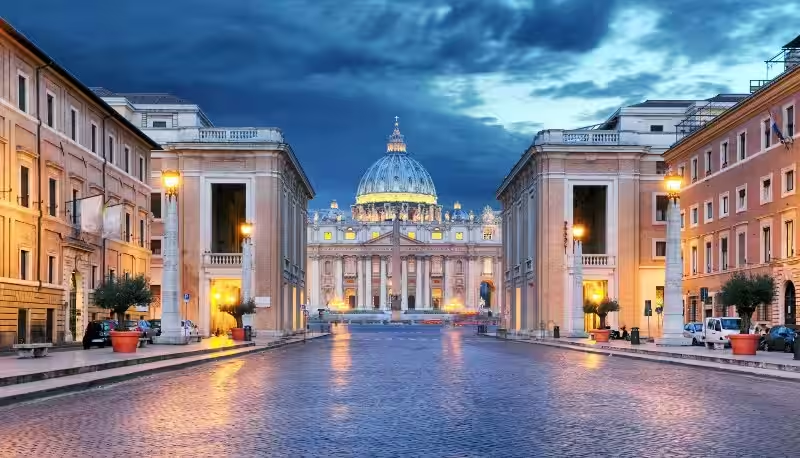
When we hear the name “Sistine Chapel,” our minds immediately conjure images of Michelangelo’s breathtaking frescoes – the creation of Adam, the Last Judgment, a kaleidoscope of divine narratives painted with unparalleled genius. It’s a pilgrimage for art lovers, a testament to human artistic prowess. Yet, before even stepping through its hallowed doors, before the awe-inspiring ceiling swallows your gaze, there’s a profound spiritual experience to be had contemplating the Sistine Chapel from the outside. This iconic structure, nestled within the Vatican City, is more than just a shell for masterpieces; its very presence, its architectural statement, and its contextual place within the heart of the Catholic Church speak volumes about faith, power, and the enduring human quest for the divine.
Often, the focus on the Sistine Chapel’s exterior is overshadowed by the interior’s overwhelming artistic splendor. However, understanding its external form and its relationship to the surrounding Vatican grounds offers a richer, more complete appreciation of its significance. The very act of approaching this sacred space, even from a distance, is a journey in itself, a gradual immersion into a realm where art, history, and religion intertwine seamlessly. This article aims to explore that external dimension, revealing how the Sistine Chapel’s silhouette whispers its own sacred stories, shaping our perception of faith and its expression.
The Sacred Geometry of Faith: Architectural Significance from Afar
The Sistine Chapel, as viewed from its exterior, is a masterclass in sacred architecture, a building designed not merely for shelter but to evoke reverence and communicate spiritual truths. Its relatively unadorned brick facade, punctuated by simple, arched windows, might seem understated compared to the grandeur of St. Peter’s Basilica nearby. This deliberate simplicity, however, is key to its power. It acts as a powerful visual anchor, drawing the eye and the spirit towards its essential form. The chapel’s rectangular, almost fortress-like structure, speaks to its historical role as a fortified chapel, a place of prayer and significant papal ceremonies, capable of hosting the election of a new Pope. This robust external appearance hints at the endurance and stability of the Church, a solid presence in a changing world.
Consider the way the Sistine Chapel’s exterior is integrated into the larger fabric of the Vatican. It’s not a standalone monument but an integral part of a sacred complex, a testament to the organized nature of religious devotion and administration. The surrounding courtyards and walkways, the very paths pilgrims take to reach it, are designed to foster a sense of anticipation and spiritual preparation. The contrast between the more ornate exteriors of other Vatican buildings and the chapel’s restrained facade can be seen as a deliberate artistic choice, preparing the visitor for the explosion of color and narrative within. It’s like a quiet prelude before a grand symphony, allowing the external simplicity to amplify the internal magnificence.
The Color of Faith: Brick, Light, and Symbolic Resonance
The dominant color of the Sistine Chapel’s exterior is the warm, earthy tone of its brickwork. This choice is far from accidental; it imbues the structure with a sense of groundedness and history. The bricks themselves have witnessed centuries of papal processions, significant pronouncements, and the quiet prayers of countless individuals. This tactile connection to the past is palpable, even when viewed from a distance. The play of light and shadow across these textured surfaces further enhances their visual appeal, creating a dynamic interplay that shifts throughout the day. Imagine the way the late afternoon sun bathes the chapel in a golden hue, transforming its appearance and imbuing it with a radiant, almost divine glow. This is the color of enduring faith, a warm embrace of tradition and continuity.
Furthermore, the simple, arched windows, while not as ostentatious as those found in Gothic cathedrals, serve a vital symbolic purpose. They are portals of light, allowing the divine illumination to enter the sacred space. From the outside, these windows hint at the interior luminosity, the vibrant frescoes that await within. They represent the opening of the soul to spiritual understanding, the way faith allows light to penetrate even the darkest corners of our lives. The placement and scale of these windows contribute to the chapel’s overall harmonious proportion, a visual representation of the divine order that the Church seeks to uphold.
A Stage for Divine Drama: The Chapel’s Context and Ceremony
The Sistine Chapel, from an external perspective, is also a stage set for profound religious drama. Its location within the Apostolic Palace, the official residence of the Pope, immediately signals its immense importance. It is here, within these walls, that some of the most momentous decisions in the Catholic Church are made, most famously the election of a new Pope through the papal conclave. The external view of the chapel, therefore, is inextricably linked to the rituals of governance and spiritual leadership. The very act of approaching the chapel, knowing the significant events that unfold inside, can evoke a sense of awe and anticipation, even for those not directly involved in the proceedings.
The controlled access and the sense of solemnity that surrounds the Sistine Chapel, even from the outside, contribute to its mystique. It’s a place that demands respect and contemplation. The surrounding Vatican grounds, with their meticulous landscaping and imposing architecture, create an atmosphere of sacredness, preparing visitors for the profound experience that lies within. The hum of hushed conversations, the distant chime of bells, the sight of Swiss Guards in their distinctive uniforms – all these external elements contribute to the overall narrative of the Sistine Chapel as a place of profound religious significance, a beacon of faith in the heart of Rome.
The Silence Before the Storm: Anticipation and Spiritual Reflection
The exterior of the Sistine Chapel offers a unique opportunity for preparatory reflection. Before the overwhelming sensory experience of the interior, one can engage with the chapel’s external form in a more measured way. This is a time to consider the weight of history, the continuity of faith, and the immensity of the divine narratives that are housed within. The very act of waiting, of observing the architectural solidity and the subtle details, can foster a sense of inner stillness, a necessary precursor to fully appreciating the spiritual and artistic wonders that await. It’s a chance to move beyond the immediate gratification of seeing famous art and to engage with the deeper meaning and purpose of this sacred space.
The external view encourages us to think about the human endeavor to represent the divine. Michelangelo’s genius is undeniable, but the chapel itself, in its architectural integrity, also speaks to a collective human desire to create spaces that elevate the spirit and inspire devotion. The Sistine Chapel from the outside is a silent testament to this aspiration, a sturdy, enduring structure that has housed centuries of prayer, contemplation, and the unfolding of religious history. It reminds us that faith is not just about what is seen, but also about the spaces we create to honor and explore it.
Frequently Asked Questions: Sistine Chapel (Exterior) and Religion
What is the Sistine Chapel?
The Sistine Chapel is a chapel in the Apostolic Palace, the official residence of the Pope, in Vatican City. While famously known for its interior frescoes by Michelangelo, the exterior itself is part of the larger Apostolic Palace complex.
Can you see the Sistine Chapel from the outside?
The Sistine Chapel is located within the Apostolic Palace, which is not generally accessible to the public from the outside in its entirety. Visitors typically access the chapel as part of a tour through the Vatican Museums. Therefore, you don’t “see” the Sistine Chapel as a standalone building from the outside.
What is the religious significance of the Sistine Chapel?
The Sistine Chapel holds immense religious significance as it is the site of papal conclaves, the ceremony where the College of Cardinals elects a new Pope. It is also used for other important papal ceremonies. The frescoes within, depicting biblical scenes, further underscore its sacred and theological importance for the Catholic Church.
Is the Sistine Chapel a church?
While it functions as a chapel for papal ceremonies and conclaves, the Sistine Chapel is not a parish church in the traditional sense. It is part of the Pope’s official residence and serves a specific, high-level function within the Catholic hierarchy.
What happens inside the Sistine Chapel related to religion?
Historically and currently, the Sistine Chapel is where the College of Cardinals gathers in conclave to elect a new Pope. Other significant religious ceremonies and masses presided over by the Pope are also held there. The art within powerfully depicts key narratives of salvation history from the Old and New Testaments, reinforcing Catholic doctrine.