For many, the name “Rome” conjures images of gladiators, emperors, and architectural marvels. Yet, beneath the grandeur of the Colosseum and the whispers of the Forum lies a profound spiritual heritage, a bedrock upon which Western civilization was built. This is where Romano Tours truly shines, offering an immersive journey not just through history, but through the very soul of a city that has been a crucible of faith for millennia. Whether you’re a devout believer, a curious historian, or simply someone seeking a deeper understanding of the forces that shaped our world, a Romano Tours experience dedicated to religion promises to be both enlightening and profoundly moving.
Imagine standing in the very spaces where pivotal religious events unfolded, where prayers echoed through sacred precincts, and where artistic expressions of devotion have endured for centuries. Romano Tours crafts itineraries that go beyond the surface, delving into the rich religious narrative of Rome, from its pagan roots to the rise and evolution of Christianity, and even touching upon the vibrant Jewish heritage that predates and coexists with it. This isn’t just sightseeing; it’s a pilgrimage for the mind and spirit, guided by experts who breathe life into ancient stones and forgotten stories.
The Sacred Foundations: Pagan Rome and Early Beliefs
Before the iconic cross became a ubiquitous symbol of Rome, the city pulsed with a vibrant polytheistic faith. The ancient Romans worshipped a pantheon of gods and goddesses, each with their own domains and rituals. Temples dedicated to Jupiter, Minerva, and Venus dotted the landscape, serving as centers of civic and spiritual life. Understanding these early beliefs is crucial to appreciating the context in which later religions took root and flourished. Romano Tours often begins by exploring these pagan foundations, helping visitors grasp the spiritual milieu that early Roman converts navigated.
Consider the Pantheon, a marvel of Roman engineering, originally a temple to all gods. Its massive dome and oculus, open to the heavens, speak volumes about the Roman reverence for the celestial and the divine. A guided exploration with Romano Tours can illuminate the astronomical alignments and architectural symbolism that were integral to pagan worship. We learn about the Vestal Virgins, keepers of the sacred flame, and the elaborate public festivals that bound the community together in shared devotion. This initial immersion sets the stage for understanding the monumental shifts that would soon transform Rome’s spiritual landscape entirely.
Echoes of the Gods: Temples, Rituals, and Daily Devotion
During a Romano Tours excursion focused on pre-Christian Rome, you might find yourself walking amongst the ruins of the Temple of Saturn in the Roman Forum, imagining the sacrifices and prayers offered to the god of wealth and agriculture. You’ll learn about the intricacies of Roman religious practice, which was often deeply intertwined with daily life and civic duty. It wasn’t solely about personal salvation, but about maintaining harmony with the gods to ensure the prosperity and stability of the state. Romano Tours makes these concepts relatable by explaining how these ancient practices influenced later Roman customs and even elements of modern society.
The concept of “pax deorum” – the peace of the gods – was paramount. Romans believed that by performing the correct rituals and sacrifices, they could appease the deities and maintain a favorable relationship. This often involved elaborate processions, public ceremonies, and private devotions within household shrines. Romano Tours helps demystify these practices, presenting them not as abstract historical facts, but as the lived experiences of people who sought meaning and protection in their world. You’ll discover how the very fabric of Roman society was woven with threads of religious observance, from the grand pronouncements of the augurs to the simple offerings made at roadside shrines.
The Dawn of a New Faith: Christianity’s Rise in Rome
The story of Christianity in Rome is one of profound transformation, a narrative of a nascent faith that grew from a persecuted sect to the dominant religion of the empire. Romano Tours excels at tracing this remarkable journey, taking visitors to the very sites where the early Christian community struggled, persevered, and ultimately triumphed. It’s a story of faith, courage, and the enduring power of belief in the face of adversity.
The early Christians, often meeting in secret in catacombs and private homes, developed a distinct set of beliefs and practices centered around the life, death, and resurrection of Jesus Christ. These early gatherings were not only acts of worship but also vital expressions of community and mutual support. Romano Tours can guide you through the echoing silence of the Catacombs of Callixtus or Domitilla, spaces that served as early burial grounds and clandestine meeting places, where you can witness the nascent artistic expressions of Christian faith, such as the fish symbol and early depictions of Christ as the Good Shepherd.
From Persecution to Papacy: The Transformation of Rome
The conversion of Emperor Constantine in the early 4th century marked a turning point, ushering in an era of imperial favor and rapid expansion for Christianity. This pivotal moment is vividly brought to life by Romano Tours, which can lead you to sites like the Arch of Constantine, celebrating his victory at the Milvian Bridge, a victory he attributed to divine intervention. You’ll learn how the once-underground faith began to flourish openly, leading to the construction of magnificent basilicas and the establishment of a hierarchical church structure.
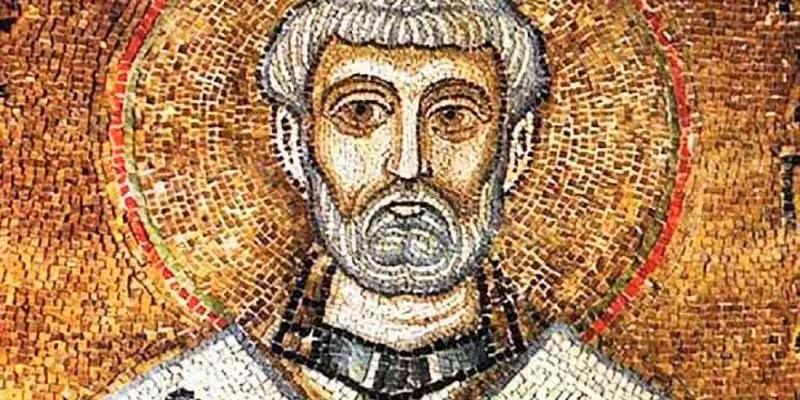
The rise of the Papacy, with its seat in Rome, further cemented the city’s status as the spiritual heart of Christendom. Romano Tours often includes visits to St. Peter’s Basilica, a monumental testament to this legacy, built over the traditional burial site of Saint Peter. You’ll hear stories of the early Popes, their struggles and their triumphs, and understand how their leadership shaped not only religious doctrine but also the political and social landscape of Europe. Experiencing these sites with expert guidance from Romano Tours allows for a deeper appreciation of the immense historical and spiritual weight they carry.
A Tapestry of Faiths: Jewish Heritage and Other Spiritual Threads
While Christianity’s narrative is central to Rome’s religious story, it’s essential to remember that Rome’s spiritual tapestry is far richer and more complex. The presence of a vibrant Jewish community in Rome dates back to antiquity, with a history that predates the widespread adoption of Christianity. Romano Tours often incorporates visits to the Jewish Ghetto, one of the oldest continuously inhabited Jewish settlements in the world, allowing for a more comprehensive understanding of Rome’s multi-faith heritage.
Walking through the historic Jewish Ghetto, you can feel the echoes of centuries of resilience and cultural preservation. The Great Synagogue of Rome, with its striking architecture, stands as a testament to the community’s enduring presence and its contributions to Roman society. Romano Tours can provide insights into Jewish traditions, festivals, and the unique relationship the Roman Jewish community has maintained with the city throughout its long history. This aspect of the tour adds a crucial layer of understanding to the religious landscape, highlighting that Rome’s spiritual narrative is not monolithic but a complex interweaving of diverse traditions.
Beyond the Basilica: Exploring Diverse Devotions
Beyond the grand cathedrals and ancient synagogues, Rome also holds spaces for other expressions of faith and devotion. While not always the primary focus, many Romano Tours can offer glimpses into these less visible spiritual aspects. This might include visiting monasteries, exploring the patronage of various saints by different guilds and professions, or understanding the evolution of religious art and its role in conveying spiritual messages to the populace. Romano Tours strives to offer a holistic view, recognizing that faith manifests in myriad ways.
For instance, the intricate symbolism found in Renaissance art, often commissioned by the Church, tells its own spiritual story. Romano Tours can highlight how artists like Michelangelo and Raphael, through their masterpieces in the Vatican Museums, visually interpreted biblical narratives and theological concepts for a society where literacy was not universal. This artistic devotion, a form of spiritual expression in itself, becomes accessible and understandable through informed guidance, enriching the overall Romano Tours experience and leaving visitors with a profound appreciation for the enduring power of faith in shaping human culture.
Frequently Asked Questions about Romano Tours and Religion
What is the primary religion associated with Romano Tours?
Romano Tours primarily focuses on religious tourism, with a significant emphasis on Catholic pilgrimage sites. Many of their tours are designed to visit prominent basilicas, cathedrals, and holy locations throughout Italy and beyond, often coinciding with significant religious events or feasts.
Do Romano Tours cater to specific religious denominations?
While Romano Tours has a strong focus on Catholic pilgrimages, they may also offer tours that touch upon other historical or cultural aspects of religion in the regions they visit. However, their core offering is centered around Catholic traditions and sites.
Can I request a tour with a specific religious focus?
Romano Tours generally offers pre-designed itineraries that highlight popular religious destinations. For specific religious interests or custom requests, it is advisable to contact Romano Tours directly to inquire about tailor-made tour options or specialized itineraries.
Are the tours guided by religious experts?
Many of Romano Tours’ guides are knowledgeable about the history, art, and religious significance of the sites visited. While they may not always be ordained clergy, they are trained to provide informative and insightful commentary relevant to the religious context of the pilgrimage.
What kind of religious experiences can I expect on a Romano Tour?
Expect opportunities to visit significant churches, participate in Mass (where available and appropriate), learn about the lives of saints, and experience the spiritual atmosphere of holy places. Tours often include visits to sites like the Vatican City, Assisi, Lourdes, and Fatima, among others.