The very name “Vatican City” conjures images of immense religious significance, a spiritual epicenter for millions worldwide. Within its ancient walls, steeped in centuries of tradition, lies a practice that, while seemingly simple, carries profound theological weight and deeply personal meaning for believers: the use of Vatican City holy water. This sacred substance, blessed within the heart of Catholicism, transcends mere water; it is a tangible conduit of divine grace, a powerful symbol of purification and protection, and an integral element in the rich tapestry of Catholic religion. Understanding its origins, its significance, and its everyday use offers a unique window into the enduring faith that emanates from this tiny, sovereign state.
The concept of holy water, particularly as dispensed and consecrated within the environs of Vatican City, is not a recent invention. Its roots stretch back to the earliest days of Christianity, drawing parallels from Old Testament rituals of cleansing and sanctification. The water itself, once blessed, is believed to be imbued with a special spiritual power, acting as a sacramentals – an outward sign instituted by the Church to confer grace. This spiritual potency is a cornerstone of its importance, making Vatican City holy water a focal point for devotion and a practical tool in the spiritual lives of many.
The Sacred Blessing: How Holy Water Gets Its Power
The process of creating Vatican City holy water is a deeply reverent affair. While the specific rituals may vary slightly in different churches, the essence remains the same: a solemn blessing by a priest or bishop. This consecration transforms ordinary water into something extraordinary, a vessel for divine intervention. The prayers used in the blessing are ancient and laden with theological meaning, invoking God’s power to cleanse, protect, and sanctify all who come into contact with the water.
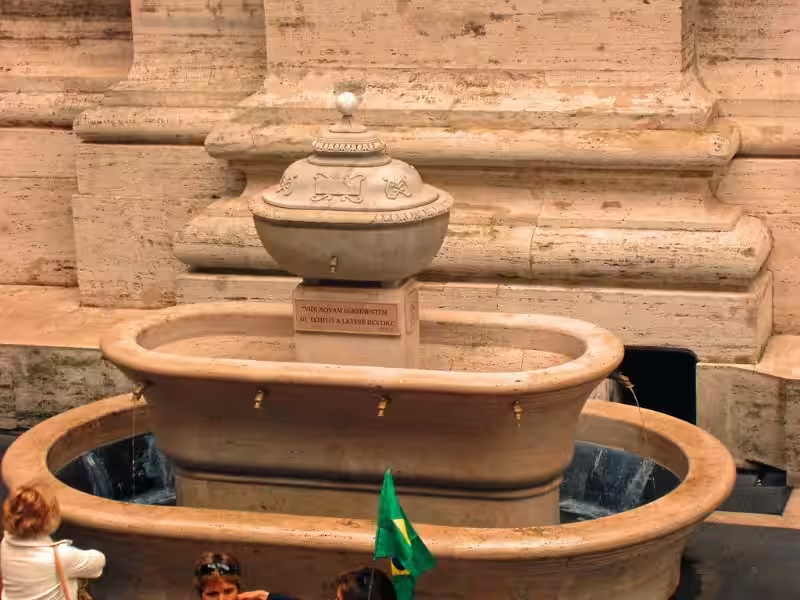
Imagine a priest, standing before a font, perhaps within the hallowed grounds of St. Peter’s Basilica or another significant Vatican institution. He holds his hands over the water, reciting prayers that call upon the Holy Spirit. These are not just words; they are a sacramental act, a prayerful petition for God to infuse the water with His purifying grace. Vatican City holy water is a testament to the Church’s belief that God works through tangible means, making the invisible power of the Spirit accessible through the physical element of water.
The Ritual of Blessing: More Than Just a Sprinkling
The blessing ceremony itself often involves the priest making the sign of the cross over the water, a gesture laden with symbolic meaning. The water may also be mixed with a small amount of blessed salt, a practice that dates back to antiquity, where salt was seen as a purifier and preserver. This combination further emphasizes the water’s ability to ward off evil and preserve spiritual well-being.
The prayers spoken during the blessing are carefully chosen. They often recall the waters of creation, the parting of the Red Sea, and the baptism of Jesus in the Jordan River – all significant moments where water played a pivotal role in God’s salvific plan. Thus, Vatican City holy water is not just blessed; it is steeped in the history of salvation, connecting the present moment with the foundational events of religion.
The Multifaceted Roles of Holy Water in Catholic Life
The significance of Vatican City holy water extends far beyond the act of its blessing. It finds expression in numerous devotional practices and is a familiar sight in churches and homes around the world. From the moment a Catholic enters a church to the intimate moments of prayer at home, holy water serves as a constant reminder of their faith and their connection to the divine.
For many, the act of dipping their fingers into the holy water font at the entrance of a church is a deeply ingrained ritual. This simple gesture, often performed before taking a seat, is a profound moment of religion, a spiritual cleansing before approaching the altar. It’s a personal act of making oneself holy, ready to receive the blessings of the Mass.
Personal Devotion and Home Practices
The use of Vatican City holy water isn’t confined to the church building. Many devout Catholics keep a small bottle of holy water at home. This allows for private prayer and devotion, offering a tangible connection to the Church’s sacramental life even when away from Mass. It can be used to bless oneself, one’s home, or even objects, imbuing them with a sense of sacredness.
Consider a family at home before bedtime. A parent might bless their child with holy water, making the sign of the cross on their forehead and reciting a short prayer for protection. This simple act reinforces the child’s faith, offering comfort and a sense of God’s presence. Vatican City holy water, in this context, becomes a symbol of love, protection, and the enduring power of faith within the domestic sphere.
Sacramental Use and Protection
Beyond personal devotion, Vatican City holy water plays a crucial role in various sacraments and rituals. It is used in the Sacrament of Baptism, where it signifies the washing away of original sin and the new birth in Christ. It is also present in the Rite of Exorcism, where its power is invoked to drive out evil spirits.
The belief in the protective qualities of holy water is widespread among Catholics. Many believe it can ward off evil influences, protect against illness, and bring spiritual comfort during times of distress. This belief is rooted in the Church’s understanding of the sacraments as channels of God’s grace, and holy water, as a sacramental, shares in this power. Therefore, Vatican City holy water is not just a symbol; it is perceived as an active agent of spiritual defense.
The Enduring Legacy of Vatican City Holy Water
In a world that often feels increasingly secular, the enduring presence and use of Vatican City holy water stand as a powerful testament to the resilience and vitality of religion. It represents an unbroken chain of tradition, connecting believers today with the practices and beliefs of their ancestors. The water, blessed in the heart of the Catholic Church, carries with it the prayers, hopes, and faith of generations.
The very act of obtaining and using Vatican City holy water, whether from a font in St. Peter’s Basilica or from a small vial purchased at a religious goods store, is an affirmation of faith. It signifies a belief in the unseen, in the power of God’s grace, and in the efficacy of the Church’s rituals. This simple, sacred substance continues to play a vital role in the spiritual lives of millions, a constant reminder of a faith that is both ancient and ever-present.
From the grand ceremonies within the Vatican walls to the quiet moments of prayer in individual homes, Vatican City holy water serves as a tangible link to the divine. It is a symbol of purification, a source of protection, and a profound expression of the enduring power of religion. Its continued use underscores the deep human need for spiritual connection and the Church’s ability to provide sacred means for that connection to flourish.
Frequently Asked Questions about Vatican City Holy Water
What is holy water?
Holy water is consecrated water used in the Catholic Church for various sacramental and devotional purposes. It is typically blessed by a priest or bishop.
Where does Vatican City get its holy water?
Vatican City, like other Catholic dioceses, sources its holy water from regular water supplies that are then blessed according to liturgical rites. There isn’t a unique or separate source of water for the Vatican.
How is holy water blessed?
The blessing of holy water is a solemn rite performed by a minister of the Church. It involves prayers, scripture readings, and often the exorcism of the water and prayers of petition to God.
What is holy water used for in the Catholic Church?
Holy water is used for several purposes, including:
* As a sign of purification and rebirth during baptisms.
* To bless people, places, and objects, such as churches, homes, and crucifixes.
* As a devotion, particularly when making the Sign of the Cross with it.
Is the holy water from Vatican City special or different from holy water elsewhere?
The spiritual efficacy of holy water comes from God’s grace invoked through the Church’s prayer and the minister’s action, not from the physical source of the water or the location where it is blessed. Therefore, holy water blessed in Vatican City is spiritually the same as holy water blessed in any other Catholic church.
Can I get holy water from Vatican City?
Visitors to St. Peter’s Basilica and other churches in Vatican City may find fonts of holy water available for use by the faithful. Inquire with church staff if you are unsure where to find it or how to use it respectfully.