In a world increasingly grappling with ecological crises, humanity is finding itself drawn to a deeper, more spiritual ecology. This burgeoning field, which we can broadly term eco-religion, explores the profound interconnectedness between our religious and spiritual beliefs and the health of our planet. It’s not simply about recycling or reducing our carbon footprint, though these actions are vital. Instead, eco-religion delves into the very ecosystems of our faith, examining how ancient traditions and contemporary spiritual movements can foster a more harmonious relationship with the Earth. This is a journey of ecological awakening, a recognition that our spiritual well-being is intrinsically linked to the flourishing of the natural world.
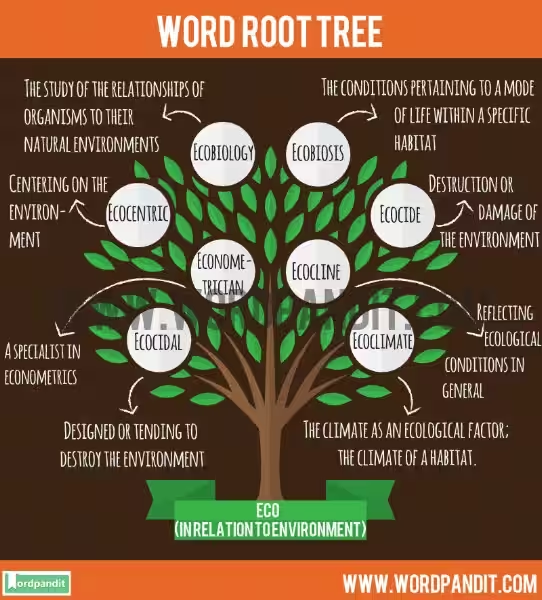
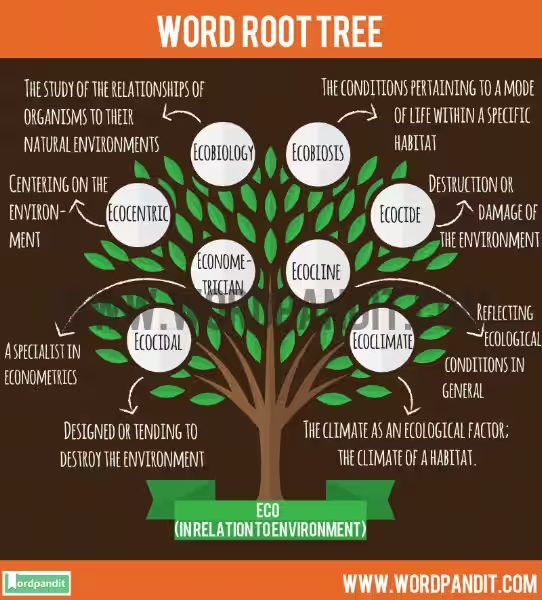
The term “eco-religion” itself hints at this deep symbiosis. The prefix “eco,” derived from the Greek word “oikos” meaning “house” or “dwelling,” speaks to our shared home, the Earth. When combined with “religion,” it signifies a spiritual dwelling place, a sacred space that encompasses all life. This understanding challenges anthropocentric views that place humanity at the apex of creation, instead advocating for a more ecocentric perspective where all beings hold inherent value. This shift in perspective is not just an intellectual exercise; it has the potential to inspire profound behavioral change, guiding us towards more responsible and respectful interactions with the environment.
The Sacredness of the Earth: Ancient Roots and Modern Echoes
For millennia, many cultures and religions have recognized the inherent sacredness of the natural world. These traditions often viewed the Earth not as a mere resource to be exploited, but as a living entity, a divine creation deserving of reverence. This eco-centric worldview was deeply embedded in their daily practices and communal rituals.
Consider the indigenous peoples of the Americas, whose spiritual practices were inextricably woven into the land. For them, mountains, rivers, and forests were not just geographical features, but sentient beings, ancestral spirits, and vital components of a cosmic ecosystem. Their rituals, often tied to seasonal cycles and agricultural rhythms, were acts of communion and gratitude, acknowledging their dependence on and belonging within the natural order. The reverence for the buffalo, the respect for the planting and harvesting cycles – these were not separate from their faith; they were their faith, an embodied understanding of their place in the grand tapestry of life. This deep respect for the Earth’s ecology served as a powerful, albeit often unintentional, form of eco-religion.
In a similar vein, many Eastern religions, such as Hinduism and Buddhism, offer profound ecological insights. The concept of karma, for instance, suggests that actions have consequences that ripple outwards, affecting not only individuals but also the wider environment. The principle of ahimsa, or non-violence, extends beyond human interactions to encompass all living beings. This inherent respect for life, for the interconnectedness of all things within the cosmic ecosystem, provides a fertile ground for developing a robust eco-religion. The idea that harming a tree is a karmic offense, or that all sentient beings deserve compassion, directly translates into a call for ecological stewardship.
Reinterpreting Scripture and Doctrine for an Ecological Age
As we confront the escalating environmental challenges of the 21st century, many religious traditions are re-examining their sacred texts and theological doctrines through an ecological lens. This process is not about discarding established beliefs, but about uncovering latent eco-conscious messages and applying them to contemporary issues.
Many scholars and theologians are now highlighting passages in religious scriptures that speak to humanity’s role as stewards of creation. The Genesis account, for example, which describes God entrusting Adam and Eve with the care of the Garden of Eden, is being reinterpreted not as a license for dominion, but as a mandate for responsible eco-management. This understanding redirects the focus from unchecked human authority to a profound sense of responsibility, emphasizing our duty to nurture and protect the Earth. This is a crucial step in bridging the gap between our spiritual aspirations and our ecological actions, forming the bedrock of a practical eco-religion.
Furthermore, the concept of eco-theology is gaining traction, seeking to develop theological frameworks that integrate ecological concerns. This involves exploring how concepts like divine immanence (God’s presence within creation) and the inherent goodness of the material world can inspire a deeper appreciation for nature. For example, the idea that every blade of grass, every flowing river, contains a spark of the divine can transform our perception of the natural world from a passive backdrop to an active, sacred entity. This eco-centric reinterpretation of religious doctrine provides a powerful motivation for ecological action, fostering a sense of spiritual obligation to protect the planet.
Embracing Eco-Spiritual Practices for Personal and Planetary Healing
The call to eco-religion extends beyond intellectual understanding and theological reinterpretation; it demands active engagement through eco-spiritual practices. These practices are designed to cultivate a deeper connection with nature, fostering empathy, gratitude, and a sense of responsibility towards the Earth.
One such practice involves eco-meditation or nature contemplation. This can be as simple as spending quiet time in a park, forest, or by a body of water, consciously observing the sights, sounds, and smells of the natural world. During these moments, one can intentionally focus on the interconnectedness of all life, recognizing how the air we breathe, the water we drink, and the food we eat are all products of complex ecosystems. This mindful engagement can lead to a profound sense of awe and humility, fostering a deeper appreciation for the delicate balance of nature and our dependence upon it. This practice is a direct pathway to a more intimate eco-religious experience.
Another powerful practice is eco-activism rooted in spiritual conviction. This could involve participating in environmental clean-ups, advocating for policies that protect natural resources, or supporting organizations dedicated to conservation. When these actions are motivated by a genuine love for creation and a spiritual understanding of our role as caregivers, they become acts of devotion. For instance, a group of individuals from a faith community might organize regular tree-planting initiatives, viewing each sapling as a prayer for future generations and a tangible expression of their eco-religious commitment. This active stewardship is a vital component of living out an eco-conscious faith. Moreover, the shared experience of eco-activism within a faith community can strengthen bonds and create a collective sense of purpose, amplifying the impact of individual efforts.
The Future of Eco-Religion: A Flourishing Earth and a Renewed Spirituality
The rise of eco-religion signifies a crucial turning point in humanity’s relationship with the planet. It offers a hopeful vision where our spiritual lives and our ecological responsibilities are not in conflict, but rather mutually reinforcing.
As more individuals and communities embrace eco-spiritual principles, we can anticipate a profound transformation in how we interact with the Earth. This could manifest in the development of eco-congregations that integrate environmental stewardship into their worship services and community outreach, or in the creation of eco-villages that embody sustainable living practices guided by spiritual values. The emphasis will shift from a consumerist culture to one that values simplicity, sufficiency, and a deep respect for the natural world. This eco-centric transformation is not a distant dream, but a tangible possibility fueled by the growing awareness of our interconnectedness.
Ultimately, the future of eco-religion is intertwined with the future of our planet. By recognizing the sacredness of the Earth and embracing our role as its caretakers, we can foster a world where both humanity and the natural world can truly flourish. This is an ecological imperative and a spiritual journey, a call to awaken to the profound wisdom that lies at the heart of our connection to all living things. The echoes of our sacred connection to the Earth are growing louder, beckoning us towards a more harmonious and sustainable future.
Frequently Asked Questions about Words with the Root “Eco” and Religion
What does the root word “eco” mean?
The root word “eco” comes from the Greek word “oikos,” which means “house,” “household,” or “dwelling.” It is often used to refer to the environment or the natural world.
The concept of “eco” in relation to religion often explores the relationship between humanity and the natural world as a divine creation. Many religions emphasize stewardship, respect, and care for the environment, viewing it as sacred or a manifestation of the divine.
What are some examples of words with the root “eco” that relate to religion or the environment in religious contexts?
While not all words with “eco” have a direct religious connotation, some concepts and terms can be explored through a religious lens:
Ecology: The study of how organisms interact with their environment. Religious traditions often provide ethical frameworks for how humans should interact with the natural world, thus influencing the practice of ecology from a moral standpoint.
Ecumenism: A movement or policy promoting unity among different Christian churches or denominations. While this “eco” refers to the inhabited world or the whole church, it can sometimes intersect with interfaith environmental initiatives.
Ecosystem: A biological community of interacting organisms and their physical environment. Religious teachings often speak to the interconnectedness of all life within the Earth’s ecosystem, emphasizing a holistic view of creation.
Ecocriticism: A literary theory that analyzes literature and the environment. Religious texts and interpretations can be subjects of ecocritical study, examining how they portray or influence human relationships with nature.
Are there specific religious movements or philosophies that focus on environmental issues using the “eco” concept?
Yes, there are several. “Eco-theology” is a field that explores the relationship between religious beliefs and environmental concerns. Many religious denominations and interfaith organizations have launched initiatives focused on environmental stewardship, often referred to as “eco-justice” or “creation care,” which are deeply rooted in their religious doctrines and ethical teachings regarding the Earth.
How do different religions interpret the “eco” aspect of their faith?
Different religions have diverse interpretations. For example:
Christianity: Many Christians believe humans are called to be stewards of God’s creation, responsible for caring for the Earth.
Islam: Muslims are taught that the Earth is a trust (amanah) from Allah, and humans are accountable for its preservation.
Judaism: The concept of “tikkun olam” (repairing the world) is often applied to environmental action, emphasizing human responsibility to heal and protect the planet.
Buddhism: Buddhism emphasizes interconnectedness and compassion for all sentient beings, which naturally extends to a concern for the environment.
Hinduism: Many Hindu traditions revere nature and view elements like rivers, mountains, and trees as sacred, promoting respect and protection.