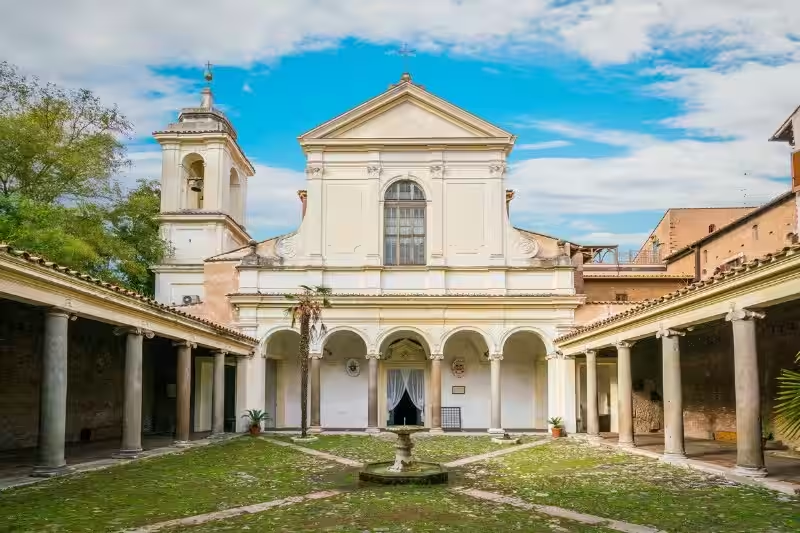
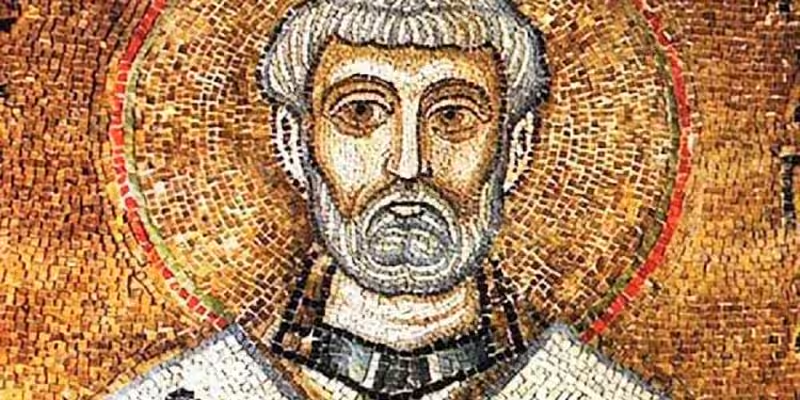
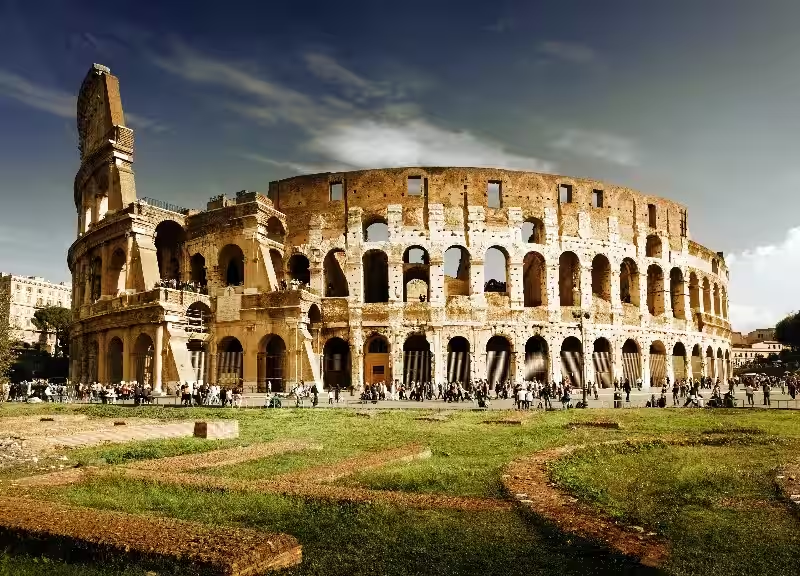
The allure of Rome is undeniable, a city where every cobblestone whispers tales of empires, artists, and, most profoundly, of religion. Amidst the grandeur of St. Peter’s Basilica and the Colosseum’s imposing silhouette, lies a hidden gem that offers a uniquely intimate and revealing glimpse into centuries of Christian devotion: the Basilica di San Clemente. This remarkable church, dedicated to Pope Clement I, isn’t just another magnificent edifice; it’s a living testament to the evolution of faith, a geological marvel of sacred architecture that invites us to descend through time, layer by spiritual layer.
Imagine stepping back in time, not through a history book, but literally beneath your feet. The Basilica di San Clemente provides this extraordinary experience. It’s a place where the sacred is not merely depicted in art or proclaimed in sermons, but is physically embedded in the earth. To understand its profound significance, we must journey downwards, peeling back the strata of history to uncover the enduring power of religion and its tangible impact on human lives. This is more than just a tourist attraction; it’s a pilgrimage for the curious soul, a place to connect with the roots of Christianity in a way that resonates deeply, offering a tangible link to the devotion of those who came before us.
The Upper Basilica: A Symphony of Light and Devotion
Our exploration begins in the present-day Basilica di San Clemente, a beautiful 12th-century structure that, while stunning in its own right, is merely the uppermost layer of a much deeper story. As you enter, you’re greeted by the radiant glow of mosaics, particularly the breathtaking apse mosaic depicting the Triumph of the Cross. This vibrant artwork, a masterpiece of Byzantine-influenced style, is not just a visual feast; it’s a theological statement, a bold declaration of Christ’s victory and the enduring promise of salvation. The intricate details, from the winding vines symbolizing the Church to the figures of saints and apostles, speak to a rich tradition of religious storytelling through art.
The upper church itself serves as a sanctuary of peace and contemplation. Sunlight streams through the windows, illuminating the nave and chapels, creating an atmosphere conducive to prayer and reflection. You can admire the ancient marble columns, some salvaged from earlier Roman buildings, a subtle nod to the continuity of history and the way faith often repurposes and transforms existing structures. The altar, a focal point of devotion, stands as a reminder of the sacraments and the central role of the Eucharist in Catholic worship. This upper level, while accessible and awe-inspiring, is just the beginning of our descent into the profound history held within the Basilica di San Clemente.
Descending a flight of stairs, we leave the 12th-century basilica behind and enter a space that feels distinctly older, more ancient, and imbued with a different kind of energy. This is the lower church, built in the 4th century, a testament to the early Christian community’s devotion and their desire to create sacred spaces. Here, the murals, though faded and damaged, offer an invaluable window into early Christian art and religious beliefs. You can still discern scenes from the lives of saints, particularly St. Clement and St. Catherine, rendered with a raw, expressive power that speaks to a time when visual storytelling was crucial for conveying the tenets of the faith to a largely illiterate populace.
The lower church of the Basilica di San Clemente breathes a different air. The darkness is more profound, the silence more resonant. It’s here that you can truly feel the weight of centuries of worship. Imagine generations of early Christians gathering in this very space, their voices echoing off these walls as they celebrated Mass, offered prayers, and found solace in their shared religion. The remains of tombs beneath the floorboards further underscore the sacredness of this site, reminding us of the countless lives that have been touched and transformed by faith within these hallowed grounds. This layer is a powerful reminder that the Basilica di San Clemente is not just a building, but a repository of human spiritual journeys.
The Deepest Secrets: The Roman House and Mithraic Temple
Our journey continues even further down, into the very foundations of the Basilica di San Clemente, where we uncover even older layers of history and religion. Here, the remnants of a 4th-century Roman house and, most remarkably, a 2nd-century Mithraic temple, stand as silent witnesses to the diverse spiritual landscape of ancient Rome. The Mithraeum, a clandestine place of worship dedicated to the god Mithras, a popular deity among Roman soldiers, offers a fascinating glimpse into a pre-Christian mystery cult that coexisted with burgeoning Christianity. The altar depicting Mithras slaying a bull is a stark and powerful image, showcasing a very different form of religious devotion.
Exploring these deepest levels of the Basilica di San Clemente is like stepping into a time capsule. You can walk through ancient Roman streets, imagine the rituals performed in the dimly lit Mithraeum, and appreciate the complex tapestry of beliefs that existed in this city. This juxtaposition of a Christian basilica built atop pagan shrines is a profound illustration of how religion often interacts with and transforms existing cultural and spiritual practices. It highlights the resilience and adaptability of faith, and how new beliefs often emerge from and engage with the existing worldviews around them. The Basilica di San Clemente thus becomes a powerful symbol of spiritual evolution.
Why Basilica di San Clemente Matters: Connecting with the Enduring Power of Religion
The Basilica di San Clemente offers us more than just a historical or archaeological experience; it provides a tangible connection to the enduring power of religion. By descending through its layers, we witness the continuous thread of human spirituality, from the early Christian martyrs to the medieval pilgrims and the modern-day faithful. This multi-layered church illustrates how religion is not static; it evolves, adapts, and finds new expressions across different eras and cultures. It shows us that sacred spaces are built upon, transformed, and imbued with new meaning while retaining echoes of their past.
For anyone seeking to understand the deep historical roots of Christianity in Rome and the dynamic nature of religious belief, the Basilica di San Clemente is an essential destination. It’s a place that sparks contemplation on themes such as faith and perseverance, the evolution of sacred art, and the fascinating interplay between different spiritual traditions. It reminds us that beneath the surface of our modern world lie profound histories and the persistent human quest for meaning and connection, a quest deeply intertwined with the practice of religion. A visit here is a profound reminder of the continuity of the human spirit and its unceasing pursuit of the divine.
Frequently Asked Questions about Basilica di San Clemente
What is the religious significance of Basilica di San Clemente?
Basilica di San Clemente is a significant historical and religious site in Rome, dedicated to Pope Clement I, the fourth Pope. It is a testament to the evolution of Christian worship through its layered architecture, with the current 12th-century basilica built atop a 4th-century church, which in turn is situated above ancient Roman structures, including a 1st-century Mithraic temple. This layering provides a unique glimpse into the historical development of Christianity and its practices in Rome.
What specific religious elements can be found within Basilica di San Clemente?
Within the basilica, visitors can find many religious elements. The upper church features beautiful medieval mosaics, particularly the apse mosaic depicting the “Triumph of the Cross,” a significant symbol in Christianity. The lower church houses early Christian frescoes, including one believed to be the earliest depiction of Saint Patrick. The presence of the Mithraic temple below also highlights the religious landscape of ancient Rome and the eventual dominance of Christianity.
Is Basilica di San Clemente still an active place of worship?
Yes, Basilica di San Clemente remains an active Roman Catholic church and a place of worship. Mass is celebrated regularly, and the basilica continues to serve the spiritual needs of the community and welcomes pilgrims and visitors for prayer and reflection.
Can I attend religious services at Basilica di San Clemente?
Absolutely. Visitors are welcome to attend religious services held at Basilica di San Clemente. It is a living church, and participating in a service offers a profound spiritual experience within its historical context. Check the basilica’s schedule for specific times of Mass and other liturgical celebrations.
What does the historical layering of Basilica di San Clemente tell us about religious history?
The distinct layers of Basilica di San Clemente are a powerful metaphor for the continuity and transformation of religious practice. The lowest level, with its pagan temple, shows the religious environment before Christianity’s rise. The middle layer, an early Christian basilica, demonstrates the establishment and early development of Christian worship. The upper basilica represents the evolution and artistic expression of faith in the medieval period. Together, these layers narrate a continuous story of faith and worship in Rome over centuries.