For millennia, the Bible has stood as a monumental work, a cornerstone of faith for billions. It’s more than just a book; it’s a collection of narratives, laws, poetry, and prophecies that have shaped cultures, inspired revolutions, and provided solace to countless individuals. Understanding the Bible isn’t just about theological study; it’s about engaging with a profound exploration of the human condition, our search for meaning, and our relationship with the divine. This ancient text continues to resonate because it speaks to fundamental questions about love, loss, justice, and redemption – themes that remain as relevant today as they were when the first verses were penned.
This article aims to demystify the Bible, making its vast landscape accessible and relatable. We’ll explore its origins, its diverse contents, and the enduring impact of its teachings on religion and society. Whether you’re a seasoned believer, a curious seeker, or simply someone interested in the cultural forces that have shaped our world, delving into the Bible offers a rich and rewarding journey. We’ll uncover how this sacred scripture, a testament to the enduring power of faith, has continuously provided a framework for understanding ourselves and the world around us.
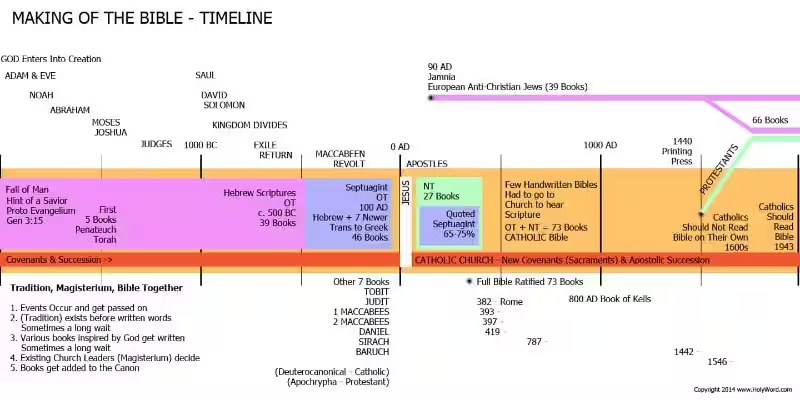
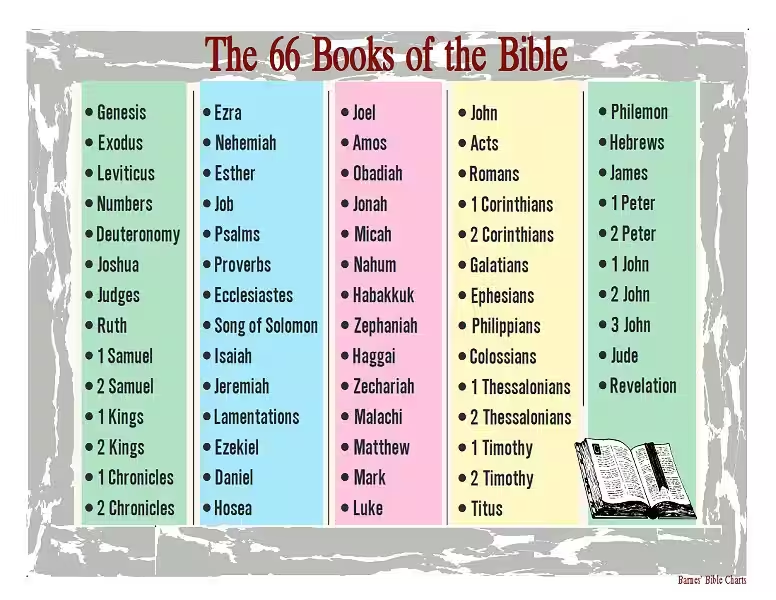
At its core, the Bible is a compilation of sacred texts considered divinely inspired by Jews and Christians. It’s not a single book written by one author at one time, but rather a library, a collection of sixty-six books divided into two main sections: the Old Testament and the New Testament. The Old Testament, largely written in Hebrew with some Aramaic, chronicles the history of the Israelites, their covenant with God, their laws, and the prophecies of their Messiah. The New Testament, written in Greek, focuses on the life, teachings, death, and resurrection of Jesus Christ, and the early spread of Christianity. This division reflects different stages of God’s revelation and relationship with humanity as understood within these religious traditions.
Think of it like a grand, multi-generational family saga. The Old Testament sets the stage, introducing the main characters, their origins, their struggles, and the promises made. It’s filled with stories of patriarchs like Abraham, kings like David, and prophets like Isaiah, all grappling with their faith and their responsibilities. The New Testament then introduces a pivotal new character, Jesus, and builds upon the existing narrative, revealing a new covenant and a path to salvation. The intricate tapestry of the Bible is woven from diverse literary styles, including historical accounts, legal codes, wisdom literature, and prophetic visions, each contributing to a comprehensive spiritual and moral framework.
The Old Testament: A Foundation of Covenant and Law
The Old Testament is the bedrock upon which much of Jewish and Christian theology is built. It begins with the creation of the universe and humanity in the book of Genesis, detailing the fall of man and God’s subsequent establishment of a special covenant with Abraham and his descendants. This covenant became the defining relationship between God and the nation of Israel, laying out promises of land, descendants, and blessings. The subsequent books, such as Exodus, Leviticus, Numbers, and Deuteronomy, detail the liberation of the Israelites from slavery in Egypt, the giving of the Ten Commandments and other laws on Mount Sinai, and their journey through the wilderness. These laws were not merely arbitrary rules; they were designed to guide a people towards holiness and to distinguish them as a nation set apart for God’s purposes. The emphasis is on God’s faithfulness and his people’s ongoing struggle to remain faithful in return.
Beyond the legal and historical accounts, the Old Testament is rich with poetry and prophecy. The Psalms, a collection of songs and prayers, offer a raw and honest expression of human emotions – joy, sorrow, anger, and praise – directed towards God. The wisdom literature, like Proverbs and Ecclesiastes, offers practical advice for living a righteous and meaningful life, exploring themes of hard work, integrity, and the ephemeral nature of earthly pursuits. The prophetic books, from Isaiah to Malachi, contain messages from God delivered through prophets who spoke truth to power, called people to repentance, and foretold future events, including the coming of a Messiah who would bring redemption. For instance, the prophecy of Isaiah 7:14, which speaks of a virgin bearing a son named Immanuel, is seen by Christians as a significant prefiguration of Jesus’ birth, highlighting the Bible’s intricate interconnections across its vast scope.
The New Testament: The Fulfillment in Christ
The New Testament marks a profound shift, presenting Jesus Christ as the culmination of the Old Testament promises. The four Gospels – Matthew, Mark, Luke, and John – offer distinct yet complementary accounts of Jesus’ life, his miraculous ministry, his teachings on love, forgiveness, and the Kingdom of God, his crucifixion, and his triumphant resurrection. These narratives are not just historical records; they are theological declarations, presenting Jesus as the Son of God, the promised Messiah, and the Savior of humanity. His teachings, often delivered through parables, offer profound insights into spiritual truths and ethical living. For example, the parable of the Prodigal Son powerfully illustrates God’s boundless forgiveness and welcoming grace.
Following the Gospels, the book of Acts details the early spread of Christianity, empowered by the Holy Spirit, and the missionary journeys of apostles like Paul. The Epistles, letters written by apostles to various churches and individuals, provide further theological explanations, practical guidance for Christian living, and encouragement for believers facing persecution. They address issues such as faith, salvation, church order, and ethical conduct. Finally, the book of Revelation offers a symbolic and apocalyptic vision of the end times, the ultimate triumph of God, and the establishment of a new heaven and a new earth. Throughout the New Testament, the central message remains the transformative power of faith in Jesus Christ and the new life that is available through him, offering hope and purpose to believers.
The Bible’s Enduring Influence on Religion and Culture
The impact of the Bible extends far beyond the walls of churches and synagogues; its influence is woven into the very fabric of Western civilization and has profoundly shaped global culture. For adherents of Judaism and Christianity, the Bible is the ultimate source of religious doctrine, moral guidance, and spiritual practice. It dictates rituals, informs ethical decision-making, and provides a roadmap for a life lived in accordance with divine will. The teachings on compassion, justice, and the inherent dignity of every individual have been instrumental in shaping the moral compass of these religions and, by extension, influencing societal values. The concept of loving your neighbor as yourself, a central tenet found in both the Old and New Testaments, has inspired countless acts of charity and social reform throughout history.
Moreover, the Bible has been a wellspring of inspiration for art, literature, music, and law for centuries. Think of Michelangelo’s Sistine Chapel ceiling, Handel’s Messiah, or Milton’s Paradise Lost – all deeply rooted in biblical narratives and themes. The legal and ethical principles embedded within biblical texts have also left an indelible mark on legal systems worldwide, influencing concepts of justice, human rights, and governance. Even for those who do not subscribe to its religious tenets, the Bible remains a crucial text for understanding historical events, literary allusions, and the development of philosophical and ethical thought. Its stories, characters, and wisdom continue to be referenced, debated, and reinterpreted, underscoring its persistent relevance in the human narrative. The very language we use often carries biblical idioms and phrases, demonstrating its pervasive presence.
Navigating the Sacred Text: Approaches to Understanding
Approaching the Bible can feel like standing before a vast ocean, its depths and currents full of wonder and potential challenges. Several approaches can help make this journey more fruitful and understandable. For many religious individuals, faith is the primary lens through which they read the Bible. They believe it to be the inspired word of God and approach it with reverence, seeking divine wisdom and guidance. This often involves prayer, meditation, and community study, where shared interpretation and experience enrich understanding. This approach emphasizes the Bible’s spiritual authority and its capacity to transform lives through a personal encounter with God’s message.
Others approach the Bible from a historical or literary perspective, seeking to understand its context, authorship, and the cultural milieu in which it was written. This involves critical analysis, examining the different genres, historical events, and linguistic nuances that contribute to its meaning. For instance, understanding the historical context of the Exodus narrative helps explain the significance of liberation and covenant for the Israelite people. A literary approach might focus on the narrative structures, character development, and poetic devices employed within the text. Regardless of the approach, engaging with the Bible, whether through personal study, academic exploration, or communal discussion, offers a rich opportunity for learning, reflection, and a deeper appreciation of its enduring legacy.
The Bible’s Continuing Relevance: A Source of Hope and Guidance
In a world often characterized by complexity, uncertainty, and division, the Bible continues to offer a timeless message of hope, redemption, and purpose. Its narratives, even those ancient, speak to universal human experiences – the struggle against adversity, the yearning for love and belonging, the search for meaning in suffering, and the profound desire for reconciliation. The stories of individuals who faced immense challenges, like Job or David, and their journey of faith, can provide comfort and perspective to those facing their own trials. The New Testament’s message of divine love and forgiveness, embodied in Jesus’ life and sacrifice, offers a powerful antidote to despair and a pathway to spiritual renewal for believers.
Furthermore, the ethical teachings of the Bible, emphasizing love, compassion, justice, and service to others, remain a vital guide for moral living. In an era where ethical frameworks are constantly being debated, the enduring principles found within the Bible offer a consistent and profound foundation for individual and societal well-being. Whether it’s the call to care for the poor and marginalized, the importance of honesty and integrity, or the pursuit of peace, these teachings continue to inspire action and shape a more just and humane world. The Bible, therefore, is not merely a historical artifact but a living testament, a source of enduring guidance and unwavering hope for millions across the globe.
Frequently Asked Questions about the Bible and Religion
What is the Bible?
The Bible is a collection of religious texts or scriptures, considered sacred by Christians and Jews. It is divided into two main parts: the Old Testament (shared with Judaism) and the New Testament (central to Christianity). It contains narratives, laws, prophecies, poetry, and wisdom literature.
What are the main branches of Christianity?
The three largest branches of Christianity are Catholicism, Protestantism, and Eastern Orthodoxy. There are many other denominations and traditions within these branches.
What is the role of God in the Bible?
In the Bible, God is presented as the creator of the universe, the supreme being, and the ultimate source of love, justice, and salvation. He is understood differently by different religious traditions, but generally described as all-powerful, all-knowing, and ever-present.
What is the significance of Jesus Christ in Christianity?
For Christians, Jesus Christ is the Son of God, the Messiah prophesied in the Old Testament, and the central figure of their faith. They believe his life, death, and resurrection offer salvation and reconciliation with God.
What are the core tenets of Judaism?
Judaism’s core tenets include the belief in one God, the observance of the Torah (the first five books of the Hebrew Bible), the importance of ethical conduct and justice, and the covenant between God and the Jewish people.
How is the Bible interpreted?
The Bible is interpreted in various ways by different religious scholars, denominations, and individuals. Interpretations can range from literal readings to more symbolic or allegorical approaches, often influenced by historical, cultural, and theological contexts.
What is the purpose of religious practices?
Religious practices, such as prayer, worship, meditation, rituals, and community gatherings, serve various purposes, including fostering a connection with the divine, seeking guidance, expressing devotion, promoting moral development, and building community.
Are there different versions of the Bible?
Yes, there are many different translations and versions of the Bible. These translations aim to convey the original meaning of the ancient texts into contemporary languages, and they can differ in their translation philosophy (e.g., word-for-word vs. thought-for-thought).
What is the relationship between the Old and New Testaments?
Christians view the New Testament as the fulfillment of prophecies and promises made in the Old Testament. The Old Testament lays the foundation for understanding the context and significance of Jesus Christ’s ministry in the New Testament.
How does religion impact daily life?
Religion can significantly impact daily life by providing a moral framework, guiding ethical decisions, influencing personal values, shaping social interactions, and offering comfort and meaning in times of joy and hardship.