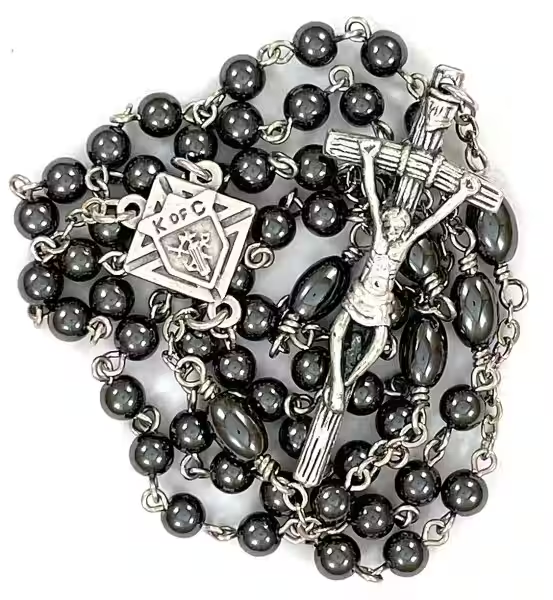
The Rosary, a beloved prayer in the Catholic tradition, offers a profound way to engage with the life, death, and resurrection of Jesus Christ. While many are familiar with the mechanics of praying the Hail Mary and Our Father, the practice of meditating on the Rosary Stations elevates this devotion into a deeply personal and transformative spiritual exercise. These stations, often depicted in art within churches, represent pivotal moments in Christ’s Passion, inviting us to walk alongside Him, not just in spirit, but in contemplation and prayer. This article aims to explore the richness of the Rosary Stations, making them accessible and meaningful for your own faith journey.
Engaging with the Rosary Stations is more than just reciting a prayer; it’s an invitation to empathy, to understand the immense love and sacrifice at the heart of our faith. By focusing on specific events, we can move beyond abstract concepts and connect with the human reality of Jesus’ suffering and triumph. Whether you are a seasoned practitioner of the Rosary or new to its contemplative depths, understanding and utilizing the Rosary Stations can deepen your prayer life in ways you might not have imagined.
Understanding the Rosary Stations: A Visual and Spiritual Walk
The concept of “stations” in prayer often evokes the imagery of the Stations of the Cross, a devotional practice that traces the path of Jesus from His condemnation to His burial. The Rosary Stations largely draw from these same pivotal moments, weaving them into the fabric of the Rosary’s mysteries. Each station represents a significant event, a tangible point of reflection that grounds our prayers in the concrete narrative of salvation history. It’s like having a spiritual roadmap, guiding us through the most impactful stages of Christ’s earthly mission.
Think of it this way: when you pray the Rosary, you are already contemplating specific events – the Annunciation, the Crucifixion, the Resurrection. The Rosary Stations simply provide a more structured and visually oriented framework for this contemplation. By associating each decade of the Rosary with a particular “station,” we are encouraged to pause, visualize, and internalize the emotions and spiritual lessons embedded within that event. This method transforms the repetitive nature of the Rosary into a dynamic and deeply personal encounter with Christ.
The Sorrowful Mysteries and Their Station Meditations
The Sorrowful Mysteries, arguably the most directly linked to the Rosary Stations, offer a powerful opportunity for profound reflection. These mysteries focus on the suffering and death of Jesus, and each station within this cycle invites a deep dive into His sacrifice. For instance, meditating on the First Station of the Rosary, Jesus in the Garden of Gethsemane, allows us to contemplate His agonizing prayer and surrender to the Father’s will, a profound lesson in obedience even amidst immense distress. This is a time to consider our own moments of struggle and how we can find strength in prayer.
Moving through the Rosary Stations of the Sorrowful Mysteries, we encounter events like the Scourging at the Pillar, the Crowning with Thorns, and the Carrying of the Cross. Each station is a vivid scene, a visual anchor for our prayers. Imagine yourself present, witnessing these events with empathy. For example, as you pray the decade associated with the Station of the Cross, Jesus falls under the weight of the cross, you can reflect on the burdens we carry in our own lives and the support Christ offers us even in our weakest moments. This is not just about historical events; it’s about their ongoing relevance to our daily lives and spiritual struggles.
Examples of Station-Focused Rosary Prayer
To truly benefit from the Rosary Stations, consider incorporating specific prayers or reflections within each decade. For the Agony in the Garden Station, you might pray for the grace to surrender your own will to God’s, acknowledging that His plan is always best, even when it’s difficult to understand. When you reach the Scourging Station, you can pray for purity of heart and the strength to overcome temptations that wound your soul.
When praying the Crowning with Thorns Station, consider praying for humility and the ability to endure insults or mockery with grace, much like Jesus did. The Carrying of the Cross Station is an opportune moment to ask for the strength to bear your own crosses, those daily challenges and sufferings, with patience and love. Even the Crucifixion Station can be a powerful moment to pray for forgiveness for yourself and for others, reflecting on Jesus’ ultimate act of mercy from the cross. These focused intentions transform the Rosary from a rote recitation into a vibrant dialogue with Christ.
Beyond the Sorrowful: Integrating Stations into Other Mysteries
While the Sorrowful Mysteries are intrinsically tied to the Rosary Stations, the practice can be adapted and broadened to enrich the contemplation of the Joyful, Luminous, and Glorious Mysteries as well. Imagine the Annunciation Station within the Joyful Mysteries, picturing Mary’s humble acceptance of God’s plan. This Rosary Station invites reflection on our own “yes” to God’s call in our lives, however small.
Similarly, for the Luminous Mysteries, one might conceptualize a Baptism Station during the Baptism of Jesus, reflecting on our own baptismal promises and renewal. Or a Transfiguration Station, contemplating moments of divine revelation in our lives. The Glorious Mysteries offer rich possibilities too, from a Resurrection Station to a Pentecost Station, each calling us to a deeper understanding of Christ’s victory and the power of the Holy Spirit. The Rosary Stations are not a rigid set of rules, but a flexible tool for spiritual growth.
The beauty of the Rosary Stations lies in their ability to make the Gospel narrative intensely personal. As you move through each station, consider what it means for you. For the Station of Jesus Falling the First Time, are you feeling weighed down by a particular sin or regret? Ask for the grace to rise again with His help. At the Station of Veronica Wiping Jesus’ Face, consider how you can offer comfort and compassion to those who are suffering in your own community.
Each Rosary Station is an opportunity for specific petition or thanksgiving. Perhaps after contemplating the Station of Jesus being Nailed to the Cross, you will offer a prayer for those who are suffering from addiction or injustice, acknowledging the pain of being “nailed down” by circumstances. The Station of Jesus Dying on the Cross can be a time to pray for a peaceful death, or for the strength to embrace the sacrifices God asks of you. The Rosary Stations are not just historical markers; they are living encounters with Christ’s enduring love.
Practical Tips for Incorporating Rosary Stations
To make your Rosary Stations practice more impactful, consider having visual aids. This could be a set of Rosary Station cards, a small booklet with reflections, or even artwork depicting each event. As you begin each decade, take a moment to look at the image or read a brief reflection related to that Rosary Station. This will help to anchor your mind and heart in the specific mystery you are contemplating.
Don’t feel pressured to have profound insights at every Rosary Station. Sometimes, simply being present with Jesus is enough. The repetition of the Hail Marys, when united with the contemplation of the Rosary Stations, can become a powerful meditative rhythm. You might find that certain Rosary Stations resonate more deeply with you at different times in your life. Embrace this organic unfolding of your prayer life. The journey through the Rosary Stations is a lifelong pilgrimage of faith.
The Transforming Power of Contemplating Rosary Stations
The consistent practice of meditating on the Rosary Stations can lead to profound spiritual transformation. By immersing ourselves in the Passion of Christ, we cultivate a deeper sense of gratitude for His sacrifice and a greater desire to live a life that reflects His love. The Rosary Stations offer a powerful antidote to the distractions of modern life, providing a sacred space for quiet introspection and a renewed focus on what truly matters.
As you journey through the Rosary Stations, you will likely discover a heightened sense of empathy for Jesus and for your fellow human beings. The suffering depicted in each Rosary Station can soften our hearts, making us more inclined towards mercy, forgiveness, and acts of charity. This is the transformative power of drawing near to Christ through prayer, allowing His love to reshape our own hearts and minds.
Frequently Asked Questions About the Rosary Stations
What are the Rosary Stations?
The Rosary Stations, also known as the Stations of the Cross, are a devotion that commemorates the Passion of Jesus Christ. It involves meditating on specific moments or “stations” of Jesus’ suffering and death, from his condemnation to his burial.
What is the purpose of praying the Stations of the Cross?
The purpose is to deepen one’s understanding of and solidarity with Christ’s suffering, to reflect on the meaning of sacrifice and redemption, and to foster a spirit of penance and prayer.
How is the Rosary Stations prayed?
Typically, individuals or groups move from one station to another, meditating on the event at each station, offering prayers (such as the Our Father, Hail Mary, and Glory Be), and often reciting a brief reflection or prayer specific to that station.
Where can the Stations of the Cross be prayed?
They can be prayed in a church where Stations of the Cross are set up along the walls, outdoors in a Calvary garden, or even at home with the aid of images or a booklet.
Are the Rosary Stations part of the Rosary prayer?
While both are Catholic devotions involving prayer and meditation, the Stations of the Cross are a distinct devotion from the Rosary. The Rosary primarily meditates on the mysteries of the lives of Jesus and Mary, whereas the Stations focus specifically on the Passion of Christ.
What are the traditional 14 Stations of the Cross?
The traditional 14 stations are:
1. Jesus is condemned to death.
2. Jesus takes up his cross.
3. Jesus falls the first time.
4. Jesus meets his mother.
5. Simon of Cyrene helps Jesus carry his cross.
6. Veronica wipes the face of Jesus.
7. Jesus falls the second time.
8. Jesus comforts the women of Jerusalem.
9. Jesus falls the third time.
10. Jesus is stripped of his garments.
11. Jesus is crucified.
12. Jesus dies on the cross.
13. Jesus is taken down from the cross.
14. Jesus is laid in the tomb.
Can the Stations of the Cross be prayed at any time?
Yes, they can be prayed at any time, but they are particularly popular during Lent, especially on Fridays, as a way to prepare for Easter.
Is there a specific prayer for each station?
While there are many prayer books and guides with specific prayers for each station, the core elements often include an Our Father, a Hail Mary, and a Glory Be, along with a short reflection on the particular event of the station.