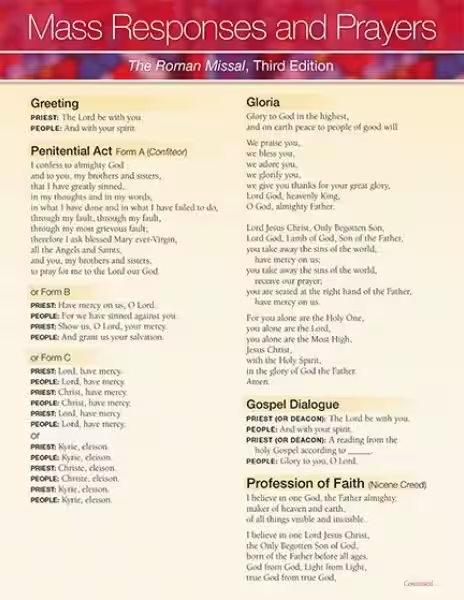
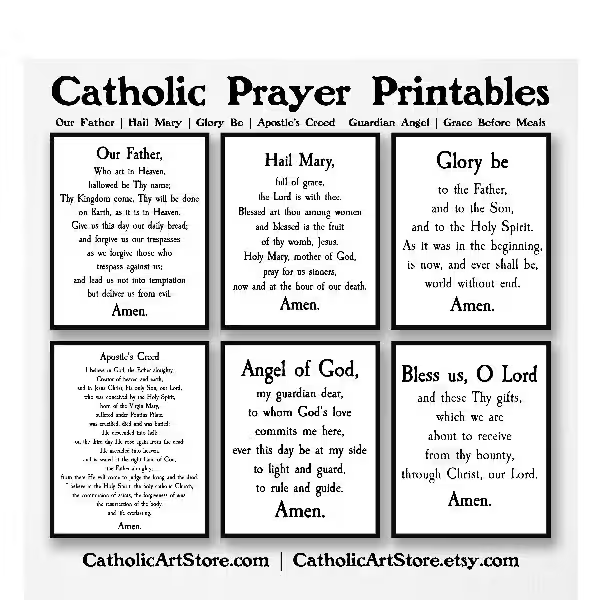
For many, the Catholic Mass is more than just a weekly obligation; it’s a profound spiritual encounter, a sacred gathering where faith is nurtured, community is strengthened, and the divine is encountered. At the very core of this experience lie the Catholic Mass prayers and responses, a beautifully orchestrated dialogue between the priest, the congregation, and God. These aren’t just rote recitations; they are actively chosen words, deeply rooted in tradition and Scripture, serving as the very heartbeat of our faith. Understanding their meaning and participating in them thoughtfully can transform the Mass from a passive observance into a truly transformative spiritual journey.
This article aims to demystify the rich tapestry of prayers and responses that form the Catholic Mass, offering insights that make the experience more relatable and personally meaningful. Whether you’re a lifelong Catholic seeking a deeper understanding or a curious newcomer, exploring these liturgical elements can unlock a new dimension of appreciation for this central act of worship. We’ll delve into the “why” behind these pronouncements, explore common prayers and their significance, and highlight the importance of your active participation. Prepare to discover how your voice, united with thousands of others, can amplify the beauty and power of the Mass.
The Liturgical Dance: Why Prayers and Responses Matter
The Catholic Mass is often described as a liturgical drama, a re-enactment of Christ’s sacrifice and resurrection. Within this sacred play, the prayers and responses are not mere stage directions; they are the very essence of the narrative. They are the vehicles through which we express our faith, our hopes, our gratitude, and our petitions to God. When the priest says, “The Lord be with you,” and the congregation responds, “And with your spirit,” it’s a profound testament to our belief in God’s presence in our midst and His spiritual connection with His ministers. This exchange isn’t just a formality; it’s a tangible moment of unity and shared spiritual awareness.
The repetition of certain prayers and responses, far from being monotonous, serves to reinforce core tenets of our faith. Think of the “Amen” that concludes so many prayers. It’s a declaration of assent, a powerful affirmation: “So be it.” Or consider the “Alleluia” sung during the Easter season, a joyous proclamation of Christ’s victory over death. These familiar phrases become spiritual anchors, grounding us in the unchanging truths of our religion. They create a sense of continuity, connecting us to generations of believers who have offered the same prayers throughout history. This shared experience fosters a profound sense of belonging and communal faith.
The Opening Rites: Setting the Sacred Tone
The Mass begins with a series of prayers and responses designed to gather the community and prepare our hearts for worship. The initial greeting, “The Lord be with you,” is a beautiful way to acknowledge God’s presence among us as we begin. The congregational response, “And with your spirit,” embodies the understanding that the priest is acting in persona Christi, and we are praying that God’s spirit be with him as well, guiding his ministry and our shared prayer. This simple exchange immediately establishes a mutual spiritual connection.
Following this, we often engage in the Penitential Act, where we humbly acknowledge our sins and ask for God’s mercy. The most common form includes the priest’s invitation, “Let us acknowledge our sins,” followed by a moment of silent reflection. Then, we might recite or sing the “Confiteor” (I confess), a communal admission of guilt, and implore for divine compassion. The priest offers the Absolution, a declaration of God’s forgiveness, but importantly, it is not a sacrament in itself, rather a prayer for God’s mercy. This act of humble repentance purifies our hearts, making us more receptive to the divine graces that will be offered throughout the Mass.
The Gloria: A Hymn of Praise
The Gloria, a magnificent hymn of praise, bursts forth after the Penitential Act, typically on Sundays and feast days. This ancient prayer is a powerful expression of joy and adoration, echoing the angels’ song at the birth of Jesus (Luke 2:14). It begins with the exalted words, “Glory to God in the highest,” and continues with a cascade of praise, acknowledging God’s majesty, power, and love. As we sing or recite the Gloria, we are joining a celestial choir, celebrating God’s goodness and reaffirming our commitment to Him.
The structure of the Gloria invites a comprehensive outpouring of praise. We glorify God the Father, “We praise you, we bless you, we adore you, we glorify you.” We give thanks for His great glory and acknowledge His unique divine nature. Then, our attention shifts to Jesus Christ, His only Son, “Lord God, Lamb of God, Son of the Father.” We recognize Him as the one who takes away the sins of the world, imploring His mercy and acknowledging His supreme authority. Finally, we honor the Holy Spirit, “For you alone are holy, you alone are the Lord, you alone are the Most High, Jesus Christ.” This complete Trinitarian praise is a cornerstone of our Catholic faith, and the Gloria provides a vibrant and uplifting way to articulate it.
The Liturgy of the Word: Encountering God’s Revelation
The second major part of the Mass is the Liturgy of the Word, where we encounter God’s revelation through Sacred Scripture. Three readings are usually presented: one from the Old Testament, one from the New Testament letters, and a Gospel reading. These readings are carefully chosen to form a cohesive narrative, often related to the liturgical season or the specific feast being celebrated. The proclamation of God’s Word is a pivotal moment, demanding our attentive listening and thoughtful reflection. The priest or deacon reads from the Lectionary, the official book of Scripture readings for the Mass.
Following the readings, we respond with the Responsorial Psalm, a beautiful and ancient form of prayer set to music. The cantor or a psalmist sings a verse, and the congregation responds with a recurring refrain, such as “Our soul is waiting for the Lord” or “Praise the Lord, my soul.” This communal singing of the Psalm allows us to meditate on the themes presented in the readings and internalize their spiritual message. It’s a dynamic way to engage with the Word, transforming it from mere words on a page into a living encounter with God’s truth. The Psalm acts as a bridge, connecting the different scriptural readings and preparing us for the homily.
The Profession of Faith: Declaring Our Beliefs
After the homily, which expounds on the readings, comes the Profession of Faith, most commonly the Nicene Creed or the Apostles’ Creed. This is a solemn declaration of our fundamental Christian beliefs, a communal affirmation of what we hold true as Catholics. When the priest begins, “I believe in one God,” and we continue with him, it’s a powerful moment of collective witness. This creed is not simply a historical document; it’s a living statement of our faith, recited by millions across the globe, uniting us in a shared understanding of God, Jesus Christ, the Holy Spirit, the Church, and salvation.
Reciting the Creed involves articulating core doctrines such as the divinity of Jesus Christ, His suffering, death, and resurrection, and the belief in the Holy Spirit, the Catholic Church, the communion of saints, the forgiveness of sins, the resurrection of the body, and life everlasting. Standing to recite the Creed is a sign of reverence and conviction, emphasizing the importance of these truths. It’s a reminder that our faith is not based on personal opinion but on divinely revealed truths passed down through the Church. This shared confession strengthens our resolve and solidifies our identity as believers.
The Liturgy of the Eucharist: The Heart of the Mass
The Liturgy of the Eucharist is the climax of the Mass, the sacred meal where Christ is made present in the bread and wine through the power of the Holy Spirit. This section begins with the Preparation of the Gifts, where the congregation may offer financial contributions to support the Church’s mission. More importantly, the bread and wine, symbols of our lives and our work, are brought to the altar, representing our offering to God. The priest then offers prayers of blessing over the gifts, acknowledging God’s providence.
The Eucharistic Prayer is the central prayer of the Mass, a profound anamnesis (remembrance) of Christ’s sacrifice. The priest, acting in persona Christi, invokes the Holy Spirit to consecrate the bread and wine, transforming them into the Body and Blood of Christ. This miraculous transformation, known as transubstantiation, is the cornerstone of Catholic belief. The prayers here are rich with theological depth, recounting Christ’s institution of the Eucharist at the Last Supper and His sacrificial offering on the cross. The priest’s words are solemn and reverent, guiding us through this sacred mystery.
Following the Eucharistic Prayer, we are invited to recite the Our Father (Pater Noster), a prayer taught to us directly by Jesus Himself (Matthew 6:9-13). This is a uniquely intimate prayer, addressing God as “Our Father, who art in heaven, hallowed be thy name.” It’s a powerful reminder of our filial relationship with God and the universal nature of His fatherhood. As we pray this together, we are united not only as a local community but as children of the same Heavenly Father.
The Our Father moves from our relationship with God to our relationships with each other and our needs. “Thy kingdom come, thy will be done on earth as it is in heaven” expresses our longing for God’s reign to be fully realized. “Give us this day our daily bread” is a petition for our sustenance, both physical and spiritual. “Forgive us our trespasses, as we forgive those who trespass against us” highlights the crucial link between receiving God’s forgiveness and extending forgiveness to others. Finally, “Lead us not into temptation, but deliver us from evil” is a plea for protection and guidance. The concluding “Amen” signifies our firm belief and assent to the prayer’s petitions.
The Sign of Peace and Communion: Unity and Nourishment
Before receiving Holy Communion, we share the Sign of Peace. The priest may invite us to offer a sign of peace to one another, a gesture of reconciliation and fellowship. It’s a moment to acknowledge that we are all part of God’s family and to extend love and understanding to our brothers and sisters in Christ. This act of peace is a preparation for receiving the Eucharist, reminding us that we cannot truly be united with Christ if we are divided from one another.
Then comes the Communion, the reception of the Body and Blood of Christ. As the priest holds up the consecrated Host, saying, “Behold the Lamb of God, behold him who takes away the sins of the world. Blessed are those called to the supper of the Lamb,” we respond with profound humility: “Lord, I am not worthy that you should enter under my roof, but only say the word and my soul shall be healed.” This response, rooted in the words of the Roman centurion (Matthew 8:8), expresses our unworthiness yet our profound faith in Christ’s power to heal and transform us. Receiving the Eucharist is the spiritual nourishment that sustains our faith and strengthens us to live out Christ’s teachings in our daily lives, making us truly the Body of Christ in the world.
The Concluding Rites: Commissioned for Mission
The Mass concludes with the Concluding Rites, a time to be sent forth to live out our faith in the world. The priest offers a final blessing, often a solemn trinitarian blessing: “May almighty God bless you, the Father, and the Son, and the Holy Spirit.” Our response, “Amen,” signifies our acceptance of this blessing and our commitment to live according to God’s will. This blessing is not just a ritualistic closing; it’s a divine empowerment for the mission ahead.
Finally, the priest dismisses the congregation with the words, “Go in peace,” or “Go forth, the Mass is ended.” Our response, “Thanks be to God,” is a heartfelt expression of gratitude for the graces received during the Mass and a promise to carry Christ’s love and message into our daily lives. We are not just leaving a building; we are being commissioned as disciples, sent to be Christ’s hands and feet in the world, to serve, to love, and to evangelize. The prayers and responses of the Mass equip us for this vital mission, reminding us of God’s unending love and our profound responsibility as members of His Church.
Frequently Asked Questions: Catholic Mass Prayers and Responses
What is the purpose of prayers and responses in the Catholic Mass?
Prayers and responses are an integral part of the Catholic Mass, serving to unite the congregation in worship, to express their faith and devotion, and to actively participate in the liturgy. They are a way for the faithful to respond to God’s word and presence.
What are some common responses made by the congregation during Mass?
Some of the most common congregational responses include:
“Amen” (meaning “so be it” or “I believe”)
“And with your spirit” (in response to the priest’s greeting)
“Thanks be to God” (after scripture readings)
“Lord, have mercy” (during the Kyrie)
“Glory to God in the highest” (during the Gloria)
“Holy, Holy, Holy Lord, God of power and might…” (during the Sanctus)
“We proclaim your death, O Lord, and profess your resurrection until you come again.” (after the consecration)
“Amen” (after the priest recites the final prayer of the Mass)
What is the Sign of the Cross and when is it recited?
The Sign of the Cross is a prayer and a profession of faith that Catholics make by tracing the shape of a cross on their body while reciting, “In the name of the Father, and of the Son, and of the Holy Spirit. Amen.” It is typically made at the beginning of Mass, during the invocation of the Trinity, and at other significant moments during the liturgy and personal prayer.
What is the “Lord, have mercy” (Kyrie eleison) and why is it prayed?
“Kyrie eleison” is a Greek phrase meaning “Lord, have mercy.” It is one of the oldest prayers in the Christian tradition and is recited during the Opening Prayer or as a separate prayer in the Penitential Act. It is an expression of our need for God’s mercy and forgiveness.
What is the Gloria and when is it prayed?
The Gloria is a joyful hymn of praise to God, beginning with the words sung by the angels at the birth of Jesus. It is typically recited or sung on Sundays (except during Lent and Advent), feast days, and solemnities.
What is the Creed and what does it affirm?
The Creed is a formal statement of Christian belief. At Mass, the Nicene Creed is most commonly recited. It summarizes the core doctrines of the Catholic faith, including belief in God the Father, Jesus Christ the Son, the Holy Spirit, the Church, and the resurrection of the dead.
What is the Our Father (The Lord’s Prayer) and when is it recited?
The Our Father is the prayer that Jesus taught his disciples. It is recited in the Mass after the Sign of Peace, as a communal prayer of petition and a reminder of our relationship with God as our Father.
What is the Sign of Peace and what is its significance?
The Sign of Peace is a moment during the Mass where the congregation exchanges a gesture of peace, often with a handshake or a nod, to signify reconciliation and unity before receiving Holy Communion. It is a reminder of Christ’s command to love one another.
What is the Agnus Dei (Lamb of God) and when is it prayed?
The Agnus Dei is a prayer sung or recited during the Commemoration of the Breaking of the Bread. It invokes Jesus as the “Lamb of God who takes away the sins of the world,” asking for mercy and peace.
What does “Amen” signify in the Mass?
“Amen” is a very significant word in the Mass. It is an affirmation of belief and agreement. When the priest concludes a prayer with “Amen,” the congregation responds with “Amen” to signify their assent and that they believe and accept what has been prayed. It is also the final word of the Mass.