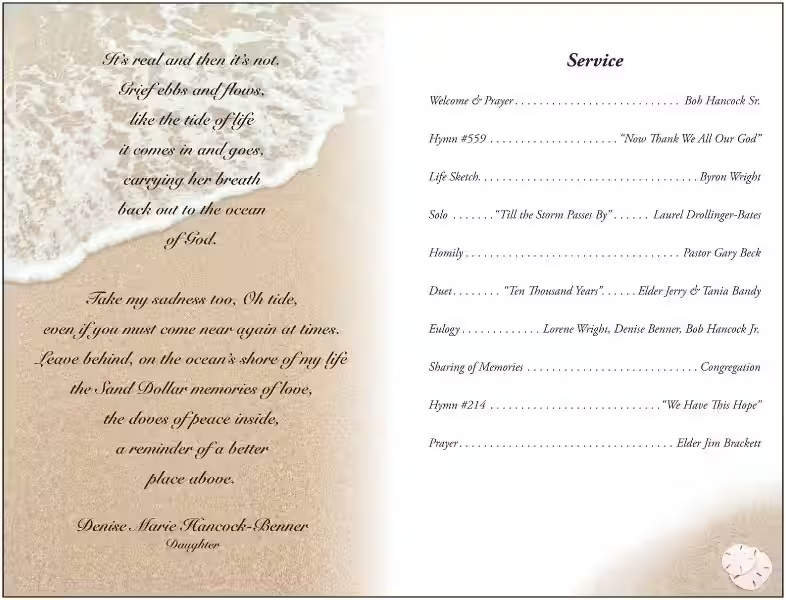
Life, in its beautiful and ephemeral dance, inevitably leads us to moments of profound loss. The departure of a loved one leaves a void, a silence where laughter once echoed and wisdom once resonated. In these tender times, religious traditions offer a beacon of solace, a structured pathway through grief, and a profound connection to the enduring spirit of those we hold dear. At the heart of this spiritual journey lies the practice of memorial prayers, ancient and deeply personal rituals that bridge the earthly realm with the eternal.
These prayers are more than mere words; they are vibrations of love, gratitude, and hope sent across the veil. Whether recited individually in quiet contemplation or offered collectively during sacred ceremonies, memorial prayers serve as a powerful testament to the indelible mark a soul leaves upon our own. They acknowledge the pain of separation while simultaneously celebrating a life lived and expressing faith in a continuation beyond our earthly sight.
The Sacred Art of Remembering: Memorial Prayers Across Faiths
Across the vast tapestry of human belief, the concept of remembering the departed through prayer is a universal thread. While the specific rituals and theological underpinnings may differ, the core intention remains the same: to honor, to connect, and to find peace. These prayers are not simply about bidding farewell, but about actively participating in the ongoing spiritual journey of both the deceased and the bereaved. They provide a framework for processing grief, fostering a sense of community, and reaffirming our deepest convictions about life, death, and the divine.
Consider the profound comfort found in a simple memorial prayer for a departed soul: “May your journey be peaceful, your spirit be light, and your memory be a blessing to all who knew you. We entrust you to the loving embrace of the Divine, and we hold your love in our hearts forever.” This sentiment, expressed in countless ways, underscores the shared human experience of cherishing those who have passed from our physical presence.
Judaism: Yizkor and the Enduring Light
In Judaism, the Yizkor service is a central observance dedicated to remembering departed loved ones. This solemn liturgy, recited on specific holy days, offers a structured opportunity for reflection and prayer. It’s a time when families gather, often in synagogues, to engage in communal remembrance, acknowledging the profound spiritual connection that transcends death.
The act of reciting memorial prayers in Judaism, particularly during Yizkor, is imbued with a deep sense of obligation and love. It’s believed that through these prayers, the merits of the living can be transferred to the departed, aiding them on their spiritual ascent. A common element involves pledging charity in the name of the deceased, a tangible act of love that continues their legacy of good deeds. One might offer a prayer such as: “God of Abraham, God of Isaac, and God of Jacob, bless the souls of my father, my mother, my brother, my sister [and other relatives], who have gone to their eternal rest. May their memory be a source of inspiration and strength for me and for all of Israel.” This prayer not only remembers but also seeks guidance and continued connection.
Christian traditions offer a rich landscape of memorial prayers and practices aimed at comforting the grieving and supporting the spiritual journey of the departed. The belief in an afterlife, and in the power of intercessory prayer, forms the bedrock of these observances. From Requiem Masses in Catholicism to specific remembrance services in Protestant denominations, the emphasis is on communion with God and the enduring presence of love.
Within Christian contexts, memorial prayers often express hope for the departed’s reunion with God and for their peace in His presence. A poignant example might be: “Eternal Father, we commend the soul of [Name] into Your loving hands. Grant them peace, eternal rest, and may light perpetual shine upon them. Strengthen us in our grief, and let Your love be our comfort.” This prayer embodies faith in divine mercy and a desire for the departed’s ultimate well-being, showcasing the interconnectedness of the living and the departed through faith.
Islam: Forgiveness and Mercy for the Deceased
In Islam, memorial prayers, often referred to as Du’a, are an integral part of honoring the deceased. The core tenets emphasize Allah’s infinite mercy and forgiveness. Muslims believe that making supplications for the departed can benefit them in the hereafter, seeking divine pardon and a high station in Paradise.
The practice involves praying for the deceased’s sins to be forgiven and for them to be admitted into Jannah (Paradise). A typical memorial prayer in Islam might be: “O Allah, forgive our living and our dead, those present and those absent, our young and our old, our males and our females. O Allah, whoever You keep alive among us, keep him alive on Islam, and whoever You cause to die, cause him to die on faith. O Allah, forgive him and have mercy on him, and grant him ease, and broaden his entrance [into Paradise].” (Hadith narrated by Abu Hurairah) This comprehensive prayer reflects a deep understanding of life and death, and an earnest plea for divine grace for all.
Buddhism: Cultivating Compassion and Merit for All Beings
Buddhist traditions approach memorial prayers with a focus on compassion, merit-making, and the understanding of impermanence. While the concept of a permanent soul is viewed differently, the practice of dedicating merit earned through good deeds and prayers to those who have passed is profound. This act of transferring spiritual merit is believed to assist the departed in their journey through the cycle of rebirth.
Memorial prayers in Buddhism often involve chanting, meditation, and the recitation of sutras. The intention is to cultivate positive energy and well-wishes for the deceased, as well as for all sentient beings. A simple yet powerful prayer might be: “May all beings be free from suffering. May the merit generated from this practice be a blessing to the departed, guiding them towards enlightenment and peace. May the echoes of their love continue to inspire us.” This prayer highlights the Buddhist emphasis on universal compassion and the interconnectedness of all life.
The Comfort of Collective Remembrance: Memorial Services and Gatherings
Beyond individual prayer, many religions emphasize the power of communal remembrance. Memorial services, anniversary masses, and specific remembrance days provide vital opportunities for the living to come together, share their grief, and offer prayers collectively. These gatherings reinforce the idea that no one grieves alone, fostering a sense of shared humanity and spiritual support.
The shared experience of reciting memorial prayers together can be incredibly cathartic. Hearing the same words of comfort and hope spoken by others who are also experiencing loss can create a powerful sense of unity and shared burden. It’s a testament to the resilience of the human spirit and the enduring strength found in faith communities.
The Enduring Power of a Simple Memorial Prayer
Ultimately, the beauty of memorial prayers lies in their adaptability and accessibility. Whether you are part of a formal religious tradition or seeking personal solace, the act of offering a prayer, a thought, or a moment of silent meditation dedicated to the departed is a powerful act of love. These prayers serve as bridges of connection, reminding us that while physical presence may cease, the essence of a person and the love we share can transcend the boundaries of life and death.
In moments of quiet reflection, when the ache of absence feels most profound, consider offering a simple memorial prayer: “For the memories we cherish, for the lessons you taught, and for the love that forever remains, we offer this prayer. May your spirit find eternal peace, and may your legacy continue to bloom in our hearts.” This sentiment, expressed in countless ways, is a universal affirmation of the enduring power of memory and love.
Frequently Asked Questions About Memorial Prayers
What are memorial prayers?
Memorial prayers are prayers offered for the repose of the soul of a deceased person. They are a way to commemorate their life, honor their memory, and express hope for their eternal peace and well-being in the afterlife.
What religions commonly practice memorial prayers?
Memorial prayers are found in many religions, including Christianity (especially Catholicism and Orthodox traditions), Islam, Judaism, Hinduism, Buddhism, and Sikhism. While the specific rituals and beliefs may vary, the underlying intention of remembering and praying for the departed is a common thread.
The timing of memorial prayers can differ significantly between religions and even within denominations. Some common occasions include:
Immediately after death.
On specific anniversaries of the death (e.g., one year, three years).
During religious festivals or holy days.
As part of regular religious services.
Upon visiting the grave or memorial site.
What is the purpose of offering memorial prayers?
The purpose of memorial prayers is multifaceted:
To honor and remember the deceased.
To pray for their soul’s journey and rest in the afterlife.
To seek comfort and solace for the bereaved family and friends.
To acknowledge the spiritual connection between the living and the departed.
In some traditions, to help cleanse or purify the soul.
Are memorial prayers a form of worship?
Memorial prayers are distinct from worship, which is typically directed towards a divine being (God, deities, etc.). While they are often offered within a religious context and may involve supplications to the divine, their primary focus is on the deceased, seeking their peace and remembrance.
Can anyone offer memorial prayers, or are they specific to certain individuals?
In most religions, anyone can offer a memorial prayer for a deceased person. While immediate family members often take the lead, friends, community members, and even strangers who wish to honor a life can offer prayers. Some traditions may have specific roles for clergy or designated individuals.
What are some examples of memorial prayers or practices in different religions?
Christianity: Requiem Masses, prayers for the departed, lighting candles, visiting graves.
Islam: Salat al-Janazah (funeral prayer), Du’a (supplication) for the deceased, visiting graves and reciting Quran.
Judaism: Kaddish (a prayer for the dead recited by mourners), Yizkor (a memorial prayer recited on specific holidays), visiting graves.
Hinduism: Shraddha rituals (offerings and prayers for ancestors), Pind Daan (offering rice balls), Tarpan (libations).
Buddhism: Chanting, merit-making ceremonies, offering food and incense to monks for the benefit of the deceased.
Sikhism: Ardas (a communal prayer), Kirtan (devotional singing), prayers for the departed soul.
Do memorial prayers affect the deceased’s afterlife?
Beliefs about the impact of memorial prayers on the deceased’s afterlife vary significantly by religion. Some traditions believe prayers can directly benefit the soul, offering comfort, intercession, or a path to a better spiritual state. Others view prayers as a way for the living to maintain connection and express love, with the ultimate fate of the soul being in the hands of the divine.