The Rosary, often seen as a powerful prayer and a meditative tool within the Catholic faith, can sometimes appear intimidating to newcomers. Whether you’re curious about your faith, seeking a deeper spiritual connection, or simply looking for a structured way to pray, the Rosary is accessible to everyone. For those who might feel a little lost, think of it as a Rosary for dummies – a simplified approach to understanding and engaging with this ancient devotion. This guide aims to demystify the Rosary, making it approachable and meaningful for people of all levels of religious experience.
We’ll break down the components, the prayers, and the purpose behind this beloved Catholic practice. You don’t need to be a theologian or a lifelong practitioner to find solace and spiritual growth through the Rosary. In fact, many find that approaching it with a beginner’s mindset, much like a “dummies” guide, allows for a more authentic and personal connection to the prayer.
At its core, the Rosary is a devotional prayer that centers on the life of Jesus Christ and the Blessed Virgin Mary. It’s not merely the repetitive recitation of prayers, but a contemplative journey through significant moments in their lives. The beads themselves are a physical aid, helping us keep track of the prayers and focus our minds. Think of the beads as visual cues, guiding us through a series of meditations, or “Mysteries.”
The word “Rosary” itself comes from the Latin word for “rose garden,” symbolizing the flowers of prayer offered to God. Each bead represents a prayer, and the sequence of prayers and meditations is what gives the Rosary its unique structure. It’s a way to meditate on the Gospel in a tangible, prayerful manner.
The Components of a Rosary: A Closer Look
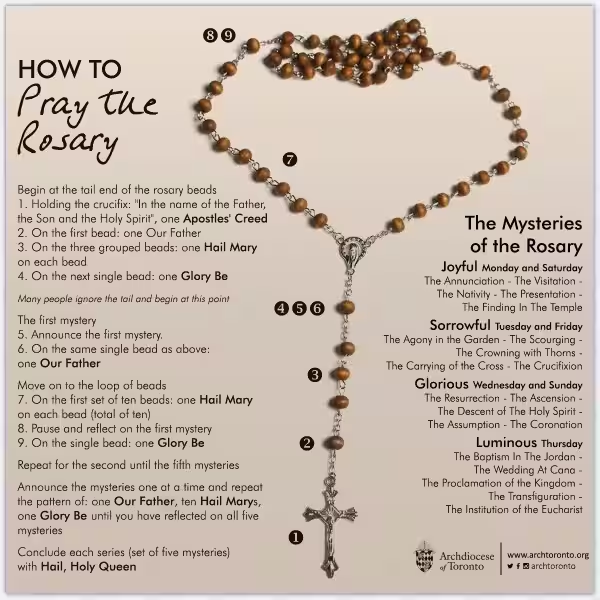
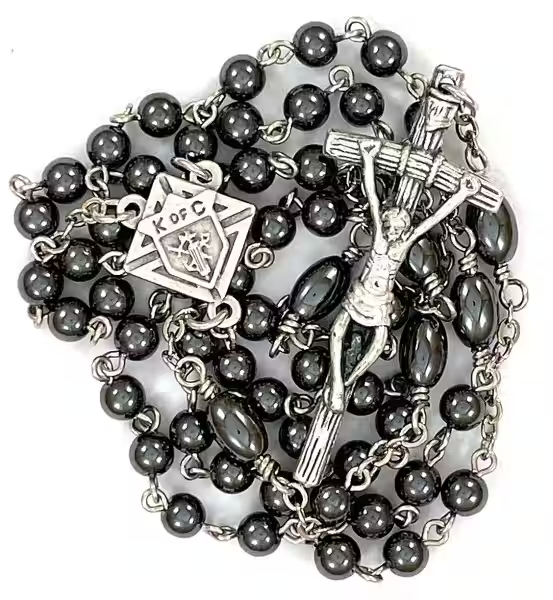
Before diving into the prayers, understanding the physical structure of the Rosary is essential. This is where the “dummies” aspect comes in – breaking down the seemingly complex into simple, manageable parts. A standard Rosary typically consists of:
The Crucifix: This is where the Rosary begins. It often holds symbolic meaning, reminding us of Christ’s sacrifice.
The Medal: Located after the Crucifix, this can be of various saints or depictions of Mary.
The Our Father Bead (Pater Noster): A single, larger bead, signifying the Lord’s Prayer.
The Hail Mary Beads (Ave Maria): Groups of ten smaller beads, where the Hail Mary prayer is recited.
The Glory Be Beads (Gloria Patri): A single bead separating the groups of ten, where the Glory Be prayer is said.
The Apostle’s Creed: Often recited at the beginning, summarizing core Christian beliefs.
Understanding these components is like learning the alphabet before writing a book; it’s foundational to the entire process.
The Significance of the Beads: A Physical Anchor for Prayer
The beads serve as a practical tool, especially for those new to praying the Rosary. They help to structure the prayer, preventing the mind from wandering too much. Imagine trying to count to a hundred without a calculator; the beads act as your fingers, helping you keep track.
Each bead is a gentle reminder to focus on the specific prayer and the corresponding Mystery. When you hold the Crucifix, you are reminded of the foundation of your faith. Moving to the Our Father bead, you are invited to recite the prayer Jesus himself taught us, setting a tone of devotion. Then, as you move through the Hail Mary beads, you are entering into a meditative dialogue with Mary, reflecting on her role in salvation history. The separation of these groups by the Glory Be bead signifies a pause, a moment of reflection and praise.
The Prayers of the Rosary: Simple Yet Profound
The Rosary is composed of several key prayers, each with its own significance. For a “Rosary for dummies,” the focus should be on understanding the essence of each prayer rather than memorizing intricate theological nuances.
The core prayers are the Apostle’s Creed, the Our Father, the Hail Mary, and the Glory Be. While the Hail Mary is repeated most frequently, each prayer plays a vital role in the overall devotion.
The Rosary often begins with the Apostle’s Creed. This is a powerful declaration of fundamental Christian beliefs. It’s a concise summary of what Catholics believe about God the Father, Jesus Christ, the Holy Spirit, and the Church.
Reciting the Creed at the start of the Rosary is like setting your spiritual compass. It reaffirms your commitment to the core tenets of your faith before you embark on the meditative journey of the Rosary. For example, when you say, “I believe in God, the Father Almighty, Creator of Heaven and Earth,” you are grounding your prayer in the belief in a supreme being who created and sustains all things.
The Our Father: A Prayer Taught by Christ
The Our Father, also known as the Lord’s Prayer, is a cornerstone of Christian prayer. Jesus himself taught this prayer to his disciples. It’s a prayer that addresses God as “Our Father,” emphasizing our relationship with Him as His children.
When you pray the Our Father on the dedicated bead, you are connecting with Jesus’ own words. You are praying for God’s will to be done, for daily sustenance, for forgiveness, and for protection from evil. It’s a prayer that encompasses our needs and our relationship with the divine.
The Hail Mary: A Dialogue with Mary
The Hail Mary is the most frequently recited prayer in the Rosary. It’s a beautiful and respectful address to the Blessed Virgin Mary. The prayer is composed of two parts: the angelic greeting and a petition.
The first part, “Hail Mary, full of grace, the Lord is with thee,” comes from the greeting of the Angel Gabriel to Mary at the Annunciation. The second part, “Blessed art thou amongst women, and blessed is the fruit of thy womb, Jesus,” comes from the greeting of Elizabeth to Mary. The latter part of the Hail Mary, “Holy Mary, Mother of God, pray for us sinners, now and at the hour of our death. Amen,” is a petition, asking Mary to intercede for us with her Son.
For a “Rosary for dummies,” understanding the Hail Mary as a loving conversation with Jesus’ mother is key. You are asking her, who experienced the life of Christ so intimately, to guide you in your contemplation and to pray for you.
The Glory Be: A Trinitarian Hymn
The Glory Be, or the Doxology, is a short hymn of praise to the Holy Trinity: the Father, the Son, and the Holy Spirit. It is a profound expression of adoration and worship of God’s divine nature.
Reciting the Glory Be after each decade of Hail Marys serves as a moment of praise and thanksgiving. It reminds us that all our prayers are ultimately directed towards the glory of God. It’s a way to acknowledge His eternal presence and to offer Him honor.
The Mysteries of the Rosary: Meditations on Christ’s Life
The true heart of the Rosary lies in the contemplation of the Mysteries. These are significant events in the lives of Jesus and Mary that we meditate on as we pray the Hail Marys. There are four sets of Mysteries: the Joyful, the Luminous, the Sorrowful, and the Glorious. Each set focuses on different aspects of Christ’s life and mission.
For a “Rosary for dummies,” the Mysteries are simply themes for reflection. You don’t need to have deep theological insights; simply allow the title of the Mystery to spark a thought or an image in your mind as you pray.
The Joyful Mysteries: The Beginning of God’s Love
The Joyful Mysteries focus on the early life of Jesus and Mary. They are characterized by joy and wonder, reminding us of the humble beginnings of our salvation.
The Annunciation: Mary’s acceptance of God’s plan to bear Jesus. This is a powerful reminder of obedience and faith.
The Visitation: Mary visits her cousin Elizabeth, who is pregnant with John the Baptist. This highlights service and the anticipation of Christ.
The Nativity: The birth of Jesus in Bethlehem. A moment of divine humility and boundless love.
The Presentation: Jesus is presented in the Temple. This signifies the dedication of Jesus to His Father’s will.
The Finding of Jesus in the Temple: A young Jesus teaches in the Temple. This shows His divine wisdom and early mission.
As you pray through the Joyful Mysteries, imagine yourself present at these events. What would you see, hear, and feel? Simple visualization can be incredibly powerful.
The Luminous Mysteries: The Public Ministry of Jesus
Introduced by Pope John Paul II, the Luminous Mysteries focus on Jesus’ public ministry. These Mysteries reveal the divinity of Christ and His teachings.
The Baptism of Jesus: Jesus is baptized by John the Baptist. A profound moment of divine revelation and the start of His public ministry.
The Wedding at Cana: Jesus performs His first public miracle, turning water into wine. This demonstrates His power and his desire to bless human celebrations.
The Proclamation of the Kingdom of God: Jesus preaches the Gospel and calls for repentance. This emphasizes the central message of His teachings.
The Transfiguration: Jesus’ divine glory is revealed to Peter, James, and John. A glimpse of Christ’s heavenly splendor.
The Institution of the Eucharist: Jesus shares the Last Supper with His disciples, establishing the sacrament of His Body and Blood.
Meditating on the Luminous Mysteries connects us to the core of Jesus’ message and actions. It’s a reminder of His love and authority as the Son of God.
The Sorrowful Mysteries: The Suffering of Our Savior
The Sorrowful Mysteries focus on the passion and death of Jesus. These are challenging but essential meditations, reminding us of the sacrificial love that redeemed humanity.
The Agony in the Garden: Jesus prays before His arrest, experiencing immense sorrow. This highlights obedience to God’s will even in suffering.
The Scourging at the Pillar: Jesus is brutally whipped. A stark reminder of the physical suffering He endured.
The Crowning with Thorns: Jesus is mocked and crowned with thorns. A depiction of humiliation and the rejection of divine authority.
The Carrying of the Cross: Jesus carries His cross to Golgotha. This embodies patience and the burden of sin.
The Crucifixion: Jesus is nailed to the cross and dies. The ultimate act of sacrifice and love.
These Mysteries can be difficult, but they are also deeply transformative. They invite us to reflect on the depth of Christ’s love and to offer our own sufferings in union with His.
The Glorious Mysteries: The Triumph of Christ and Mary
The Glorious Mysteries celebrate the resurrection and ascension of Jesus, and the Assumption and Coronation of Mary. These Mysteries fill us with hope and the promise of eternal life.
The Resurrection: Jesus rises from the dead, conquering sin and death. The foundation of Christian hope.
The Ascension: Jesus ascends into heaven. This signifies His triumph and His continued presence with us through the Holy Spirit.
The Descent of the Holy Spirit: The Holy Spirit comes upon the Apostles. The empowerment of the Church.
The Assumption of Mary: Mary is taken body and soul into heaven. A testament to her special role and purity.
The Coronation of Mary: Mary is crowned Queen of Heaven and Earth. Her exaltation and intercessory power.
The Glorious Mysteries offer a vision of ultimate victory and glory. They remind us that suffering leads to joy and that there is a life beyond this earthly existence.
How to Pray the Rosary: A Step-by-Step Guide
For anyone looking for a “Rosary for dummies” approach, a simple, step-by-step guide is invaluable. Don’t feel pressured to be perfect; the intention and the effort are what matter most.
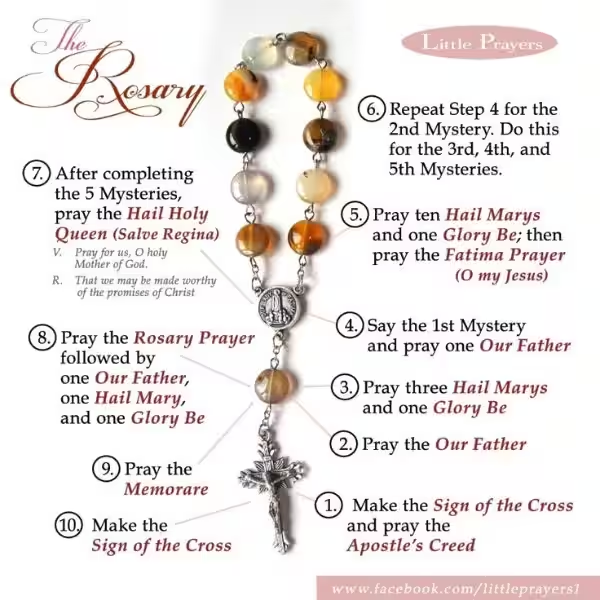
Make the Sign of the Cross: Begin by holding the Crucifix and making the Sign of the Cross.
Recite the Apostle’s Creed: On the Crucifix or medal, recite the Apostle’s Creed.
Pray the Our Father: Move to the first large bead and pray the Our Father.
Pray Three Hail Marys: On the next three small beads, pray the Hail Mary. This is often done to increase faith, hope, and charity.
Pray the Glory Be: On the next large bead, pray the Glory Be.
Announce the First Mystery: State the first Mystery of the chosen set (e.g., “The First Joyful Mystery: The Annunciation”).
Pray the Our Father: On the large bead, pray the Our Father.
Pray Ten Hail Marys: On the ten small beads, pray the Hail Mary, meditating on the Mystery.
Pray the Glory Be: At the end of the decade, pray the Glory Be.
Announce and Repeat: Announce the next Mystery and repeat steps 7-9 for all five Mysteries in the chosen set.
Concluding Prayers: After the fifth Mystery, you can recite the Hail Holy Queen and make the Sign of the Cross.
Remember, this is a flexible guide. If you get lost or forget a prayer, simply start again with the intention of praying. Consistency over perfection is key.
Tips for Beginners: Making the Rosary Your Own
Don’t be discouraged if your mind wanders. This is common for everyone, not just beginners. The key is to gently bring your focus back to the prayer and the Mystery.
Start Small: You don’t have to pray the entire Rosary at once. Begin with one decade, or even just the Hail Marys for a particular Mystery.
Use a Rosary App or Video: Many resources can guide you through the Rosary, saying the prayers aloud and displaying the Mysteries.
Find a Quiet Space: Choose a time and place where you can minimize distractions.
Focus on One Mystery: As you pray the Hail Marys for a decade, try to picture the scene or reflect on the meaning of that specific Mystery.
Don’t Be Afraid to Ask for Help: If you have questions, your local priest, a religious education teacher, or a knowledgeable friend can be a great resource.
The Rosary is a gift to the faithful, a way to draw closer to Christ and His mother. By approaching it with an open heart and a willingness to learn, even a “Rosary for dummies” can lead to a rich and rewarding spiritual life. It’s a journey, not a race, and every step taken in faith is a meaningful one.
Frequently Asked Questions about the Rosary
What is a rosary?
A rosary is a string of beads used for prayer, particularly in the Catholic Church. It helps individuals keep track of prayers and meditate on significant events in the lives of Jesus and Mary.
What is the purpose of praying the rosary?
The rosary is prayed to honor Mary, to meditate on the life of Jesus through the mysteries, and to ask for intercession. It is considered a powerful prayer for spiritual growth and for requesting graces.
What are the “mysteries” of the rosary?
The mysteries are events from the lives of Jesus and Mary that are meditated upon while praying the rosary. They are divided into four sets: the Joyful Mysteries, the Luminous Mysteries, the Sorrowful Mysteries, and the Glorious Mysteries.
How do you pray the rosary?
The rosary is prayed by reciting specific prayers, such as the Our Father, the Hail Mary, and the Glory Be, in a set order while meditating on one of the mysteries. The beads are used to count the prayers.
Is the rosary only for Catholics?
While the rosary is a prominent devotion in Catholicism, people of other Christian denominations and even those of other faiths may find the meditative aspect of the rosary beneficial. However, its prayers are rooted in Catholic theology.
What is the role of Mary in praying the rosary?
In Catholic tradition, Mary is honored and asked to intercede for the person praying. The Hail Mary prayer specifically asks for her prayers for the sinner now and at the hour of death.
Can I use a store-bought rosary or make my own?
Yes, you can use a store-bought rosary or make your own. The materials used for the beads or the design do not affect the validity of the prayer itself.
Is there a specific time to pray the rosary?
There is no set time to pray the rosary. Many people pray it daily, while others pray it at specific times of the day or in response to particular needs.
What if I don’t know all the prayers?
There are many resources available, both online and in print, that provide the prayers of the rosary. It’s also acceptable to start with the prayers you know and learn the others as you go.