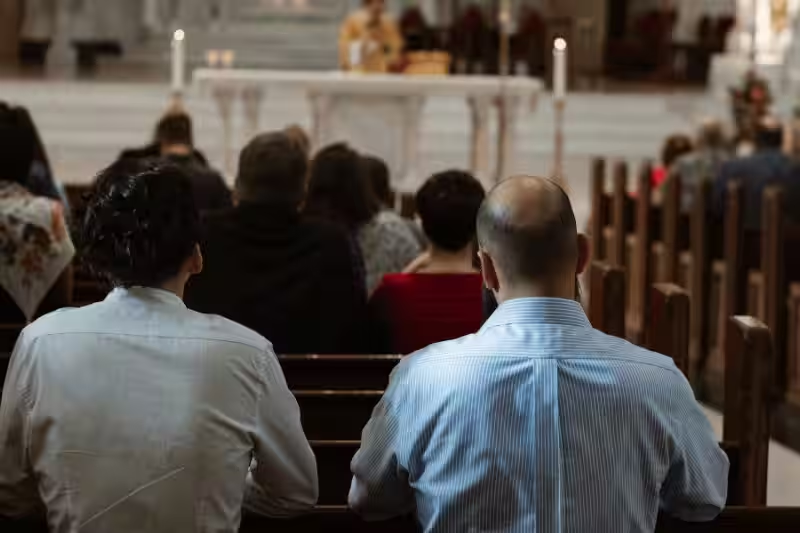
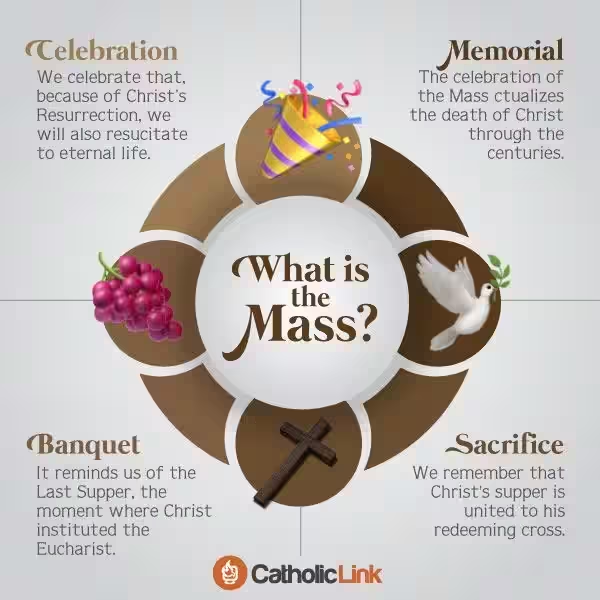
For centuries, the Catholic Church has gathered for Mass, a sacred liturgy that is far more than just a weekly service; it’s a profound encounter with the divine. At its core, Mass is a communal act of worship, a re-presentation of Christ’s sacrifice, and a spiritual nourishment for believers. The prayers within this sacred rite are the very language of this encounter, a carefully crafted dialogue between God and His people. Understanding these prayers isn’t just about memorizing words; it’s about grasping their meaning, their purpose, and the transformative power they hold for those who participate with open hearts.
Whether you are a lifelong Catholic looking to deepen your appreciation or a curious individual seeking to understand this central element of Catholic life, exploring the prayers of the Mass offers a window into a rich tradition. These prayers are not static pronouncements but living expressions of faith, hope, and love, guiding the congregation through a spiritual journey that culminates in a mystical union with Christ. They are the threads that weave together the fabric of communal worship, inviting each person into a personal relationship with God.
The Introductory Rites: Setting the Stage for Sacred Encounter
The Mass begins not with a bang, but with a gentle, yet powerful, series of invocations designed to gather the faithful and prepare their hearts for the sacred liturgy. These Introductory Rites serve as a crucial prelude, moving us from the secular world into the holy presence of God. They are an invitation to leave behind distractions and focus our minds and spirits on the divine encounter that is about to unfold. The opening prayers here are deliberate, aiming to unite us as a community of faith and awaken our awareness of God’s presence among us.
The Sign of the Cross, recited at the very outset, is a foundational prayer, a public declaration of our faith in the Trinity – Father, Son, and Holy Spirit. It’s a reminder of our baptism and our commitment to Christ’s sacrifice. Following this, the Greeting by the priest, such as “The Lord be with you,” establishes a direct connection with the congregation, echoing the biblical encounters where God’s presence is announced. The Penitential Act, which often includes the Confiteor (“I confess to almighty God…”), is a moment of humble self-examination. We acknowledge our sins, not to dwell in shame, but to seek God’s mercy and forgiveness, clearing our spiritual palate for the grace to come. This is a crucial step, for as the saying goes, “we cannot truly worship God if we are not at peace with Him.”
The Kyrie Eleison: A Universal Plea for Mercy
A particularly poignant prayer within the Penitential Act is the Kyrie Eleison, meaning “Lord, have mercy” in Greek. This ancient plea, often sung, transcends language barriers and cultural differences. It’s a simple yet profound expression of our dependence on God’s compassion. Imagine a child, lost and afraid, crying out for their parent – the Kyrie is that primal cry of the soul reaching out for divine solace and understanding. It’s repeated three times, emphasizing its importance and universality.
The repetition of “Christ, have mercy” and “Lord, have mercy” isn’t mere redundancy; it’s a deepening of our supplication. It acknowledges Christ’s role as our Savior and God the Father’s ultimate authority and mercy. This prayer reminds us that we are all sinners in need of God’s grace, and that our salvation comes through His boundless love. It’s a communal act of humility, acknowledging our shared need for divine intervention, preparing us to receive the Word and the Eucharist with hearts cleansed and open.
The Liturgy of the Word: Encountering God Through His Revelation
Following the Introductory Rites, the Mass moves into the Liturgy of the Word, a central pillar of Catholic worship. This is where God speaks to us directly through the Sacred Scriptures. The chosen readings, drawn from the Old and New Testaments, are not random selections; they are carefully orchestrated to reveal God’s plan of salvation throughout history. The proclamation of the Word is an act of faith, an expectation that God’s message will illuminate our lives and guide our actions. This section is designed to challenge, comfort, and inspire us, offering divine wisdom for our daily struggles.
The readings culminate in the Gospel, the heart of the Liturgy of the Word, proclaimed by the priest or deacon. This is a moment of heightened reverence, marked by standing, bowing heads, and the use of incense. The Gospel accounts of Jesus’ life, teachings, and miracles are presented not as historical narratives alone, but as living encounters. After the readings, the Homily – the priest’s explanation of the texts – bridges the ancient words to our modern lives. The homily is a crucial prayerful reflection, helping us to “hear God’s voice in the living Word.”
The Creed: Professing Our Shared Faith
After the homily, the congregation stands together to recite the Nicene Creed (or sometimes the Apostles’ Creed). This is not just a recitation of historical beliefs; it is a powerful communal profession of faith. It’s a declaration of what Catholics believe, encapsulating the core tenets of Christianity. Think of it as a unified “yes” to God’s revelation, a collective affirmation of our foundational beliefs. This shared prayer solidifies our identity as a community united in Christ.
The Creed is structured around key doctrines: belief in God the Father as Creator, in Jesus Christ as His Son and our Savior, and in the Holy Spirit who sanctifies the Church. It also professes belief in the Church itself, its sacraments, the resurrection of the dead, and the life everlasting. Reciting the Creed is a powerful act of communal witness, reminding us that our faith is not a private affair but a shared journey. It’s an opportunity to recommit ourselves to the truths we hold dear, strengthening the bonds of our faith community.
The Liturgy of the Eucharist: The Sacrifice and the Supper
The Liturgy of the Eucharist is the absolute pinnacle of the Catholic Mass. It is here that the sacrifice of Jesus on the cross is made present again, and where we partake in the Sacred Meal – the Body and Blood of Christ. This is the most sacred and profound part of the Mass, a mystery that has been central to Christian worship since the Last Supper. The prayers in this section are deeply reverent, focusing on the transformation of bread and wine into the very presence of Christ.
The Prayer of the Faithful, often preceding the offertory, is a series of intercessory prayers for the Church, the world, and those in need. It’s a moment where we bring our petitions and concerns before God as a community. Following this, the Offertory involves the presentation of the bread and wine, symbolizing our own offerings and the fruits of our labor. The priest then offers these gifts to God with the prayer, “Pray, brethren, that this my sacrifice and yours may be acceptable to God the Almighty Father.” This is a crucial reminder that the Mass is not just the priest’s sacrifice, but ours as well, a participatory offering of our lives.
The Eucharistic Prayer: The Heart of the Mass
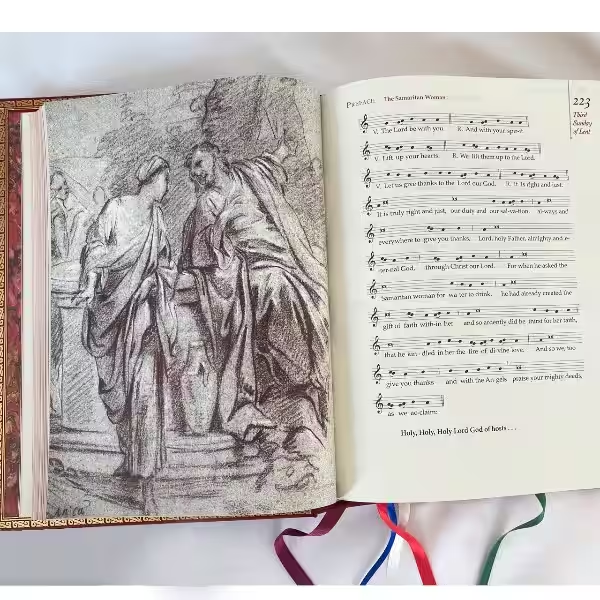
The Eucharistic Prayer is the longest and most solemn prayer of the Mass. It is the anamnesis, the memorial of Christ’s passion, death, and resurrection. The priest, acting in the person of Christ, leads the congregation in a profound dialogue of praise and thanksgiving. This prayer includes the Sanctus (“Holy, holy, holy Lord God of hosts…”), an ecstatic hymn of praise to God’s holiness, echoing the worship of angels. It’s a moment of heightened spiritual awareness, recognizing the divine majesty present on the altar.
The most profound moment within the Eucharistic Prayer is the Institution Narrative, where the priest recounts Jesus’ words and actions at the Last Supper: “Take this, all of you, and eat it, for this is my body… take this, all of you, and drink from it, for this is the chalice of my blood…” These words, spoken with faith, effect the transubstantiation: the bread and wine become the true Body and Blood of Christ. This is the miraculous heart of the Mass, a sacramental encounter with the Real Presence of Jesus. The subsequent prayers of epiclesis (invoking the Holy Spirit) and commemoration further deepen the mystery, asking for the Holy Spirit to sanctify the gifts and the faithful, and remembering the saints.
The Communion Rite: Receiving the Divine Gift
Following the Eucharistic Prayer, the Communion Rite begins, a time of preparation to receive the Body and Blood of Christ. The Our Father, recited by the entire congregation, is a foundational prayer taught by Jesus Himself. It is a prayer of communal petition, asking for God’s will to be done on earth as it is in heaven, for our daily bread (which can be interpreted as spiritual nourishment), and for forgiveness. It’s a prayer that unites us in our shared reliance on God and our desire for reconciliation.
The Sign of Peace follows, a gesture of reconciliation and unity within the community, a tangible expression of the forgiveness we have received. Then comes the Lamb of God (Agnus Dei), a prayer that cries out, “Lamb of God, you take away the sins of the world, have mercy on us.” This prayer directly links Christ’s sacrifice to our reception of communion, acknowledging Him as the ultimate sacrifice for our sins. Finally, the priest elevates the consecrated Host and Chalice, inviting us to approach the altar for Holy Communion. Receiving the Eucharist is the culmination of the Mass, a spiritual food that strengthens our faith and unites us more intimately with Christ and with one another. As the priest says when distributing communion, “The Body of Christ,” and we respond, “Amen,” it is a profound personal acceptance of this divine gift.
The Prayer After Communion: Sustained by Grace
After all have received communion, a brief period of silent prayer often follows, allowing each individual to privately converse with God, to internalize the graces received. This personal encounter with Christ in the Eucharist is a sacred moment of intimacy. Then, the priest leads the Prayer After Communion, a final petition that summarizes the graces received and asks for their lasting effect in our lives. This prayer is not just a concluding remark; it’s a plea for the sacramental grace to sustain us as we return to our daily lives, carrying the presence of Christ with us.
This prayer often asks that the “sacred mysteries” we have received may bring about spiritual and bodily health, and that we may be strengthened in our faith and love. It’s a prayer for mission, equipping us to be Christ’s witnesses in the world. It’s a reminder that the Mass doesn’t end when we leave the church building; it continues in our actions and our lives. The prayers after communion are designed to ensure that the transformative power of the Eucharist “permeates our being” and guides our every step forward in love and service.
The Concluding Rites: Sending Forth to Serve
The Mass concludes with the Concluding Rites, a vital transition from the sacred space back into the world. These rites are not an abrupt dismissal but a deliberate sending forth, commissioning the faithful to live out the Gospel they have just experienced. The final blessing, delivered by the priest, is a solemn invocation of God’s favor upon the congregation, asking for His protection and guidance. It’s a benediction that extends God’s peace and grace beyond the confines of the church walls. “May almighty God bless you…” are words that resonate with profound spiritual significance.
The dismissal, often “Go in peace, to love and serve the Lord,” is the final call to action. It’s an imperative to take the spiritual nourishment and divine encounter of the Mass and translate it into tangible acts of love and service in our daily lives. We are not sent away unchanged; we are transformed and empowered. The prayers and rituals of the Mass have equipped us to be “the salt of the earth and the light of the world,” carrying Christ’s presence into every aspect of our existence and sharing His love with all whom we encounter.
Frequently Asked Questions: Catholic Church Prayers During Mass
What are the main types of prayers said during Mass?
The prayers said during Mass can be broadly categorized into several types: the opening prayer (collect), prayers of the faithful (intercessions), the prayer over the offerings, and the prayer after Communion. The central prayer of the Mass is the Eucharistic Prayer, which includes the words of consecration.
What is the purpose of the prayers of the faithful?
The prayers of the faithful, also known as the universal prayer or intercessions, are a series of petitions offered for various needs. These typically include prayers for the Church, for civil authorities and the whole human family, for those burdened by difficulties, and for the local community.
What is the significance of the Sign of the Cross?
The Sign of the Cross is a fundamental gesture and prayer in Catholicism, invoking the Holy Trinity: the Father, the Son, and the Holy Spirit. It is used at the beginning and end of Mass, and at various other significant moments, symbolizing our faith and dedication to God.
Who leads the prayers during Mass?
The priest, acting in the person of Christ, leads the prayers during Mass. However, the congregation also actively participates in prayers, responding to the priest’s words, singing hymns, and offering their own silent or spoken intentions.
What is the “Our Father” and why is it prayed during Mass?
The “Our Father” (Pater Noster) is the prayer taught by Jesus himself to his disciples, as recorded in the Gospels. It is prayed during the Communion Rite of the Mass as a communal expression of our adoption as children of God and our reliance on His will. It is a prayer of petition, forgiveness, and unity.
What is the Ambo and what prayers are associated with it?
The Ambo is the raised platform from which the Word of God is proclaimed (readings and homily) and from which the prayers of the faithful are typically led. It is a place of prominence for the proclamation of Scripture and the articulation of the Church’s prayers for the world.
What is the role of silence in Catholic prayers during Mass?
Silence plays a vital role in Catholic prayer during Mass. It provides opportunities for personal reflection, contemplation of the readings and homily, and a deeper connection with God. Specific moments of silence are often interspersed throughout the liturgy.
What is the Creed and why is it recited?
The Creed is a summary of core Catholic beliefs, most commonly the Nicene Creed or the Apostles’ Creed. It is recited by the congregation during the Liturgy of the Word to affirm their faith in God, Jesus Christ, the Holy Spirit, and the Church. It is a communal profession of faith.
How are hymns and songs considered prayers?
Hymns and songs sung during Mass are considered a form of prayer, often referred to as musical prayer or liturgical chant. They express praise, thanksgiving, petition, and devotion, uniting the congregation in a communal act of worship and reflection.