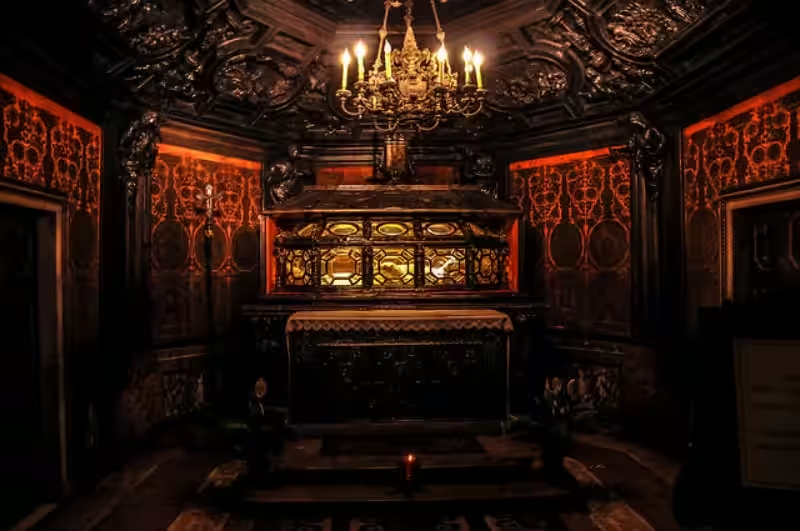
Lima, a city where history whispers from colonial facades and the modern pulse beats strong, holds within its bustling streets a sanctuary of profound peace and enduring faith: the Monastery of San Francisco. More than just a collection of ancient stones and revered relics, this magnificent complex stands as a testament to centuries of religious devotion, architectural grandeur, and the unwavering spirit of the Franciscan order. For anyone seeking to understand the deep-rooted religious tapestry of Peru, or simply yearning for a moment of quiet contemplation amidst the vibrant energy of the capital, a visit to the Monastery of San Francisco is an essential pilgrimage.
Stepping through its imposing entrance is like stepping back in time. The air, thick with the scent of aged wood and incense, immediately invites a sense of reverence. This is not merely a historical site; it is a living, breathing embodiment of religion, a place where prayers have echoed for generations and where the principles of St. Francis of Assisi continue to guide the lives of those within its walls. The Monastery of San Francisco in Lima offers a profound glimpse into the soul of a nation, woven with threads of faith, art, and a remarkable resilience that has weathered the storms of time.
A Foundation of Faith: The Genesis of the Monastery of San Francisco
The story of the Monastery of San Francisco in Lima begins with the arrival of the Franciscan friars in the mid-16th century. Driven by a fervent desire to spread Christianity and serve the burgeoning colonial society, they established their presence in the nascent city. The initial structures were modest, reflecting the order’s commitment to humility and simplicity. However, the vision for a grander, more permanent edifice soon took root, fueled by the growing importance of Lima as the viceregal capital and the dedication of its faithful clergy and patrons. This was a time of immense religious fervor, and the construction of such a significant religious complex was seen as a paramount undertaking, reflecting the power and influence of the Catholic Church in the New World.
The construction of what we see today, the impressive Monastery of San Francisco, was a multi-generational endeavor, beginning in earnest in the late 16th century and continuing through the 17th. It was a monumental undertaking, requiring vast resources, skilled artisans, and an unwavering commitment to the sacred purpose it would serve. The architectural style, a blend of Baroque and Renaissance influences, speaks volumes about the era’s artistic sensibilities and the desire to create a space that was both awe-inspiring and conducive to spiritual reflection. The very stones of the Monastery of San Francisco carry the weight of this history, whispering tales of the friars who walked its cloisters and the countless souls who found solace and inspiration within its hallowed halls.
The Monastery of San Francisco is an undeniable masterpiece of colonial architecture. Its façade, adorned with intricate carvings and imposing columns, hints at the treasures within. As you enter the main church, the sheer scale and opulence are breathtaking. The soaring ceilings, the gilded altars, and the vibrant religious artwork create an atmosphere of overwhelming beauty and devotion. Every detail, from the hand-painted tiles to the meticulously crafted wooden choir stalls, reflects a deep commitment to glorifying God and inspiring the faithful. The sensory experience is profound; the visual spectacle, combined with the hushed reverence of the space, creates a powerful connection to the religious heritage of Lima.
Beyond its aesthetic appeal, the Monastery of San Francisco is a living repository of religious art and artifacts. The art collection is particularly noteworthy, featuring paintings and sculptures that depict biblical scenes and the lives of saints with remarkable detail and emotional depth. These works were not merely decorative; they served as a means of religious instruction and inspiration for a populace, many of whom were illiterate. The catacombs, a fascinating and somewhat eerie aspect of the monastery, offer a stark reminder of the cyclical nature of life and death, and the enduring belief in an afterlife. Exploring these subterranean passages, where the remains of thousands of Lima’s early inhabitants lie, adds another layer to the spiritual and historical narrative of the Monastery of San Francisco.
A Living Monastery: The Franciscans Today
While the Monastery of San Francisco is undoubtedly a historical treasure, it is crucial to remember that it remains an active religious institution. The Franciscan friars continue their sacred work within its walls, upholding the traditions and values passed down through centuries. They are not merely custodians of history; they are integral to its ongoing narrative. Their daily lives are dedicated to prayer, service, and the spiritual guidance of their community. This living aspect imbues the Monastery of San Francisco with a unique energy, a palpable sense of continuity that resonates with visitors.
The friars at the Monastery of San Francisco are actively involved in various ministries, extending their reach beyond the confines of the monastery itself. This includes charitable work, educational initiatives, and pastoral care. Their commitment to the teachings of St. Francis, which emphasize humility, service to the poor, and a deep respect for creation, remains a guiding principle. Engaging with the friars, even through observation of their daily routines, offers a tangible connection to the enduring power of faith and its capacity to inspire profound acts of compassion and devotion. It reinforces that the Monastery of San Francisco is not a relic of the past, but a vibrant center of religious life.
One of the most compelling and often talked-about features of the Monastery of San Francisco is its extensive network of catacombs. These underground chambers served as the final resting place for thousands of Lima’s early inhabitants, including clergy, nobility, and ordinary citizens. Descending into this silent city of the dead is a profound experience. The orderly arrangement of bones, meticulously stacked and often forming decorative patterns, creates a stark and humbling reminder of our shared mortality. It’s a place where the veil between the living and the departed seems to thin, inviting contemplation on the ephemeral nature of life and the enduring concepts of faith and the soul.
The catacombs of the Monastery of San Francisco are more than just a historical curiosity; they are an integral part of the religious narrative. They speak to the historical understanding of death and burial practices, as well as the deep-seated religious beliefs surrounding the afterlife. Exploring these tunnels offers a unique perspective on the lives of those who came before, connecting us to their hopes, fears, and their faith. It’s a poignant experience that complements the grandeur of the church above, providing a grounding and introspective counterpoint within the overall spiritual journey offered by the Monastery of San Francisco.
The Monastery of San Francisco as a Cultural Beacon
The Monastery of San Francisco transcends its religious identity to stand as a significant cultural landmark in Lima. Its architectural style, its vast collection of religious art, and its historical importance all contribute to its status as a vital part of Peru’s heritage. It is a place where art, history, and religion converge, offering a rich and multi-faceted experience for visitors from all walks of life. The meticulous preservation of the monastery ensures that future generations can continue to learn from and be inspired by its legacy. It is a testament to the enduring power of human creativity and spiritual conviction.
For tourists and locals alike, the Monastery of San Francisco provides a welcome respite from the urban clamor. It is a sanctuary where one can pause, reflect, and connect with a deeper sense of history and spirituality. The guided tours are invaluable, offering insights into the construction, the art, and the lives of the friars who have called this place home. These tours often highlight specific periods, key figures, and the religious significance of different areas within the complex, enriching the visitor’s understanding and appreciation of the Monastery of San Francisco. It’s an opportunity to not just see a beautiful building, but to understand the profound stories it holds within its ancient walls.
The ongoing preservation efforts at the Monastery of San Francisco are crucial for safeguarding its invaluable heritage. These efforts involve meticulous restoration work, ongoing maintenance, and the careful management of its vast collections. The goal is not merely to maintain the physical structures but also to ensure that the spiritual and cultural significance of the monastery continues to be accessible and understood. Modern conservation techniques are employed to protect delicate artworks and ancient manuscripts, ensuring that the stories they tell can continue to resonate for centuries to come.
The responsibility of preserving such a historically and religiously significant site like the Monastery of San Francisco is a shared one. Through tourism, donations, and a general appreciation for its importance, the public plays a vital role in its continued existence. This dedication to preservation ensures that the Monastery of San Francisco will remain a vital spiritual and cultural beacon, a place where the echoes of faith and history can continue to inspire awe and contemplation for generations to come. It is a promise to the past and a gift to the future, ensuring the enduring legacy of this magnificent religious heart of Lima.
Frequently Asked Questions about Religion at the Monastery of San Francisco, Lima
What is the primary religion practiced at the Monastery of San Francisco?
The primary religion practiced at the Monastery of San Francisco is Roman Catholicism.
What religious order founded and maintains the monastery?
The monastery was founded and is maintained by the Franciscan Order, a mendicant order of the Catholic Church.
Can visitors attend religious services at the monastery?
Yes, visitors are generally welcome to attend religious services held at the monastery, such as Mass. It’s advisable to check the specific schedule for services.
Is the Monastery of San Francisco an active place of worship or primarily a historical site?
The Monastery of San Francisco serves as both an active place of worship for the Franciscan friars and a significant historical and cultural landmark.
Are there any specific religious artifacts or relics housed within the monastery?
The monastery houses numerous religious artifacts, artworks, and historically significant items related to the Franciscan Order and Catholic tradition.