The phrase “the dead will rise first” echoes through sacred texts and spiritual discussions, often evoking images of a momentous future event. This potent declaration isn’t merely a sensational prophecy; it carries deep theological weight and offers profound insights into humanity’s understanding of life, death, and the ultimate destiny of existence. For believers across diverse faiths, the concept signifies a fundamental shift, a divine intervention that redefines the very order of things. It speaks to a hope beyond the grave, a promise that dissolution is not the end, but a prelude to a grander, more permanent state.
Understanding this statement requires delving into the theological frameworks that give it meaning. It’s a core tenet in many religious traditions, suggesting a divinely orchestrated resurrection where those who have passed from this world are brought back to life before the living experience their own transformation. This hierarchy of the resurrected – the dead coming first – is not arbitrary. It suggests a cosmic justice, a restoration, and a reordering of creation that prioritizes those who have already endured the separation from their physical forms. This idea can be a source of immense comfort, offering solace to those grieving loved ones and a powerful testament to the enduring nature of the soul or spirit.
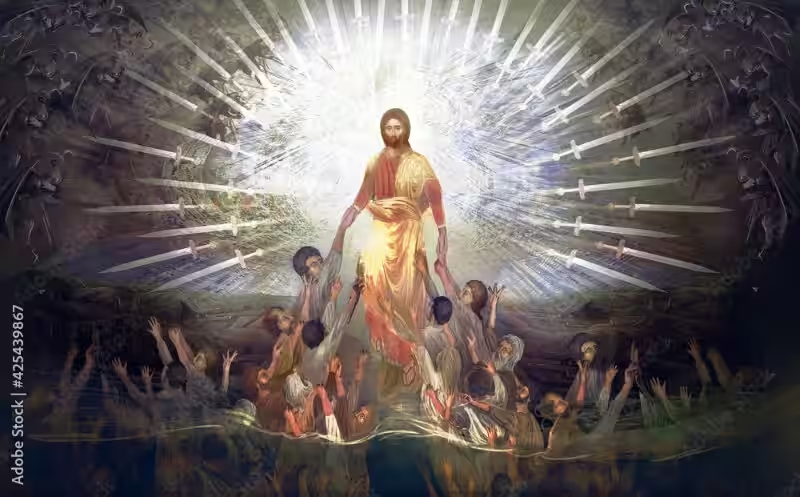
In Christian theology, the most explicit articulation of “the dead will rise first” is found in the Apostle Paul’s First Epistle to the Thessalonians. He writes, “For the Lord himself will descend from heaven with a shout, with the voice of an archangel, and with the trumpet of God. And the dead in Christ will rise first.” This passage is central to the Christian understanding of the Rapture or the Second Coming of Christ. It paints a vivid picture of a supernatural event where the faithful who have died will be resurrected and united with Christ before those who are still alive at his return. This isn’t a passive waiting; it’s an active, divinely initiated event that marks a pivotal moment in salvation history.
This concept offers a tangible hope for a reunion with loved ones who have passed. Imagine a family, torn apart by the finality of death, anticipating a future where their departed members are not only remembered but are literally brought back to life to share in an eternal existence. This promise provides a powerful antidote to the despair that often accompanies loss. The emphasis on “the dead in Christ” also highlights the importance of faith and righteous living in this eschatological timeline. It suggests that this resurrection is reserved for those who have lived in accordance with divine principles, adding a layer of moral accountability to the grand cosmic plan. The idea that the dead will rise first transforms the fear of death into an anticipation of ultimate victory.
Theological Significance of the Order
The specific order – the dead rising first – carries significant theological weight. It implies a restoration of those who have already paid the ultimate earthly price. It’s a demonstration of divine mercy and power, showcasing God’s ability to reverse the effects of sin and death. This sequence prioritizes the faithful departed, perhaps signaling their readiness for the ultimate spiritual renewal or their role in witnessing the final consummation of God’s plan. It’s a profound statement that the dead will rise first, implying a preeminence or a prioritized homecoming for those who have completed their earthly journey.
This structured resurrection can be likened to a grand gathering, where those who have been absent are welcomed back before new arrivals. It underscores the belief that death is a temporary state, a “sleep” from which the faithful will awaken. The trumpet call signifies a divine summons, a call to life that transcends mortal limitations. For many, this promises not just physical resurrection but also the shedding of mortal frailty, a transition to an incorruptible and glorified state. This is where the concept of the dead will rise first becomes not just a theological statement but a deeply personal assurance of continuity and ultimate redemption.
Broader Religious Interpretations and Similar Concepts
While the most prominent articulation of “the dead will rise first” is found in Christianity, similar concepts of resurrection and afterlife, often with an emphasis on a divine reordering, exist in other religious traditions. Judaism, for instance, speaks of a future Messianic Age where the dead will be resurrected. While the precise order might not be as explicitly defined as in Christian eschatology, the underlying principle of a divine awakening of those who have passed is present. This shared hope for a future life, where death is overcome, connects diverse spiritual paths.
Many ancient mythologies and spiritual belief systems feature narratives of individuals or groups being brought back from the underworld or the realm of the departed, often as a reward for their virtue or as part of a larger cosmic event. These stories, though varied in their specifics, often point to a fundamental human yearning for a life beyond the ephemeral nature of our current existence. The idea that the dead will rise first speaks to this universal desire for ultimate justice and the belief that there is a spiritual reality that transcends the physical. It’s a testament to the enduring human spirit’s quest for meaning and immortality.
The Comfort and Challenge of the Promise
The promise that the dead will rise first offers immense comfort, particularly in the face of grief. It transforms the stark reality of death into a hopeful interlude. For those who have lost parents, children, spouses, or friends, this teaching provides a powerful vision of future reunion. It’s the assurance that the bonds of love are not severed by the grave but are destined to be restored in a glorious future. This belief can be a bedrock of strength during times of intense sorrow, allowing individuals to navigate their grief with the underlying certainty of an eternal reunion.
However, this concept also presents a challenge. It calls believers to live lives worthy of this promised resurrection. The emphasis on “the dead in Christ” or similar phrasing in other traditions suggests that this ultimate destiny is not automatic but is tied to one’s faith and actions. It encourages a life of purpose, devotion, and adherence to spiritual principles. The anticipation of such a momentous event serves as a constant reminder to live with intention, knowing that the earthly life is a preparation for something far greater. The profound truth that the dead will rise first is a call to both hope and righteous living.
Living with the Hope of Resurrection
For those who embrace the belief that the dead will rise first, life takes on a different dimension. It’s not just about navigating the present; it’s about preparing for an eternal future. This understanding can foster a sense of urgency in sharing faith, living compassionately, and striving for spiritual growth. The daily choices and actions become imbued with a cosmic significance, seen as contributions to a grander narrative of redemption and restoration. It’s a perspective that imbues everyday life with profound meaning and purpose.
This eschatological hope can also foster a sense of community and shared destiny among believers. Knowing that they are all part of a grand plan, awaiting a common glorious future, strengthens their bonds and encourages mutual support. The belief that the dead will rise first is not just an individualistic aspiration but a communal expectation, uniting people in their faith and their anticipation of God’s ultimate triumph. It transforms the fear of the unknown future into a shared journey of hope and ultimate fulfillment.
Frequently Asked Questions: The Dead Will Rise First (Religion)
What does “the dead will rise first” mean in a religious context?
This phrase most prominently appears in Christian theology, specifically in the First Epistle to the Thessalonians (1 Thessalonians 4:16-17). It describes a future event where believers who have died will be resurrected and ascend to meet Christ in the air, followed by those who are still alive at that time. It’s often associated with the concept of the Second Coming of Jesus Christ and the rapture.
Which religions or denominations teach about the dead rising first?
The primary religious context for this teaching is within Christianity. While interpretations vary significantly among denominations and theological schools, the concept of a bodily resurrection of the dead and a future gathering with Christ is a core tenet for many Christian traditions, including:
Evangelical Protestantism: Many denominations within this broad category hold to a literal interpretation of this passage, often linking it to the rapture.
Pentecostalism and Charismatic Christianity: Similar to evangelical traditions, these groups often teach about a pre-tribulation rapture where the dead in Christ rise first.
Some Traditional Protestant Denominations: While interpretations might be less literal or focused on a distinct “rapture” event, the belief in a future resurrection of believers is common.
Catholicism and Eastern Orthodoxy: While they believe in a future resurrection and the Second Coming of Christ, the specific timing and sequence implied by “the dead will rise first” as a singular, distinct event prior to living believers being taken is often understood differently. The emphasis is more on a general resurrection at the final judgment.
It’s important to note that while other religions have beliefs about an afterlife and the resurrection of the dead, the specific phrasing and theological framework of “the dead will rise first” is distinctly Christian.
Are there different interpretations of this event within Christianity?
Yes, there are significant differences in how Christians interpret “the dead will rise first.” The main variations revolve around the timing and nature of this event, particularly in relation to Jesus’ Second Coming and the concept of the “rapture”:
Pre-Tribulation Rapture: This view holds that believers (both the resurrected dead and living believers) will be taken to be with Christ before a period of intense suffering known as the Great Tribulation. The dead in Christ rise first, followed by the living.
Mid-Tribulation Rapture: This view suggests the rapture occurs in the middle of the seven-year tribulation period.
Post-Tribulation Rapture: This view posits that believers will go through the tribulation period, and the resurrection of the dead and the rapture of the living will occur after the tribulation, simultaneous with or just before Christ’s second coming in glory.
Other Views: Some theological viewpoints do not emphasize a distinct “rapture” event as described above, but rather a singular resurrection of both believers and unbelievers at the final judgment, with the dead in Christ rising to be with Him.
Does this teaching imply that only certain people will be resurrected?
In Christian theology, the phrase “the dead will rise first” specifically refers to believers who have died. The general Christian belief is that there will be a future resurrection for all people – both the righteous and the unrighteous – at the final judgment. However, the specific sequence described in 1 Thessalonians 4:16-17 focuses on the resurrection of those who are in Christ.
What is the significance of this event for believers?
For believers, the teaching that “the dead will rise first” offers several significant aspects:
Hope and Comfort: It provides assurance of a future resurrection and eternal life with God, offering comfort in the face of death and loss.
Victory over Death: It signifies the ultimate triumph of Christ over death and the grave.
Gathering with Christ: It promises a future reunion with Christ and with loved ones who have already died in faith.
Anticipation of Christ’s Return: It is seen as a sign and anticipation of Jesus Christ’s glorious return to earth.