Religion, at its core, is a deeply human endeavor, a quest for meaning, connection, and understanding in a vast and often mysterious universe. This quest manifests in myriad ways, each shaped by cultural contexts, historical developments, and the unique spiritual needs of individuals and communities. One of the most visible and tangible expressions of this religious impulse can be seen in the diverse array of church forms that dot landscapes worldwide. These structures are more than just buildings; they are physical embodiments of belief systems, hubs of communal worship, and often, architectural marvels that reflect the values and aspirations of their creators. From the soaring spires of Gothic cathedrals to the humble simplicity of a village chapel, each church form tells a story of faith, tradition, and the enduring human desire for transcendence.
Understanding these various church forms offers a fascinating glimpse into the rich and complex tapestry of religion itself. It allows us to appreciate how different denominations and traditions translate their theological understandings into physical spaces that facilitate worship, fellowship, and spiritual growth. Whether you are a devout follower, a curious observer, or someone simply seeking to understand the world better, exploring the evolution and diversity of church forms can be an enlightening journey. It’s a way to connect with the past, understand the present, and contemplate the future of religious expression.
From Ancient Sanctuaries to Modern Congregations: A Historical Perspective
The history of religion is inextricably linked to the development of places of worship. Early forms of religious practice often took place in natural settings – caves, groves, or mountaintops. As human societies became more organized, so too did their methods of communal worship. The earliest dedicated religious structures, often referred to as temples or shrines, were built to honor deities and serve as centers for ritual and sacrifice. These ancient church forms were typically elaborate and monumental, designed to inspire awe and reverence. Think of the grandeur of ancient Egyptian temples or the impressive ruins of Roman basilicas, which would later influence the design of Christian churches.
With the rise of Christianity, the concept of the church as a dedicated place for Christian worship evolved significantly. Early Christians often met in private homes, but as the faith grew, dedicated structures became necessary. The basilica, a Roman public building, provided a foundational architectural model for many early Christian churches. Over centuries, this evolved into a vast array of church forms, each with its own distinct characteristics. We see this in the development of Romanesque churches with their thick walls and rounded arches, followed by the breathtaking soaring heights and intricate stained glass of Gothic cathedrals. Each era, each regional style, contributed to the rich lexicon of Christian church forms, reflecting not only theological shifts but also technological advancements and artistic sensibilities.
The Architectural Language of Faith: Decoding Different Church Forms
The sheer diversity of church forms can seem overwhelming at first glance, but each style carries with it a distinct architectural language that communicates aspects of the faith it houses. For instance, the Gothic cathedral, with its pointed arches, flying buttresses, and vast stained-glass windows, was designed to draw the worshipper’s gaze upward towards heaven. The immense height and luminosity were meant to symbolize the divine presence and inspire a sense of awe and transcendence. You can almost feel the spiritual weight and aspiration in every soaring pillar. These were not just places of prayer; they were cathedrals of light, designed to bring worshippers closer to the divine through their very construction.
In contrast, Protestant church forms, particularly those that emerged from the Reformation, often emphasized simplicity and accessibility. Many chapels and meeting houses adopted more restrained designs, focusing on a clear, uncluttered space for preaching and congregational singing. The emphasis shifted from the grandeur of ritual to the direct engagement with scripture and community. A simple wooden altar, clear sightlines to the pulpit, and comfortable seating became hallmarks of these church forms. This is not to say they lacked beauty, but their aesthetic prioritized clarity and a sense of egalitarianism in worship, a stark contrast to the hierarchical symbolism of earlier traditions.
Key Architectural Features and Their Religious Significance
Delving deeper into the specifics of church forms reveals how even seemingly minor architectural choices carry significant religious meaning. Consider the nave, the main body of the church where the congregation gathers. Its length and width can influence the sense of communal gathering and the flow of processions. The altar, the focal point of many Christian services, is often positioned at the east end of the church, symbolizing the resurrection and the coming of Christ. The orientation of the altar and the overall layout of the sanctuary are deliberate choices designed to enhance the worshipper’s experience and reinforce theological concepts. Even the materials used, from rough-hewn stone to polished marble, contribute to the overall spiritual atmosphere.
Furthermore, symbolism is woven into the very fabric of many church forms. The cross, of course, is a ubiquitous symbol, but its placement and prominence can vary. Stained-glass windows often depict biblical stories, saints, or theological concepts, serving as visual sermons for those who may not be literate. The shape of the nave itself might be cruciform (cross-shaped), directly mirroring the central symbol of Christianity. Even the smallest decorative elements, such as fleur-de-lis motifs or geometric patterns, can carry layers of meaning for those familiar with the iconography of the faith. These elements are not mere ornamentation; they are visual theology, designed to educate, inspire, and deepen the spiritual connection of the congregants.
Beyond the Building: The Evolving Functions of Church Forms
While the architectural aspect of church forms is undeniable, it’s crucial to remember that their function extends far beyond mere shelter for religious services. In many communities, churches have historically served as social centers, providing a gathering place for people of all ages and backgrounds. They have been instrumental in organizing charitable activities, offering support to the needy, and fostering a sense of community solidarity. Think of the parish hall, often a bustling hub of activity, hosting everything from bake sales to youth group meetings. This communal aspect is a vital part of religion, and the church building often acts as the physical anchor for these connections.
In contemporary society, the role of church forms continues to adapt to changing needs. Many congregations are transforming their spaces to be more versatile and inclusive. This might involve creating dedicated areas for childcare, developing multi-purpose rooms for community events, or even establishing outreach programs that extend beyond the church walls. Some churches are embracing technology, incorporating modern audio-visual equipment into their worship spaces to reach a wider audience. The essence of religion – to connect, to serve, and to grow – remains, but the church forms that facilitate these endeavors are constantly evolving, demonstrating the enduring adaptability of faith in the modern world.
Modern Adaptations and the Future of Religious Spaces
The 21st century presents new challenges and opportunities for church forms. As demographics shift and societal values evolve, congregations are increasingly re-evaluating how their physical spaces can best serve their communities. This has led to innovative approaches, such as the adoption of multi-site churches, where a single congregation operates across multiple locations, often utilizing rented spaces or repurposed buildings. This allows for greater reach and accessibility without the immense financial burden of constructing new, traditional edifices. The focus is on the congregation and its mission, rather than solely on the grandeur of a specific church form.
The future of church forms will likely see a continued emphasis on flexibility and community engagement. We may see more churches designed with modular interiors, allowing spaces to be reconfigured for different events. There’s also a growing interest in sustainability and eco-friendly building practices, reflecting a broader societal concern for the environment. Ultimately, the enduring power of religion lies in its ability to foster human connection and provide a framework for living a meaningful life. The church forms of the future will undoubtedly continue to serve these fundamental purposes, albeit in ways that may surprise and inspire us with their ingenuity and adaptability.
Frequently Asked Questions about Church Forms and Religion
What are church forms?
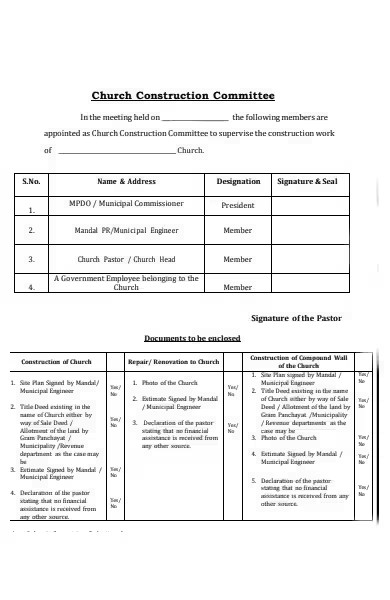
Church forms are official documents used by religious organizations for various administrative purposes. These can include membership applications, baptismal records, wedding requests, donation receipts, volunteer sign-ups, and more.
Why are there different forms for different religions?
Each religion has its own unique traditions, practices, and organizational structures. Consequently, the administrative needs and documentation requirements vary from one faith to another. For example, one religion might require specific forms for confirmations, while another might not have a similar sacrament or process.
Are church forms legally binding?
The legal standing of church forms can vary depending on the specific form and the jurisdiction. Some forms, like those related to property or financial transactions, may carry legal weight. Others, such as membership applications or event registrations, are primarily for internal church administration and may not have external legal implications. It’s advisable to consult with legal counsel if you have concerns about the legal aspects of any church document.
Church forms are typically available directly from the church office, through the church’s website, or on request from church staff or volunteers. Some denominations may also provide standardized forms for their congregations.
Do I need to be a member of a church to fill out some forms?
This depends on the form. Membership application forms, naturally, require you to be seeking membership. However, many other forms, such as those for event attendance, volunteer opportunities, or general inquiries, may be accessible to anyone, regardless of membership status.
What kind of information is typically requested on church forms?
The information requested varies widely. Common fields include contact details (name, address, phone, email), personal information (date of birth, marital status), family details, and sometimes information related to faith or spiritual interests. For specific purposes like donations or volunteer work, additional details pertinent to those activities will be requested.
Are church forms kept private?
Churches generally strive to protect the privacy of personal information collected through their forms, adhering to relevant data protection regulations. However, individuals should be aware that certain information may be accessible to specific church staff or volunteers who require it for their duties. It’s always a good idea to review a church’s privacy policy if one is available.
Can I request a copy of my church records?
In many cases, yes. Individuals can typically request access to or a copy of their personal records held by the church, such as baptismal or membership certificates. This is usually done by contacting the church office and making a formal request.
What is the role of religion in society?
Religion plays a multifaceted role in society. It often provides individuals with a framework for understanding life, morality, and their place in the universe. Religiosity can foster a sense of community, offer support systems, and inspire charitable works and social justice initiatives. It can also influence cultural norms, values, and traditions.
How does religion shape personal identity?
Religion can be a significant component of personal identity, influencing an individual’s beliefs, values, ethical code, and sense of purpose. It can provide answers to existential questions and connect individuals to a larger historical and spiritual narrative. For many, religious affiliation is an important aspect of how they see themselves and how they relate to others.
What are the common elements found across different religions?
Despite their diversity, many religions share common themes. These often include a belief in a higher power or ultimate reality, moral guidelines or ethical teachings, rituals and practices that mark significant life events or connect believers to the divine, sacred texts or scriptures, and a community of followers. Concepts like compassion, love, justice, and the search for meaning are also frequently present.