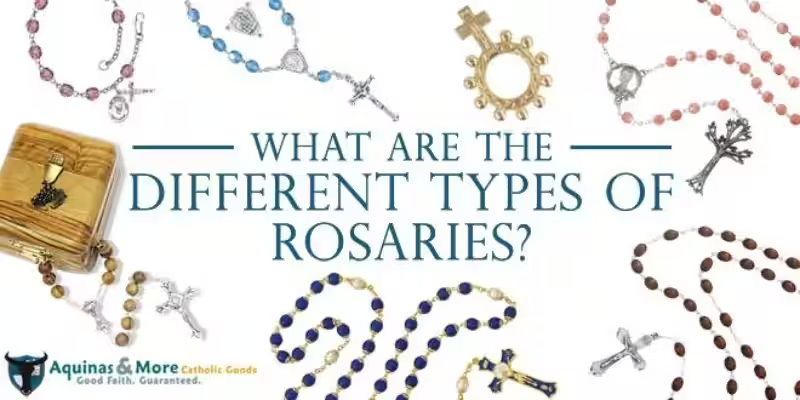
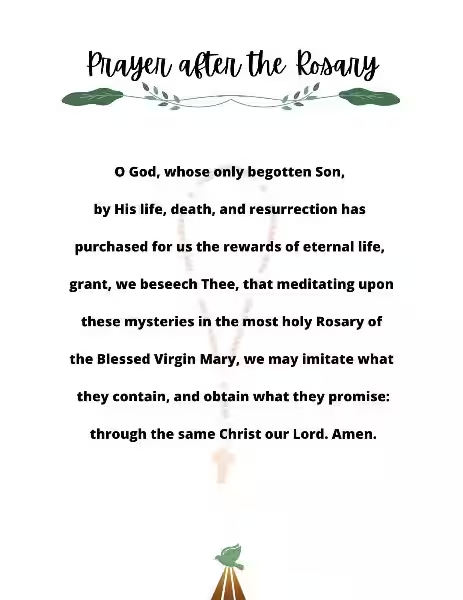
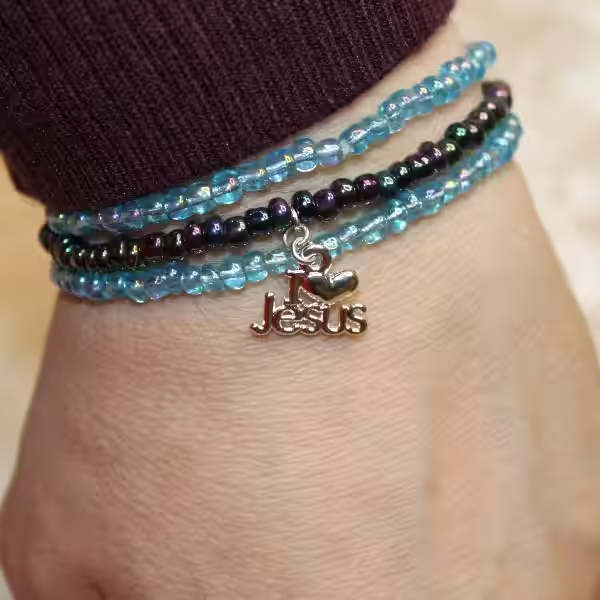
The rosary, a string of beads intertwined with prayer and contemplation, holds a profound place in the spiritual landscape of many faiths. Far more than just a tool for counting prayers, it serves as a tactile anchor, guiding the devotee through meditations on sacred mysteries, fostering a deeper connection with the divine. While the most widely recognized form originates from Christianity, particularly Catholicism, the concept of using beads for prayer and reflection is echoed in diverse religious traditions, showcasing a universal human desire for structured spiritual engagement. Understanding the different rosary types reveals not just variations in design and prayer, but also the rich diversity of devotional practices woven into the fabric of global religion.
For many, the word “rosary” immediately conjures images of the Catholic rosary, with its distinctive crucifix, medal, and set of beaded loops. However, to limit our understanding to this single iteration would be to overlook a vast and fascinating array of devotional aids. Each type, whether Christian or from another religious background, offers a unique pathway to spiritual awareness, encouraging mindfulness, repetition, and focused intention. This exploration aims to illuminate these different forms, providing a comprehensive and relatable guide for those seeking to deepen their prayer life or simply curious about the spiritual significance of these sacred instruments.
The Heart of Christian Devotion: The Catholic Rosary and Its Variations
The Catholic rosary is perhaps the most familiar to many, a beautifully crafted string of beads used to pray the Rosary, a series of meditations on the life of Jesus and Mary. This practice involves reciting specific prayers, such as the Our Father, Hail Mary, and Glory Be, while contemplating different “mysteries” – significant events from the Gospels categorized into the Joyful, Sorrowful, Glorious, and Luminous mysteries. The physical act of moving one’s fingers along the beads provides a tangible rhythm that aids in concentration and prevents the mind from wandering. The structure itself, typically consisting of 150 Hail Marys (arranged in sets of ten decades, each preceded by an Our Father and followed by a Glory Be), is designed to systematically cover these pivotal moments of salvation history.
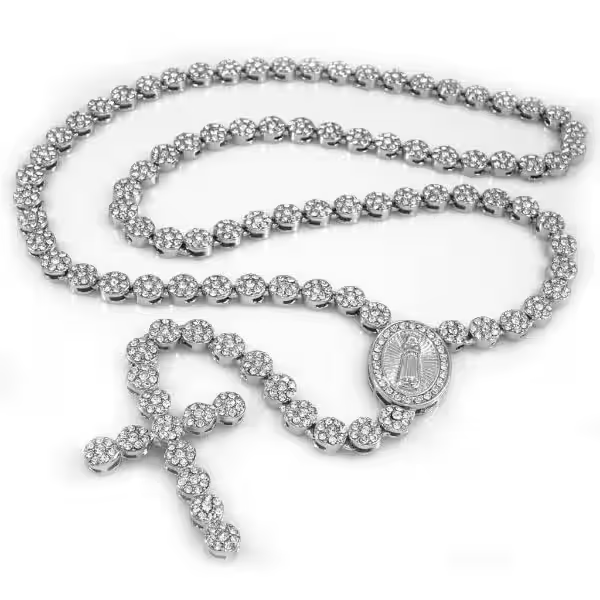
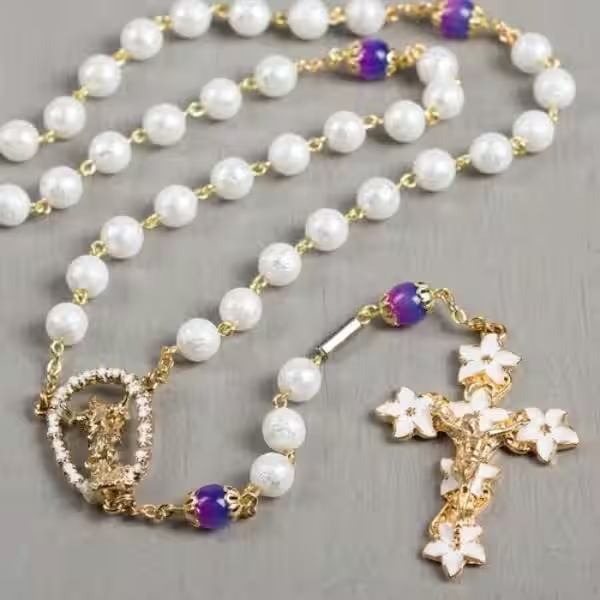
Within the Catholic tradition itself, there are subtle variations and emphases that can be considered different rosary types in practice. For example, some individuals might use a “pocket rosary,” a smaller, simpler version designed for easy portability, perfect for saying prayers on the go. Others opt for rosaries made from specific materials, like wood, rose petals, or semi-precious stones, each chosen for its symbolic meaning or aesthetic appeal, further personalizing the devotional experience. The chaplet, a smaller set of beads often used for specific novenas or devotions, also shares functional similarities, acting as a condensed form of rosary prayer. These variations, while sharing the core methodology, cater to individual preferences and specific spiritual goals, demonstrating the inherent adaptability of the rosary as a devotional tool.
The Structure and Significance of the Catholic Rosary Beads
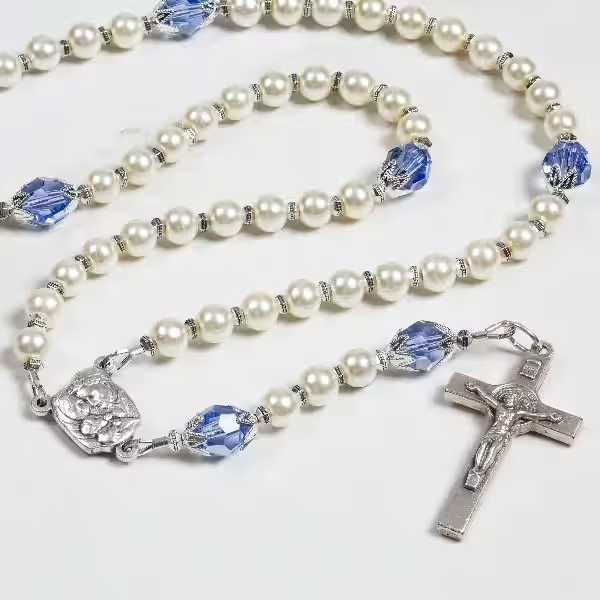
The standard Catholic rosary is meticulously designed, with each component holding symbolic weight. It typically begins with a crucifix, where the Nicene Creed is recited, setting the intention for the prayer. This is followed by a single Our Father, three Hail Marys (often for an increase in faith, hope, and charity), and a Glory Be. The main body of the rosary consists of five decades, each comprising ten Hail Mary beads, separated by a single Our Father bead and followed by a Glory Be bead. At the end of each decade, the pray-er meditates on one of the mysteries. The presence of a central medal often depicts Mary, serving as a reminder of her intercession and a focal point for devotion.
The progression through the beads offers a meditative flow, guiding the devotee through each prayer and mystery without the need for constant mental calculation. This physical journey mirrors the spiritual journey being undertaken. For instance, when contemplating the Joyful Mysteries, which focus on the early life of Jesus, a Catholic might hold the crucifix and begin the prayers. As they move their thumb from bead to bead, they are reminded to reflect on events like the Annunciation or the Nativity. This sacred counting transforms rote recitation into a profound engagement with the narrative of faith, making the different rosary types within this tradition a powerful instrument for spiritual growth.
Beyond Catholicism: Rosary-Like Devotional Tools in Other Religions
While the Catholic rosary is the most widely recognized, the practice of using beads for prayer and meditation is not exclusive to Christianity. Many other religions utilize similar aids, often referred to by different names and incorporated into distinct spiritual traditions. These instruments, while varying in form and prayer content, share the common thread of offering a structured approach to spiritual contemplation and a means to focus the mind. Exploring these parallels reveals the universality of human spiritual aspirations and the diverse ways individuals connect with the divine across cultures.
One of the most prominent examples outside of Catholicism is the mala used in Hinduism, Buddhism, and Jainism. These prayer beads, typically made of 108 beads (though other counts exist), are used to count mantras, chants, or repetitions of divine names. The act of reciting a mantra while turning the mala can induce a state of trance-like focus, quieting the mental chatter and allowing for a deeper spiritual experience. The materials used for malas can also be significant, with various woods, seeds, or stones chosen for their energetic properties or symbolic associations within these traditions. The fundamental principle of rhythmic repetition to achieve spiritual awareness is a powerful commonality.
The Hindu Mala: A Sacred Tool for Mantra Repetition
In Hinduism, the mala, often fashioned from rudraksha seeds, sandalwood, or tulsi wood, is a central element in the practice of japa, the repetitive chanting of a mantra. Each bead represents one repetition of the mantra, and the goal is to complete a full cycle, often 108 times, with the guru bead marking the beginning and end of the cycle. The mala acts as a physical reminder to stay present and dedicated to the mantra’s recitation. The choice of mantra can vary widely, from names of deities like Vishnu or Shiva to sacred syllables like “Om.” This focused repetition is believed to purify the mind, attract divine blessings, and facilitate spiritual liberation.
The number 108 itself holds deep significance in Hinduism, often representing the union of the individual soul (1) with the divine (0) and the infinite (8). Therefore, completing 108 repetitions with the mala is a symbolic act of bringing oneself into alignment with the universal consciousness. The texture and feel of the beads, the subtle aroma of sandalwood, and the rhythmic movement all contribute to a sensory experience that enhances the meditative quality of the practice. The diversity of mantras and the personalization of mala materials highlight how the different rosary types in principle can be deeply integrated into individual spiritual paths.
The Buddhist Mala and Prayer Beads: Pathways to Enlightenment
Similarly, the mala plays a crucial role in Buddhist devotional practices. Buddhist malas are also typically composed of 108 beads, though variations exist. They are used to count recitations of mantras, such as “Om Mani Padme Hum,” or to mark prostrations. The purpose is to cultivate mindfulness, develop concentration, and accumulate merit. Different schools within Buddhism may have specific mantras or prayer sequences associated with their malas, and the materials can range from wood and seeds to more precious stones.
The act of using a Buddhist mala is seen as a way to transform negative karma and cultivate positive qualities like compassion and wisdom. The repetitive nature of the prayer, guided by the beads, helps to quiet the discursive mind and create space for deeper insight. In some Buddhist traditions, specific colors of beads or particular arrangements might signify different Buddhas or enlightened beings. This demonstrates how even within a single religious framework, there can be different rosary types or prayer bead configurations tailored to specific teachings and practices, all aimed at guiding practitioners towards enlightenment.
Moving beyond the well-known Christian and Eastern traditions, other religions also incorporate prayer beads into their spiritual practices. Islam, for instance, utilizes the tasbih or misbaha, a string of beads used to count recitations of specific phrases praising Allah. These beads serve a similar purpose to the rosary and mala: to aid in focused prayer and to ensure a consistent number of repetitions, fostering a sense of devotion and remembrance of God.
The misbaha, typically made of anywhere from 33 to 99 beads, is used to count recitations of phrases like “Subhan Allah” (Glory be to God), “Alhamdulillah” (Praise be to God), and “Allahu Akbar” (God is Greatest). The rhythmic movement of the beads through the fingers helps to maintain concentration during Dhikr (remembrance of God), a central pillar of Islamic spirituality. The simple yet profound act of counting these phrases, facilitated by the beads, can lead to a state of deep spiritual connection and peace. This highlights how different rosary types can manifest in various cultural contexts, each fulfilling a vital role in the believer’s relationship with the divine.
The Islamic Tasbih/Misbaha: Cultivating Dhikr
The tasbih or misbaha is an indispensable tool for Muslims seeking to engage in Dhikr, the remembrance of Allah. Whether in private prayer or during congregational gatherings, these prayer beads provide a tangible way to keep track of the numerous praises and glorifications of God. The standard practice involves reciting “Subhan Allah” 33 times, “Alhamdulillah” 33 times, and “Allahu Akbar” 33 times, followed by a concluding phrase, totaling 100 recitations. This structured approach ensures that the devotee consistently remembers and glorifies their Creator throughout the day, bringing a spiritual dimension to everyday activities.
The materials for tasbihs vary widely, from simple wooden beads to ornate ones made of amber or ivory, often adorned with decorative tassels. Regardless of the material, the functional purpose remains paramount: to facilitate the continuous remembrance of God. This practice is not merely about ritualistic counting; it is about cultivating a state of constant awareness of divine presence, a concept deeply ingrained in Islamic theology. The availability of different rosary types in this context, from simple strings to more elaborate designs, allows for personal expression while upholding the core spiritual objective of remembrance and devotion.
Conclusion: A Universal Language of Prayer
As we have explored, the concept of using prayer beads, or different rosary types, transcends religious boundaries, offering a universal language of devotion and a structured path to spiritual connection. Whether it’s the familiar Catholic rosary, the Hindu mala, the Buddhist prayer beads, or the Islamic tasbih, these sacred instruments serve as powerful aids in cultivating mindfulness, deepening faith, and fostering a more intimate relationship with the divine. They are not merely decorative objects but profound tools that engage the senses, focus the mind, and guide the spirit on a journey of prayer and reflection.
In a world that often feels chaotic and overwhelming, the consistent rhythm of prayer beads can provide a much-needed anchor. The physical act of moving from bead to bead, coupled with the recitation of sacred words, creates a meditative space where one can find solace, clarity, and spiritual strength. Understanding the nuances of these different rosary types enriches our appreciation for the diverse expressions of faith across the globe and reminds us of the enduring human quest for connection to something larger than ourselves. Each bead, each prayer, is a step on a sacred path, a testament to the timeless power of devotion.
Frequently Asked Questions About Different Rosary Types
What is a Rosary?
A Rosary is a set of prayer beads used for counting prayers, most commonly in the Catholic tradition. It is a physical aid to meditation and prayer, helping the user to focus on the mysteries of the life of Jesus and Mary.
While the core structure of a Rosary (beads arranged in a specific pattern) is consistent, there are variations in the number of beads, materials, and accompanying devotional practices. The most common types include:
The Traditional Catholic Rosary: This is the most widely recognized Rosary, consisting of 150 Hail Marys, 15 Our Fathers, and 15 Glory Be’s, divided into five decades. It is often accompanied by the meditation on the Joyful, Sorrowful, and Glorious Mysteries.
The Dominican Rosary: This is essentially the same as the Traditional Catholic Rosary, emphasizing the recitation of the full 150 Hail Marys.
The Franciscan Crown: This Rosary has seven decades, each consisting of seven Hail Marys, and is dedicated to the Seven Joys of the Blessed Virgin Mary. It also includes an Our Father and a Glory Be before and after each decade, plus a final Hail Mary and Glory Be.
The Scapular Rosary: This is actually a brown scapular worn around the neck, which has beads attached to it. It is often used for specific devotions related to the Scapular of Our Lady of Mount Carmel.
The Chaplet of Divine Mercy: This chaplet uses a standard Rosary bead set but is prayed with specific prayers for the Divine Mercy devotion, invoking Jesus’ mercy for the world.
The Rosary of the Seven Sorrows of Mary: This chaplet consists of seven decades, each dedicated to one of the Sorrows of Mary. It typically uses seven beads for the Hail Marys in each decade, with an Our Father and a Glory Be at the beginning and end of each sorrow.
What are the “Mysteries” associated with the Rosary?
The Mysteries are events from the lives of Jesus and Mary that are meditated upon while praying the Rosary. These are traditionally divided into three sets:
The Joyful Mysteries: Meditated on Mondays and Thursdays (and Sundays during Advent).
The Sorrowful Mysteries: Meditated on Tuesdays and Fridays (and Sundays during Lent).
The Glorious Mysteries: Meditated on Wednesdays and Saturdays (and Sundays outside of Lent and Advent).
Pope John Paul II introduced the Luminous Mysteries (Mysteries of Light) in 2002, which are meditated on Thursdays and focus on the public ministry of Jesus.
Can people of other religions use a Rosary?
While the Rosary is deeply rooted in Catholic tradition, some individuals from other Christian denominations, or even those exploring spirituality, may find the meditative aspect of using prayer beads beneficial. However, the specific prayers and theological meanings of the Rosary are intrinsically linked to Catholic beliefs.
What are Rosary beads made of?
Rosary beads can be made from a wide variety of materials, including wood, glass, metal, semi-precious stones, plastic, and even seeds. The material often reflects personal preference, durability, or symbolic meaning.
How do I pray the Rosary?
The prayer of the Rosary involves a series of specific prayers recited in a particular order while moving through the beads. A common structure includes:
Make the Sign of the Cross and pray the Apostles’ Creed.
Pray the Our Father, three Hail Marys, and a Glory Be.
Announce the first Mystery and pray the Our Father.
Pray ten Hail Marys while meditating on the Mystery.
Pray a Glory Be and the “O My Jesus” prayer.
Repeat steps 3-5 for each of the five decades.
Conclude with the Hail Holy Queen and the Sign of the Cross.
There are many resources available, including prayer cards and online guides, that provide detailed instructions on how to pray the Rosary.